Performance Line CX Gen 5
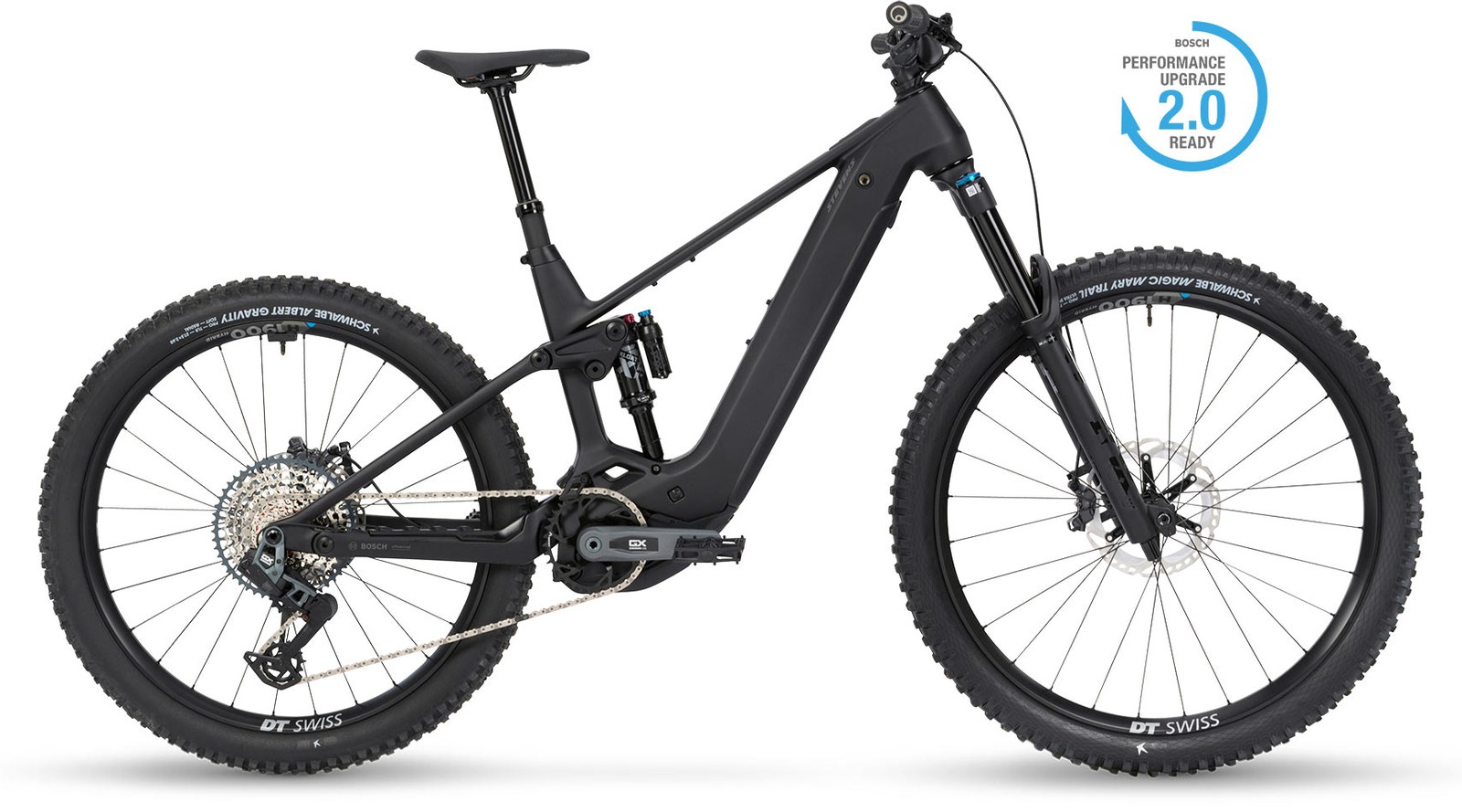
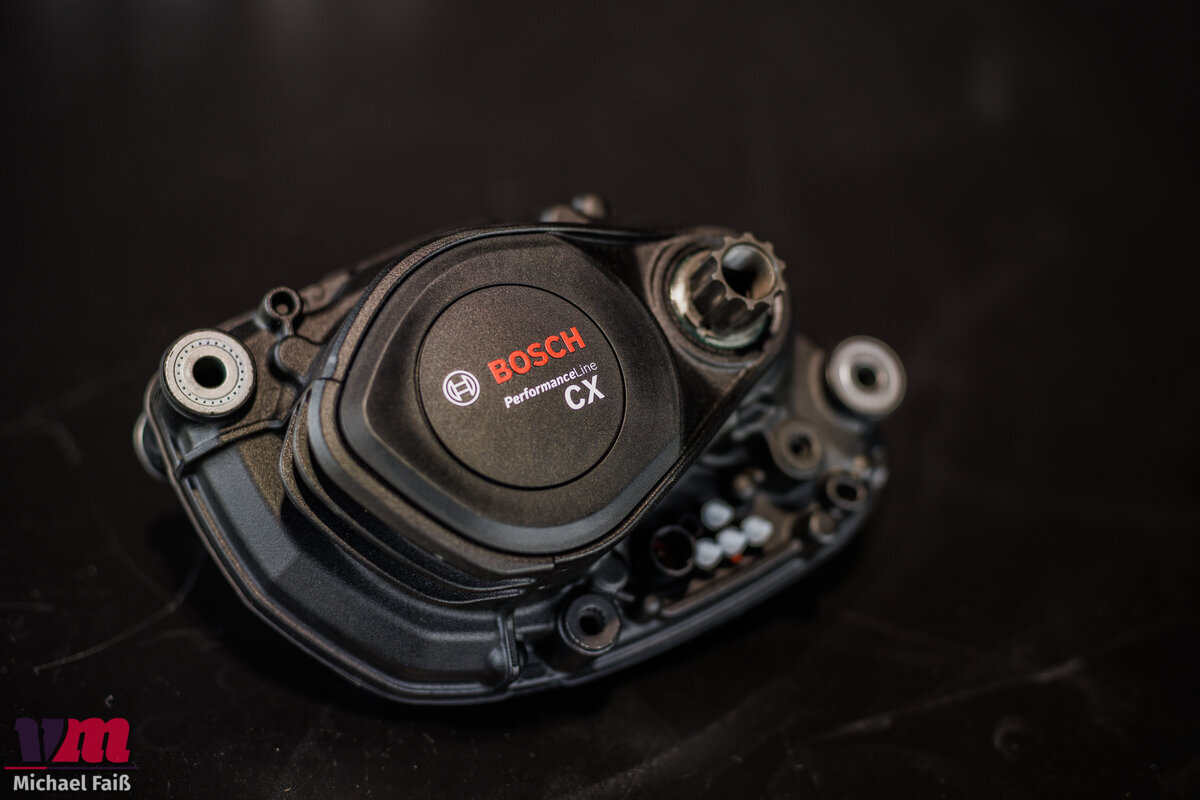
Bosch's fifth-generation Performance Line CX is the quiet, controlled benchmark of the full-power class — and after two free firmware upgrades it now claims 120 Nm and 750 W, answering DJI's Avinox on refinement if not raw watts, without changing a single bolt.
On Velomotion's dyno, power ramps in from around 50 rpm, plateaus near 60 rpm at the ~685 W measured peak, then holds remarkably flat — little fluctuation right out to 140 rpm rather than the early roll-off of rivals.
Bosch Performance Line CX Gen 5 arrived in September 2024 as a surprise: same 85 Nm and 600 W on paper as the Gen 4 it replaced, but wrapped in a 100 g-lighter magnesium housing, a new two-bolt mount and a gearbox that finally killed the old motor's descending clatter. On Velomotion's PTLabs dyno the new BDU38 and the old BDU37 traced almost identical peak-power lines, so the early verdict was "evolution, not revolution" — the revolution, it turned out, was simply how refined and quiet it had become. Note the date: Bosch unveiled the unit in September 2024 with bikes landing from early 2025, so this is a 2024-launch motor despite the firmware story that followed.
Then came the software. The July 2025 Performance Upgrade lifted Velomotion's measured peak power to around 685 W (a claimed 750 W) and torque to 100 Nm; the May 2026 Performance Upgrade 2.0 pushed the headline torque to a 120 Nm dynamic boost and the support ratio to a huge 600%, with peak power unchanged at a claimed 750 W. None of it touches the hardware — it is all unlocked through the eBike Flow app. The trade-off is heat: in Velomotion's testing the unlocked power tunes warm sooner and derate after roughly eight minutes of hard climbing (housing settling near 80°C), where the stock 85 Nm tune holds full power past the twelve-minute mark at a cooler ~75°C.
What hasn't changed is the CX's defining trait — a beautifully metered, natural delivery that never tries to outrun the rider. It needs a genuine ~200 W of leg to give everything, which keeps the ride feeling earned rather than electric. On raw shove it is now mid-pack among the heavy hitters: Velomotion measures the DJI Avinox M2S at ~1150 W (150 Nm claimed) and the Sachs RS at ~898 W / 112 Nm, and even Specialized's updated 3.1 S-Works (~810 W / 111 Nm measured) now sits clearly ahead of the Bosch's ~685 W. But as an all-round trail motor the Gen 5 remains the one most riders will simply forget is there.
Sustained power & heat
How long the headline number actually lasts under sustained climbing load.
Velomotion measured ~12 min at full power before derating, vs ~8 min for Gen 4; housing settles near 75°C, cooler than rivals.
In Velomotion's test the unlocked tune derates from ~8 min under sustained 250 W load; ~8% down after 20 min, housing near 80°C, but still matches the stock tune's output.
Character
The case for and against
Strengths
- Class-leading refinement — quiet, smooth, natural delivery
- Free firmware route to 120 Nm / 750 W / 600% support
- Excellent efficiency and uphill range
- Flat power curve from ~60 to 140 rpm
- Lighter magnesium housing, runs cooler than rivals
Compromises
- 120 Nm is a few-second dynamic boost, not sustained torque
- Power tunes derate sooner under hard, prolonged climbing
- Now mid-pack on raw power — trails Avinox M2S, Sachs RS and the updated Specialized 3.1 S-Works
- Needs ~200 W rider input for peak — not a free ride
How it stacks up
Bikes running this motor · 40