Giant SyncDrive Sport
Giant's SyncDrive Sport is the brand's Yamaha-built mid-drive (a re-badged PW-ST) found on its trekking and sportier touring e-bikes rather than its hardcore eMTBs. Quiet, smooth and easy-going, it trades outright punch for refinement, and it has since spawned punchier Sport 2 and Sport 3 successors.
Synthesised from Yamaha PW-ST cadence figures (no independent dyno exists for this exact unit): brisk low-end ramp toward the 70 Nm torque ceiling, a broad usable plateau around 60-80 rpm, then a gentle taper toward the 110 rpm support ceiling. Power is bounded by the 250 W nominal rating; no peak-watt figure is published for the base PW-ST.
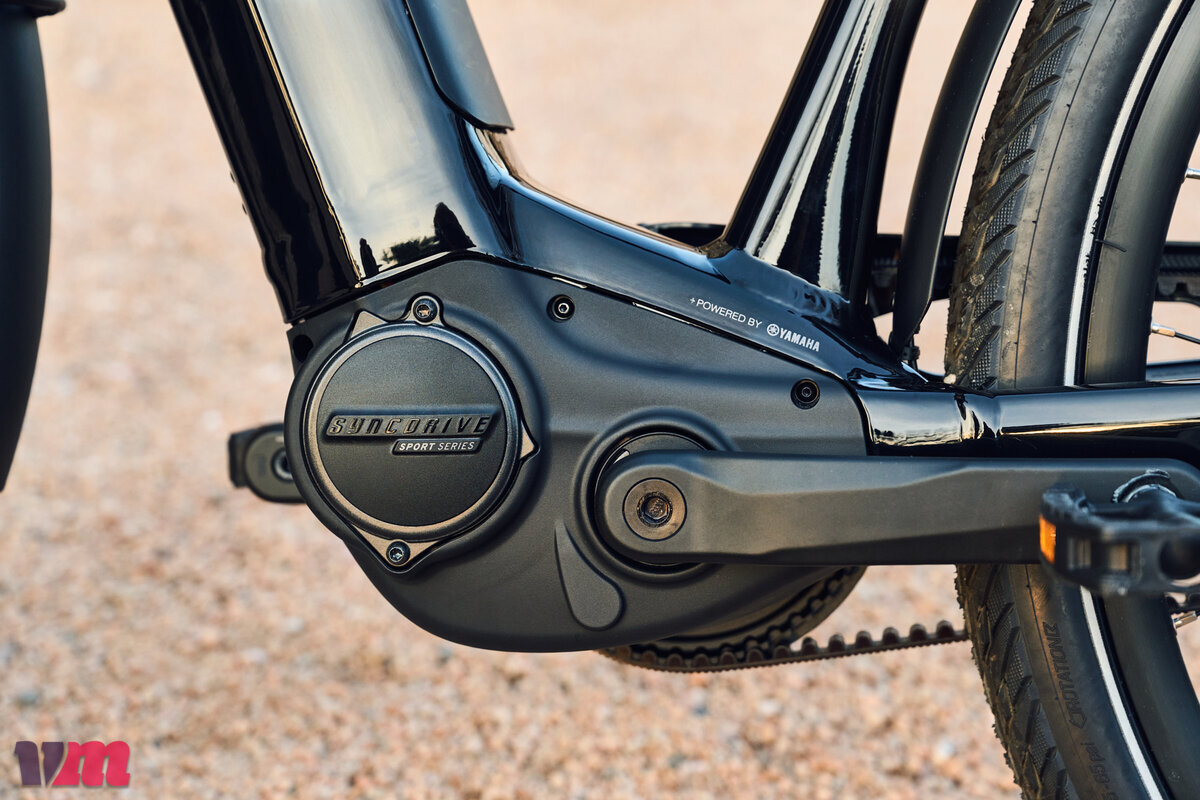
Giant SyncDrive Sport is the workhorse of Giant's Yamaha-derived line-up, sitting below the full-fat SyncDrive Pro and above the lightweight SyncDrive Life. Mechanically it is Yamaha's PW-ST unit wearing a Giant 'Sport Series' cover, paired with Giant's own Smart Assist / PedalPlus 4-sensor firmware. This page describes the original SyncDrive Sport: Giant's showcase quotes it at 70 Nm with a 350% maximum support ratio (Eco 50% to Sport+ 350%), a 250 W nominal rating, 36 V and a unit weight of about 3.48 kg, matching the underlying Yamaha PW-ST (70 Nm, 250 W, 3.4 kg).
Giant has since launched two newer generations that should not be confused with this one: the SyncDrive Sport 2 (75 Nm, 400% support, 600 W peak, 2.8 kg) and the SyncDrive Sport 3 (85 Nm, 400% support, 650 W peak, 2.8 kg). Those are lighter and stronger; the 2.8 kg weight quoted for them does not apply to this original PW-ST-based unit. If you are cross-shopping, check which generation a given bike actually carries.
On the trail or towpath the original Sport is defined by smoothness rather than aggression. The Smart Assist algorithm reads cadence, torque and slope and ramps power in progressively, so it feels natural and unintimidating instead of shoving you up the climb. Velomotion's Giant tests of PW-ST-class bikes (AnyTour E+, Fathom E+ 2) praise how willingly it supports higher cadences and how composed it stays, which suits the trekking and commuting bikes it is fitted to. It is rated at 250 W nominal; Yamaha does not publish a peak-watt figure for the base PW-ST, so we quote no peak here rather than invent one.
There is no independent ebike-lab dyno trace for this exact unit, so the curve below is a representative shape built from Yamaha's cadence figures rather than a measured graph, and we leave measured peak power blank. Treat the headline torque as a current manufacturer claim (70 Nm for this generation), and remember the newer Sport 2/3 motors carry the higher numbers.
Character
The case for and against
Strengths
- Quiet and refined for a trekking mid-drive (subjectively among the quietest, though no dBA is published)
- Smooth, natural Smart Assist power delivery
- Solid 70 Nm torque and 350% support for relaxed trekking duty
- Not known to derate on normal trekking loads
- Pairs with Giant's large EnergyPak batteries for strong range
Compromises
- Lower output (70 Nm / 250 W) than eMTB-focused rivals and the newer Sport 2/3 (75-85 Nm)
- Heavier (about 3.48 kg) than the 2.8 kg Sport 2/3 successors
- No independent dyno, peak-watt or thermal data published
- Yamaha PW-ST platform is now several generations old