But he is not a proper reviewer by any stretch of the imagination, and he still uses annoying clickbaity titles. Example from memory: he advertised a video as a "range test" of the Amflow, but it was just him going for a ride and telling us how many miles he did and what battery percentage was left. There was no attempt to control any variables (terrain, power modes, rider weight, etc) so the info was meaningless. At least professional reviewers usually make systematic, quasi-scientific comparisons with other bikes.Ian Richards always gives an honest review, buys all his own bikes and rides the wheels off them, but if something is shit he’ll say so.
Navigation
Install the app
How to install the app on iOS
Follow along with the video below to see how to install our site as a web app on your home screen.
Note: This feature may not be available in some browsers.
More options
Style variation
You are using an out of date browser. It may not display this or other websites correctly.
You should upgrade or use an alternative browser.
You should upgrade or use an alternative browser.
Avinox launch 1500w M2S motor and cheaper M2 motor
a
- Thread starter Rob Rides EMTB
- Start date

⚡ EMTB PRO
25% off e*thirteen, Peaty’s & more with PRO
Member-only deals from e*thirteen, Peaty’s, PEMBREE and Magicshine · ad-free browsing · PRO badge · Living Intelligence Reports
See the deals →
From £1.99/month
I mean bro, it’s a real world range test. Testing range on a treadmill isn’t exactly useful in any way either.But he is not a proper reviewer by any stretch of the imagination, and he still uses annoying clickbaity titles. Example from memory: he advertised a video as a "range test" of the Amflow, but it was just him going for a ride and telling us how many miles he did and what battery percentage was left. There was no attempt to control any variables (terrain, power modes, rider weight, etc) so the info was meaningless. At least professional reviewers usually make systematic, quasi-scientific comparisons with other bikes.
Honestly, I’m a bit surprised by Amflow’s decision to go with LG 4650 cells. Going for a custom cell in this size feels unusual.
If they were already developing something custom, a 4625 format would make more sense to me, 2P for main battery and 1P for slim 350wh range extender. Overall 46.. cell format is great for slim downtube we just need more energy density. 500 wh/kg would be great.
If they were already developing something custom, a 4625 format would make more sense to me, 2P for main battery and 1P for slim 350wh range extender. Overall 46.. cell format is great for slim downtube we just need more energy density. 500 wh/kg would be great.
Copy and paste from the Amflow websiteGood afternoon. Is this official information? It’s just that the ability to increase the range of the PR version of the bike is very important to me.
*Footnotes on PX and PR pages.

I'm sorry for the confusion, I was trying to speak on the capability of the new 700wh 4650 pack and how it's hard say if it can charge higher than the current 12a charger without more technical data. On one of the older threads I recall a shop opening up a gen 1 800wh due to some tech issue and it was proven with photos that the LG M58T cell was used.I'm now >80% confident they are still using the LG M58T or a very closely-related member of the M58 family.
I don’t think he even professes to be a proper reviewer. He’s more of a “here’s me on a ride and my opinion on my stuff.”But he is not a proper reviewer by any stretch of the imagination, and he still uses annoying clickbaity titles. Example from memory: he advertised a video as a "range test" of the Amflow, but it was just him going for a ride and telling us how many miles he did and what battery percentage was left. There was no attempt to control any variables (terrain, power modes, rider weight, etc) so the info was meaningless. At least professional reviewers usually make systematic, quasi-scientific comparisons with other bikes.
My point was that he seems honest and totally unbiased in what he says about his bike etc.
Gauss Guzzler
Member
It's not fair to simply Google "the best battery cell" and compare it to some startup mountain bike brand. Molicel is a very expensive boutique manufacturer specializing in class-leading performance at the expense of many other metrics, such as expense. You can't buy a car, cordless drill, or laptop with Molicel batteries, but you'll sure find them on a lot of spacecraft. You might be able to buy a few questionable Molicel's on eBay for umteen dollars/ea but that doesn't mean DJI can secure a contract for umteen million cells/year at a profit-compelling price.Regarding the disappointing energy density of the FP700...Why they didn't build it with the 6,5Ah 21700 cells, I don't know.
There are only ~4 major battery manufacturers in the world: CATL, LG, Samsung and Panasonic.
Molicel barely even makes the top 10 and Tesla, the world's largest consumer of batteries and world's 10th largest corporation spent a trillion gazillion dollars over the course of a decade trying to make a "custom Panasonic cell" only to fail spectacularly, even though Panasonic did all the work for them.
The fact that DJI has somehow managed to market a new cell architecture with their FP700 battery is absolutely bonkers. No one does this. Not Apple, Not GM, No company has done this in our lifetimes other than Tesla (barely). This is a really big deal. A REALLY BIG DEAL.
The 21mm architecture is very well optimized - Molicel or otherwise, whereas the new 46mm architecture is not - Tesla or otherwise. But 46mm is quite compelling from assembly cost and performance standpoints with its greatly improved charge/discharge speeds, as well as structural and safety advantages. I suspect the Avinox cell probably comes from some lower-tier Chinese domestic market EV that the western media is not yet aware of. And presumably, the cars this cell was intended for should take priority, so the fact that DJI was able to procure them is astonishing.
Lastly, it's also not fair to rank the FP700 in simple traditional metrics of Wh/kg. On paper, 46mm(?) cells don't compete with the latest 21700's, but just like the "structural battery pack" intent of the original 4680, the structural (and marketing) advantages of a slim round downtube need to be considered as well as the cost and safety advantages of a "1P" pack.
Yes, the cell type was confirmed on the old 800 Wh pack. I am talking about the new RS800 removable pack. I was hoping they'd use better cells. I know the 700 Wh internal pack uses 46xx cells, so it's very different.I'm sorry for the confusion, I was trying to speak on the capability of the new 700wh 4650 pack and how it's hard say if it can charge higher than the current 12a charger without more technical data. On one of the older threads I recall a shop opening up a gen 1 800wh due to some tech issue and it was proven with photos that the LG M58T cell was used.

sethimus
😠 Temu Gary 😠
it should be rated as Wh/volume, in that metric, it wins big. and we will see more bikes with rounder tubes againLastly, it's also not fair to rank the FP700 in simple traditional metrics of Wh/kg. On paper, 46mm(?) cells don't compete with the latest 21700's, but just like the "structural battery pack" intent of the original 4680, the structural (and marketing) advantages of a slim round downtube need to be considered as well as the cost and safety advantages of a "1P" pack.
Watty
Member
If the bike comes with a fast charger that is , my Megamo only came with standard charger and getting the fast charger is proving to be impossible as nobody has any in stock , my new bike is not getting used I’m still using my five year old bike because I have a 2nd battery and I do big rides .because you can just use the fast charger for 20-30mins and get the same range boost?
I bought the Megamo only the basis I could fast charger separate at lunchtime but feel I’ve been sold a lie and the bike is useless to me

Hey, valid points to think/talk about.It's not fair to simply Google "the best battery cell" and compare it to some startup mountain bike brand. Molicel is a very expensive boutique manufacturer specializing in class-leading performance at the expense of many other metrics, such as expense. You can't buy a car, cordless drill, or laptop with Molicel batteries, but you'll sure find them on a lot of spacecraft. You might be able to buy a few questionable Molicel's on eBay for umteen dollars/ea but that doesn't mean DJI can secure a contract for umteen million cells/year at a profit-compelling price.
There are only ~4 major battery manufacturers in the world: CATL, LG, Samsung and Panasonic.
Molicel barely even makes the top 10 and Tesla, the world's largest consumer of batteries and world's 10th largest corporation spent a trillion gazillion dollars over the course of a decade trying to make a "custom Panasonic cell" only to fail spectacularly, even though Panasonic did all the work for them.
The fact that DJI has somehow managed to market a new cell architecture with their FP700 battery is absolutely bonkers. No one does this. Not Apple, Not GM, No company has done this in our lifetimes other than Tesla (barely). This is a really big deal. A REALLY BIG DEAL.
The 21mm architecture is very well optimized - Molicel or otherwise, whereas the new 46mm architecture is not - Tesla or otherwise. But 46mm is quite compelling from assembly cost and performance standpoints with its greatly improved charge/discharge speeds, as well as structural and safety advantages. I suspect the Avinox cell probably comes from some lower-tier Chinese domestic market EV that the western media is not yet aware of. And presumably, the cars this cell was intended for should take priority, so the fact that DJI was able to procure them is astonishing.
Lastly, it's also not fair to rank the FP700 in simple traditional metrics of Wh/kg. On paper, 46mm(?) cells don't compete with the latest 21700's, but just like the "structural battery pack" intent of the original 4680, the structural (and marketing) advantages of a slim round downtube need to be considered as well as the cost and safety advantages of a "1P" pack.
Yes it is true that Molicel is small compared to the cell production big guns. I am also aware that there are actually only 4 big manufacturers, LG Chem/LGES(LG energy solution) supposedly being the one making cells for Amflow.
I mentioned Molicel as they are/were usually leaders(other catching fast) with development of new 21700 type cells etc...and were the first(or among first) to release a 6,5Ah cell. Their cells tested among the best out there.
My first posts(in fall 2025) in one of the threads about the possible new Avinox packs I along side Molicel also mentioned FEB(Far East Battery). FEB is not well known in the west, but is a huge and fast growing li-ion manufacturer based in China.
Not as big as other 4, but it's significantly big enough to play on the chessboard.
Far East Battery
Far East Battery, a core subsidiary of Far East Smart Energy Co., Ltd. (stock code: 600869) since 2009, is a global new energy battery and ESS service provider. It integrates R & D, production and sales
share.google
Below is a short recap of their 21700 cell type development over the years.
Far East Battery is a mid-to-large Li-ion manufacturer active since 2009 with production in the GWh scale, making everything from:
- small cylindrical cells
- to multi-kWh modules
- up to container-scale (MWh) energy storage systems
Capacity evolution:
- 2016 - 2020
- 4.0–5.0 Ah → early standard cells
- 2020 -2025
- 5.5 Ah(21700-58E) → improved energy density (~71 g class)
- 6.0 Ah(21700-62E) → widely deployed high-capacity baseline
2025-2026- 6.5 Ah → high-nickel + Si-C anode (~310 Wh/kg)
- ~6.8 Ah (latest) → current limit-pushing generation
Latest generation
- 21700-68E
- ~6.8 Ah class
- ~320 Wh/kg
- Advanced chemistry (high-nickel cathode + silicon-carbon anode)
- Optimized for energy density over discharge
--------
To add to the topic if anyone is interested, there are also other small players that are pushing the boundaries with materials, for example HPQ Silicon targeting 7Ah in the future. Currently at ~6,7Ah.
HPQ Silicon Reports 6,696 mAh GEN4 21700 Cell Performance Among the Highest Reported Globally — HPQ Silicon

About the charging. The specs say 0% to 75% in 1,5h. I am guessing this is for the 800Wh.I'm now >80% confident they are still using the LG M58T or a very closely-related member of the M58 family.
So I'm pretty confident it's the M58T or another LG cell that is essentially identical. My main doubt comes from the 12 A Avinox charger, which is beyond what that cell is rated for in a 10s4p pack.
- The nominal voltage of the RS800 is 35.9. The nominal voltage of the M58T is 3.59 so this fits a 10s4p (4 parallel groups of 10 cells) configuration perfectly.
- With a quick search, I cannot find any other cells with 3.59 nominal voltage; most are between 3.6 and 3.7. If there are no such cells, this alone is very strong evidence the M58T is being used.
- The claimed capacity of the RS800 is 800 Wh. The "nominal capacity" of the M58T is 5.8 Ah, which would give 5.8*4*35.9=832.88 Wh. However, the "minimum capacity" on the data sheet, which is much more accurate in my experience, is 5.57. That would be a great match: 5.57*4*35.9=799.9 Wh.
- This is only moderately strong evidence, because claimed Wh capacities of battery packs tend to be rounded by manufacturers/retailers.
- Another source claims the capacity of the RS800 is 22.3 Ah, which is also a good fit assuming a 5.57 Ah per-cell capacity: 800/35.9 (or 4*5.57)=22.28 Ah.
- This is strong evidence because, following standard rounding conventions, 22.3 Ah only works for cells between 5.57 and 5.59 Ah (5.56*4=22.24=22.2; 5.60*4=22.40=22.4). I cannot find any other cell with "nominal" or "minimum" capacity within that very narrow range.
- The RS800 charger maxes out at 12 A, which in 4p configuration would give 3 A per cell. The max charge current of the M58T is 2.7, which in 4p configuration would permit 2.7*4=10.8 A. If they use the same cells in 600 Wh packs, which are presumably 10s3p, the charging limit would be 2.7*3=8.1 A.
- I see this as moderate evidence against the M58T being used. Generally manufacturers will try to keep the current below the max, to prevent overheating and cell degradation. But perhaps they did some testing, or sought advice from LG, and decided 12 A would be fine. Also, the cells allow up to 5 A charging if the charging voltage is reduced to 4.0 A per cell (rather than the usual 4.2 A), so maybe the charger has some firmware that charges in two stages or something? Or maybe it doesn't actually charge at the full 12 A? I would like more information on this.
- Avinox used the M58T for their old FS800 and FS600 (fixed) batteries, so it would be odd for them to switch to a different cell that had exactly the same specs. The M58T is also used by Bosch.
- A fairly weak but non-trivial point in favour of the M58T.
- Aside from the M58T, there are apparently three additional cells in the M58 family: M58, M58V, and M58VT.
- This does weaken the case for the M58T in particular being used. However, Chat GPT couldn't find spec sheets for those other three, and what little info it could find appears to be the same as the M58T, so it might just be the type of wrapper used or something irrelevant like that.
Now this is an example how a lithium ion battery charge curve looks like:
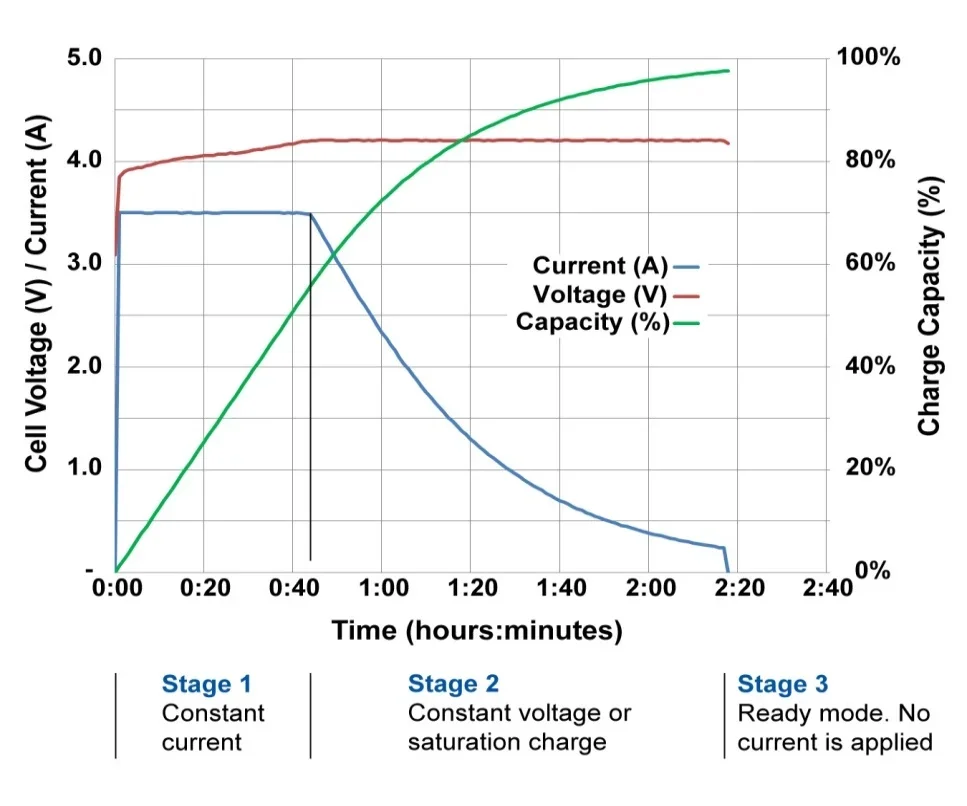
I am guessing that if the cell can sustain the max charge current of 2,7A (LG M58T) for a specific time(this example 40min) without exceeding the maximum allowed temperature it's good to go.
Of course during testing and a few years of data collection(user accounts) they most probably got a pretty good picture how long this first time window where the charge current is at maximum can be and programed the charging algorithms for the chargers and battery bms accordingly.

Highland Wheels
Well-known member
Fast chsrger is available on stock at a few places up here tbfIf the bike comes with a fast charger that is , my Megamo only came with standard charger and getting the fast charger is proving to be impossible as nobody has any in stock , my new bike is not getting used I’m still using my five year old bike because I have a 2nd battery and I do big rides .
I bought the Megamo only the basis I could fast charger separate at lunchtime but feel I’ve been sold a lie and the bike is useless to me
Watty
Member
I’m hoping this is the case to as the motor is plug and playI'd also hazard a guess that down the line, those folk thsy may need a new M1 motor through warranty or whatever may end up with an M2S as M1 stocks get used up?
Or I'm way off but it makes sense in my head
Watty
Member
Where at I’ve searched every website I can find they are all out of stockFast chsrger is available on stock at a few places up here tbf
mmcengineer
Active member
would be interesting to be a fly on the wall at bosch and specialized HQ
I wonder if anyone has more details about the M2 vs M2S in terms of durability and noise. I've read that the M2S has a better "dual" gearset. I wonder what that actually means and how it will affect long term durability and quietness on the trail? Is there any info on this available?

Wojtek
New Member
- Mar 13, 2026
- 112
- 94
Just watched a video saying M2s is quieter...I wonder if anyone has more details about the M2 vs M2S in terms of durability and noise. I've read that the M2S has a better "dual" gearset. I wonder what that actually means and how it will affect long term durability and quietness on the trail? Is there any info on this available?

Good questionI've read that the M2S has a better "dual" gearset. I wonder what that actually means and how it will affect long term durability and quietness on the trail? Is there any info on this available?

I guess they could say it's 397% more durable - but we wouldn't know in real world terms for a few years.I wonder if anyone has more details about the M2 vs M2S in terms of durability and noise. I've read that the M2S has a better "dual" gearset. I wonder what that actually means and how it will affect long term durability and quietness on the trail? Is there any info on this available?
I believe the m2S now has some helical gears to reduce the noise whilst the M2 sticks with straight cut.
The Helical grips are probably quieter too ..
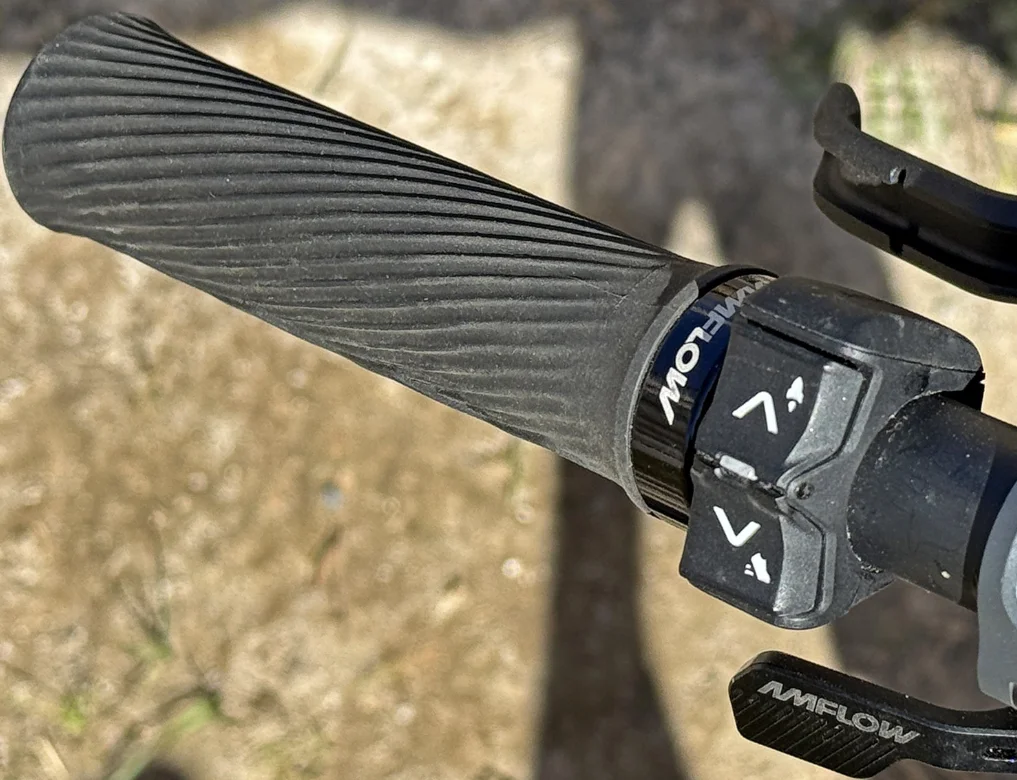
Good point. I wonder if “dual” gear sets exist anywhere else in the wild? Like maybe in automotive or factory machinery. I’m not even clear on what that means.I guess they could say it's 397% more durable - but we wouldn't know in real world terms for a few years.
I believe the m2S now has some helical gears to reduce the noise whilst the M2 sticks with straight cut.
My best guess is that it’s two helical gears back to back with reverse cuts. Or maybe a helical and a straight cut back to back?
Anybody know of dual gears used on other applications?
I guess @Bearing Man might be able to give us some insight, but he's not normally on here at weekends but we might get a lucky reply next week.Good point. I wonder if “dual” gear sets exist anywhere else in the wild? Like maybe in automotive or factory machinery. I’m not even clear on what that means.
My best guess is that it’s two helical gears back to back with reverse cuts. Or maybe a helical and a straight cut back to back?
Anybody know of dual gears used on other applications?
TheKaiser
Active member
I can't answer that question, but since range is important to you I wanted to remind you that the removable batteries open up the option to carry a spare in a backpack, and swap out mid-ride. In the past, I have seen a lot of people who do mega-vert in the Alps discussing that method, although I know some people don't like to ride with a backpack or, if they do, don't want to add 3-4kg to it. I wouldn't want it to be my everyday setup, but with the right backpack I could see using that method for infrequent but big backcountry rides that don't allow a trip back to the car to switch batteries.Good afternoon. Is this official information? It’s just that the ability to increase the range of the PR version of the bike is very important to me.
Good point. I wonder if “dual” gear sets exist anywhere else in the wild? Like maybe in automotive or factory machinery. I’m not even clear on what that means.
My best guess is that it’s two helical gears back to back with reverse cuts. Or maybe a helical and a straight cut back to back?
Anybody know of dual gears used on other applications?
I don't know much further than pros and cons of strait/spur cut vs helical gears. Straight cut have excellent durability easy to manufacture but are loud, helical are quieter but create sideways/axial forces so you need trust bearings and are more expensive to manufacture.
So it's an Interesting topic to build on...
Here's what the internet provides about double helical gears:
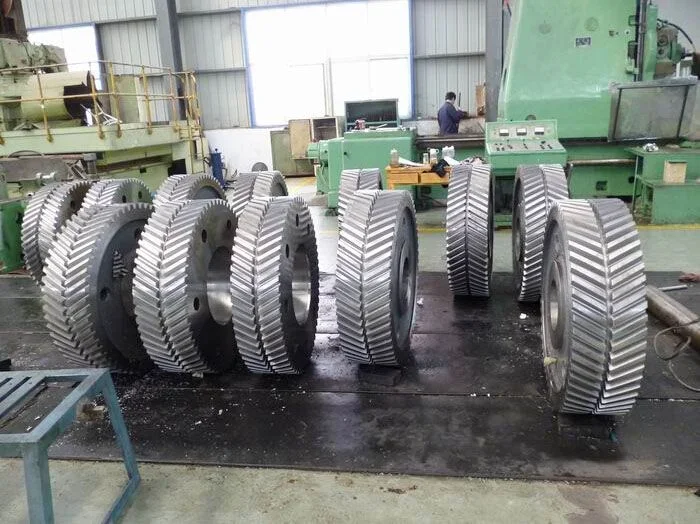
Key Pros of Double Helical Gears
- No Axial Thrust: The opposing helix angles cancel out axial thrust forces, removing the need for thrust bearings on the input shaft.
- High Load Capacity & Torque: The combined tooth structure, or herringbone pattern, allows for very high torque transmission and greater load capacity compared to single helical or spur gears.
- Smooth and Quiet Operation: The gradual meshing of helical teeth results in reduced noise and vibration, making them ideal for high-speed applications.
- Increased Stability and Reliability: The design provides better contact ratios, leading to more uniform load distribution, improved heat dissipation, and overall greater durability.
- Self-Aligning: The chevron shape can offer improved alignment characteristics in specialized applications.
Double Helical Gear: Design, Advantages, and Applications
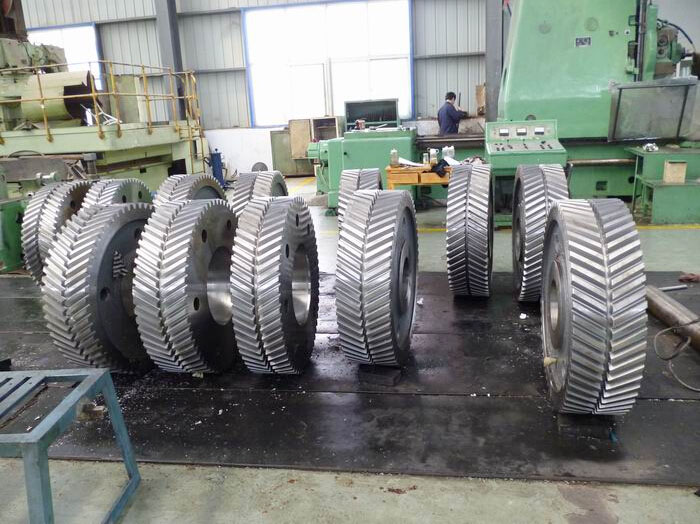
Double Helical Gear: Design, Advantages, and Applications -Leading Gear Manufacturer in China Expert Gear Manufacturer and Supplier in China
Introduction Double helical gears are an advanced type of gear system that improve on the design and functionality of single helical gears. Recognized by their unique "V" shape, these gears are commonly used in industrial applications requiring high precision, load capacity, and efficiency...
 share.google
My guess is because the sideways profile of the M2S is a bit wider vs the M1, the main two large gears(bigger on the drive shaft) are now wider and double helical gears. Bottom left on the picture.
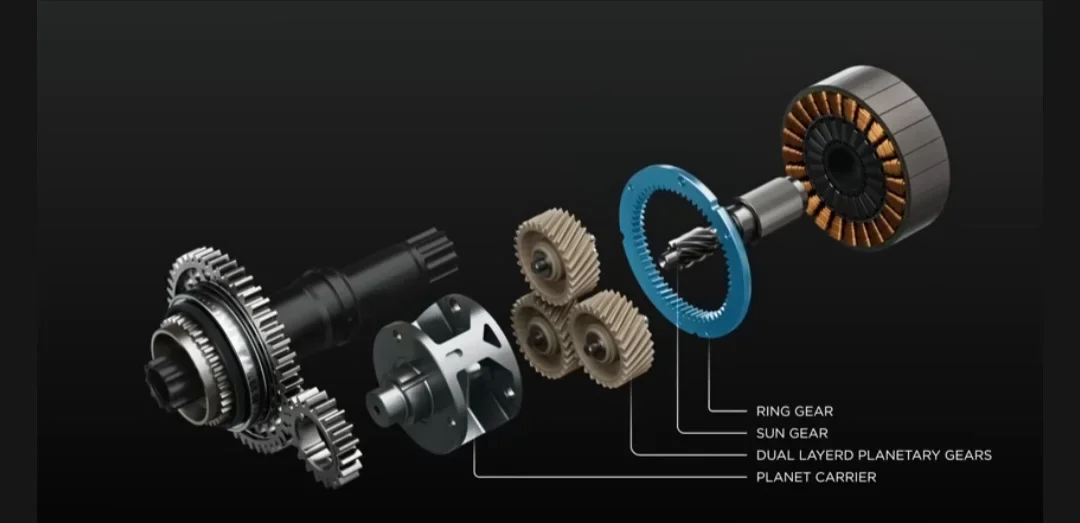
My suspicion when studying the internals of the M1 was that the main two straight cut gears were the rattle trouble makers, as usually straight cut gears have extra tolerances for meshing and so can have a significant backlash. @Rob Rides EMTB said that in one of his open examples when testing the planetary gearset created the rattle. On the bottom picture the small metal planetary gears mesh with the fixed ring gear. Looking closely at the small gears they already are helical. So maybe these were made double helical also.
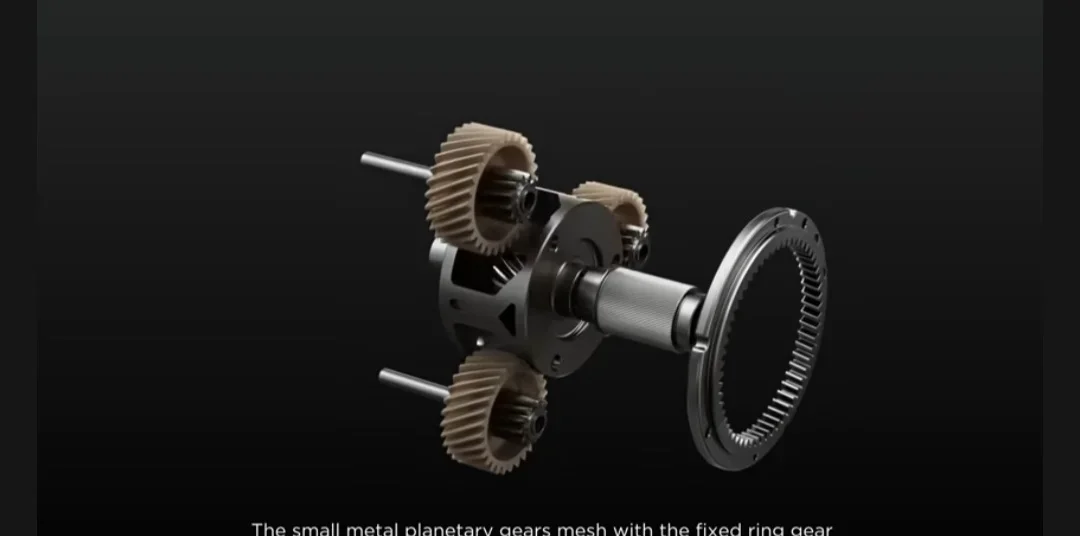
So either the 2 main straigt gears are double helical or the smaller planetary gears are double helical, or both gearsets are double helical, thus the description 》Dual helical gearset《. Hope this makes sense.


TheKaiser
Active member
Edit: I just posted the below reply only to see that @emtbeast had been writing up some very similar thoughts at the same time. I'll leave my post as-is though, as it describes a slightly different "dual-gear" method of construction, although that dual-helical setup he shows seems like a likely candidate too...I can't wait to see some cutaways or the first ballsy Youtuber to crack open the casing and show us what's inside the M2S!
@Zimmerframe said: "I believe the m2S now has some helical gears to reduce the noise whilst the M2 sticks with straight cut."
The part that leads to the lack of clarity is that the M1 planetary gears were already helical, which you can see in the M1 cutaways (see image below). So when we see a media sources talking about the M2 using "new" helical gears, it is unclear if they mean a refined design of the existing helical planetary gears, or if they have truly added new helical cut gears in the locations where the M1 previously used straight cut gears.
Regarding the question about the "dual-gears" of the M2S, I have seen that tech variously described in different media sources as being either in place of, or in addition to the helical gears, and I haven't seen it specified if the dual-gears are helical dual-gears, or if they are straight cut dual-gears. Based on my understanding of how "dual-gears" work, I would image that they are using them in place of the old straight cut gears, as it seems like it could be pretty tricky to get them to work in a helical application. The reason being that dual-gears are typically 2 gears functioning as a parallel unit, with either the teeth of the 2 gears slightly offset, or with some sort of springy element that allows a little free movement between the 2 sets of parallel teeth. That allows one set of the dual-gear teeth to tightly mesh with the front side of the opposing gear, and the other set of the dual-gear teeth to tightly mesh with the back side of the opposing gear, eliminating the free play that would normally be required to prevent binding.
@Zimmerframe said: "I believe the m2S now has some helical gears to reduce the noise whilst the M2 sticks with straight cut."
It would be really nice to see a cutaway image of the new M2 and M2S to confirm, but from the various M2/S articles I've read, it's described as the opposite of what Zimmerframe said. The M2 uses what are described as "new" helical gears (vs. the M1) and the M2S uses "dual-gears". Different media sources describe this a bit differently, and I think they're all just regurgitating what the Avinox press materials said, without having seen the internals themselves, which has lead to different descriptions of this gear situation.Good point. I wonder if “dual” gear sets exist anywhere else in the wild? Like maybe in automotive or factory machinery. I’m not even clear on what that means.
My best guess is that it’s two helical gears back to back with reverse cuts. Or maybe a helical and a straight cut back to back?
Anybody know of dual gears used on other applications?
The part that leads to the lack of clarity is that the M1 planetary gears were already helical, which you can see in the M1 cutaways (see image below). So when we see a media sources talking about the M2 using "new" helical gears, it is unclear if they mean a refined design of the existing helical planetary gears, or if they have truly added new helical cut gears in the locations where the M1 previously used straight cut gears.
Regarding the question about the "dual-gears" of the M2S, I have seen that tech variously described in different media sources as being either in place of, or in addition to the helical gears, and I haven't seen it specified if the dual-gears are helical dual-gears, or if they are straight cut dual-gears. Based on my understanding of how "dual-gears" work, I would image that they are using them in place of the old straight cut gears, as it seems like it could be pretty tricky to get them to work in a helical application. The reason being that dual-gears are typically 2 gears functioning as a parallel unit, with either the teeth of the 2 gears slightly offset, or with some sort of springy element that allows a little free movement between the 2 sets of parallel teeth. That allows one set of the dual-gear teeth to tightly mesh with the front side of the opposing gear, and the other set of the dual-gear teeth to tightly mesh with the back side of the opposing gear, eliminating the free play that would normally be required to prevent binding.
Last edited:

Wojtek
New Member
- Mar 13, 2026
- 112
- 94
Helical gears are quieter, straight cut are louder, but straight cut also have less friction than helical and will make more power in a motor vs helical gears. Tl the point about more friction is true it would make the motor less efficient. Yet, it is rated at 84.5% ..
We have enough power but the point about more friction is true it would make the motor less efficient. Yet, it is rated at 84.5% ..
Do we know what are the competitors gears?
M2S — dual-gear meshing (a polymer tooth segment offset against the metal gear to eliminate backlash). This is the more sophisticated solution, designed to handle the higher 150Nm loads.Edit: I just posted the below reply only to see that @emtbeast had been writing up some very similar thoughts at the same time. I'll leave my post as-is though, as it describes a slightly different "dual-gear" method of construction, although that dual-helical setup he shows seems like a likely candidate too...I can't wait to see some cutaways or the first ballsy Youtuber to crack open the casing and show us what's inside the M2S!
@Zimmerframe said: "I believe the m2S now has some helical gears to reduce the noise whilst the M2 sticks with straight cut."
It would be really nice to see a cutaway image of the new M2 and M2S to confirm, but from the various M2/S articles I've read, it's described as the opposite of what Zimmerframe said. The M2 uses what are described as "new" helical gears (vs. the M1) and the M2S uses "dual-gears". Different media sources describe this a bit differently, and I think they're all just regurgitating what the Avinox press materials said, without having seen the internals themselves, which has lead to different descriptions of this gear situation.
The part that leads to the lack of clarity is that the M1 planetary gears were already helical, which you can see in the M1 cutaways (see image below). So when we see a media sources talking about the M2 using "new" helical gears, it is unclear if they mean a refined design of the existing helical planetary gears, or if they have truly added new helical cut gears in the locations where the M1 previously used straight cut gears.
View attachment 181748
Regarding the question about the "dual-gears" of the M2S, I have seen that tech variously described in different media sources as being either in place of, or in addition to the helical gears, and I haven't seen it specified if the dual-gears are helical dual-gears, or if they are straight cut dual-gears. Based on my understanding of how "dual-gears" work, I would image that they are using them in place of the old straight cut gears, as it seems like it could be pretty tricky to get them to work in a helical application. The reason being that dual-gears are typically 2 gears functioning as a parallel unit, with either the teeth of the 2 gears slightly offset, or with some sort of springy element that allows a little free movement between the 2 sets of parallel teeth. That allows one set of the dual-gear teeth to tightly mesh with the front side of the opposing gear, and the other set of the dual-gear teeth to tightly mesh with the back side of the opposing gear, eliminating the free play that would normally be required to prevent binding.
M2 — helical gears alone, without the dual-engagement polymer segment. Simpler, but sufficient at 125Nm.
Apparently both m2 and m2s are score same noise level.
Hey @Rob Rides EMTB, a question if you maybe know as I haven't seen any info around. I guess the new M2S Avinox system is still a closed one. Still no third party device(i.e. Garmin Watch) BT connectivity. Except for HR monitors. I know there are two different displays.
Similar Threads


Free account
Join 43,151
eMTB riders
eMTB riders
One tap. No forms. Fewer ads.
or sign up with email
Already a member? Log in