EP8 (DU-EP800)
Shimano's 2020 game-changer: the DU-EP800 (EP8) shed weight, slimmed the Q-factor to 177 mm and turned the wick up to 85 Nm, dragging Shimano back into the fight with Bosch after the underpowered E8000 era. Not to be confused with the later EP801, which shares this hardware but adds firmware that lifts peak power.
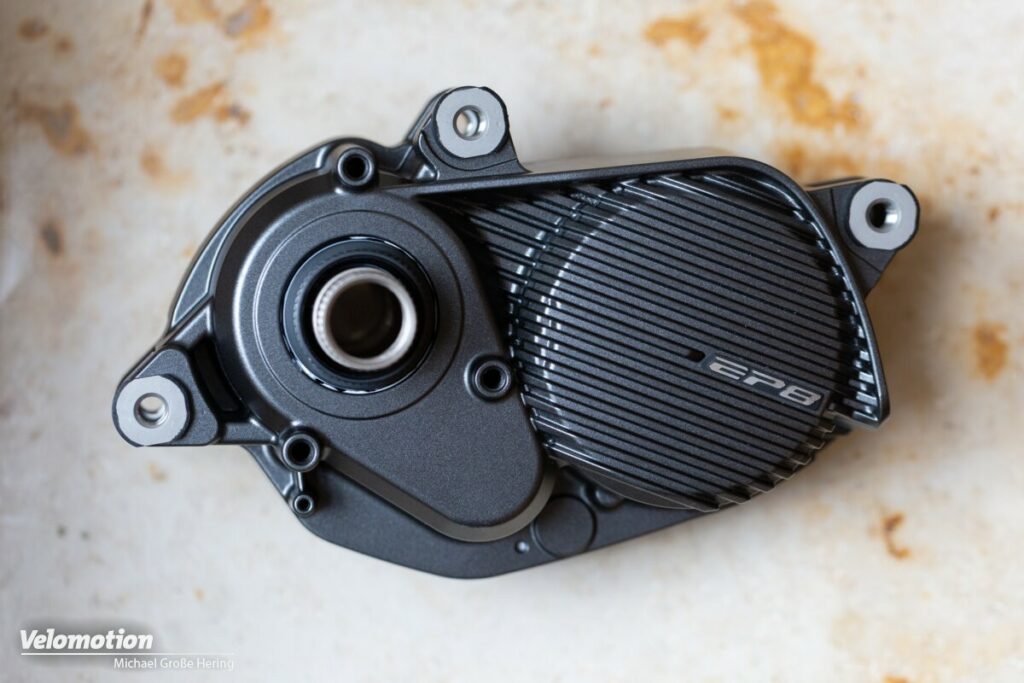
Strong, eager pull that peaks in the 70-75 rpm band at around 666 W (Velomotion, 250 W input) then fades as cadence climbs past 90 rpm.
Shimano EP8 (DU-EP800) was the motor that made Shimano relevant again on eMTBs. Compared with the old E8000 it dropped to a claimed 2.6 kg, slimmed the Q-factor to 177 mm and jumped to 85 Nm of peak torque on a 250 W nominal rating. On the dyno it punched well above that nominal figure: Velomotion measured an average of 666 W at the wheel from 250 W of rider input at 70-75 rpm, and over 500 W from just 100 W of input.
A note on naming: this page covers the original EP8 (DU-EP800), not the later EP801. The two share core hardware and the same 85 Nm torque ceiling, but the EP801 lifts claimed peak from 500 W to 600 W through firmware and improves sealing and thermal management. Independent dyno data from ebike-lab is taken on an EP801 (firmware V4.4.1), so the measured figures quoted here for the EP8 come from Velomotion's EP8 test.
Character is the headline. The EP8 is sporty and eager, snapping to full assist from barely 100 W of rider input, which makes it feel lively and natural for a strong rider but a touch grabby for anyone wanting metered, tractor-like climbing. Its weakness is cadence: support is strongest in the 70-75 rpm band and sags as you spin past 90 rpm. The well-documented coast-clutch rattle on rough descents remains its most-complained-about trait. Still, as a benchmark of 2020-2023, it earned every bit of its reputation.
Sustained power & heat
How long the headline number actually lasts under sustained climbing load.
~978 vertical metres, support did not drop; cold/wet conditions, so not a worst-case heat test.
Character
The case for and against
Strengths
- 85 Nm peak torque; Velomotion measured a 666 W average at 250 W input
- Light at a claimed 2.6 kg, with a slim 177 mm Q-factor
- Lively, sporty, eager delivery
- Class-leading flat-ground efficiency for its era
- Highly tunable assist via E-TUBE app (up to 400%)
Compromises
- Support is cadence-sensitive, strongest at 70-75 rpm and fading past 90 rpm
- Notorious coast-clutch rattle on rough descents
- Can feel grabby for riders wanting metered power
- Superseded by the EP801, which adds peak power and better sealing
How it stacks up
Bikes running this motor · 34