
I agree with you that if you are just consider the bike alone that they are not close and that 30 nm of extra torque is more power than a 10lb difference... to our collective point the weight of the rider and the shape of the rider have a lot to do with it?I’m fitter than most guys I ride with, certainly a higher percentage of those on ebikes. They want to boost around all day, and I need to be in boost to keep up. Range on a full boost day is only like 3600 feet, which is only an hour and a half where I’m riding. They’re good for another 2k after my battery is toast. Unless I’m on a time crunch ride, I generally don’t bother riding E unless I’m gonna go 5k+.
I didn’t buy the Rise to ride with that crowd, knowing full well that a smaller battery and a detuned motor means that they either have to chill or I’m riding solo or with SL friends. I guess YMMV, but in my experience, 25nm does not equal 10lbs.
For reference, I’m 170lb with gear, and my M10 weighs about 43lb. Pretty much stock except for tires and Cush Core rear. Probably about 600g over the stock build.
Navigation
Install the app
How to install the app on iOS
Follow along with the video below to see how to install our site as a web app on your home screen.
Note: This feature may not be available in some browsers.
More options
Style variation
You are using an out of date browser. It may not display this or other websites correctly.
You should upgrade or use an alternative browser.
You should upgrade or use an alternative browser.
Orbea Rise Custom M10
- Thread starter Rob Rides EMTB
- Start date

⚡ EMTB PRO
25% off e*thirteen, Peaty’s & more with PRO
Member-only deals from e*thirteen, Peaty’s, PEMBREE and Magicshine · ad-free browsing · PRO badge · Living Intelligence Reports
See the deals →
From £1.99/month
jimsantos
Member
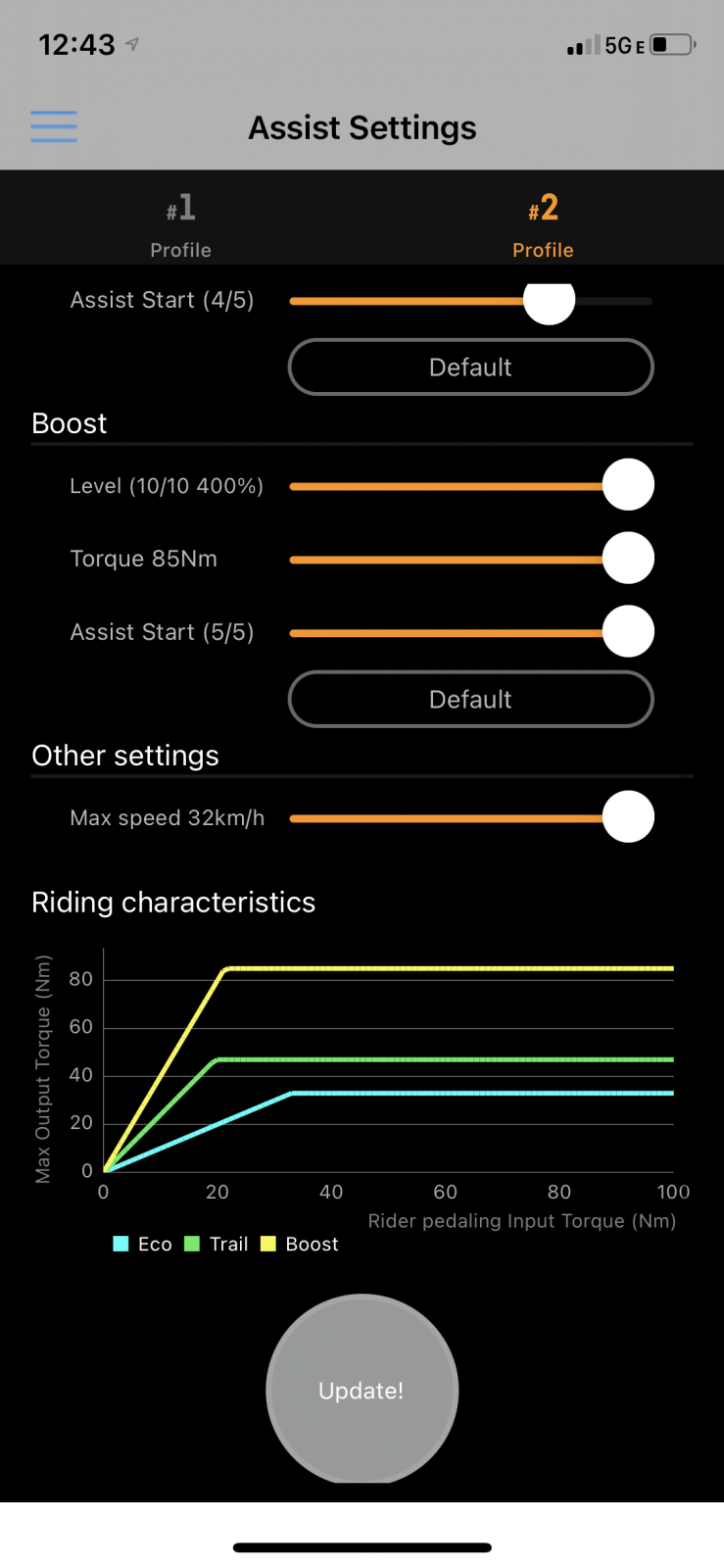
Not sure if anyone’s mentioned this yet but ST Unlocker app seems to allow upping torque to “full power” aka 85nm torque. I haven’t actually tried it myself yet though!
JDA
Member
I'm no electrical engineer so take this with a grain of salt but can the smaller battery found in the rise tolerate the higher amp draw required to run at 85nm or will you be cutting the battery life short?
Good point, JDA.
I won't be changing mine from 60NM when it arrives. My 24kg bike has 70NM max but I only run it in 40 & 60NM outputs in Eco and Trail anyway. I'm hoping the weight reduction of 5kg between bikes means I can cut output back a little further to maybe 30 & 50NM for Eco and Trail...
I won't be changing mine from 60NM when it arrives. My 24kg bike has 70NM max but I only run it in 40 & 60NM outputs in Eco and Trail anyway. I'm hoping the weight reduction of 5kg between bikes means I can cut output back a little further to maybe 30 & 50NM for Eco and Trail...

Personnellement les capacités de montée à l'assistance sont largement suffisantes. je viens d'un Wild Orbea.
Je monte toujours les monté impossible en musculaire avec encore plus de facilité que le sauvage, dans la technique grâce à une légèreté de l'avant.
Mes sorties sont certes un poil moins rapide qu'en Vae standard et par contre plus exigeante physiquement.
Je ne changerais donc pas. Merci JDA de ton analyse
Je monte toujours les monté impossible en musculaire avec encore plus de facilité que le sauvage, dans la technique grâce à une légèreté de l'avant.
Mes sorties sont certes un poil moins rapide qu'en Vae standard et par contre plus exigeante physiquement.
Je ne changerais donc pas. Merci JDA de ton analyse

carlbiker
🛡️🚵🛡️
One thing I didn't mention that is questioned a lot is range. I hear a lot of Youtube reviewers demanding from manufacturers bigger and bigger batteries, and that obviously comes at a significant weight penalty. Clearly the goal is to have 'just enough' juice for every ride.
Here's my experience:
I weigh 75KG kitted up. 6'4" on XL. Bike is an M10. I live in the UK and ride muddy trails, hills and forests, not jump parks. I like to head out on it for an hour during the week for a blast, and then do 2-3hrs on the odd weekend on trails with friends. Most important for me is that the bike is light and fun and 'poppy'.
An hours heavy blast of 13km will cost me 30% of my inbuilt battery if I boost through the hills to get to the fun stuff and keep boosting back to the top a jump run. Gloopy mud. That is the highest usage.
25km for 2 hours (moving time) at Swinley trail park, riding with an analogue mate (thus slower) used 45% of main battery. Also, as you can see from the chart, sometimes I'm riding with the motor off. That is probably the key benefit of lightweight ebikes - The impact of a flat battery is not nearly as significant - It's not as if you're stranded. What will inevitably happen for the huge rides is as your anxiety for running out of juice increases, you'll put more effort in and increase the range.
I have the range extender on order, and thus could theoretically get 7h+ riding in a day, which is more than enough for me. I imagine riding with FF ebikes would dent that range significantly.
So for me, I'm very glad to only have a 360wh. In fact, I'd be happy if it were a touch smaller and can only imagine needing that range extender for those rare mammoth days. Also, the range extenders I've heard are compact and only 1.4kg or so and £450 in UK. Seems pretty reasonable to have a second in a rucksack if you're frequently traversing the Scottish highlands in a day.
Just my use-case, and hopefully useful to others wondering about range.
Key for graph:
3-Boost
2-Trail
1-Eco
Below 1 - Off
View attachment 56355
That’s great that! How are you finding it now? Do you find the 150 travel enough vs the larger found on FF? I guess with it being lighter it’s not required and on that point did you change the brakes, rotors or tyres?
carlbiker
🛡️🚵🛡️
Here is my review of the Mullet 160/160 Rise.
64deg Ht, 337mm BB. Enjoy!!
Great review that, I’ve also subscribed cheers! Loads of useful irl info and comparisons
ChipRockets
New Member
Hi mate. I really like the rear guard you’ve put on the Orbea. Looks fantastic. Can you tell me where you got it from (did you make it)? It’s exactly what I need on my Rise too! Hope you see this and let me know. I hope you’re well.My M20 custom! 17,5kg size L
View attachment 57162
View attachment 57163
View attachment 57164
View attachment 57165
My friend converted his M10 Medium to mullet setup based on users feedback on this forum for a couple weeks now.
Front Fork Fox 36 160mm / Rear Shock Plush Coil 160mm = 216x63mm (8.5x2.5) with one offset bushing (tail).
In the past couple rides, he started to hear some weird friction noise below the frame when going over some bumps - not all the time - and so did I when I took the bike for a ride. So we looked closer and found that the rear shock coil has come into contact with the frame when the rear frame triangle compresses and has left some marks under the top tube. We are a bit concerned as wondering if it would cause any damage to the carbon frame.
Anybody has experienced with this issue and how would you resolve it?
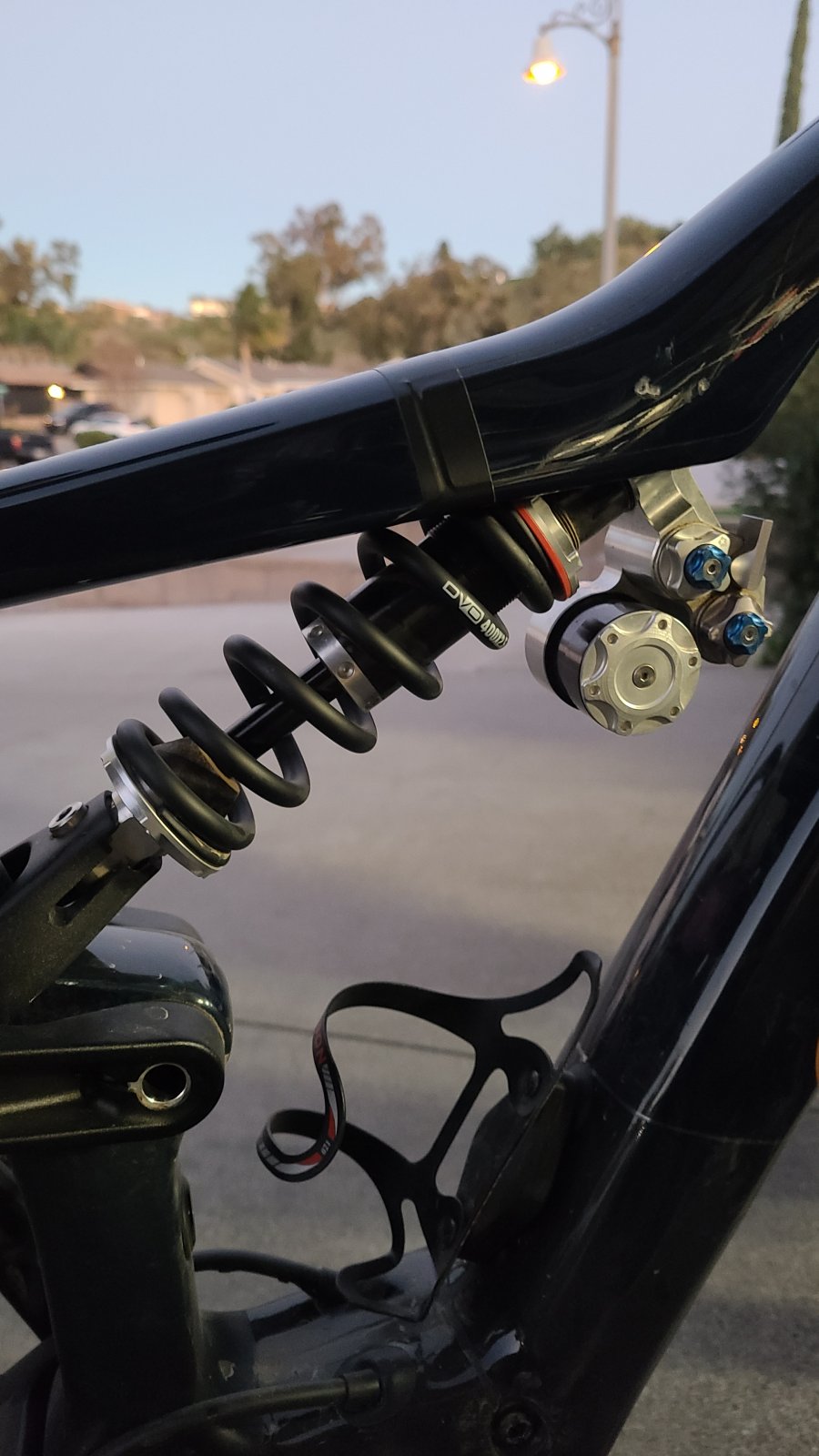
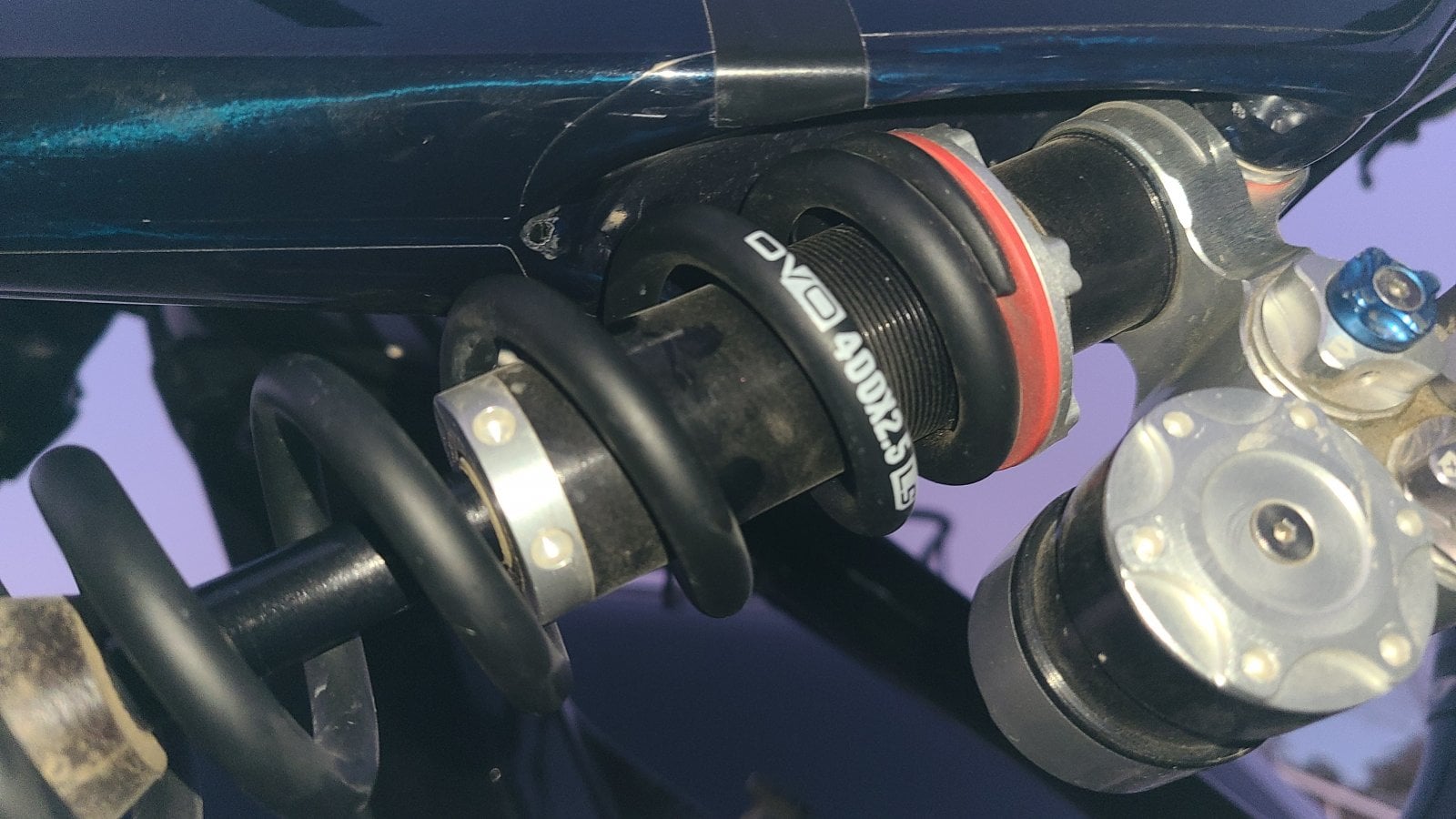
Front Fork Fox 36 160mm / Rear Shock Plush Coil 160mm = 216x63mm (8.5x2.5) with one offset bushing (tail).
In the past couple rides, he started to hear some weird friction noise below the frame when going over some bumps - not all the time - and so did I when I took the bike for a ride. So we looked closer and found that the rear shock coil has come into contact with the frame when the rear frame triangle compresses and has left some marks under the top tube. We are a bit concerned as wondering if it would cause any damage to the carbon frame.
Anybody has experienced with this issue and how would you resolve it?
FYI there isn't enough clearance to fit an offset bushing on the head of a Manitou Mara Pro shock (maybe 1mm clear static).
Tried to fit a 216x63 with two offset bushings. I was trying to run 160/160 29er keeping the HA and STA in check with stock, static BB would raise a bit, but once sagged would be close to stock. No go, so I just kept the single bushing in the tail. Paired it with my Mezzer up front and we will see how she goes.
Tried to fit a 216x63 with two offset bushings. I was trying to run 160/160 29er keeping the HA and STA in check with stock, static BB would raise a bit, but once sagged would be close to stock. No go, so I just kept the single bushing in the tail. Paired it with my Mezzer up front and we will see how she goes.
jimsantos
Member
If anyone wants to try out 160mm travel, I'm selling my coil shock setup. Worked great for me, but I'm selling my Rise and going back to non-e-bike.
It does NOT have the rub issues pictured above, on my large frame.
Asking $250 shipped within the US, can quote you for intl shipping, but it'll be reasonable.
Included:
- Marzocchi Bomber CR shock
- 450 + 500lb springs good for about 160-210lb rider.
- 1 offset bushing for the rear, installed
Thanks!
It does NOT have the rub issues pictured above, on my large frame.
Asking $250 shipped within the US, can quote you for intl shipping, but it'll be reasonable.
Included:
- Marzocchi Bomber CR shock
- 450 + 500lb springs good for about 160-210lb rider.
- 1 offset bushing for the rear, installed
Thanks!
Last edited:

COL Weyland
New Member
Hi guys have any of you tried fitting a 215x63 fox DHX2? I've seen one for a good price and can't quite work out whether it will fit and what offset bushing I might need (I know usually people go for 216*63. My bike is a large carbon. I will mullet the bike obviously. Any help appreciated thanks
Similar Threads
-
 Installing a Shimano XF97 chainring on an Orbea Rise LT M10 2025 — anyone done this?
- Started by owenxcw150
- Replies: 6
-
-
-
 2022 Orbea Rise M10 battery won't charge — how to reset Shimano RS BMS?
- Started by crkunselman
- Replies: 19
-
 ethirteen Helix Core e*spec Steel E-MTB Chainring shimano ep8 compatible
- Started by skizzian
- Replies: 13
Free account
Join 43,259
eMTB riders
eMTB riders
One tap. No forms. Fewer ads.
or sign up with email
Already a member? Log in