Bosch Range Tests - Comparisons

⚡ EMTB Pro Go Pro — exclusive discounts & ad-free Peaty's 25% off & more · Ad-free browsing · Pro badge See the deals →
"Trail" mode, ie the mode that the manufacturer has the bike start at by default and assumes you will spend most of your time in. The max power modes are all different too, we aren't looking for a "range" figure here, but efficiency. The motor will have a relatively narrow band in which it is most efficient so the manufacturer ought to tailor their main general purpose mode to this band.
All these manufacturers ought to be trying to follow the regulations which stipulate much lower power outputs for continuous use, so tailoring their motor to be most efficient at a level way above the law is arguably a flagrant abuse.

It certainly would be interesting... turbo, trail, eco and see the "scatter" or range of efficiencies. The problem is which variables do you try to hold constant and others that will vary while testing. Also inputing/outputting steady wattage like in these tests doesn't really represent real world usage, which is more dynamic. Almost certainly less efficient too, but to have repeatable results lab testing is what it is.

As far as power... I thought the same for a while, like how are the "getting away" with this. Simple answer, it's a shortcoming of the law and advancement in motor/controller technology. The law set a maximum level on power THERMALLY per a specific test and NOT actual mechanical output. So fast forward a number of years and now motors are no-longer brushed in this application and controllers are digital. Both allow for increased mechanical output at the lower thermal output.

Basically a modern motor/controller is operating at the same temperature requirement (the law) as the older tech, but outputting WAY more power. Add to that "throttling" of motor output, means for shorter durations you can output even more power and stay within the thermal limit. I believe the latter is what Avinox does with sophisticated sensing and algorithms... designed to push the maximum power and alter it on the fly. Hence you see a lot of output power fluctuation over time at high power levels.

Legal loophole if you will... or a poor and out-dated definition of the law which doesn't reflect the current motor tech.
 
As I understand it, the law, at least in Europe, is based on a continuous motor output rating. The motor manufacturer can essentially choose this without needing to justify it.
"Our motor is rated for 250W continuous but if you push it for a while if can do 1000W..."
This is making a mockery of the regulations and it's a short-sighted move which is bounds to end up with the regulations being tightened up, most likely in a heavy handed way that ends up putting an end to anything over 500W max output. Possibly even less.
 
As I understand it, the law, at least in Europe, is based on a continuous motor output rating. The motor manufacturer can essentially choose this without needing to justify it.
"Our motor is rated for 250W continuous but if you push it for a while if can do 1000W..."
This is making a mockery of the regulations and it's a short-sighted move which is bounds to end up with the regulations being tightened up, most likely in a heavy handed way that ends up putting an end to anything over 500W max output. Possibly even less.
No, your understanding is incorrect. Bosch did a press event on the new generation CX and a reporter asked this very question and got very long answer with a bit of history.

The law states a motor must adhere to a specific thermal test and NOT exceed 250W continually. Back in the day, that would be equivalent to a 250W mechanical output brushed motor. Today's motor are more efficient and hence can output more mechanical power at the same thermal levels.

I should have prefaced this 250W continuous was in EU. Then Austria (IIRC) implemented at 600W max limit, which Bosch adhered too to be able to sell motors across Europe. Later Austria's limit was removed and now Bosch was back at working to the 250W continuous. In the US, it depends on the state... most are 750W and a few are 1000W.
 
Last edited:
The laws should be rewritten to limit max power to 750w/ 100 nm across the board.

That said, there will be work arounds.
 
The laws should be rewritten to limit max power to 750w/ 100 nm across the board.

That said, there will be work arounds.
NVM

Read your post incorrectly. Sure, limiting MAX mechanical power would be more clear cut. Though folks will argue, should it be 750, 1000, etc... What if I'm 275 lbs... it not the same as someone whose 150, etc...
 
NVM

Read your post incorrectly. Sure, limiting MAX mechanical power would be more clear cut. Though folks will argue, should it be 750, 1000, etc... What if I'm 275 lbs... it not the same as someone whose 150, etc...
You get 10watts per kg!
 
"Regulation (EU) No 168/2013 of the European Parliament and of the council, which replaced 2002/24/EC on 1 January 2016 but is substantially the same, exempts vehicles with the following definition from the requirement for type approval: "pedal cycles with pedal assistance which are equipped with an auxiliary electric motor having a maximum continuous rated power of less than or equal to 250 W, where the output of the motor is cut off when the cyclist stops pedalling and is otherwise progressively reduced and finally cut off before the vehicle speed reaches 25 km/h [15.5 mph]". This is the de facto definition of an electrically assisted pedal cycle in the EU. As with all EU directives, individual member countries of the EU are left to implement the requirements in national legislation. The EU specification does not require a helmet to be worn when riding this class of bicycle."
Nothing here about thermal power, the key point is "continuous" which is a loop hole big enough to drive a Surron through...
 
@Greg Watts (Or anyone else) This thread has some awesome efficiency percentage comparisons, in particular the lab data from the ebike-mtb.com group tests. Did we ever get the TQ HPR60 motor efficiency numbers? I don't see them in the tables above or on the ebike-mtb.com site, but maybe I'm just not looking in the right place.
 
@Greg Watts (Or anyone else) This thread has some awesome efficiency percentage comparisons, in particular the lab data from the ebike-mtb.com group tests. Did we ever get the TQ HPR60 motor efficiency numbers? I don't see them in the tables above or on the ebike-mtb.com site, but maybe I'm just not...
Good question, and you're not missing anything obvious. ebike-mtb.com has published efficiency data on the TQ HPR60, but not in the same standardised lab test format they use for the full-power motors in their group tests. Their numbers tend to surface in individual bike reviews and comparison pieces rather than the neat side-by-side tables you're used to seeing for Bosch, Shimano, and the like.

That said, we've got a reasonable picture of HPR60 efficiency from community data. The HPR60 is approximately 20% more efficient than the HPR50 according to ebike-mtb.com testing, with specs of 60Nm and 350W versus the HPR50's 50Nm and 300W.

In real-world terms, @Mteam found that swapping an HPR50 for an HPR60 in a Trek Fuel EXe increased typical range by 15-20% with no other changes to the bike.

More precisely, the HPR60 measured energy consumption of 25.65 Wh per 100 vertical metres at full motor support in testing, and showed a 27.2% increase in efficiency compared to HPR50 when measuring elevation gained per unit of battery energy consumed.

For a direct comparison to what you're probably most interested in, a 30km loop with 1100m vertical showed 21kph average on the TQ HPR60 versus 23kph on a Bosch Gen 5, described as similar performance with more effort required on the TQ.

So the HPR60 is genuinely competitive with full-power systems on climbing efficiency, but the Bosch still has the edge on outright speed for the same effort.

@Suns_PSD's earlier Fazua Ride 60 vs TQ HPR50 testing showed the Fazua using 39 Wh per standard climb versus 54 Wh for the HPR50, which gives you some sense of where the older TQ sat before the HPR60 closed that gap considerably.

The short answer to your question: no, we don't have the HPR60 in the same standardised lab efficiency table format as the Bosch/Shimano/EP8 group test data. But the real-world numbers above paint a fairly clear picture. If you're comparing it against full-power systems for your next bike decision, the efficiency per watt-hour is genuinely impressive for a motor in that weight class.
 
27% seems like an enormous improvement in efficiency. Harmonic drives aren't known for being very efficient so I wonder what is behind this.
 
oh noes, SO. MUCH. TEXT


interesting results, especially for @Suns_PSD


1773168513913.webp
 
oh noes, SO. MUCH. TEXT


interesting results, especially for @Suns_PSD


View attachment 179170

Sethimus, you are the most butt hurt individual I've about ever seen pop up on a forum. Your entire personality seems to revolve around your bike choice and it's pretty pathetic.
 
@Greg Watts (Or anyone else) This thread has some awesome efficiency percentage comparisons, in particular the lab data from the ebike-mtb.com group tests. Did we ever get the TQ HPR60 motor efficiency numbers? I don't see them in the tables above or on the ebike-mtb.com site, but maybe I'm just not looking in the right place.

I too think the TQ HPR60 is a really sweet package.

If you go through the review on that motor however, they were unable to get it to 'behave' in their efficiency tests (same with the Maxon). Doesn't mean in the real world it's not completely fine but it acts up when they input 250w consistently.

Looks like a new portion of the review was just published which I have yet to read. Edited: I'm reading it right now and am seriously impressed with what these guys have done in this review.

 
Last edited:
Agree with Rob, hence the road tire and you can make out a drum with mechanism (with round lightening holes) within that 80/20 extrusion below the rear tire. There inputing power via that splined coupling (where the crank arm would be) and measuring the output at the wheel. There also tapping the battery to measure consumption.

I don't think the differences were seeing/measured are really significant... once all the motors are tested we'll see. I wouldn't get too excited unless I saw 20% or more. If you could drop from a 800 to 600 wh battery with the same range/vert... now were talking.
Like I thought prior.... takeaway is you shouldn't select a motor based on efficiency, because its not meaningfully different. Only standout is the Maxon Air and that won't satisfy your full power needs if desired.
 
Last edited:
I must say I'm a bit disappointed with how they present their test results. A bunch of the measures are pretty useless. Like the vertical range per battery weight is not normalized for climbing speed. So of course you will get more climbing range if you climb slower.

They also only show the discharge energy available for 3 systems - it would be interesting to see it for other systems.

Some things that stood out for me:
  • The Maxon Air S stands out in the efficiency rating
  • Avinox resistance with motor off isn't terribly high and doesn't explain range difference with Bosch CX-R as I think @Suns_PSD hypothesized at some point (not criticizing what you previously wrote)
    • The Avinox battery seems to have less usable capacity than Bosch (693wh vs 722wh)
  • The vert range results are really difficult to compare between systems, because of the speed differences
    • Between Bosch and Avinox, Avinox was faster, but the system weight was slightly lower and the vert slightly lower
    • Mahle lags significantly in range, despite same battery size as Bosch and Avinox, and isn't faster
    • S-Works quite a bit lower range than Bosch and Avinox despite bigger battery, but is also quite 5.3kph faster than CX-R
  • Fazua seems slightly more efficient than TQ60 (30 vs 30.5wh / 100m vert, slightly faster)
  • The Pinion system gets the same range and speed as Mahle, despite highest resistance without motor and the likely higher gearbox resistance
So... it's all difficult to interpret. For me, with a Fazua 60 - the conclusion is that I have a fairly efficient system that will get me good vert for weight and power.
 
I too think the TQ HPR60 is a really sweet package.

If you go through the review on that motor however, they were unable to get it to 'behave' in their efficiency tests (same with the Maxon). Doesn't mean in the real world it's not completely fine but it acts up when they input 250w consistently.

Looks like a new portion of the review was just published which I have yet to read. Edited: I'm reading it right now and am seriously impressed with what these guys have done in this review.

My eyes glazed over trying to read that....
 
I must say I'm a bit disappointed with how they present their test results. A bunch of the measures are pretty useless. Like the vertical range per battery weight is not normalized for climbing speed. So of course you will get more climbing range if you climb slower.

They also only show the discharge energy available for 3 systems - it would be interesting to see it for other systems.

Some things that stood out for me:
  • The Maxon Air S stands out in the efficiency rating
  • Avinox resistance with motor off isn't terribly high and doesn't explain range difference with Bosch CX-R as I think @Suns_PSD hypothesized at some point (not criticizing what you previously wrote)
    • The Avinox battery seems to have less usable capacity than Bosch (693wh vs 722wh)
  • The vert range results are really difficult to compare between systems, because of the speed differences
    • Between Bosch and Avinox, Avinox was faster, but the system weight was slightly lower and the vert slightly lower
    • Mahle lags significantly in range, despite same battery size as Bosch and Avinox, and isn't faster
    • S-Works quite a bit lower range than Bosch and Avinox despite bigger battery, but is also quite 5.3kph faster than CX-R
  • Fazua seems slightly more efficient than TQ60 (30 vs 30.5wh / 100m vert, slightly faster)
  • The Pinion system gets the same range and speed as Mahle, despite highest resistance without motor and the likely higher gearbox resistance
So... it's all difficult to interpret. For me, with a Fazua 60 - the conclusion is that I have a fairly efficient system that will get me good vert for weight and power.
My main conclusions from the article focusing on the big 3:

1) Avinox is pretty much as efficient as the Bosch getting nearly the same vertical range faster.
2) Avinox does have significantly more drag when the motor off. Wouldn't affect me or most users I think, but does mean there is room for even better efficiency.
3) S-works with new firmware pulls harder for longer than Avinox. S-works battery should be considered a 800Wh rather than 840Wh. S-works achieves less range, but at quite a higher speed.

Would love to see the test repeated with some kind of EMTB like power level (400% assists, 600W, 100Nm), to see the differences at roughly equivalent speeds.

From personal anectdotal experience, the Avinox with 800% assist consumes the battery quite heavily on flat terrain, even commuting on road, compared to a Bosch, but from this test I would be fairly optimistic about riding in the mountains with an Avinox.

Excited for the Avinox M2 ecosystem reveal, wonder if Bosch will be able to respond with larger capacity cells in thinner formats, before they lose their market dominance.
 
I must say I'm a bit disappointed with how they present their test results. A bunch of the measures are pretty useless. Like the vertical range per battery weight is not normalized for climbing speed. So of course you will get more climbing range if you climb slower.

They also only show the discharge energy available for 3 systems - it would be interesting to see it for other systems.

Some things that stood out for me:
  • The Maxon Air S stands out in the efficiency rating
  • Avinox resistance with motor off isn't terribly high and doesn't explain range difference with Bosch CX-R as I think @Suns_PSD hypothesized at some point (not criticizing what you previously wrote)
    • The Avinox battery seems to have less usable capacity than Bosch (693wh vs 722wh)
  • The vert range results are really difficult to compare between systems, because of the speed differences
    • Between Bosch and Avinox, Avinox was faster, but the system weight was slightly lower and the vert slightly lower
    • Mahle lags significantly in range, despite same battery size as Bosch and Avinox, and isn't faster
    • S-Works quite a bit lower range than Bosch and Avinox despite bigger battery, but is also quite 5.3kph faster than CX-R
  • Fazua seems slightly more efficient than TQ60 (30 vs 30.5wh / 100m vert, slightly faster)
  • The Pinion system gets the same range and speed as Mahle, despite highest resistance without motor and the likely higher gearbox resistance
So... it's all difficult to interpret. For me, with a Fazua 60 - the conclusion is that I have a fairly efficient system that will get me good vert for weight and power.

It's a lot of info but I didn't find all of it useful.

A reached similar conclusions to you but I'll add a bit more.

1) The efficiency differences in the end exist, but aren't so huge as to effect my personal purchase decisions.
2) Buy the bike you want, I think choosing the bike, then the motor reliability and noise makes the most sense. But everyone has a different calculus.
3) Regarding the Avinox efficiency, hey I'll admit that I thought that the conclusions I had reached of lower efficiency would be born out in the test results. But they weren't. In fact this particular example of the Avinox was one of the most efficient. But I would add a few caveats to that: a.) the Avinox motor has had running changes that have effected noise and likely efficiency (as these two are linked), b.) if you average 100w input power over your ride, 5w extra watts of drag is still a 5% loss, nothing to scoff at, c.) It's my opinion that since they ran the efficiency tests in turbo, and the Avinox makes, what 1000w, that the drag becomes irrelevant as a percent of total power. However in riding situations that extra 5w (or maybe more in some examples of the motor) might very well become a higher percent of the total. d.) It does appear that the Avinox needs some tuning work, because in many reviews, people ride together and the Avinox runs out sooner than Bosch bikes. e.) A High Pivot idler probably sucks more power than the motor drag in a current Avinox. This expains why some pretty poor range reports have came out of the Forbidden guys.
4) Right or wrong, power sells. Bosch probably needs to bump their power significantly to remain competitive. They should also offer a long skinny 800w (or more) battery for the aesthetics, if not for the handling. Leave it up to the manufacturers to choose short and fat or long and skinny. I personally like the idea of long and skinny just because I could run the 600w 95% of the time and have a better looking/ lighter bike. Lots of people just tour on their bikes and an extra 2# over the front wheel doesn't matter to them at all.
5) I still think the Bosch and Avinox are the motors to buy in the full power segment and I'd be stoked on either one.
 
Last edited:
The battery graph is interesting - the avinox is more conservative for usable enery - maybe due to its higher charging and discharging currents.

Lots of speculation of avniox putting higher densities in existing formats but I think the bosch system would really benefit from a 700wh fast charge in the 600 shape.
 
hey @Suns_PSD, there is a new efficiency king in town:

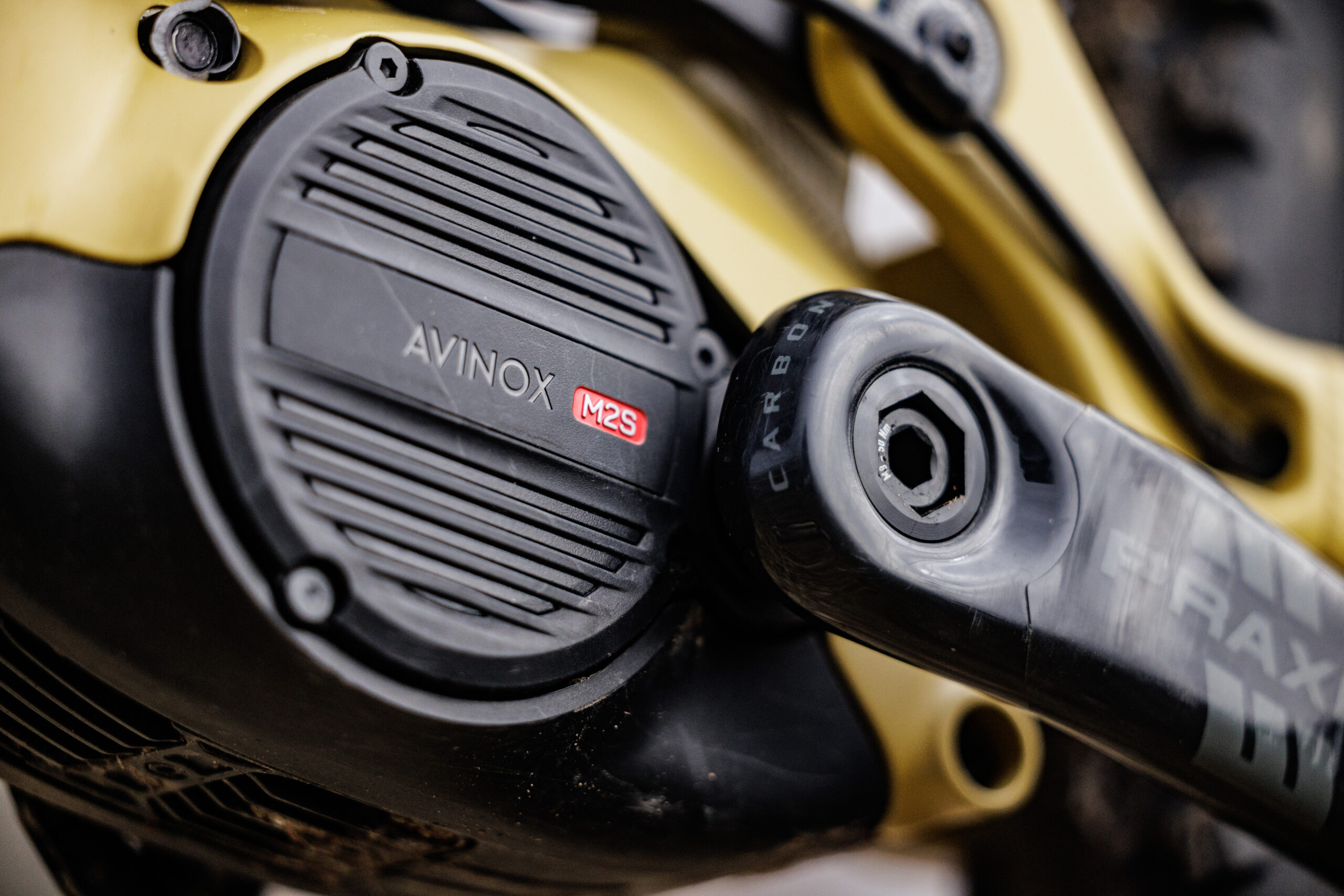
I really appreciate the lab testing that those guys do. Having said that, their review is a little odd, in comparision to the Pinkbike one (https://www.pinkbike.com/news/avino...drive-units-with-up-to-1500-w-peak-power.html).

The main thing is that Ebike-mtb.com is normally very technically precise, but in this review they seem to treat the M2 and M2S motors as mechanically the same, and list a single weight for both of them, as well as mentioning the “Dual Gear Engagement” and helical gears as common technologies shared between the 2 motors, as well as saying that they use flat copper wire winding on the motor coil to increase the efficiency.

The Pinkbike review, on the other hand, says that only the M2S has the "Dual Gear Engagement" which eliminates all the rattle, whereas the M2 is more of a modified M1 and lacks that tech and instead uses helical gears as a rattle reduction technique that is less effective. Pinkbike also lists different weights for each motor, which makes sense if they are mechanically different. Pinkbike also says that only the M2S uses the flat copper wire to increase power output while using the copper very efficiently, and the M2 instead uses traditional round copper that needs extra winds to achieve the higher power output.
 
I really appreciate the lab testing that those guys do. Having said that, their review is a little odd, in comparision to the Pinkbike one (https://www.pinkbike.com/news/avino...drive-units-with-up-to-1500-w-peak-power.html).

The main thing is that Ebike-mtb.com is normally very technically precise, but in this review they seem to treat the M2 and M2S motors as mechanically the same, and list a single weight for both of them, as well as mentioning the “Dual Gear Engagement” and helical gears as common technologies shared between the 2 motors, as well as saying that they use flat copper wire winding on the motor coil to increase the efficiency.

The Pinkbike review, on the other hand, says that only the M2S has the "Dual Gear Engagement" which eliminates all the rattle, whereas the M2 is more of a modified M1 and lacks that tech and instead uses helical gears as a rattle reduction technique that is less effective. Pinkbike also lists different weights for each motor, which makes sense if they are mechanically different. Pinkbike also says that only the M2S uses the flat copper wire to increase power output while using the copper very efficiently, and the M2 instead uses traditional round copper that needs extra winds to achieve the higher power output.
translate that one then:


much more detailed

with the new 700 battery, there is practically no derating anymore:

1775732785489.webp

motor casing gets as hot as 120°C though, so curious when the first american idiot sues them for burning his legs :D
 
Keep reading
    Browse all

    Similar Threads

    Community Stats

    Since 2018
    668K
    Messages
    40,733
    Members
    Join 30,000+ Riders, it's free!
    Back
    Top