
sethimus
😠 Donald Duck 😠
that would be as stupid as trying to compare car engines driven in 2nd gear
Follow along with the video below to see how to install our site as a web app on your home screen.
Note: This feature may not be available in some browsers.

As opposed to comparing them in 6th gear?that would be as stupid as trying to compare car engines driven in 2nd gear
that would be as stupid as trying to compare car engines driven in 2nd gear
"Trail" mode, ie the mode that the manufacturer has the bike start at by default and assumes you will spend most of your time in. The max power modes are all different too, we aren't looking for a "range" figure here, but efficiency. The motor will have a relatively narrow band in which it is most efficient so the manufacturer ought to tailor their main general purpose mode to this band.
All these manufacturers ought to be trying to follow the regulations which stipulate much lower power outputs for continuous use, so tailoring their motor to be most efficient at a level way above the law is arguably a flagrant abuse.
No, your understanding is incorrect. Bosch did a press event on the new generation CX and a reporter asked this very question and got very long answer with a bit of history.As I understand it, the law, at least in Europe, is based on a continuous motor output rating. The motor manufacturer can essentially choose this without needing to justify it.
"Our motor is rated for 250W continuous but if you push it for a while if can do 1000W..."
This is making a mockery of the regulations and it's a short-sighted move which is bounds to end up with the regulations being tightened up, most likely in a heavy handed way that ends up putting an end to anything over 500W max output. Possibly even less.
NVMThe laws should be rewritten to limit max power to 750w/ 100 nm across the board.
That said, there will be work arounds.
You get 10watts per kg!NVM
Read your post incorrectly. Sure, limiting MAX mechanical power would be more clear cut. Though folks will argue, should it be 750, 1000, etc... What if I'm 275 lbs... it not the same as someone whose 150, etc...

Good question, and you're not missing anything obvious. ebike-mtb.com has published efficiency data on the TQ HPR60, but not in the same standardised lab test format they use for the full-power motors in their group tests. Their numbers tend to surface in individual bike reviews and comparison pieces rather than the neat side-by-side tables you're used to seeing for Bosch, Shimano, and the like.@Greg Watts (Or anyone else) This thread has some awesome efficiency percentage comparisons, in particular the lab data from the ebike-mtb.com group tests. Did we ever get the TQ HPR60 motor efficiency numbers? I don't see them in the tables above or on the ebike-mtb.com site, but maybe I'm just not...

 ebike-mtb.com

oh noes, SO. MUCH. TEXT
Deep Dive: Vertical Range, Range and Efficiency: Which Motor System Gets the Most Out of Every Watt-Hour?
How far will an eMTB take you on a single charge? In our deep dive, we analyse the maximum range, efficiency and energy consumption of modern eMTB motors.
interesting results, especially for @Suns_PSD
View attachment 179170
@Greg Watts (Or anyone else) This thread has some awesome efficiency percentage comparisons, in particular the lab data from the ebike-mtb.com group tests. Did we ever get the TQ HPR60 motor efficiency numbers? I don't see them in the tables above or on the ebike-mtb.com site, but maybe I'm just not looking in the right place.
ebike-mtb.com
yes, that's why i posted it and tagged you in it. and then you found it on your own, two posts later. wow.Looks like a new portion of the review was just published which I have yet to read.
Like I thought prior.... takeaway is you shouldn't select a motor based on efficiency, because its not meaningfully different. Only standout is the Maxon Air and that won't satisfy your full power needs if desired.Agree with Rob, hence the road tire and you can make out a drum with mechanism (with round lightening holes) within that 80/20 extrusion below the rear tire. There inputing power via that splined coupling (where the crank arm would be) and measuring the output at the wheel. There also tapping the battery to measure consumption.
I don't think the differences were seeing/measured are really significant... once all the motors are tested we'll see. I wouldn't get too excited unless I saw 20% or more. If you could drop from a 800 to 600 wh battery with the same range/vert... now were talking.

My eyes glazed over trying to read that....I too think the TQ HPR60 is a really sweet package.
If you go through the review on that motor however, they were unable to get it to 'behave' in their efficiency tests (same with the Maxon). Doesn't mean in the real world it's not completely fine but it acts up when they input 250w consistently.
Looks like a new portion of the review was just published which I have yet to read. Edited: I'm reading it right now and am seriously impressed with what these guys have done in this review.
Deep Dive: Vertical Range, Range and Efficiency: Which Motor System Gets the Most Out of Every Watt-Hour?
How far will an eMTB take you on a single charge? In our deep dive, we analyse the maximum range, efficiency and energy consumption of modern eMTB motors.
My main conclusions from the article focusing on the big 3:I must say I'm a bit disappointed with how they present their test results. A bunch of the measures are pretty useless. Like the vertical range per battery weight is not normalized for climbing speed. So of course you will get more climbing range if you climb slower.
They also only show the discharge energy available for 3 systems - it would be interesting to see it for other systems.
Some things that stood out for me:
So... it's all difficult to interpret. For me, with a Fazua 60 - the conclusion is that I have a fairly efficient system that will get me good vert for weight and power.
- The Maxon Air S stands out in the efficiency rating
- Avinox resistance with motor off isn't terribly high and doesn't explain range difference with Bosch CX-R as I think @Suns_PSD hypothesized at some point (not criticizing what you previously wrote)
- The Avinox battery seems to have less usable capacity than Bosch (693wh vs 722wh)
- The vert range results are really difficult to compare between systems, because of the speed differences
- Between Bosch and Avinox, Avinox was faster, but the system weight was slightly lower and the vert slightly lower
- Mahle lags significantly in range, despite same battery size as Bosch and Avinox, and isn't faster
- S-Works quite a bit lower range than Bosch and Avinox despite bigger battery, but is also quite 5.3kph faster than CX-R
- Fazua seems slightly more efficient than TQ60 (30 vs 30.5wh / 100m vert, slightly faster)
- The Pinion system gets the same range and speed as Mahle, despite highest resistance without motor and the likely higher gearbox resistance
I must say I'm a bit disappointed with how they present their test results. A bunch of the measures are pretty useless. Like the vertical range per battery weight is not normalized for climbing speed. So of course you will get more climbing range if you climb slower.
They also only show the discharge energy available for 3 systems - it would be interesting to see it for other systems.
Some things that stood out for me:
So... it's all difficult to interpret. For me, with a Fazua 60 - the conclusion is that I have a fairly efficient system that will get me good vert for weight and power.
- The Maxon Air S stands out in the efficiency rating
- Avinox resistance with motor off isn't terribly high and doesn't explain range difference with Bosch CX-R as I think @Suns_PSD hypothesized at some point (not criticizing what you previously wrote)
- The Avinox battery seems to have less usable capacity than Bosch (693wh vs 722wh)
- The vert range results are really difficult to compare between systems, because of the speed differences
- Between Bosch and Avinox, Avinox was faster, but the system weight was slightly lower and the vert slightly lower
- Mahle lags significantly in range, despite same battery size as Bosch and Avinox, and isn't faster
- S-Works quite a bit lower range than Bosch and Avinox despite bigger battery, but is also quite 5.3kph faster than CX-R
- Fazua seems slightly more efficient than TQ60 (30 vs 30.5wh / 100m vert, slightly faster)
- The Pinion system gets the same range and speed as Mahle, despite highest resistance without motor and the likely higher gearbox resistance
 ebike-mtb.com
I really appreciate the lab testing that those guys do. Having said that, their review is a little odd, in comparision to the Pinkbike one (https://www.pinkbike.com/news/avino...drive-units-with-up-to-1500-w-peak-power.html).hey @Suns_PSD, there is a new efficiency king in town:
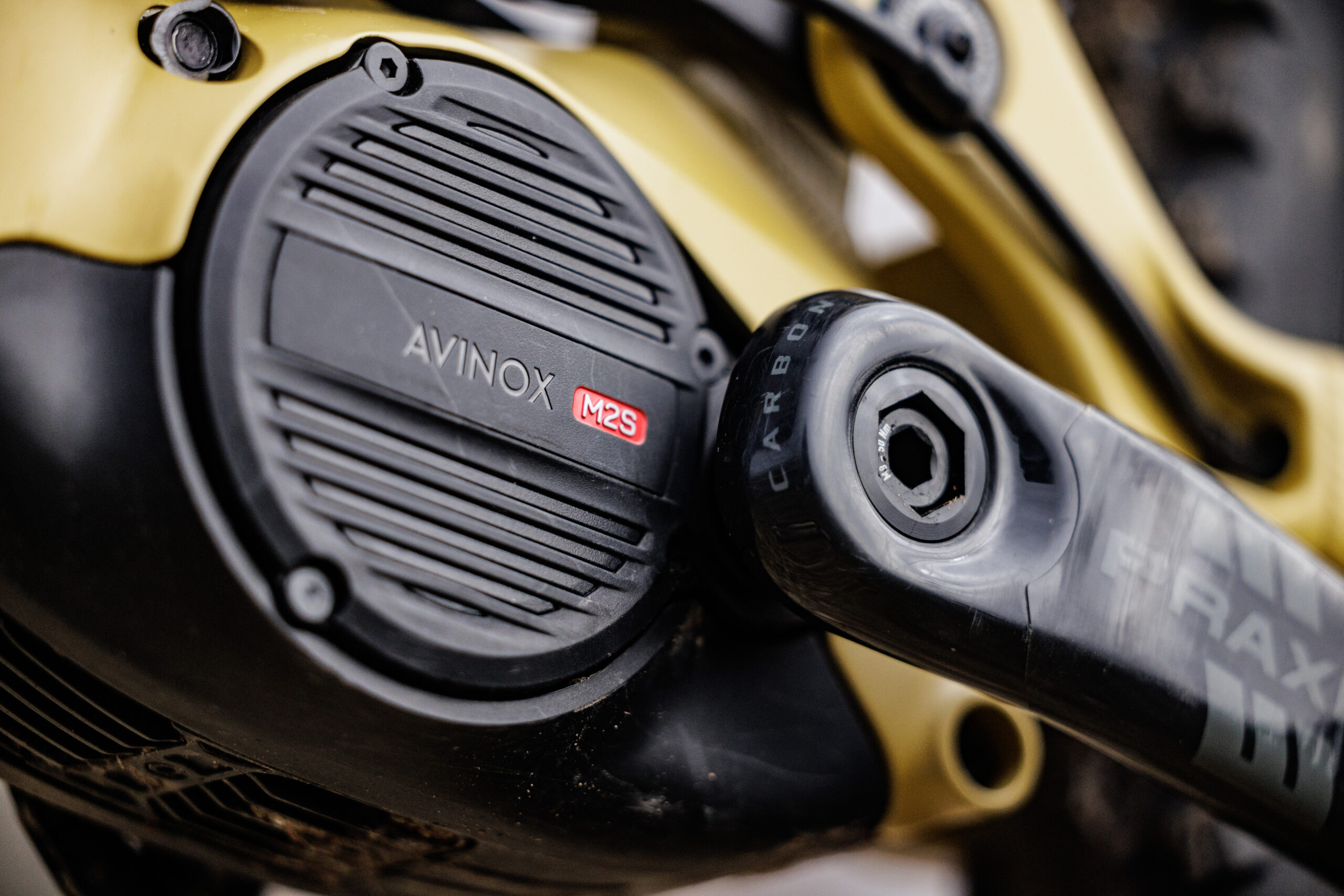
New Avinox M2S and M2 Motor System on Test: The Rise of DJI?
Just how capable are the new Avinox M2S and M2 motor systems? Our trail test puts the latest Avinox drive unit to the proof.
translate that one then:I really appreciate the lab testing that those guys do. Having said that, their review is a little odd, in comparision to the Pinkbike one (https://www.pinkbike.com/news/avino...drive-units-with-up-to-1500-w-peak-power.html).
The main thing is that Ebike-mtb.com is normally very technically precise, but in this review they seem to treat the M2 and M2S motors as mechanically the same, and list a single weight for both of them, as well as mentioning the “Dual Gear Engagement” and helical gears as common technologies shared between the 2 motors, as well as saying that they use flat copper wire winding on the motor coil to increase the efficiency.
The Pinkbike review, on the other hand, says that only the M2S has the "Dual Gear Engagement" which eliminates all the rattle, whereas the M2 is more of a modified M1 and lacks that tech and instead uses helical gears as a rattle reduction technique that is less effective. Pinkbike also lists different weights for each motor, which makes sense if they are mechanically different. Pinkbike also says that only the M2S uses the flat copper wire to increase power output while using the copper very efficiently, and the M2 instead uses traditional round copper that needs extra winds to achieve the higher power output.
 velomotion.de


