
I don't agree 100% with any reviews.
Follow along with the video below to see how to install our site as a web app on your home screen.
Note: This feature may not be available in some browsers.


Swap the speed sensor as well. Sures it's only like 25GBP..wait, what? I thought all this was backwards compatible?

Getting hold of the motor seems the hard part.Swap the speed sensor as well. Sures it's only like 25GBP
Hey I always take new releases with some skepsis and that's is exactly what was boggling my mind yesterday.There is video on their website which shows the internals of the battery:
Avinox Antriebssystem – Akkus – Avinox
They are probably using 4650 batteries.
View attachment 181456
View attachment 181457
 .
.
The length of the FP700 battery pack was published by Avinox on their website as 558.5Hey I always take new releases with some skepsis and that's is exactly what was boggling my mind yesterday.
In the conversation with @Zimmerframe on the Atherton thread way back in January I initially suspected that they would use the 46... type cylindrical cells, butt dismissed the idea because the length of 10 most common 4680 cells(Tesla developed) in series would be 80cm which is to much for a downtube of cca 60cm length.
Now that's exactly what didn't/doesn't add up with some of the review channels information(probably false) circulating about their new FP700 battery pack using ten(10 piece needed for 36V of system voltage) 4680 cells.
The length of the new FP700 is suposedly cca 56cm(specs), @Rob Rides EMTB can you maybe confirm that?
10x 4680 = 36V (Voltage OK)
Length of stacked cells cca 80cm(doesnt addup with the FP700 spec mentioned 56cm).
Now there is no commercially available 4650 cells, so the only way to do a pack like this is as some chanels did say specifically developed for this use case.
Now are they revolutionary as cells? IMO not really, the form factor already exists, the technology exists, the only thing new is most probably the chemistry as with all cylindrical cells(more further).
Is the use of bigger cells in this form for ebikes revolutionary?
Well maybe...higer stsble dischrge currents possible for longer, but to the expense of what? If you go watch the whole Velomotion's thermal stability test, the motor itself reached temps of 120°C, judge for your self.
Maybe not...it's only a marginal energy density gain and weight.
The best 4680 cells have a capacity of cca 95Wh tops. Divide that to the 8cm of length of the cell we get 11,875Wh/cm.
The specificlly developed 4650 cell- 5cm x 11,875Wh=60Wh.
10 used cells x 60Wh = 600Wh.
So the new cells have a new chemistry that has cca 17% more energy density(60Wh+17%=70Wh). That gets us to 700Wh of the FP700 pack.
Is that 17% possible, yes and it's not revolutionary.
Example: The old 21700 cell used by Amflow packs is cca 5,55Ah, the new high energy density 21700 cells are 6,5Ah.
5,55Ah + 17% = cca 6,5Ah
The tech is/was already here, it's the way DJI used it and the will to do it that deserves a thumbs up


I was hoping they might release a faster charger for their older 600 and 800 Wh integrated packs, because I don't want to wait 2h for a charge. But after some digging around it seems those packs use LG M58T cells, which are fairly high capacity (~5.8 Ah) but have a charging limit (in 10s4p configuration) very close to the 12 amps used in the Avinox "fast" charger. If they had used, for example, Molicel P50B, the pack could theoretically charge at 100 amps, or more realistically, 20-40 amps, giving a full charge in under an hour (lunch break) - but with about 10% less capacity.Hey I always take new releases with some skepsis and that's is exactly what was boggling my mind yesterday.
In the conversation with @Zimmerframe on the Atherton thread way back in January I initially suspected that they would use the 46... type cylindrical cells, butt dismissed the idea because the length of 10 most common 4680 cells(Tesla developed) in series would be 80cm which is to much for a downtube of cca 60cm length.
Now that's exactly what didn't/doesn't add up with some of the review channels information(probably false) circulating about their new FP700 battery pack using ten(10 piece needed for 36V of system voltage) 4680 cells.
The length of the new FP700 is suposedly cca 56cm(specs), @Rob Rides EMTB can you maybe confirm that?
10x 4680 = 36V (Voltage OK)
Length of stacked cells cca 80cm(doesnt addup with the FP700 spec mentioned 56cm).
Now there is no commercially available 4650 cells, so the only way to do a pack like this is as some chanels did say specifically developed for this use case.
Now are they revolutionary as cells? IMO not really, the form factor already exists, the technology exists, the only thing new is most probably the chemistry as with all cylindrical cells(more further).
Is the use of bigger cells in this form for ebikes revolutionary?
Well maybe...higer stsble dischrge currents possible for longer, but to the expense of what? If you go watch the whole Velomotion's thermal stability test, the motor itself reached temps of 120°C, judge for your self.
Maybe not...it's only a marginal energy density gain and weight.
The best 4680 cells have a capacity of cca 95Wh tops. Divide that to the 8cm of length of the cell we get 11,875Wh/cm.
The specificlly developed 4650 cell- 5cm x 11,875Wh=60Wh.
10 used cells x 60Wh = 600Wh.
So the new cells have a new chemistry that has cca 17% more energy density(60Wh+17%=70Wh). That gets us to 700Wh of the FP700 pack.
Is that 17% possible, yes and it's not revolutionary.
Example: The old 21700 cell used by Amflow packs is cca 5,55Ah, the new high energy density 21700 cells are 6,5Ah.
5,55Ah + 17% = cca 6,5Ah
The tech is/was already here, it's the way DJI used it and the will to do it that deserves a thumbs up


I think this graph more than anything else I've seen this early on is perhaps the most important. The M2S turns out to be substantially different than the M1 in sustaining power, and as a byproduct more efficient as well. It's interesting that the M2 hangs with the M2S but then gives up the ghost midway. I wonder if this is a nerfing of sorts or there's enough of an internal design difference to warrant this decay suddenly....
Also a main difference is the thermal performance decay - the stability of the new battery is insane:
View attachment 181484
Read somewhere there were delays bringing it to market. Whether that's true or not, I would for sure prefer the 700wh with less weight and less prominent down tube over the 800wh.It’s interesting how few bikes so far utilize the 700Wh battery.

PR was supposed to hit EU bike shops mid april. Last time i heard was delayed until end april ...Read somewhere there were delays bringing it to market. Whether that's true or not, I would for sure prefer the 700wh with less weight and less prominent down tube over the 800wh.
Hopefully some other manufactures have already got something underway. Perhaps Rob can confirm.
@emtbeast
Maybe you can tell what what is going on from all of this ???
Please !
Specs from Avinox Spares (Accessories)
FP700 Battery : NEW
558.5×59.1×56.1mm - 700Wh - 36.1V
3.18KG
Form: 10S
RS800 Battery : NCM Lithium
434.5×71.8×69mm - 800Wh - 35.9V
4Kg
? Form: Looks odddly triangular ! 3P ?
RS600 Battery - Amflow listing has disappeared ! Other Sources Online
2.96Kg
? Form: Looks oddly rectangular ! 2P ?
Original
FS800 Battery : NCM ?
Dims ? 800Wh - 35.9 V
3.74 kg
? Form: 10S4P ?
FS600 Battery : NCM ?
Dims ? 600Wh - 35.9 V
2.87 kg
? Form: 10S3P ?
View attachment 181552
 Avinox Battery Comparison
 FP700 (700Wh) 19,4Ah
 FS600 (600Wh) 16,7Ah RS600 (600Wh) 16,7Ah
 FS800 (800Wh) 22,3Ah RS800 (800Wh) 22,0Ah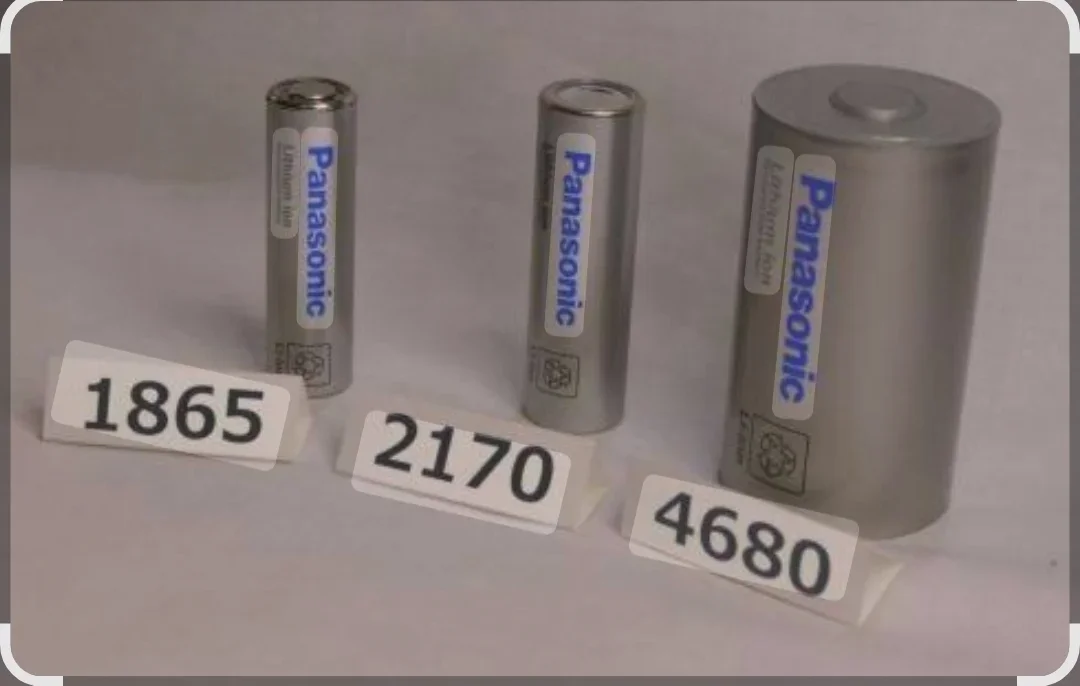

Interesting, this is significantly shorter than the old 800WH while slightly heavier. I think I would prefer this as it removes some weight at the top of the downtube. Hope Amflow/Avinox continues having these options as id rather have a thin downtube that handles very good then a super thin that handles goodRS800 (800Wh) 22,0Ah
- Capacity: 800 Wh
- Weight: ~4.0 kg
- Mounting: Removable
- Dimensions: 434.5 × 71.8 × 69 mm
- Voltage: 35.9 V
- Cell configuration: 10S4P
- Cell type: 21700 cylindrical
- Estimated cells: ~40
- Energy density: ~200 Wh/kg
what do you mean with "BIG brand"? Bigger than Mondraker, Canyon and Orbea? (all with Avinox)Off.road.cc
The Avinox M2 is here! 18 e-moutnain(sic) bike we know that come with Avinox's newest motors
Plus they are saying 60 bike brands in total set to announce M2/M2S bikes
"Avinox may have just caused the biggest bike launch we've ever seen with 60 brands unveiling new Avinox-equipped machines."
Wonder how long before a BIG brand decides to add an Avinox offering ...
I was thinking Giant, Trek, Specialized, Cube.what do you mean with "BIG brand"? Bigger than Mondraker, Canyon and Orbea? (all with Avinox)
What Orbea uses Avinox?what do you mean with "BIG brand"? Bigger than Mondraker, Canyon and Orbea? (all with Avinox)

Efficiency is approximately 2% higher - which whilst that's outstanding, with the higher average outputs means you get about the same km/wh as with the m1 generation (based on reviews and experience so far).how is the efficency of the m2/m2s? do you get more range than the m1 with the same battery?
Soon the be announced, according to many rumoursWhat Orbea uses Avinox?
Oh you made it sound like it was already reality.Soon the be announced, according to many rumours
What message are you suggesting we read into that?Just spotted
Sea Otter Site Plan
Bosch(Plot R7) is directly opposite Amflow (Plot M1)

most frames probably initially were designed for the m1 system and the old batteriesIt’s interesting how few bikes so far utilize the 700Wh battery.
Saw this. But nothing on the canyon sites…Interestingly Pinkbike list Canyon as one of the manufacturers that will be using Avinox.


