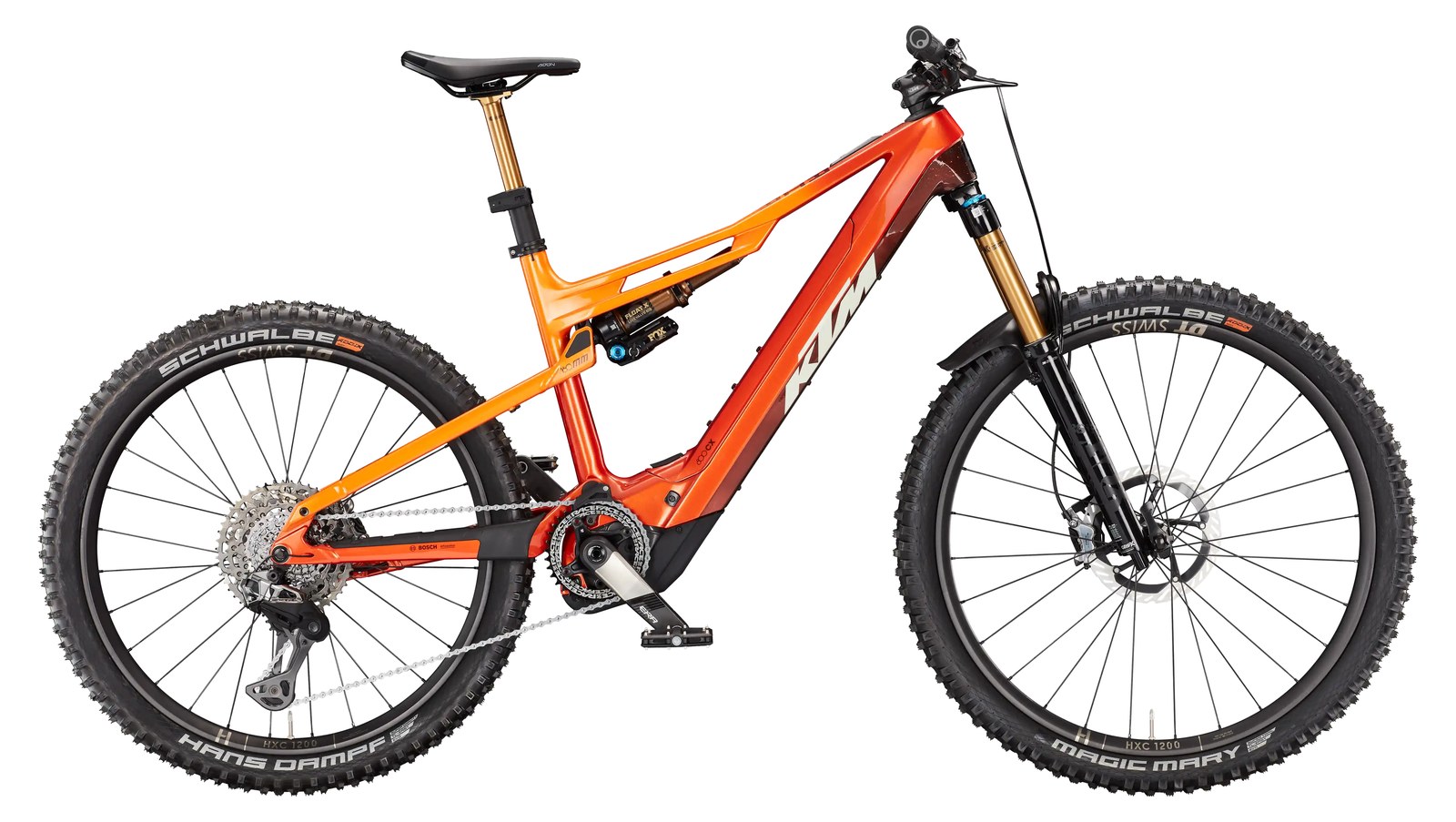
Performance Line CX Gen 4
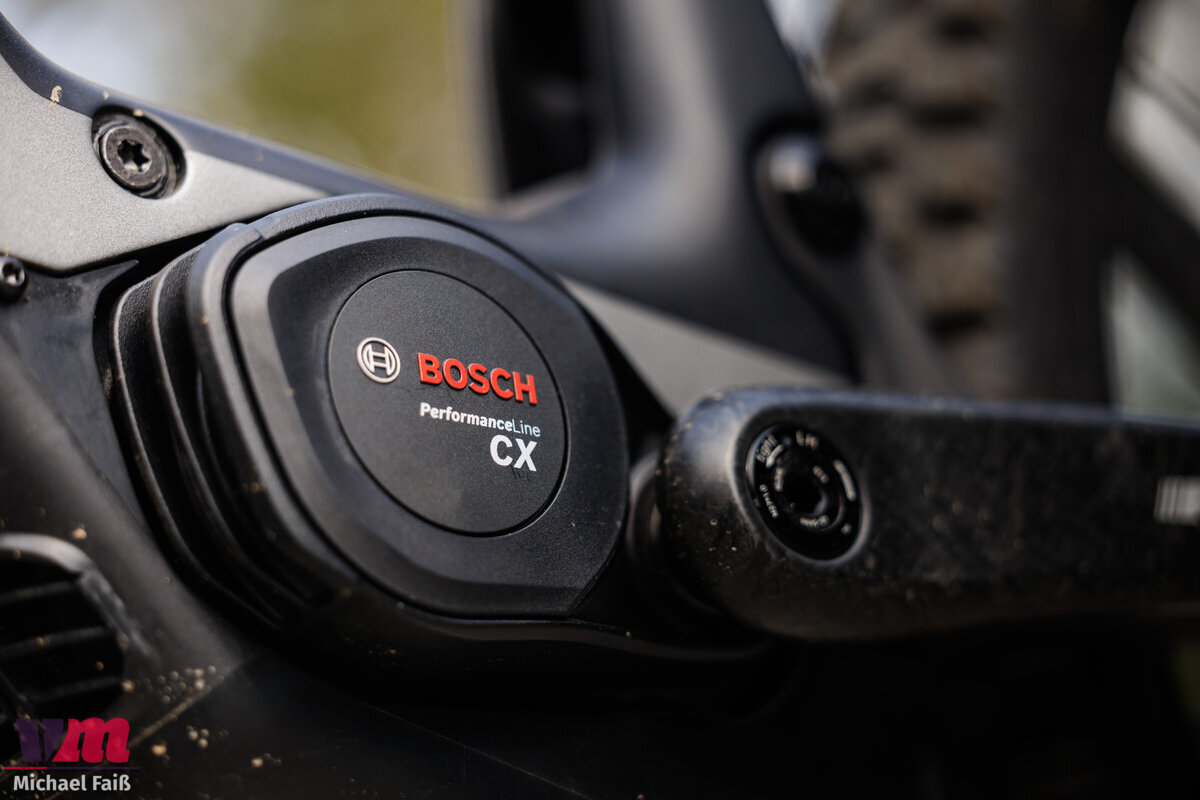
The motor that put Bosch back on the eMTB map: the Gen 4 Performance Line CX shrank the housing, found a fourth gear's worth of grunt and ran the trail-bike show for half a decade. Five years on, its measured numbers tell you exactly where it still holds up — and a free software update keeps it more relevant than its age suggests.
Power ramps quickly to its plateau by about 50 rpm, then holds a near-flat shelf at a measured ~540 W (Bosch claims a 600 W ceiling) across the usable cadence range before tapering at the top end. ebike-lab measured power-vs-cadence; no independent torque-vs-cadence curve is published for this unit.
Bosch Performance Line CX Gen 4 landed in 2020 as a genuine leap: a third lighter and far smaller than the clunky Gen 2/3 units, yet pushing a claimed 85 Nm and a 600 watt ceiling. On ebike-lab's test stand the unit makes a measured peak of around 540 watts — a little shy of Bosch's headline 600 W figure but still a strong full-power output. Feed it roughly 200 watts of leg in Turbo and the assist multiplies out to that peak at the default 340% support. Crucially the plateau arrives early, from a cadence of around 50 rpm, and stays flat as you spin up. That broad, linear shelf is the heart of the Gen 4's likeable, predictable character.
The cracks show under sustained load and at the eardrums. In bench testing the Gen 4 starts shedding power after roughly eight minutes of full-gas climbing as the housing heats — the single biggest reason Bosch's Gen 5 exists. And it is loud: a penetrating high-frequency whine on the climb and an audible clatter on rough descents that became its signature. No lab has put a clean dBA figure on it, but testers are unanimous that it is the noisiest of the modern full-power Bosch units; the Gen 5 redesign decoupled the drivetrain specifically to silence it.
Two things keep the Gen 4 competitive today. First, the free Performance Update 2.0 (eBike Flow) unlocks eMTB+ mode and raises maximum support from 340% to up to 400% — no new hardware required — so an older bike gains a noticeably punchier auto-mode. Second, the platform's maturity: a deep battery range and a proven ecosystem. What the update can't do is change the hardware ceiling — torque stays at 85 Nm and peak at 600 W. That is the real gap to the current Gen 5 (BDU384Y), which after its own 2025 update now runs up to 120 Nm, 750 W peak and 600% support, and runs far quieter. So the Gen 4-vs-Gen 5 story is no longer 'same power, just cooler and quieter' — Gen 5 is genuinely stronger as well. As a used-bike or older-platform proposition the Gen 4 is still a thoroughly capable trail motor; just don't expect marathon thermal stamina, library-quiet running, or current-Gen torque.
Sustained power & heat
How long the headline number actually lasts under sustained climbing load.
Power tapers from ~8 min under continuous load; Gen 5 extends this to ~12 min
Character
The case for and against
Strengths
- Strong measured ~540 W peak (600 W claimed) with a flat, linear power shelf from ~50 rpm
- Excellent modulation and confidence on technical climbs
- Compact, 2.9 kg housing — a huge leap over Gen 2/3
- Free Performance Update 2.0 adds eMTB+ mode and up-to-400% support, keeping older bikes current
- Mature, reliable Bosch ecosystem with up to 875 Wh of battery (625 + 250 Wh range extender)
Compromises
- Noisiest modern full-power Bosch unit — high-frequency whine uphill, clatter downhill
- Derates after ~8 minutes of sustained climbing (Gen 5 lasts ~12)
- Needs ~200 W of rider input to access full assist
- Hardware capped at 85 Nm / 600 W — no path to the Gen 5 / CX-R 120 Nm / 750 W
How it stacks up
Bikes running this motor · 40