Bosch Range Tests - Comparisons

Any difference in perceived efficiency is a result of variability in the rider’s input on different rides and mostly how much the motor is actually outputting.

Agree with this, there are so many variables at play on any given ride, it’s why you end up with different battery % left after the exact same ride on the same bike, just on different days and different conditions.

Even where there has been a great deal of effort to try and control the variables in some group tests (same rider/same effort/same tyres etc) the results show you could ‘throw a blanket’ over them as they’re all relatively close.

People will often quote route/ride times as evidence that it ‘used the same energy but did it faster’ so must be more efficient right, but again you’re measuring something else there and not efficiency.

People ride bikes for all sorts of reasons, but I don’t think there are many who go out there to try and use less battery than anybody else. To try and eke out a battery to finish a ride, yes, but as unpleasant as it might be on some e-bikes there’s always the option of pedalling! o_O

There will always be people who make the edge cases though, which is fine, but doesn’t mean it applies to the rest of us.
 
⚡ EMTB Pro Go Pro — exclusive discounts & ad-free Peaty's 25% off & more · Ad-free browsing · Pro badge See the deals →
This is the simple explanation that makes all of these “efficiency” talks silly. These companies all use commodity battery cells from the same small group of manufacturers, they have a very similar looking BMS that sends power out those into motors that are, at this point, designed very similarly, and from there power is sent out via a chain on components that are all the same between bikes again.

Any difference in perceived efficiency is a result of variability in the rider’s input on different rides and mostly how much the motor is actually outputting. Unless the motor is hooked up to a dyno with known input power and something monitoring actual output power there is absolutely no point in trying to claim one motor is more efficient as another with these crude tests. The differences in programming resulting in each motor providing varying levels of assist at each rider input level, how they even calculate assist percentages, how quickly they accelerate in every little circumstance, all plays into this stuff in a large way when added up over an entire ride.

Surely you have noticed that some e-bike motors take (approximately, for instance on a stand with no chain) 10 watts to pedal with the motor turned off where-as others take 50 watts.

That drag has to be overcame one way or the other and that's just one source of inefficiency.

Either way, I'm aware that: 1) I don't truly know how the Gen 5 vs Avinox compares for efficiency but am just looking at patterns I've spotted, & 2) I'm certainly not going to change anyone's mind and frankly don't feel the need too.

That said I'll likely buy the Regulator in part because of the Bosch and what I perceive as better efficiency compared to say the Spectre (which is such an amazing bike).
 
With 800wh of battery, how important is this efficiency really? How often are you down to 10%? And how often of those times could you just have tunes down the assistance slightly?
For me, the efficiency and power isn't the most important. Once you have "enough" power, you don't need any more and then it's a matter of numbers on a piece of paper rather than riding.
I want a motor that I can ride faster than 25kmt because it's dangerous in some situations to not be able to on jumps, but I don't want to be in fear of the motor going in to limb mode. That leaves Bosh as a complete no go for me.
I also want a motor that is as quiet as possible, and I didn't think the Avinox would actually make as much noise as it does, which has me bummed out a bit.
I'm coming from TQ with 360wh battery and to me, that battery is just a bit too small considering. Riding at 50nm I can empty the battery in about an hour.
Shimano is out of the question. It's a rattle-machine and they seem far behind in the integration. Most of their solutions are clumsy or ugly.

Fazua: reliability
Brose: huge and heavy


A perfect motor for me would be:
  • ~600wh battery with 800wh option - swappable relatively easily in car park
  • silent going down
  • good integration
  • repairable when (not if) something goes wrong
  • bash guard compatible frame
  • form factor as TQ, fazua or avinox
  • somewhere between 70 and 110nm.
I hope someone makes this motor, and some cool frames are made around it.
 
With 800wh of battery, how important is this efficiency really? How often are you down to 10%? And how often of those times could you just have tunes down the assistance slightly?
For me, the efficiency and power isn't the most important. Once you have "enough" power, you don't need any more and then it's a matter of numbers on a piece of paper rather than riding.
I want a motor that I can ride faster than 25kmt because it's dangerous in some situations to not be able to on jumps, but I don't want to be in fear of the motor going in to limb mode. That leaves Bosh as a complete no go for me.
I also want a motor that is as quiet as possible, and I didn't think the Avinox would actually make as much noise as it does, which has me bummed out a bit.
I'm coming from TQ with 360wh battery and to me, that battery is just a bit too small considering. Riding at 50nm I can empty the battery in about an hour.
Shimano is out of the question. It's a rattle-machine and they seem far behind in the integration. Most of their solutions are clumsy or ugly.

Fazua: reliability
Brose: huge and heavy


A perfect motor for me would be:
  • ~600wh battery with 800wh option - swappable relatively easily in car park
  • silent going down
  • good integration
  • repairable when (not if) something goes wrong
  • bash guard compatible frame
  • form factor as TQ, fazua or avinox
  • somewhere between 70 and 110nm.
I hope someone makes this motor, and some cool frames are made around it.
Maxon BikeDrive S
 
With 800wh of battery, how important is this efficiency really? How often are you down to 10%? And how often of those times could you just have tunes down the assistance slightly?
For me, the efficiency and power isn't the most important. Once you have "enough" power, you don't need any more and then it's a matter of numbers on a piece of paper rather than riding.
I want a motor that I can ride faster than 25kmt because it's dangerous in some situations to not be able to on jumps, but I don't want to be in fear of the motor going in to limb mode. That leaves Bosh as a complete no go for me.
I also want a motor that is as quiet as possible, and I didn't think the Avinox would actually make as much noise as it does, which has me bummed out a bit.
I'm coming from TQ with 360wh battery and to me, that battery is just a bit too small considering. Riding at 50nm I can empty the battery in about an hour.
Shimano is out of the question. It's a rattle-machine and they seem far behind in the integration. Most of their solutions are clumsy or ugly.

Fazua: reliability
Brose: huge and heavy


A perfect motor for me would be:
  • ~600wh battery with 800wh option - swappable relatively easily in car park
  • silent going down
  • good integration
  • repairable when (not if) something goes wrong
  • bash guard compatible frame
  • form factor as TQ, fazua or avinox
  • somewhere between 70 and 110nm.
I hope someone makes this motor, and some cool frames are made around it.

The weight difference between the 600 vs the 800w Bosch is 2#. Also, that weight is up high.

It's not huge difference, but if you only burn 400ish watts on 95% of your rides, well I'd rather save the 2#s.

However, if you only have 600wh of battery juice, damn right I care if my motor is (possibly) 20% more efficient than others.

My terrain is very rough. I don't see people that ride the trails that I ride my e-bike on, riding for more than 2.5 hours. The idea of an all-day ride is pretty foreign to me unless I'm somewhere terrain is really smooth, like Bentonville.

I'd also add that my pickup is a hybrid with outlets and can recharge my bike battery over lunch or the like.
 
Last edited:
The weight difference between the 600 vs the 800w Bosch is 2#. Also, that weight is up high.

It's not huge difference, but if you only burn 400ish watts on 95% of your rides, well I'd rather save the 2#s.

However, if you only have 600wh of battery juice, damn right I care if my motor is (possibly) 20% more efficient than others.

My terrain is very rough. I don't see people that ride the trails that I ride my e-bike on, riding for more than 2.5 hours. The idea of an all-day ride is pretty foreign to me unless I'm somewhere terrain is really smooth, like Bentonville.
Different needs for different days. That's why it's important to be able to swap the batteries. Some days 400wh is enough, other days 800wh isn't enough.
We sometimes take the whole weekend off and go ride self shuttle from 9 to 16 with breaks, grill, talks and laughs in between. 800wh isn't enough for a day like that.
But for jumping and goofing off, 400wh is so much more fun to ride with than 800.

Maxon BikeDrive S
I searched it up and it looks interesting. I wonder what bikes is using that motor.
I hope someone makes a dual crown compatible bike at some point with adjustable geo so it can be used for everything, with a motor like that.
 
Getting back to the review, where it lost me is the guy clearly says at the beginning he didn't like the bike balance with the range Extender added on top but it the end it would choose one... Also to be noted even from the graph, the 800wh outlasted the combo of 850wh.

So this being said for most rides the 600wh is ok, but a solution to swap batteries is an amazing thing if you either :

1. Have a longer day on the bike
2. Do loop laps as you can swap batteries quickly

I have a question about range extenders:

If you parallel connect the two batteries you want them to be roughly at the same charge level. If you had an empty battery and you plugged in a full one this could cause a big problem as the full battery rushes its juice into the empty battery.

How does the system avoid voltage mismatch. When batteries with unequal voltages are connected how do they regulate the higher-voltage battery which will want to force current into the lower-voltage battery until the levels equalize.

This can cause:

Overheating or Damage: The rapid current flow generates heat, which can harm internal components or lead to long-term degradation. Energy wasted during equalization reduces the overall system performance.
 
Not sure if I understood your question, you mean to change batteries while your still connected to the range extender?
 
Not sure if I understood your question, you mean to change batteries while your still connected to the range extender?
Just how the bikes that have the ability to use a range extender are able to manage 2 different batteries which they seem to do very well. It must take a battery management system that isolates the voltage differences between the 2 batteries.
 
Haven't used a RE and don't plan too, but from what I know, the Bosch Range extender has to stay from 100 to 0 on the bike , so it discharges at the same rate. Someone using it , correct me if I'm wrong.
 
Haven't used a RE and don't plan too, but from what I know, the Bosch Range extender has to stay from 100 to 0 on the bike , so it discharges at the same rate. Someone using it , correct me if I'm wrong.

I’ve only got experience of the Bosch SX so the ‘smart system’, but you can connect a range extender at any charge state and the bike just manages everything.
 
First ride with a mate with a DJI Teewing yesterday.

It was his first ride on the bike too. So he hadn't dialed any settings. Just jumped on it and rode.
His has a 800wh battery and i had the 600wh in my crestline.

He ran mainly in auto mode and i was mostly in emtb 85nm mode. He was cruising putting in little effort and i was putting in a decent amount of effort. We were doing a full battery burn and a distance away from the car so i couldnt easily slap my 400wh. So I couldnt go full 100nm or I'd have just burnt my battery out sooner.

Any way, the vert below included one shuttle uplift of 300mtr approx. So full battery burn in 1200ish vert meters. We mainly road gravel up and grade 5 tech down. It was raining and the tracks were soft and wet.

We got back to the finished the ride, DJI mate had 4% left and I had 5% left.
Effectively the motor was just applying more power, my mate stated he felt like he he'd done bugger all work out and the motor has assisted too much. That was on the second to lowest setting. He stated eco was worse than using an mtb. Effectively he just needs to get in there and tweak the settings to get usable power output accross the settings so he can get decent range and workout combo.

This was not in any way an efficiency test. Juts two blokes riding in the forest until batteries are flat.

1756491143545.png
 
This will be a good data point when he gets his power dialed in a bit better.
I used to think you needed power pedals and all that, but really two blokes that get the bikes feeling about the same is acceptable for our purposes.
 
This will be a good data point when he gets his power dialed in a bit better.
I used to think you needed power pedals and all that, but really two blokes that get the bikes feeling about the same is acceptable for our purposes.
There'l be more riding together and figuring out power levels ect. One thing is clear out of this test. a 600wh bosch is not that much more efficient that it can go the same speed and assistance levels and match a dji 800wh range. I clearly was putting in more effort and was reasonably burnt by the end of the ride, while my mate was still fresh.
 
Is a 600w Bosch equal in feet climbed to an 800w Avinox once assistance levels are equalized? No.
But is the 600w Bosch equal to about 700w of Avinox once equalized? Possibly, ytbd.
 
First ride with a mate with a DJI Teewing yesterday.

It was his first ride on the bike too. So he hadn't dialed any settings. Just jumped on it and rode.
His has a 800wh battery and i had the 600wh in my crestline.

He ran mainly in auto mode and i was mostly in emtb 85nm mode. He was cruising putting in little effort and i was putting in a decent amount of effort. We were doing a full battery burn and a distance away from the car so i couldnt easily slap my 400wh. So I couldnt go full 100nm or I'd have just burnt my battery out sooner.

Any way, the vert below included one shuttle uplift of 300mtr approx. So full battery burn in 1200ish vert meters. We mainly road gravel up and grade 5 tech down. It was raining and the tracks were soft and wet.

We got back to the finished the ride, DJI mate had 4% left and I had 5% left.
Effectively the motor was just applying more power, my mate stated he felt like he he'd done bugger all work out and the motor has assisted too much. That was on the second to lowest setting. He stated eco was worse than using an mtb. Effectively he just needs to get in there and tweak the settings to get usable power output accross the settings so he can get decent range and workout combo.

This was not in any way an efficiency test. Juts two blokes riding in the forest until batteries are flat.

View attachment 167104
Any chance your buddy can post his experience on his new bike? Good or bad.
 
Any chance your buddy can post his experience on his new bike? Good or bad.
He's not a forum guy so no.

But he did love it. Came off a Trek trail with 625 battery. The Teewing with 800wh battery is lighter and more playful. He ripped straight away on it. He's an exception rider though. So rips on anything. The bike is set up 150 rear/170 front.

All in all grins all round. He now needs to set up the each setting for less power. Eco was useless and the next hardest setting was applied too much power. We both burn batteries in 2.5 hours. Me in Emtb 85nm mode and him on Auto with some blasting of other modes too.
 
He's not a forum guy so no.

But he did love it. Came off a Trek trail with 625 battery. The Teewing with 800wh battery is lighter and more playful. He ripped straight away on it. He's an exception rider though. So rips on anything. The bike is set up 150 rear/170 front.

All in all grins all round. He now needs to set up the each setting for less power. Eco was useless and the next hardest setting was applied too much power. We both burn batteries in 2.5 hours. Me in Emtb 85nm mode and him on Auto with some blasting of other modes too.
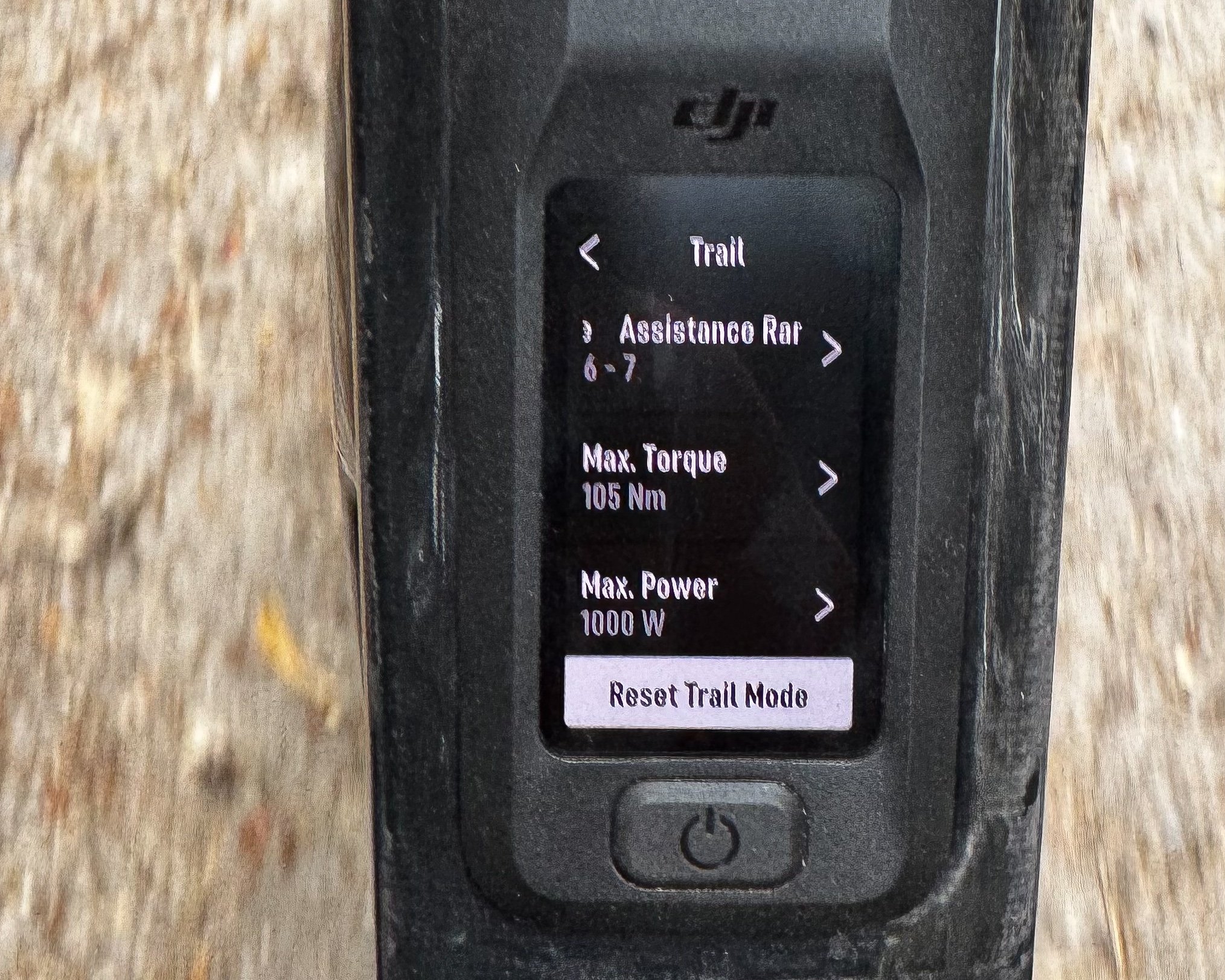
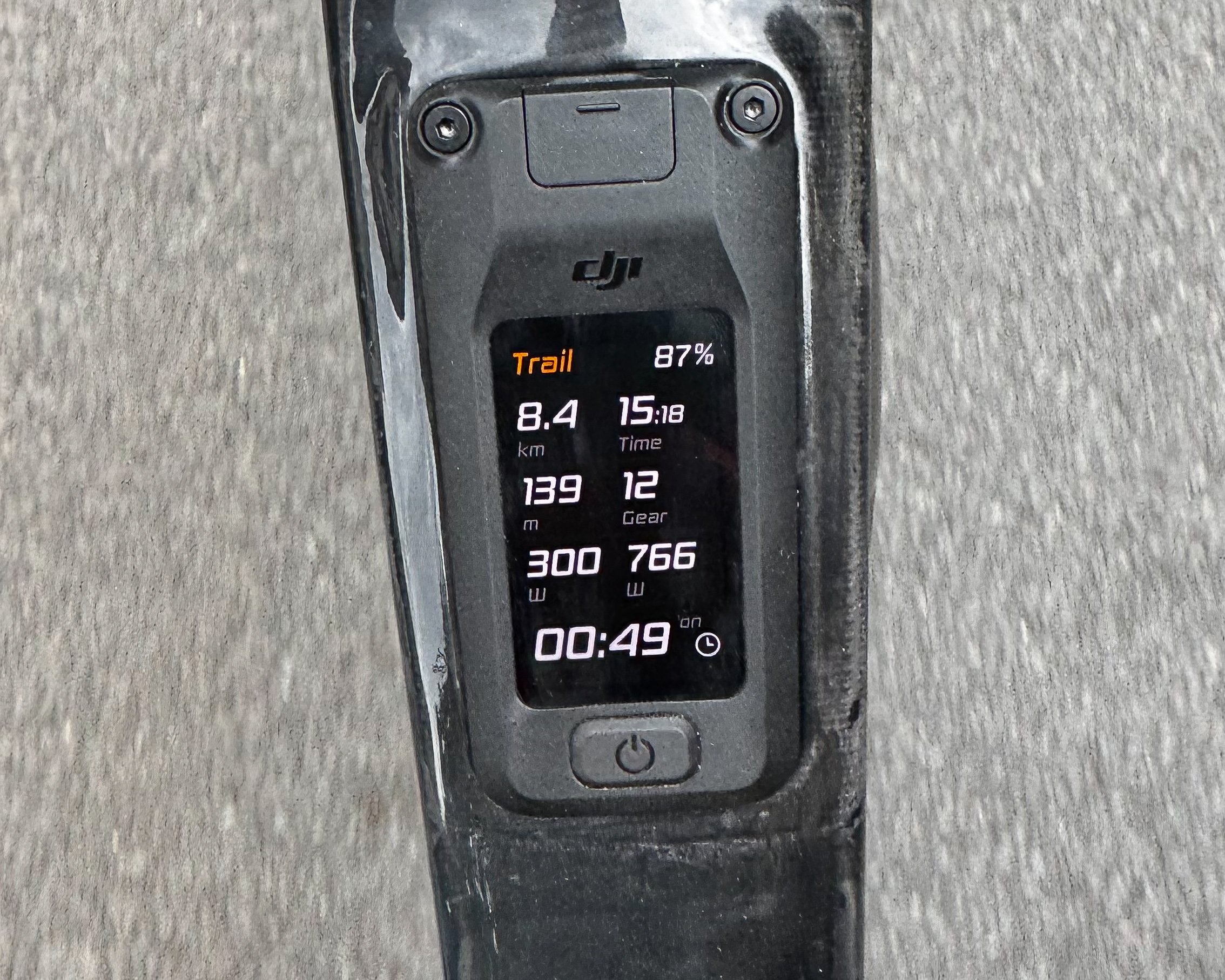
Tell him to try setting power assistance to 6 low 7 high.

Then it will double his leg power (slightly more) right up to 1000w. But reduces battery consumption significantly.

Mine shows rider power w on the left, motor power on the right.

IMG_7311_jpg.jpeg IMG_7313_jpg.jpeg
 
Another interesting ride last night.

Crestline Gen5 bosch 100nm 600wh Used 450wh 80kg kitted
Trek Rail Gen3 bosch 85nm 750hw Used 412wh 75kg kitted
Teewing DJI 105nm? 800wh used 552wh 85kg kitted.

This was a really interesting test because a good 630 mtr vert is super steep tech. It basically is super rooty and keeps getting steeper until you loop the bike out in front of you or you loose traction. Then for short period it becomes hike a bike for you then to jump back on and have another go at the steep tech until you loop out gain or ping off into the undergrowth. Just for shits and giggles half the climb was also slippery too... so slippery moss covered steep climbing

The question is which bike is the best for tech climbing? Can the 85nm bosch keep up? Will the power of dji be worse or better in the tech? will it just wheel spin? will the smoothness of the bosch with 100nm climb further?

Well first up 85nm bosch is out the back door. It cant climb the same level of tech simply because you can quickly get up to speed and carry momentum up and over the what ever the tech bit is. My moving time was 1:32 trek Rail guy 1:41. Now he did have a worn tire so couldn't clean as much in the slippery section, but it was obvious in the dry section that the lack of speed momentum limited the top end of what was possible.

Enter the battle off between DJI and Bosch 100nm. Well I have to say it was freaken similar. There were some sections i managed to clear and dji guy didn't and vice versa. Those sections it was who took the better line or didn't get pinged off a root and into the undergrowth. I don't think any one of us had a clear advantage over the other. It was pretty much level pegging.

My conclusion out of that is either motor system work well for tech climbing.

I do like the dji option to set the top speed to 45kph. That would be nice for higher speed bike park stuff.

Side note. I did the same loop about a month ago with the 400wh battery in the bike and conserved more and managed 380hw burn in 1:39 moving time. So this time I traded 70wh for 7 minutes faster.


1757616274627.png

1757615847617.png
 
Another interesting ride last night.

Crestline Gen5 bosch 100nm 600wh Used 450wh 80kg kitted
Trek Rail Gen3 bosch 85nm 750hw Used 412wh 75kg kitted
Teewing DJI 105nm? 800wh used 552wh 85kg kitted.

This was a really interesting test because a good 630 mtr vert is super steep tech. It basically is super rooty and keeps getting steeper until you loop the bike out in front of you or you loose traction. Then for short period it becomes hike a bike for you then to jump back on and have another go at the steep tech until you loop out gain or ping off into the undergrowth. Just for shits and giggles half the climb was also slippery too... so slippery moss covered steep climbing

The question is which bike is the best for tech climbing? Can the 85nm bosch keep up? Will the power of dji be worse or better in the tech? will it just wheel spin? will the smoothness of the bosch with 100nm climb further?

Well first up 85nm bosch is out the back door. It cant climb the same level of tech simply because you can quickly get up to speed and carry momentum up and over the what ever the tech bit is. My moving time was 1:32 trek Rail guy 1:41. Now he did have a worn tire so couldn't clean as much in the slippery section, but it was obvious in the dry section that the lack of speed momentum limited the top end of what was possible.

Enter the battle off between DJI and Bosch 100nm. Well I have to say it was freaken similar. There were some sections i managed to clear and dji guy didn't and vice versa. Those sections it was who took the better line or didn't get pinged off a root and into the undergrowth. I don't think any one of us had a clear advantage over the other. It was pretty much level pegging.

My conclusion out of that is either motor system work well for tech climbing.

I do like the dji option to set the top speed to 45kph. That would be nice for higher speed bike park stuff.

Side note. I did the same loop about a month ago with the 400wh battery in the bike and conserved more and managed 380hw burn in 1:39 moving time. So this time I traded 70wh for 7 minutes faster.


View attachment 167884
View attachment 167883

I'm sure plenty of people will have a legitimate point why it wasn't a fair test, but I'm sure that you were all 3 pedaling your asses off trying to clear this monster, and you and the Avinox bike got to the top within seconds of each other and both nice and tired, and YET AGAIN, the Avinox burned 23% more watts than the Gen 5 Bosch in the 100NM mode.

The Gen4 was 25% more efficient, but was stated to have climbed less well as Gen4s don't get the power bump.

I've ran this same calculation now at least 5x on different people's routes/ comparisons and although none of them were 'perfect' tests, consistently the Bosch is ~ 20% more efficient than the Avinox. In fact, it's almost dead on 20%, every-single-time.

It's one of the reasons that I feel that a Bosch with a 600w battery is plenty for me, and I happen to think it's equivalent to an approximate 720w Avinox battery as far as range covered. Between getting by with the 600w battery, no 240 gram added E13 bash guard required, the 150gram lighter CX-R motor I'm supposed to be getting, I clearly will have the lighter (and quieter!) motor package for feet/ meters climbed in the Bosch Gen5.

This is exactly what I've been saying now for some time, but people think I'm pulling numbers out of my butt. But the pattern is clear. I don't care about the excessive power of the Avinox and 100NM on the Bosch is plenty. The 105NM/ 1000w is not something I'd ever use.
 
I'm sure plenty of people will have a legitimate point why it wasn't a fair test, but I'm sure that you were all 3 pedaling your asses off trying to clear this monster, and you and the Avinox bike got to the top within seconds of each other and both nice and tired, and YET AGAIN, the Avinox burned 23% more watts than the Gen 5 Bosch in the 100NM mode.

The Gen4 was 25% more efficient, but was stated to have climbed less well as Gen4s don't get the power bump.

I've ran this same calculation now at least 5x on different people's routes/ comparisons and although none of them were 'perfect' tests, consistently the Bosch is ~ 20% more efficient than the Avinox. In fact, it's almost dead on 20%, every-single-time.

It's one of the reasons that I feel that a Bosch with a 600w battery is plenty for me, and I happen to think it's equivalent to an approximate 720w Avinox battery as far as range covered. Between getting by with the 600w battery, no 240 gram added E13 bash guard required, the 150gram lighter CX-R motor I'm supposed to be getting, I clearly will have the lighter (and quieter!) motor package for feet/ meters climbed in the Bosch Gen5.

This is exactly what I've been saying now for some time, but people think I'm pulling numbers out of my butt. But the pattern is clear. I don't care about the excessive power of the Avinox and 100NM on the Bosch is plenty. The 105NM/ 1000w is not something I'd ever use.
I think the use of the term efficiency is not correct.
As an example when i did the same loop on with my 400wh and conserved more i did a 1:39 moving time 380w used. Gen 3 guy used 412 in 1:41.

My gen5 bosch is not less efficient than Gen 3/4 bosch. It simply has a higher algorithm to output more power if you want. This is the same of DJI. I'm convinced that DJI could be set to achieve similar levels of run time.

So its more algorithm setting than actual efficiency loss.

With that all said. Bosch Gen 5 100nm is not a signficant step change worse than dji and technical climbs just as well. After the dji hype dust settles we will see a shift back to brands like bosch.

You wont be dissappointed in Gen 5. Its quiet, reliable with back up support world wide. PS That antidote bike looks kick arse too....
 
I think the use of the term efficiency is not correct.
As an example when i did the same loop on with my 400wh and conserved more i did a 1:39 moving time 380w used. Gen 3 guy used 412 in 1:41.

My gen5 bosch is not less efficient than Gen 3/4 bosch. It simply has a higher algorithm to output more power if you want. This is the same of DJI. I'm convinced that DJI could be set to achieve similar levels of run time.

So its more algorithm setting than actual efficiency loss.

With that all said. Bosch Gen 5 100nm is not a signficant step change worse than dji and technical climbs just as well. After the dji hype dust settles we will see a shift back to brands like bosch.

You wont be dissappointed in Gen 5. Its quiet, reliable with back up support world wide. PS That antidote bike looks kick arse too....

So the Avinox got to the top faster than you? No, he didn't. I'm sure you were both trying about the same amount.

Gen 4 & 5 have the same efficiency at the same power level. But when the Gen 5 is turned up to 100NM it loses some efficiency because more power. I believe the Avinox is always less efficient than the Bosch, even normalized for power.
 
So the Avinox got to the top faster than you? No, he didn't. I'm sure you were both trying about the same amount.

Gen 4 & 5 have the same efficiency at the same power level. But when the Gen 5 is turned up to 100NM it loses some efficiency because more power. I believe the Avinox is always less efficient than the Bosch, even normalized for power.
It wasn't that straight forward. Its actually 2 climbs. DJI guy got to the top of wet climb before me because i was stuck behind gen 3 guy wheel spinning with a worn out tire. On dry climb i got to the top maybe 5 mins faster. But dji guy looped out and crashed backwards into the fescues. He had to stop after than and fix his something up So my comparison of how they compared prior to him looping out.

I've seen dudes on the crestline fb group list up some really impressive distance and elevation on the dji once they have tweaked the settings. I'm reasonably certain dji can be adjusted to closely match bosch output. But i guess that is moot as both of us are going to be running bosch,,,,
 
by default avinox is tuned to give more power for less rider effort which shows on these comparisons

The gen5 is a great motor the range extender and freewheel decouple are pluses the avinox doesn't have but bosch don't half make you wait for upgrades, I'm sure they could give us a fast charger, thinner 800wh battery and high res speed sensor now but they'll drip feed it and extract the most profit they can from it.
 
by default avinox is tuned to give more power for less rider effort which shows on these comparisons

The gen5 is a great motor the range extender and freewheel decouple are pluses the avinox doesn't have but bosch don't half make you wait for upgrades, I'm sure they could give us a fast charger, thinner 800wh battery and high res speed sensor now but they'll drip feed it and extract the most profit they can from it.
Surprised that the Bosch has a magnet, rather stone age :)
 
In fairness to Bosch they have to balance out reliablity. I've had issues with my avinox speed sensor after only a couple of months

ezgif-2963568779861c.gif
 

Avinox vs. Bosch. Both set at 100NM 750W. Same weight riders and trails.

Avinox derated at 5% and the Bosch was still showing 15%. For some dumb reason they didn't continue to run the Bosch untill it derated. I thought I read that the Bosch provides full power until <1%. Does anyone know?

Like I've said though for some time, the Bosch is almost certainly 10-20% more efficient than the Avinox. I have a CX-R with ceramic bearings on order and I'm curious if those bearings will impart additional efficiency as that's what they do in hubs, BB's and the like? I guess we'll never know.
 
Interesting.

I guess the difficulty with two dudes riding next to one another is that one guy can be applying more legs/lungs than the next guy to go the same speed. So it may well be that the output is listed the same but the algorithm still applies more jandle with X pedal input.

I guess thats moot. Because they tried to run similar and still had differing battery usages at similar weights.
 
Keep reading
    Browse all

    Similar Threads

    Community Stats

    Since 2018
    668K
    Messages
    40,737
    Members
    Join 30,000+ Riders, it's free!
    Back
    Top