If you live in a country where motors not restricted to 25km/h and you can live with slightly more weight and bulkier looks i would suggest to get the Bosch. The power is great and fun on the DJI. Its really on another Level. And its ridiculus fun but not necessary. The avinox is efficient too. There is really no big diffenrence between the "new gen motors" (bdu38, avinox, levo4..) in terms of range and height.Let's assume the Bosch Crestline offered the adjustable CS length.
Would you still choose the DJI version for the power/ integration/ looks/ etc?
Or instead the CX-R for the low noise, high efficiency, etc?
From what I've read (not personally experienced) I LOVE many features about the DJI for sure (especially the integration and looks) but I keep thinking that the Bosch is just an overall better unit. I think if Bosch offered a slim 800w battery it would be check mate.
I look forward to a proper efficiency test of the 100 NM Bosch (preferably the CX-R as the ceramic bearings should improve efficiency further) vs. the DJI.
Navigation
Install the app
How to install the app on iOS
Follow along with the video below to see how to install our site as a web app on your home screen.
Note: This feature may not be available in some browsers.
More options
Style variation
You are using an out of date browser. It may not display this or other websites correctly.
You should upgrade or use an alternative browser.
You should upgrade or use an alternative browser.
1st ride on my Crestline RS 181.1 DJI
a
- Thread starter GeorgesEBike
- Start date

⚡ EMTB PRO
25% off e*thirteen, Peaty’s & more with PRO
Member-only deals from e*thirteen, Peaty’s, PEMBREE and Magicshine · ad-free browsing · PRO badge · Living Intelligence Reports
See the deals →
From £1.99/month
depends on the generation of cx4 you had. the first ones where loud as hell compared to the latest versions. Definately louder than the DJI. hopefully DJI will change some internals in the future to get the noise down.I’m super bummed to hear about the downhill rattle! One of the reasons I pulled the trigger on the RS181 and sold my Crestline Bosch Gen4 was to reduced the downhill rattle. I’m glad I’ve never ridden a silent Bosch Gen5….. sounds like I’d be even more bummed with the DJI.
The SideKick hubs that were on my previous Crestline are going on my RS181 regardless.
Just finished fully Ride Wrapping my RS181 frame, including some custom cut pieces for places Ride Wrap doesn’t cover. She’s well protected.
IndeedI've done over 2000 miles on my DJI/Amflow and can honestly say I've never heard or noticed a rattle.
How bizarre!
 I am on the 2nd Motor. Both rattle. First one maybe did rattle a little more, but the Axle had a lot of side to side play...so they replaced it.
GeorgesEBike
E*POWAH Master
- Thread starter
- #34
I wouldn't be "too" concerned over the rattle. The bike is so good in every other way. The bike geometry and suspension kinematics are a noticeable improvement over the past Crestline bikes.

AlumiPro
Well-known member
2023 Gen4 Racedepends on the generation of cx4 you had. the first ones where loud as hell compared to the latest versions. Definately louder than the DJI. hopefully DJI will change some internals in the future to get the noise down.
I guess you will be happier with the new motor, but you will notice some rattle. there are so many other good things coming with the DJI system. You will have a alot of fun. great bike too!2023 Gen4 Race
AlumiPro
Well-known member
Hopefully DJI keeps the same mounting and motor size when they release the quiet Gen2 motor, that way us with the Gen1 can swap it out.

Plummet
Flash Git
I highly doubt DJI is far less efficient. It's physics. Apply more power, use more watts, add more mass, use more watts. There will be very little difference in bearing and clutch drag between brands.That's a pretty big bummer honestly. Thanks for the clarification though. I'm actually not that sensitive to bike noise, not sure if it's even a factor for me.
Bosch Gen 5 CXR Pros: considerably more efficient, included bash guard coverage, no rattle noise
DJI Pros: better integration especially with the 800w battery, even more power, can derestrict to 28 mph, technically 1# lighter but in light of the less efficiency, it's maybe not really.
There is already a review that says that the Gen5 CX 600w with the 100NM upgrade can climb very nearly the same meters as a DJI 800w.
So if one guy is getting more range on a different system for the same ride he's either lighter or using more legs/lungs than the guy getting less range. Ok there's tire draggyness too. But the reality its watts outputted by the motor is what uses battery up faster. DJI at full settings will use more power.
Plummet
Flash Git
I'm looking forward to 100nm bosch and DJI face off. I haven't seen one yet.Let's assume the Bosch Crestline offered the adjustable CS length.
Would you still choose the DJI version for the power/ integration/ looks/ etc?
Or instead the CX-R for the low noise, high efficiency, etc?
From what I've read (not personally experienced) I LOVE many features about the DJI for sure (especially the integration and looks) but I keep thinking that the Bosch is just an overall better unit. I think if Bosch offered a slim 800w battery it would be check mate.
I look forward to a proper efficiency test of the 100 NM Bosch (preferably the CX-R as the ceramic bearings should improve efficiency further) vs. the DJI.
There's some DJI's coming into my local riding group next month(not crestrline). I'm keen to so do a face off when they arrive.
Side note. For my general riding i dont use 100nm regularly. Its not required for standard riding. Only steep tech squirts then its back down to 85 or 70nm settings to get more range and use a smaller battery and have a lighter bike.
It will also be interesting to see if Crestline stick with DJI or offer Bosch again. Only time will tell. Current there is a hype around DJI. But I think when the dust settles and there's long term reviews and understanding of warrantee claims and global support we will likely have a swing back in the other direction.

I have put foam just about everywhere I could think of, and while it does help a bit it doesn't remove the rattle. Far from it.FWIW, the motor guard on the 181 looks like it has a lot of internal space, perfect for amplifying motor rattling. Amflow is more tailored. I wonder if some foam in the motor cover might quiet things down? Though it's odd to hear such contrary experiences. Maybe you ride faster you'll outrun the noise!?
But DJI is so much fun that I wouldn't change it for a Bosch v5. If you don't plan on derestricting the jury is out, but the dji is incredibly simple and cheap to derestrict and its safe as well so you don't risk limp mode and have to do walk of shame to the dealer.
At least for the moment.
Last edited:
mtbexpress585
Member
How much does this bike weigh?
GeorgesEBike
E*POWAH Master
- Thread starter
- #42
No clue. Not interested in how much it weighs. I'm guessing 52lbs. It's a full 180mm travel enduro bike with a coil and alloy wheels. I've seen someone else post just under 51lbs with a Vivid Air.How much does this bike weigh?
Last edited:
GeorgesEBike
E*POWAH Master
- Thread starter
- #43
Love this thing more and more each time I ride it. I'm after the total ride experience. Not just how much power a bike has. I've never felt so confident on a bike. Honestly I've never ever hit the boost button and think the default Turbo settings at 105nm/800watts is the perfect amount for Turbo. This is the most fun I've had on any bike.
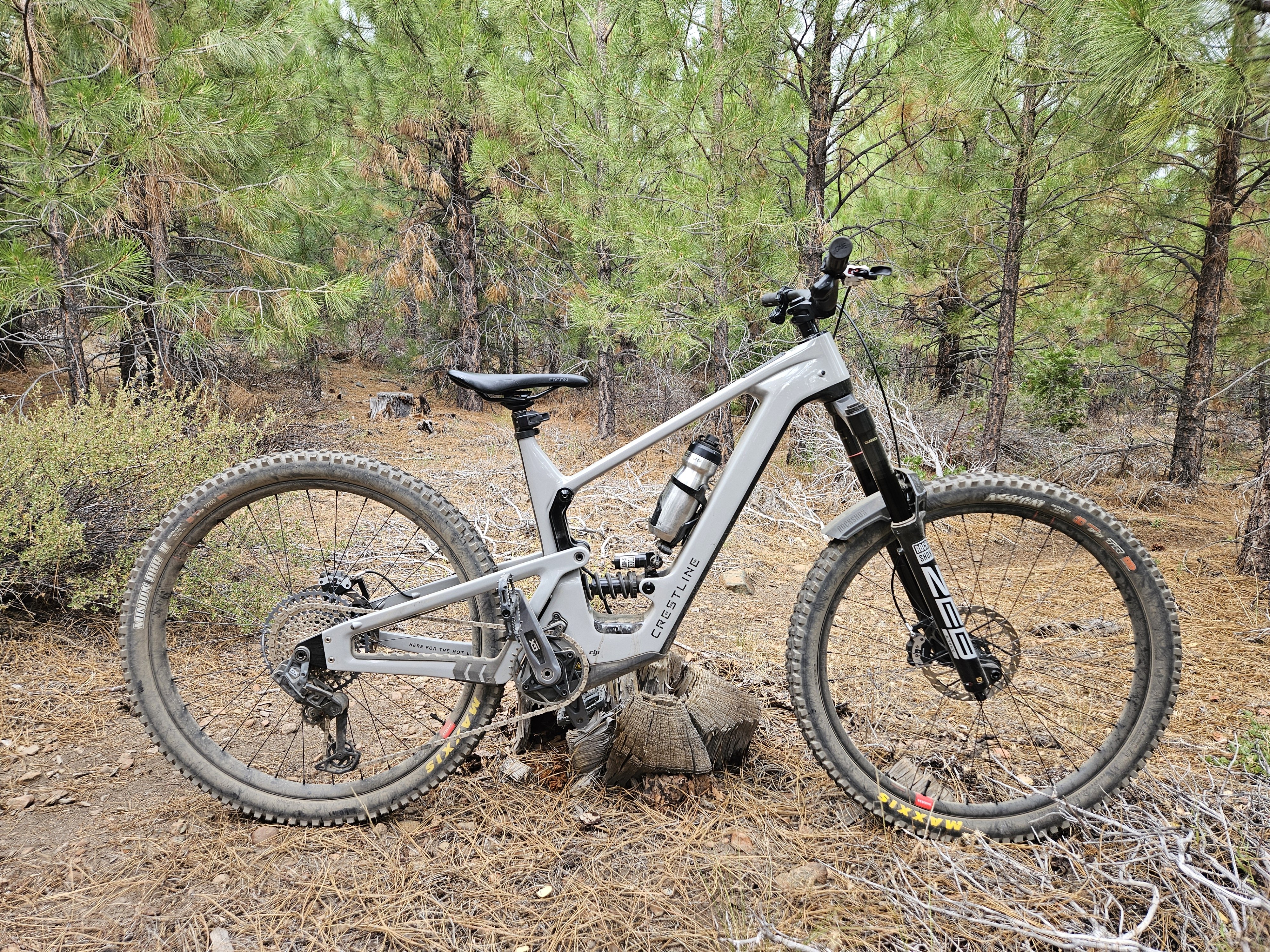

slickrock
Well-known member
Another dimension of this is that as ebikes are fitted with more and more powerful motors, riders tend to care less about getting their cadence up and not change gears to get the motor to run in it's optimum speed band, where the motor is most efficient. Rather than reduce assist as they should, they operate the bike at a higher gear and push the motor to overwork with less optimum torque, but with such power on tap, this sacrifice is not felt until they found out they've blown through the battery. Bafang BBSHD folks are the most guilty here, often breaking chains, cassettes, and hubs for breakfast before their batteries deplete. The exact opposite is the case for TQ folks, who are highly mindful of cadence to eek out the best part of the power/efficiency band, because there's hardly enough to go around.I highly doubt DJI is far less efficient. It's physics. Apply more power, use more watts, add more mass, use more watts. There will be very little difference in bearing and clutch drag between brands.
So if one guy is getting more range on a different system for the same ride he's either lighter or using more legs/lungs than the guy getting less range. Ok there's tire draggyness too. But the reality its watts outputted by the motor is what uses battery up faster. DJI at full settings will use more power.
Plummet
Flash Git
I think the mindfulness of battery conservation comes with small batteries and the desire to milk a battery as long as possible. I have 400wh and 600wh. When I'm in 400wh mode I milk every ounce of battery and flick it back modes as soon as practical. I have got a 3 hours out of my 400wh battery or 1.5 hours not conserving.Another dimension of this is that as ebikes are fitted with more and more powerful motors, riders tend to care less about getting their cadence up and not change gears to get the motor to run in it's optimum speed band, where the motor is most efficient. Rather than reduce assist as they should, they operate the bike at a higher gear and push the motor to overwork with less optimum torque, but with such power on tap, this sacrifice is not felt until they found out they've blown through the battery. Bafang BBSHD folks are the most guilty here, often breaking chains, cassettes, and hubs for breakfast before their batteries deplete. The exact opposite is the case for TQ folks, who are highly mindful of cadence to eek out the best part of the power/efficiency band, because there's hardly enough to go around.
The reality is if you want to burn 100+nm yourl be running a 200wh bigger battery to get similar run tom to 85nm. Those that want lighter and to conserve will be able to run the smaller battery. I admit the power and speed is addictive though. But I do prefer the lighter battery and lighter bike. So the 400wh will go back in and i'll be back on conserve mode again very shortly.

BikingBad
Active member
I see. I also purchased RH-3, if you don’t mind, what is your height?It's the AXS 175mm slammed in a RH-3.
GeorgesEBike
E*POWAH Master
- Thread starter
- #47
I'm 6ft 1in tall with a 34in inseam. The 175mm fits me perfect.I see. I also purchased RH-3, if you don’t mind, what is your height?
bullit398
Member
Don’t think it’s going to happen. The reason they were able to do adjustable cs with the dji is that the motor is smaller so there’s more room behind it to work with. Pretty sure the reason the 29 Bosch is 455 is because it has to be to clear with their suspension layout.Let's assume the Bosch Crestline offered the adjustable CS length.
Would you still choose the DJI version for the power/ integration/ looks/ etc?
Or instead the CX-R for the low noise, high efficiency, etc?
From what I've read (not personally experienced) I LOVE many features about the DJI for sure (especially the integration and looks) but I keep thinking that the Bosch is just an overall better unit. I think if Bosch offered a slim 800w battery it would be check mate.
I look forward to a proper efficiency test of the 100 NM Bosch (preferably the CX-R as the ceramic bearings should improve efficiency further) vs. the DJI.

Don’t think it’s going to happen. The reason they were able to do adjustable cs with the dji is that the motor is smaller so there’s more room behind it to work with. Pretty sure the reason the 29 Bosch is 455 is because it has to be to clear with their suspension layout.
The chainstay adjustment is at the wheel end of the chainstays, not the motor end.
It's true that with a Bosch you might have a lower end of adjustment, like 445mm, where with a DJI you might have been able to go shorter. But I'm not interested in short chainstays.
I'm 6ft 1in tall with a 34in inseam. The 175mm fits me perfect.
I mean, that's a pretty short dropper for a 6'1" guy. I'd love to know your distance from the top of the pedal to the top of your saddle as that takes in to account how high you run your particular saddle.
I highly doubt DJI is far less efficient. It's physics. Apply more power, use more watts, add more mass, use more watts. There will be very little difference in bearing and clutch drag between brands.
So if one guy is getting more range on a different system for the same ride he's either lighter or using more legs/lungs than the guy getting less range. Ok there's tire draggyness too. But the reality its watts outputted by the motor is what uses battery up faster. DJI at full settings will use more power.
Although I don't know if the very well-engineered DJI is less efficient than the Bosch, there is some evidence that it is, even when power matched. I mean just anecdotally, I keep reading things along the lines of "I did 4k' and used 85% of an 800 watt DJI battery...' That's hungry! The high pivot e-bikes increase the battery useage further.
For example, this standardized testing indicates the DJI is considerably more battery hungry, and at the standardized pedal power input and the cadence used, the old Bosch actually climbed faster. I think the DJI is much faster when low cadence is used, but less so at higher cadences and high rider power input.

The best e-mountainbike of 2024 – 27 eMTBs in our huge comparison test
For the biggest group test in our history, we tested 27 of the hottest e-mountainbikes, packed it with clear insights.
 ebike-mtb.com
But I just wanted to point out that there can be some pretty large swings in efficiency between different electric motors.
Here is a review comparing the Fazua 60 in a Relay & the TQ HP50 in a Trek Exe, on a standard climb and using watt power measuring pedals to measure rider input and keep it consistent.
What's relevant is that the F60 used 39 battery wh per climb, where-as the TQ HP50 used 54 wh per climb, while also going slower! That means that the TQ is 38% less efficient even when not adjusted for the speed advantage the F60 had! That's a lot.
John_likes_bikes
Well-known member
I think his point is most relevant for anyone looking to use a 29" out back. 180mm travel as a 29er and not crazy long CS's was the main selling point of the 181 for me.The chainstay adjustment is at the wheel end of the chainstays, not the motor end.
It's true that with a Bosch you might have a lower end of adjustment, like 445mm, where with a DJI you might have been able to go shorter. But I'm not interested in short chainstays.
I remeber that test but I can't remeber if it takes in to account the myriad of variables like pedal bob from suspension, tires, pressures, weather and all the many other variables.Although I don't know if the very well-engineered DJI is less efficient than the Bosch, there is some evidence that it is, even when power matched. I mean just anecdotally, I keep reading things along the lines of "I did 4k' and used 85% of an 800 watt DJI battery...' That's hungry! The high pivot e-bikes increase the battery useage further.
For example, this standardized testing indicates the DJI is considerably more battery hungry, and at the standardized pedal power input and the cadence used, the old Bosch actually climbed faster. I think the DJI is much faster when low cadence is used, but less so at higher cadences and high rider power input.
The best e-mountainbike of 2024 – 27 eMTBs in our huge comparison test
For the biggest group test in our history, we tested 27 of the hottest e-mountainbikes, packed it with clear insights.
But I just wanted to point out that there can be some pretty large swings in efficiency between different electric motors.
Here is a review comparing the Fazua 60 in a Relay & the TQ HP50 in a Trek Exe, on a standard climb and using watt power measuring pedals to measure rider input and keep it consistent.
What's relevant is that the F60 used 39 battery wh per climb, where-as the TQ HP50 used 54 wh per climb, while also going slower! That means that the TQ is 38% less efficient even when not adjusted for the speed advantage the F60 had! That's a lot.
It's probably right the tq is less effecient, but the motor is fundamental also very very different from almost all other motors. Much more difference between these, than a bosch and a dji.

sethimus
😠 Temu Gary 😠
take anything from ebike-mtb.com with a grain of salt. the gold standard of ebike motor testing is imho velomotion.de
bullit398
Member
Obvously, but 445 is the default on the bosch and you cant run 29 in that, where you probably can run 445/29 on the DJI. The motor size limits the possible length choices unless super long is what you want.The chainstay adjustment is at the wheel end of the chainstays, not the motor end.
It's true that with a Bosch you might have a lower end of adjustment, like 445mm, where with a DJI you might have been able to go shorter. But I'm not interested in short chainstays.
GeorgesEBike
E*POWAH Master
- Thread starter
- #56
The bike came out to 53.11 lbs with the following build.How much does this bike weigh?
| Crestline RS 181 Spectre DJI Frameset RH-3 29er 800wh 450mm CS |
| RockShox ZEB Ultimate Charger 3.1 RC2 Suspension Fork - 29", 180 mm, 15 x 110 mm, 44 mm Offset, Black, A3 |
| RockShox Vivid Ultimate 205 x 65 Coil Shock |
| RockShox Metric Coil Spring - Length 151mm, Travel 57.5-65mm, 350 lbs, Black |
| RockShox Reverb AXS Dropper Seatpost - 31.6mm, 175mm, Black, B1 |
| SRAM AXS POD Electronic Controller - Left or Right Mount, Discrete Clamp, 2-Button, Black, D1 (Dropper Post) |
| SRAM GX Eagle T-Type Ebike AXS Groupset - 160mm ISIS Crank Arms |
| SRAM Eagle T-Type Chainring - 36t, 12-Speed, 104 BCD, Steel, Black |
| SRAM Maven Ultimate Stealth Disc Brake and Lever - 4-Piston, Titanium Hardware, A1 - Front |
| SRAM Maven Ultimate Stealth Disc Brake and Lever - 4-Piston, Titanium Hardware, A1 - Rear |
| SRAM HS2 Disc Brake Rotor - 200mm, 6-Bolt, Rounded, Silver/Black (2ea) |
| SRAM EP Cable Extension Cord Eagle Transmission Powertrain 955MM |
| OneUp Components Regular Grips, Black |
| OneUp Components Stem 35mm clamp 42mm length +/- 0 Degree |
| OneUp Components V2 Carbon Handlebar 35 x 800mm, Black - 35 |
| OneUp Components Composite Pedals (Black) |
| Reserve Wheels Reserve 30 HD AL Wheelset - 29", 15 x 110/12 x 148, 6-Bolt, XD, Aluminum, DT 350 |
| Maxxis Assegai Tire, 29'' x 2.50, Folding, Tubeless Ready, 3C Maxx Grip, Double Down, Wide Trail, 120TPI, Black |
| Maxxis Minion DHR II Tire - 29 x 2.4, Tubeless, Folding, Black, 3C MaxxGrip, DD, Wide Trail |
| Trail One Components Top Cap & Spacer Kit - Black |
| Cane Creek 40-Series Steel 52/40 1.5" Crown Race |
| Ergon Men's SMC Saddle, Black, S/M |
| Specialized Zee Cage II + Tool |
Plummet
Flash Git
Well hopefully someone does a test and we find out. I'm about a month out from seeing DJI in the flesh locally. Super keen to seen what the hype and compare.Although I don't know if the very well-engineered DJI is less efficient than the Bosch, there is some evidence that it is, even when power matched. I mean just anecdotally, I keep reading things along the lines of "I did 4k' and used 85% of an 800 watt DJI battery...' That's hungry! The high pivot e-bikes increase the battery useage further.
For example, this standardized testing indicates the DJI is considerably more battery hungry, and at the standardized pedal power input and the cadence used, the old Bosch actually climbed faster. I think the DJI is much faster when low cadence is used, but less so at higher cadences and high rider power input.
The best e-mountainbike of 2024 – 27 eMTBs in our huge comparison test
For the biggest group test in our history, we tested 27 of the hottest e-mountainbikes, packed it with clear insights.
But I just wanted to point out that there can be some pretty large swings in efficiency between different electric motors.
Here is a review comparing the Fazua 60 in a Relay & the TQ HP50 in a Trek Exe, on a standard climb and using watt power measuring pedals to measure rider input and keep it consistent.
What's relevant is that the F60 used 39 battery wh per climb, where-as the TQ HP50 used 54 wh per climb, while also going slower! That means that the TQ is 38% less efficient even when not adjusted for the speed advantage the F60 had! That's a lot.
GeorgesEBike
E*POWAH Master
- Thread starter
- #58
If I set my DJI to 90nm/600 watts (Trail Mode) I get the same miles and elevation as my Bosch Gen 4 Race motor set to (Race Mode). I think both motors are close in efficiency when set to the same power levels.Well hopefully someone does a test and we find out. I'm about a month out from seeing DJI in the flesh locally. Super keen to seen what the hype and compare.
I think both motors are close in efficiency when set to the same power levels.
I think people forget this simple fact, there is no ‘secret sauce’ here on motors putting out this level of power and at these voltages, there’s little room for manoeuvre really.
More power equals more consumption, even with the other variables, that’s the beginning and end of it.
Plummet
Flash Git
Though I do agree its physics. In practice when we compare same output with same output we see a variation. I see that variation in how the software applies the power. sooner, harder, etc. Different models/brands of motors apply these differently and different mode options make further adjustments which leads to variation that can be considered more/less efficient.I think people forget this simple fact, there is no ‘secret sauce’ here on motors putting out this level of power and at these voltages, there’s little room for manoeuvre really.
More power equals more consumption, even with the other variables, that’s the beginning and end of it.
I'm also interesting in how rising heat affects power output. DJI as an example has less cooling fins and likely to overheat or run at hotter less efficient temps. There could be a variation in efficiency due to increased running temp.
Similar Threads


Free account
Join 43,143
eMTB riders
eMTB riders
One tap. No forms. Fewer ads.
or sign up with email
Already a member? Log in