SZZS specific CEF50-main thread (initial builds and troubleshooting related only)

Hi,

Can you recommend a seller with a complete bike that uses this frame?
Do it my self and it’s too much for me,

Thanks!
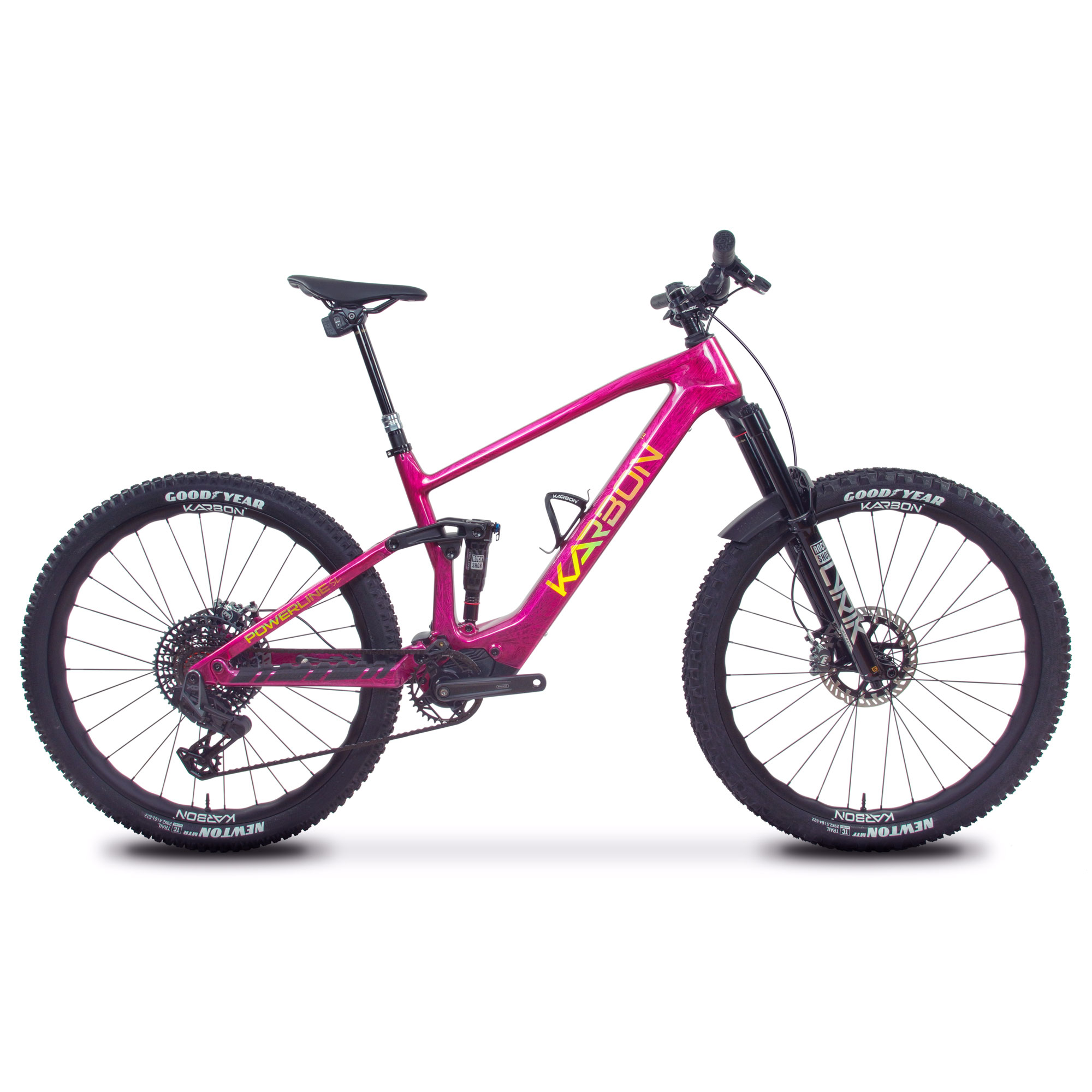
Check out Karbon bikes.
 
⚡ EMTB Pro Go Pro — exclusive discounts & ad-free Peaty's 25% off & more · Ad-free browsing · Pro badge See the deals →
But Karbon is using the Lightcarbon LCES930 just to keep the record straight, not the CEF50
 
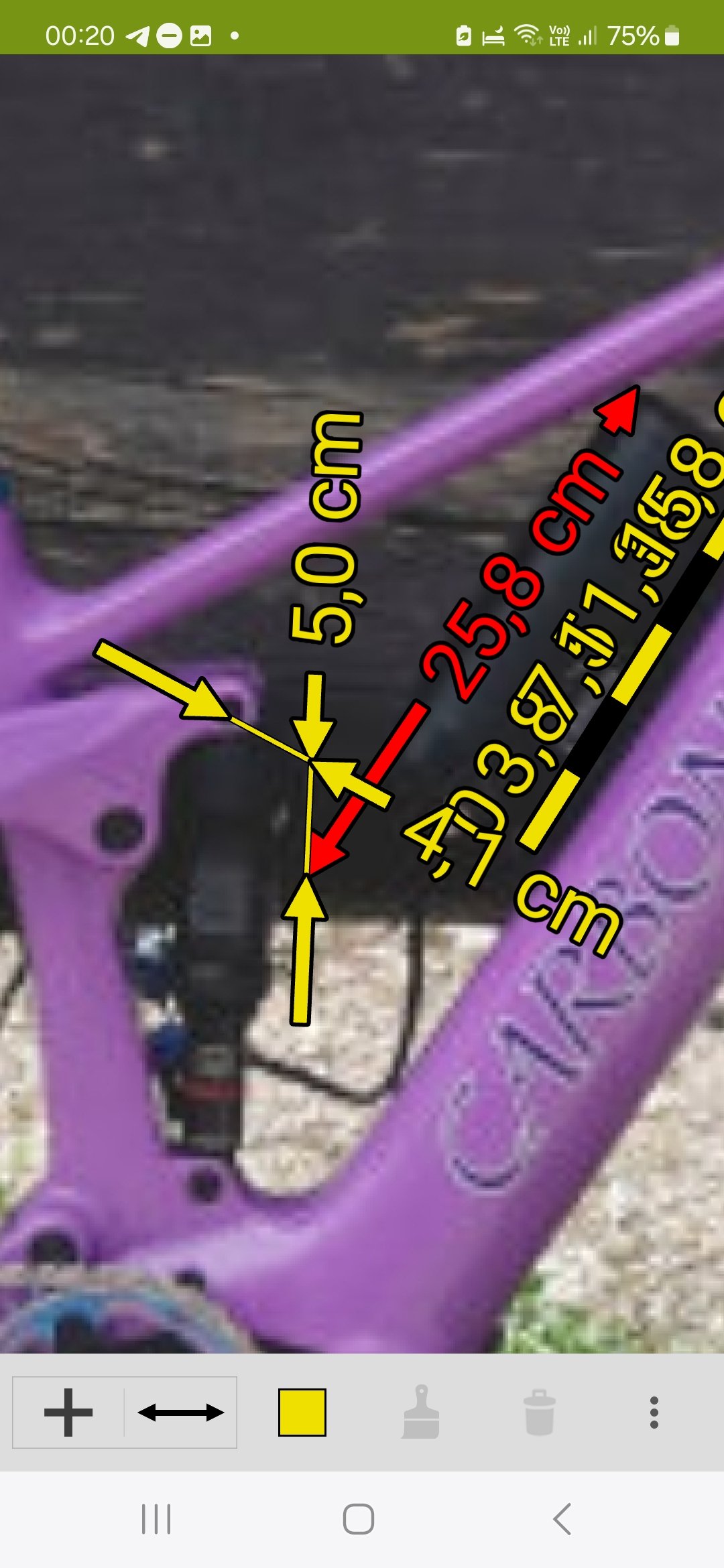
Mike, do you think you can fit a 252*77mm external battery in the frame triangle (I'm planning to build a lightweight bike with a 48 volt battery and extender, but I'm suddenly thinking about the size limitation)...?
Looks like my wife's Medium, from the point to the shock is 300mm along the underside of the top tube and down from the toptube right at the shock to the down tube is 190mm.
I hope the auto-translate works!
 
Looks like my wife's Medium, from the point to the shock is 300mm along the underside of the top tube and down from the toptube right at the shock to the down tube is 190mm.
I hope the auto-translate works!
Mike thank You for information!
What model of shock is installed? With the extra can or not? I ordered RockShox Super Deluxe Select+ with extra can.🤔
And one more request, sorry for the inconvenience, could you make of the wife's frame profile photo, with installed external battery - I think then I can calculate how much free space there is.
Thank you so much!
 
Last edited:
Mike thank You for information!
What model of shock is installed? With the extra can or not? I ordered RockShox Super Deluxe Select+ with extra can.🤔
And one more request, sorry for the inconvenience, could you make of the wife's frame profile photo, with installed external battery - I think then I can calculate how much free space there is.
Thank you so much!
RIght in the picture gallery...
 
RIght in the picture gallery...
maybe there is a reserve of 5 mm)))

Screenshot_20240331_002048_ImageMeter.jpg
 
Calculated the pros and cons and decided to go with the 700wh 48 volt battery. Seems like the extra 30% of power reserve is worth the extra 1kg of weight. Decided not to use the wiring through the steering cover - had holes made in the frame.
Guys, hint, do I need to order something in double size (I think I already got two engine covers))?
 

Attachments

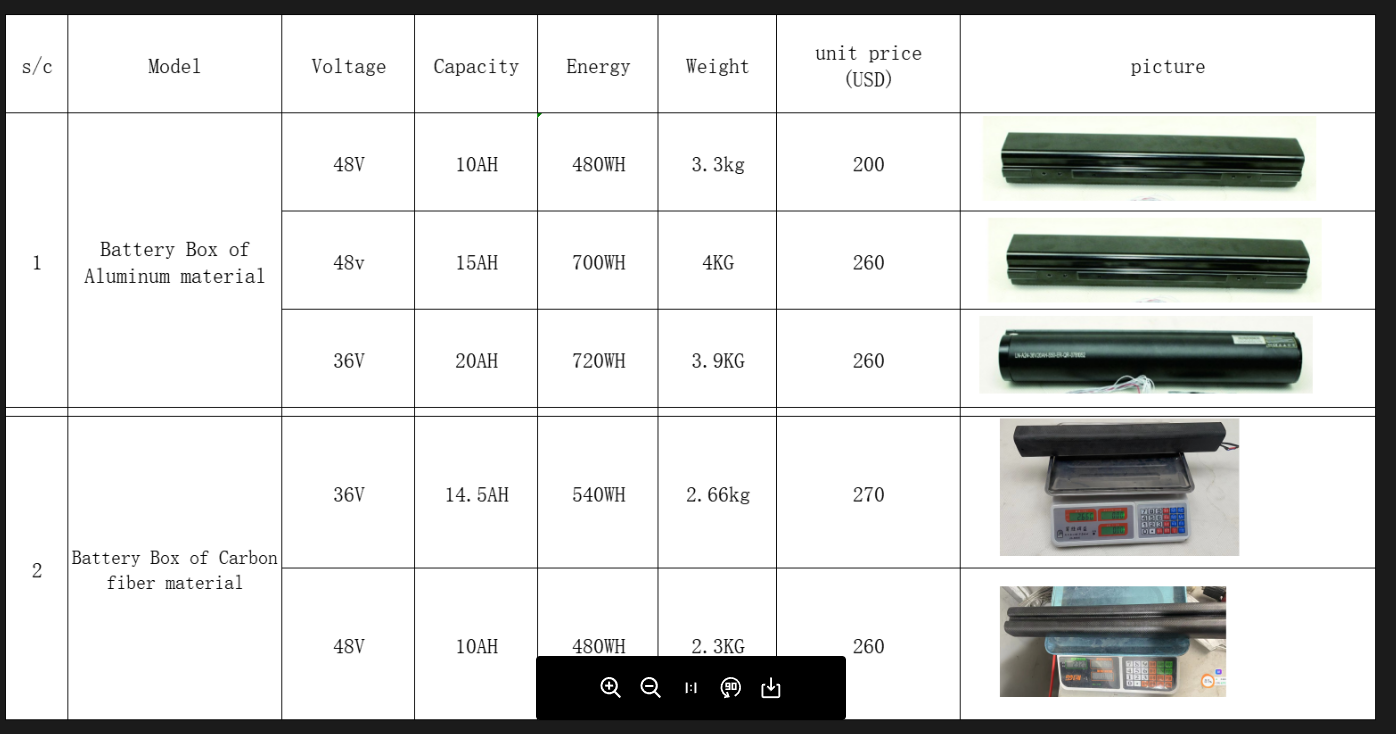
Does anyone have experience with the carbon fiber battery boxes? I'm trying to build the lightest bike I can, so I am debating over the 2 CF battery options in this picture.
Also, any opinions of those 2 options? There is a 36v and a 48v option.
Thanks!

Screenshot 2024-04-01 115837.png
 
From my own research, I will probably go with the 36v carbon battery. Can't believe nobody has an opinion of the battery options I showed in my previous post.
 
Most of us did not get a choice. The carbon battery box is very new.
 
Most of us did not get a choice. The carbon battery box is very new.
Yes, i have waited 48V10A carbone long time. But as it was not available, i had finally doing myself my little battery. Those i can said is with 48V 15Ah aluminium casing, my bike weight is 21 kg and i never use more than 30% (+-1400 D+ max done). with 48V 9.6 Ah my bike weight is 19.4 kg. i don't now how many D+ i can do with it (not tested, finished today)
 
Very cool, thanks guys. I'm looking forward to posting my opinion of it!
 
Yes, i have waited 48V10A carbone long time. But as it was not available, i had finally doing myself my little battery. Those i can said is with 48V 15Ah aluminium casing, my bike weight is 21 kg and i never use more than 30% (+-1400 D+ max done). with 48V 9.6 Ah my bike weight is 19.4 kg. i don't now how many D+ i can do with it (not tested, finished today)

48v10A aluminium vs carbon 1kg less for $60 more, seems like a no brainer!
 
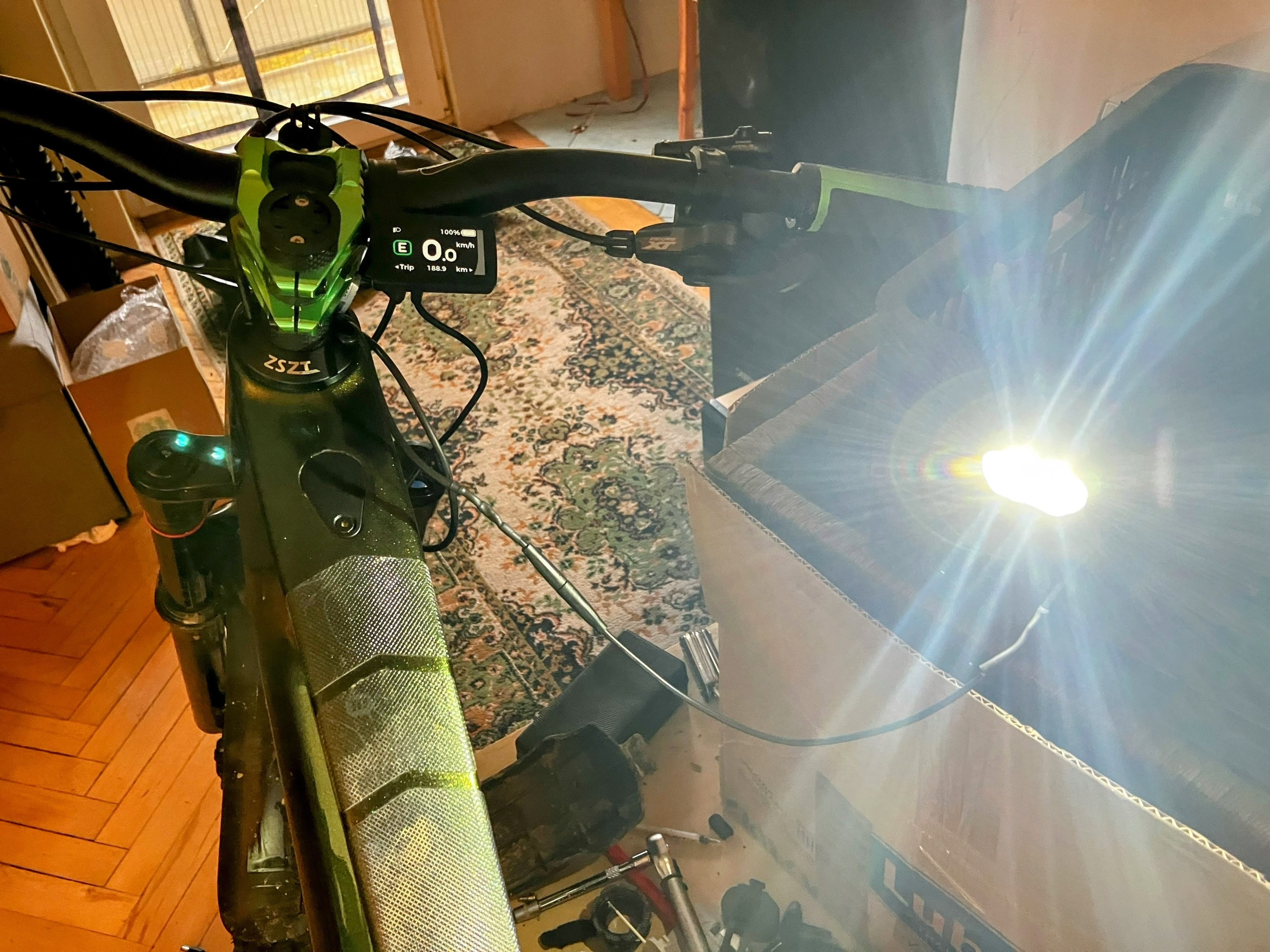
Finally I managed to install front light on my cef50. I was hoping to use a lamp that could be powered directly from the wiring harness, but finding the one that would have strong enough light output, be of decent build quality, look well and use below 6W (12V/0.5A) provided by the engine turned out to be too hard for me. Consequently, I decided to use solid state relay controlled by the 12V signal to switch voltage directly from the main battery. Here's the resulting bill of materials:

IMG_1275.jpg

My main goal here is to make it super-durable, hence I decided to solder it to a tiny PCB. SMD adapter board for DIP-8 seems like a perfect solution as it provides through-hole pads for soldering wires and good support for my SSR and its resistor. For ease of maintenance, I decided to install julet connector between the lamp and headset, so that I can tweak the headset without need to desolder lamp wires.

I started with soldering SSR and LED resistor to the PCB. TBH I haven't soldered SMD components for like 15+ years so this looks bit sloppy, but I verified there's no short circuit anywhere.
IMG_1276.jpg


This could be cleaner, but I can improve on the next circuit if I ever have to repeat this. I solder SMD resistor between pads 1 and (unused) 2 of SOIC-8 layout. Then, I will connect +12V to pad 2 so that current flows through the resistor to the LED.
IMG_1278.jpg


Now with some wires soldered. I add some knots on the wires so that the soldering pads don't suffer tension from wire movements.
IMG_1280.jpg


Both SSR sides are now connected.
IMG_1281.jpg


I enclose the whole "circuit" in heatshrink tubing, adding some zipties for waterproofing and mechanical support.
IMG_1288.jpg


Testing if this works
IMG_1290.jpg


The lamp of choice - Lezyne Micro Drive 500 High Voltage. Now, with the long cable replaced by the Julet plug.
IMG_1291.jpg


Yippie! It works!
IMG_1292.jpg
IMG_1290.jpg
 
Last edited:
Calculated the pros and cons and decided to go with the 700wh 48 volt battery. Seems like the extra 30% of power reserve is worth the extra 1kg of weight. Decided not to use the wiring through the steering cover - had holes made in the frame.
Guys, hint, do I need to order something in double size (I think I already got two engine covers))?
Wow, so now it comes with a chainring tool included, and at just $1700 it's a bargain, I'm jealous.

Ah, if possible, I recommend buying a spare motor cover. It will definitely break.
 
Wow, so now it comes with a chainring tool included, and at just $1700 it's a bargain, I'm jealous.

Ah, if possible, I recommend buying a spare motor cover. It will definitely break.
The "real" shipping costs seem to be missing. To Europe this was additional 300$...
 
It is not going to be less heat if the conductors are properly sized for the amperage.
sure but lower current allows for lower diameter conductors which are cheaper and lighter. usually lower current will put less stress on the electronic components of the motor controller leading to their longer life. the problem with "if the conductors are properly sized for the amperage" is that we, the end users, don't control the construction of engine and size of conductors, we have to accept what the designers created and trust their safety, heat dissipation margins. in the world of planned obsolescense the designers' choices often play agains our interests
 
This is an old discussion in the thread and it was brought up, that for economy of scale, most likely the conductors are not modified from the original 36v version and hence there is no savings in weight with the higher voltage versions. I suspect this is correct.
 
This is an old discussion in the thread and it was brought up, that for economy of scale, most likely the conductors are not modified from the original 36v version and hence there is no savings in weight with the higher voltage versions. I suspect this is correct.
i'm not claiming the 36V/48V versions differ to make savings in weight. what I'm saying is that engineers sometimes make savings at the cost of equipment lifetime. in such case using 48V version will allow to improve the lifetime by ensuring higher thermal safety margins.
 
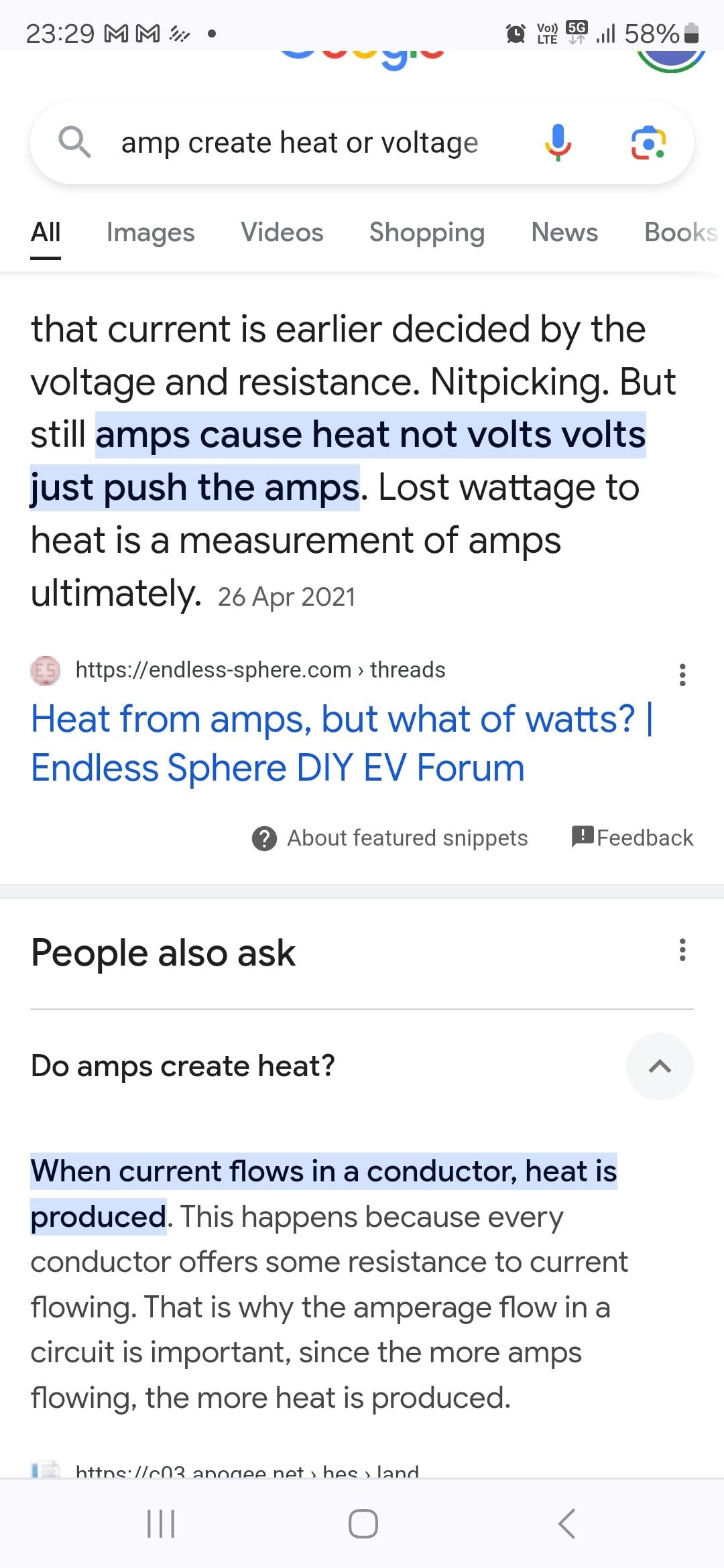
Heat is generated by resistance. The resistance in the conductors. The larger the conductor the less resistance. Current itself does not generate heat. It is current flowing against a resistance. Less resistance less heat. Bigger(heavier) and better conductor the less resistance.
If you are designing a motor and you want to optimize low weight with smaller wire size then the higher the voltage you design for the lower the current and the smaller and lighter the wires can be.. You could also use gold wire for instance to reduce resistance.
But all this must be taken into consideration when designing a motor. If cost is the primary consideration then you make the conductors large enough to handle the worst case 36v and use the same materials to make the 43v and the 48v versions.
 
Last edited:
i'm not claiming the 36V/48V versions differ to make savings in weight. what I'm saying is that engineers sometimes make savings at the cost of equipment lifetime. in such case using 48V version will allow to improve the lifetime by ensuring higher thermal safety margins.
But if the motors are all using materials for the 36v then then the 48v will not have any lower heat than the 36v. Given that the heat dissipation was adequate for 36v it is going to be just as adeqaute at 48v. There is probably more lifetime issues with the level they allow to discharge the battery until cutoff. When the battery is discharged too low before recharge the lifetime of the battery is reduced. So it is a balance between long battery life on the trail and long lifetime for the battery.
 
Keep reading
    Browse all

    Similar Threads

    Community Stats

    Since 2018
    668K
    Messages
    40,754
    Members
    Join 30,000+ Riders, it's free!
    Back
    Top