Nah mate, that’s a bit of a fairy tale. Pivot aren’t using some magical pure carbon while everyone else is sprinkling in dust and filler. All those frames, Pivot, Spesh, Trek, Forbidden, Crestline, Ibis, Intense Orbea and anything else coming out of VIP Composites in Vietnam. Same factory floor, same Toray sheets of fibre, same toughened epoxy resins. Same guy or girl laying up the carbon.
What might differ is how the layup is decided:
- Big established brands like Trek, Spesh, Pivot, Yeti have may have a composites engineer. They’ll supply VIP with a ply book to show where to beef up certain areas for stiffness (can literally be layer by instructions and VIP just executes it.)
- Smaller/newer brands like Crestline don’t have an in house composites department. They give VIP the geometry and the performance targets (weight, strength, stiffness) and rely on VIP’s engineers to design the layup. Crestline are totally open about this … they just said “give us your highest end modulus carbon and best process” and VIP delivered.
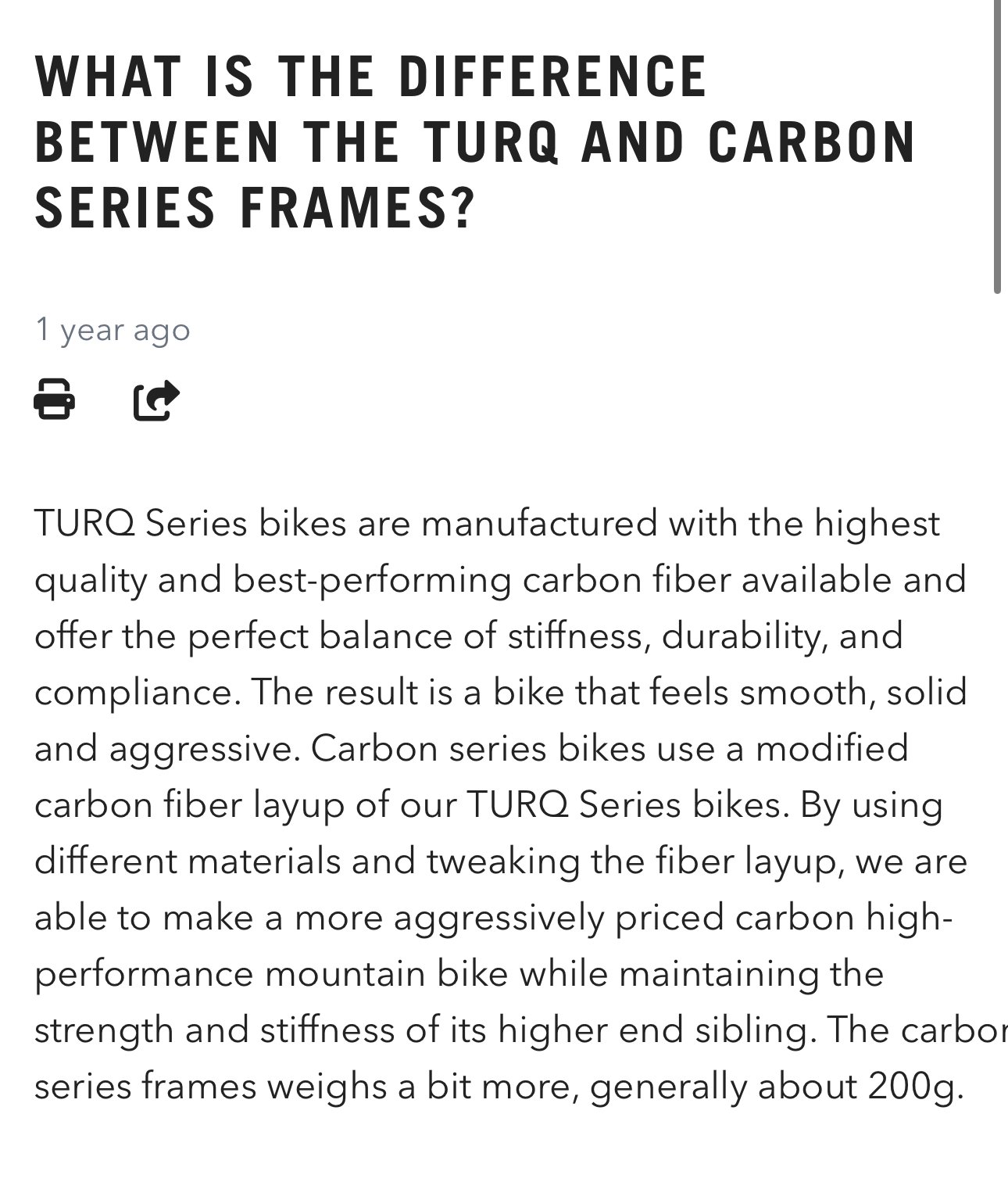
So yes, brands can choose to spend more on higher modulus fibre in certain models but everyone has access to it. And it’s likely that nearly all VIP customers use it, but then "down spec" to lower grade for cheaper models (like Yeti, who say their more basic carbon frame is about 200g heavier than their “TURQ” frame which, will be the equivalent of Pivots high grade frame.
Funnily enough Yeti say the lower grade carbon frame rides no different, but is just slightly heavier.
There’s no exclusive grade of carbon reserved for Pivot. And none of the brands are secretly blending in glass fibre or plastic to cut costs that’s total marketing bs (certainly not at a manufacturer like VIP anyway)
At the end of the day, the big differences are geometry, suspension layout, and the layup philosophy each brand chooses.
Orbea frame and a Pivot frame don’t ride differently because of the carbon fibre itself, but because of things like geometry and suspension kinematics.
Some brands might want a stiffer BB (more carbon) others may want a flexier chainstay (less carbon). The materials are all coming off the same rolls in the same factory. it’s just a question of how much high-mod you want to pay for and where you put it.
So while the marketing terms differ, Ultra High Modulus, FACT, OCLV, TURQ, Hollow Core, Smoothwall, CC etc they’re all describing variations on the same thing: a carbon frame built from Toray fibres and epoxy resin, hand laid and cured in VIP’s factory.