
Hey Denver, sick stuff. How do i purchase #1 from you? I am fairly new to this forum so cant send PM to anyone yet..View attachment 138692View attachment 138693
This can be very useful in case of theft of your bike.
Of the four necessary screws 2 are to hold the support and the other two are to fix the airtag. So it will be very easy to change the battery when it is used up.
View attachment 138694 View attachment 138695 View attachment 138696
Of course, my support is purple in color, however with a black support and black screws, the location of the airtag is practically invisible. Moreover, in case of theft it will be difficult to reach because it will first be necessary to break the lock to remove the battery.
View attachment 138697 View attachment 138698 View attachment 138699
I imagine that some people might be interested in purchasing these parts. So for those who want to know the prices :
(No. 1)View attachment 138700
The kit therefore includes :
- 1× The TPU joint for the headset.
- 5× TPU seals for the rear triangle.
- 1× TPU protection kit for VPP kinematics
The pack for $30 USD
(No. 2)View attachment 138701
TPU protection for Rockshox shock absorber (Deluxe / Super Deluxe) + Nylon cable guide +15% carbon (PA12-CF15) is available for $20 USD
(No. 3)View attachment 138702
Support (ABS) for LEZINE pump : $15 USD
(No. 4)View attachment 138703
Complete converter is available for : $40 USD
(No. 5)View attachment 138704
Internal guidance (ABS) : $20 USD
All these prices include packaging but exclude shipping costs. Shipping
I currently have in stock :
- No. 1 = 10x available
- No. 2 = 6x available
- No. 3 = 3x available soon
- No. 4 = 1x available
- No. 5 = 1x available
As a rule, all parts are black, however it is possible to make them in other colors except TPU. All screws are stainless steel.
The measurements were made on my own frame, if the parts were not suitable for your frame, you just have to return the parts to me for a refund or exchange for a part that fits.
As we have seen, I have "easy criticism" but in return I bring my share of solutions and it's to be taken as an opportunity because few people take the time to provide an objective feedback on the manufacture of a product. I hope that LightCarbon will offer even more refined frames in the future. However, LightCarbon should not be blamed, it's not easy to be on all fronts and to take into account every problem of a frame. Moreover, SantaCruz and Scor have not done better to protect the rocker... Very often, manufacturers face several problems such as development costs or the time they have available to create a new model. Moreover, the perfect frame does not exist. And very honestly, I prefer to have a frame manufacturer who puts all his efforts into the geometry of a frame as well as the kinematics and the quality of manufacture, especially as far as carbon is concerned, rather than into superfluous parts. Even if there are a few points to be made about this frame, I maintain that LightCarbon is a frame manufacturer worthy of the name and that you can trust them. For my part, I clearly do not regret having invested in this frame.
I just hope that in the future LightCarbon will take into account this kind of remarks if they make a version 2. I remain at LightCarbon's disposal to discuss all this or provide the 3D files if they want to produce copies of the various parts presented in this post.
It should be noted that I have already finished assembling my bike. I have already accumulated 150 km with the bike and I will soon give you feedback on its behavior. But before that, we'll talk about the battery (model SYR014) ...
View attachment 138706
Navigation
Install the app
How to install the app on iOS
Follow along with the video below to see how to install our site as a web app on your home screen.
Note: This feature may not be available in some browsers.
More options
Style variation
You are using an out of date browser. It may not display this or other websites correctly.
You should upgrade or use an alternative browser.
You should upgrade or use an alternative browser.
Assembly frame LightCarbon LCE971 bafang M510 (By Denver)

NWCO Emtb
Member
Hey Denver, I Would love to order #1 & #5. Can't seem to be able to PM you?

hi, sorry if it's not a problem is it possible to have the stl? they are also good for lce930 theoreticallyPreviously, I was asked why I hadn't finished assembling my bike yet. I replied that the next "post" would be there to answer this more precisely. And that's what I'm going to do, starting with the headset.
View attachment 138533
As you can see below, the photo shows the headset installed in the frame. Everything fits together correctly, there is no play, it's well designed and well manufactured.
View attachment 138534
However, I have a few small criticisms to make about this headset kit. Firstly, the guide ring isn't angled enough. If you want to preserve your cables as best as possible, I advise applying a file to break this angle.
View attachment 138535 View attachment 138536 View attachment 138537
Additionally, and this is a poor choice by LightCarbon because unfortunately the cable of the DCP245
View attachment 138538
doesn't fit through the hole. So you have two solutions ; either cut the plastic to reduce the thickness of the connector (as I did) or cut the cable and resolder the copper wires...
View attachment 138539 View attachment 138540 View attachment 138541
View attachment 138542 View attachment 138543 View attachment 138544
I can also tell you that the rubber grommet won't be very durable because it's too flexible...
View attachment 138545
But then why do we have this type of headset ?
Simply "Current trends" dictate that this type of headset is found on our mountain bikes because, let's remember, it originated from road bikes. It has the advantage of providing a cable management that is the most streamlined and discreet and moreover, attractive. You can judge for yourself the difference between my LightCarbon LCE971 and My Frey AM1000 EX :
View attachment 138546 View attachment 138547
But the downside is that it is known for having two major flaws, one being its difficult and tedious maintenance and the other is that it is an open door to all dirt (dust, sand, dirt...) which results in a more frequent maintenance interval (every 3 months minimum if you want to preserve your bearings as best as possible and depending on how often you ride in bad weather). Furthermore, many people use a "karcher" (high-pressure jet) to clean the bike, which exacerbates this problem as the pressure pushes the dirt inside.
View attachment 138548 View attachment 138549
But we have the possibility to counter this problem, and that's where 3D printing comes in handy. I took the trouble to completely model the headset and thus create a TPU seal to act as a barrier against potential dirt that could infiltrate.
View attachment 138550
TPU has the advantage of being very resistant and flexible. I took care to design the seal with 2 lips that come into contact with the outer cage of the bearing.
View attachment 138551 View attachment 138552 View attachment 138553
The seal only comes into contact with the metal part of the bearing to avoid rubbing against the frame and prematurely wearing the paint.
View attachment 138554
We can also see in the photo below that there is a small "dirt reservoir".
View attachment 138555
So, in the best case, it will remain outside the bearing and reach a certain saturation (if you never maintain it). Dirt could pass through the bearing seal.
View attachment 138556 View attachment 138557 View attachment 138558 View attachment 138559 View attachment 138560
Its effectiveness in real use will need to be judged, but from what I can visually assess, it seems very effective to me.
View attachment 138561 View attachment 138562 View attachment 138563 View attachment 138564 View attachment 138565 View attachment 138566 View attachment 138567
And now we move on to the rear end of the bike.
View attachment 138568
Here we can see the same problem as with the headset. There are openings for cable routing; the derailleur cable, the rear brake hose, and the speed sensor cable.
View attachment 138569
We can also note that LightCarbon could have aligned the holes.
View attachment 138570
Here too, it's an open invitation for dirt to embed itself in the rear end and around the motor.
View attachment 138571
Personally, I can't see myself cleaning the inside of the rear triangle because it's filled with dirt and water or constantly disassembling my motor from the frame to clean it properly. It should be noted that carbon is known to be abrasive, so it's not a good idea for cables to rub against the frame.
To address this problem, TPU grommets were modeled and printed to seal these holes as best as possible and thus limit the accumulation of dirt while minimizing cable friction as much as possible.
View attachment 138572View attachment 138573View attachment 138574View attachment 138575View attachment 138576View attachment 138577View attachment 138578View attachment 138579View attachment 138580
The grommets also have a minor advantage in that when you remove the shock from the frame, the rear triangle can no longer hit the frame and damage the paint.
View attachment 138581
The seals come in several versions; with fins, with holes, or closed if, like me, you use a "wireless" derailleur (AXS).
View attachment 138582

today i tried fitting a chainguide toIt is true that it is not always easy to make oneself understood, especially when we do not speak the same language. I looked at the link you provided in your post, and indeed, we can see that there are two models of spiders. One is the original, compatible with the chain guide, and the other is not the original. I also see that there is a photo of a spider for a Bafang M400. It's a bit unfortunate to display different spiders when it concerns only the M500, M510, M560, M600. If the spider has these "notches" on the front, it will be compatible with a chain guide. Send a photo as well as the reference (CW G522.1A) to the seller to ensure they don't make a mistake.
View attachment 142381
my new bike (kunlun)
despite it comes with iscg05 mounts i could not fit a chainguide
i tries 3 different ones and all were rubbing to the point that if you tighten the locknut it would stop moving all together
it looks like i got the right spider tho
you see the markings where it touched
i even tried filing some chainguide but still no go
what im i doing wrong
xtraman122
Well-known member
Weird, it does look like the right chain ring. This is the guide I bought that fit: Amazon.comtoday i tried fitting a chainguide to
my new bike (kunlun)
despite it comes with iscg05 mounts i could not fit a chainguide
i tries 3 different ones and all were rubbing to the point that if you tighten the locknut it would stop moving all together
it looks like i got the right spider tho
you see the markings where it touched
i even tried filing some chainguide but still no go
what im i doing wrong
View attachment 150202
View attachment 150201
View attachment 150200
Is the top hitting the frame or anything?

I bought this and it rubs on my bike as well. LCE971 frame, m560 motor. Spider rubs on the guide. Though I have ridden now for about 4 months and have not dropped a chain once yet.Weird, it does look like the right chain ring. This is the guide I bought that fit: Amazon.com
Is the top hitting the frame or anything?
hmm there might be more model spiders than we think... i think offset is not correct on these for a guideI bought this and it rubs on my bike as well. LCE971 frame, m560 motor
i tried an old bbshd axle spacer but it was to thick causing to much offset on the chain, but something like it wil fit over the axle
what i had was a 4mm one
might get it working if i used the thinnest one
does your spider from gbk has any markings whatsoever?
what i had was a 4mm one
might get it working if i used the thinnest one
does your spider from gbk has any markings whatsoever?
xtraman122
Well-known member
Weird, that one works perfect for me with no rubbing. Wonder what the deal is then. Inconsistent manufacturing in the motor or chain rings? Maybe the chain ring slips onto the motor some different amount between motors and sometimes it just gets too close to the guide. The tolerances are tight oh mine but I made sure nothing rubbed.I bought this and it rubs on my bike as well. LCE971 frame, m560 motor. Spider rubs on the guide. Though I have ridden now for about 4 months and have not dropped a chain once yet.
i tried an old bbshd axle spacer but it was to thick causing to much offset on the chain, but something like it wil fit over the axle
what i had was a 4mm one
might get it working if i used the thinnest one
View attachment 150211
does your spider from gbk has any markings whatsoever?
As I said. I have ridden 4 months and chain has not dropped a single time. I don't want to use spacers to make the chain line worse. It's not perfect to beging with. At the start I was thinking of sanding the chain guide to stop rubbing but since I have not had any problems with the chain dropping I have chosen not to do this and just leave it off.
I think my spider is identical to yours based on the pictures on your earlier comment.
I upgraded my chain ring though. I bought Deckas chainrings from aliexpress in size 32, 34 and 36. First I bought one from the other brands but that chainrings quality was crap. The material was also extremely soft. I recommend the Deckas brand chainrings. Even though they are aluminium they seem to last the power of m560 750w nicely.
I'm running Shimano XT Linkglide 11-speed 11-50 and 36T chainring. This way I get two benefits. I don't have to shift too often compared if I had 32T or 34T chainring. Though personally I think 11-speed is too many gears for full powered ebike and would recommend deore linkglide 10-speed 11-48 cassette. I tried 9-speed but it's harder to get big enough largest cog with it and the shifts are quite rough. 2nd benefit is that I don't have to use my smallest cogs as often with 36T chainring and it will prolong the life of smallest cogs.
@xtraman122 hard to say.. maybe the tolerances are too tight and the combination of 3 parts (engine, spider and chainguide) will end with very small gap or rubbing.
good point on that linkglide stuff, if you read my build log you could see i already run the 10 speed stuf with 11-48 and also a 36t chainring. still to much gears for when riding in higher assist levels, but i mainly run eco or tour anyways.
on my e10 with the same m510 motor and the same chainring and chainguide everything just works, might swap motors if chainguide doesnt work on the my new build.
i ride stuff where i want a chainguide and idler wheel to keep chain on.
on my e10 with the same m510 motor and the same chainring and chainguide everything just works, might swap motors if chainguide doesnt work on the my new build.
i ride stuff where i want a chainguide and idler wheel to keep chain on.
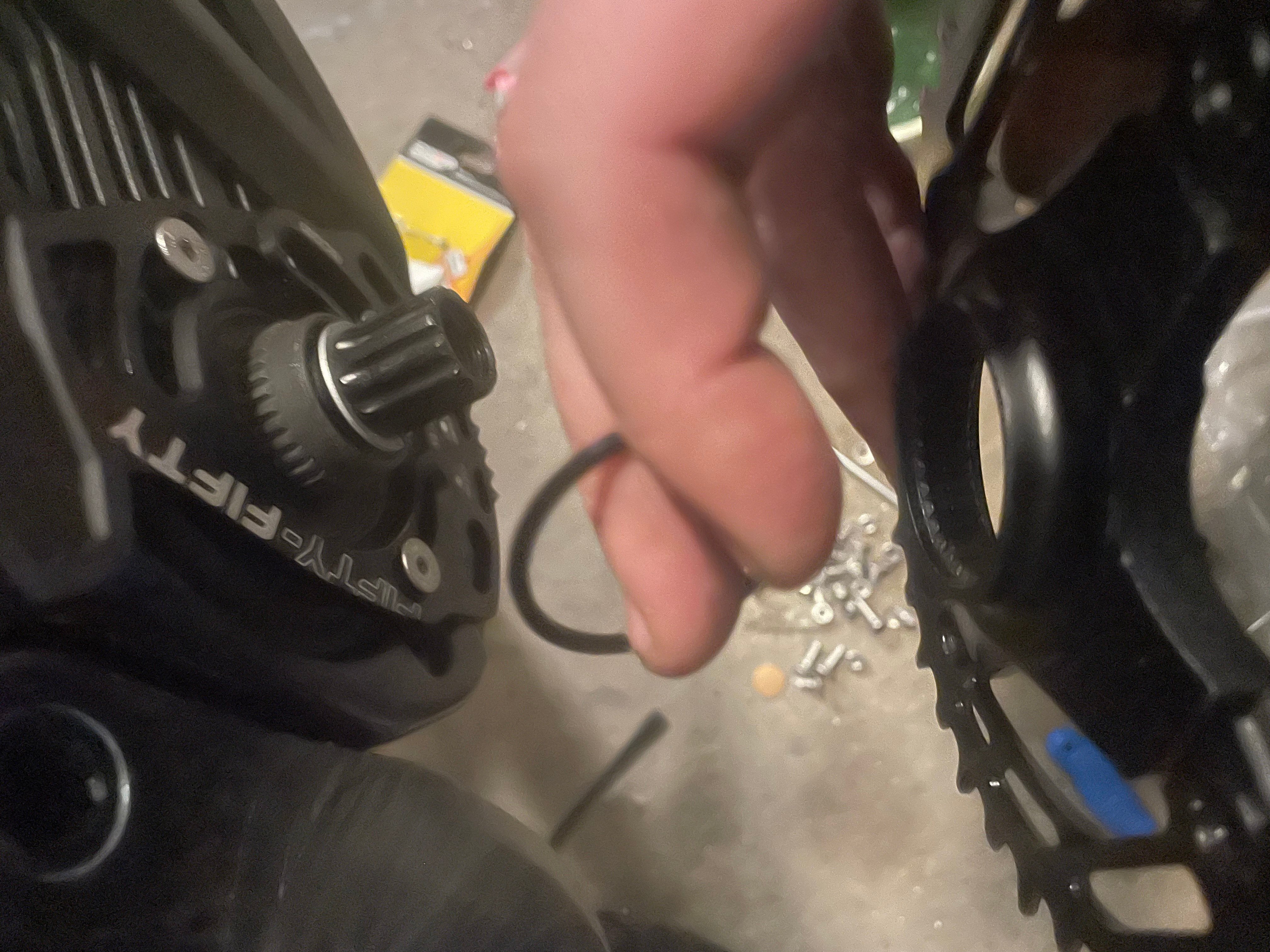
digged into why chainguide doesnt work for me.
pulled this of my e10 m510 that was running a iscg05 fifty fifty chainguide without rubbing.
the front looks same but the rear has a much more milled edge and it has a big marking S2 on it
could somebody check that ordered that greenbikekit chainring spider if its same?
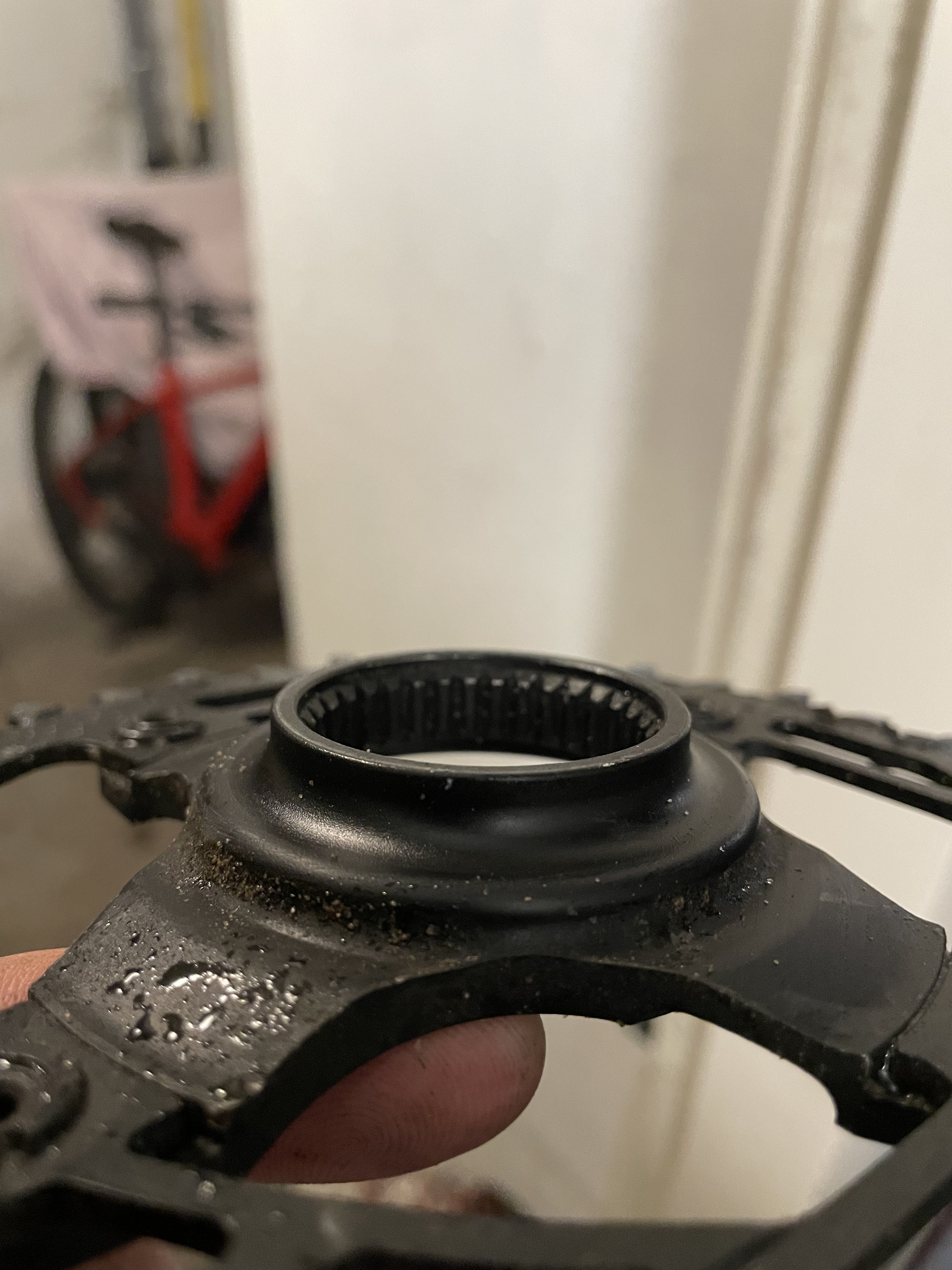
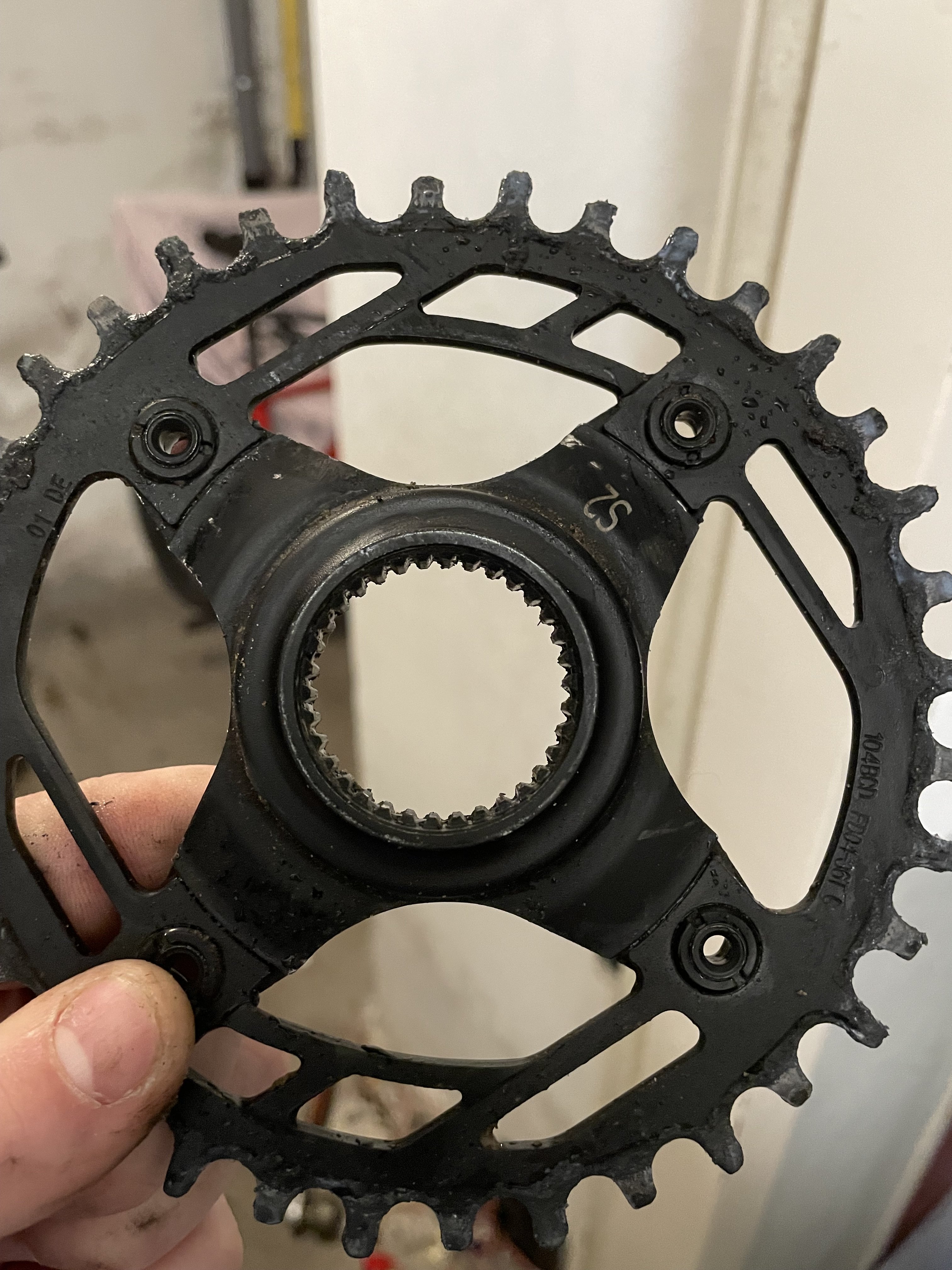
pulled this of my e10 m510 that was running a iscg05 fifty fifty chainguide without rubbing.
the front looks same but the rear has a much more milled edge and it has a big marking S2 on it
could somebody check that ordered that greenbikekit chainring spider if its same?
xtraman122
Well-known member
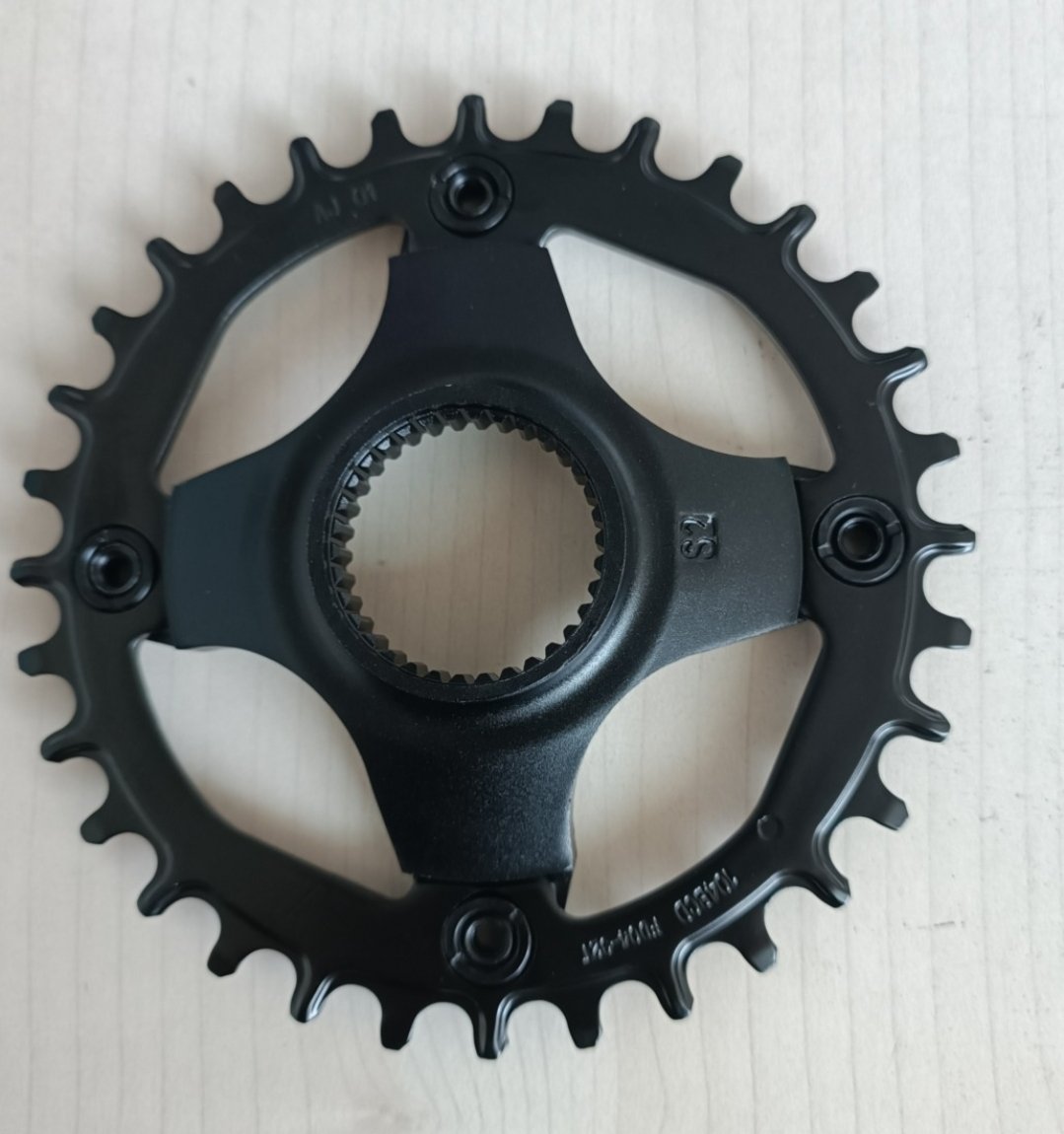
Here is mine which was from GBK and fit my chain guide fine. Did not appear to have the S2 writing on it anywhere. Dengfu E82 - M560 750w Build (Was: LightCarbon LCE971)digged into why chainguide doesnt work for me.
pulled this of my e10 m510 that was running a iscg05 fifty fifty chainguide without rubbing.
the front looks same but the rear has a much more milled edge and it has a big marking S2 on it
could somebody check that ordered that greenbikekit chainring spider if its same?
View attachment 150407
View attachment 150409
xtraman122
Well-known member
I’ll have to take mine off to double check for that S2 stamp, I notice this one on GBK does show the S2 on it in their pics and actually has the option to purchase it with a chain guide now. Bafang M620 M600 M500 M510 chainring spider BCD104-Greenbikekit.com BBS, ebike batteries, Bafang M620, Bafang M600, Bafang M500, Bafang M510, KT controller with display-GreenBikeKit.comMine has the S2 writing but it seems slightly different than yoursnot sure if it's because mine accepts 32T chainring. Not sure if yours does.
View attachment 150414
The one I actually purchased though was this one: Bafang M800 M820 M600 M560 M500 M510 M820 motor chainring -Greenbikekit.com BBS, ebike batteries, Bafang M620, Bafang M600, Bafang M500, Bafang M510, KT controller with display-GreenBikeKit.com
xtraman122
Well-known member
I had my chainring off the other day and there is no writing at all on the inside, so I guess mine is some different variation than the ones that have the S2 on them.
@JimLee-Lightcarbon do you have some news about the new version of rear triangle?
i played around with spiders and made the markhor work with the e10 spider
i found the difference in spiders is located with red on this pic
you can clearly see , there is a flat machined piece on the back of the spider.
my other spider did not have this so i took a half rounded file and made it same -ish
now both spiders work
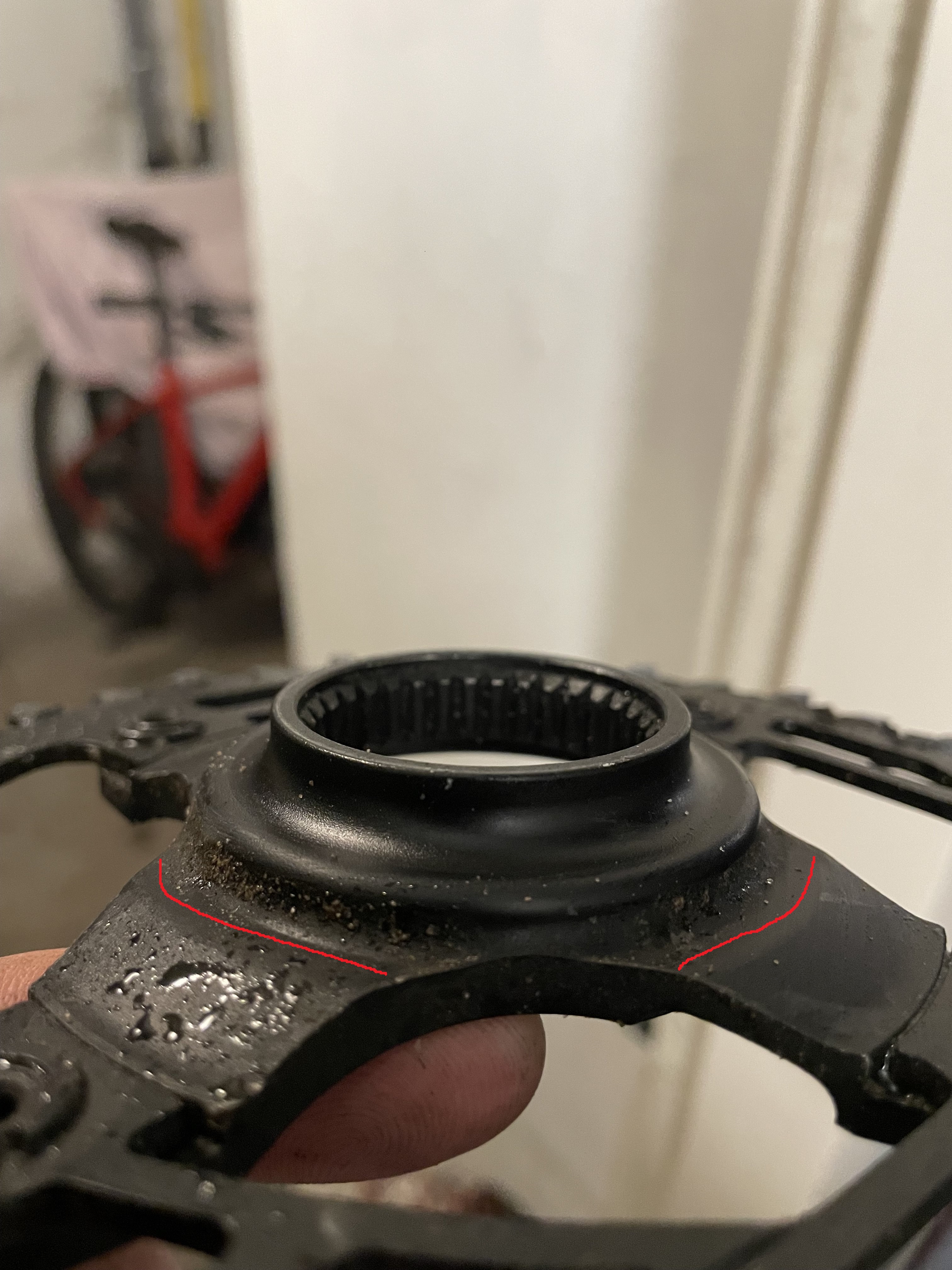
i found the difference in spiders is located with red on this pic
you can clearly see , there is a flat machined piece on the back of the spider.
my other spider did not have this so i took a half rounded file and made it same -ish
now both spiders work

xtraman122
Well-known member
I believe Fieldebikes sells it, just chat with them on Alibaba and they should be able to find it.Hey Denver where did you get your battery support system syr014. I can't find it. I started my buildView attachment 152792
I've reached out to a few people on AliExpress and Alibaba no replies yet. I'm looking for a link at this point.I believe Fieldebikes sells it, just chat with them on Alibaba and they should be able to find it.
xtraman122
Well-known member
That’s the problem I’ve found, I’ve had to buy some oddball parts and they seemingly don’t have a listing for them but if you chat with them they have rhe right thing and can make you an order for it.I've reached out to a few people on AliExpress and Alibaba no replies yet. I'm looking for a link at this point.
If I recall both I and Denver got the battery support for the battery seller. When Denver ordered it I think they had it listed it back then. I had to ask for it separately as well as the charging plug cover for the frame.Hey Denver where did you get your battery support system syr014. I can't find it. I started my buildView attachment 152792
Which seller did you buy from? I bought from here and they don't have it. https://www.aliexpress.us/item/3256...st_main.4.21ef1802mMT1Sf&gatewayAdapt=glo2usaIf I recall both I and Denver got the battery support for the battery seller. When Denver ordered it I think they had it listed it back then. I had to ask for it separately as well as the charging plug cover for the frame.
xtraman122
Well-known member
Just noticed you’re in the USA, had you asked like 2 weeks ago I would have just sent you mine. I think I finally threw it away after having it sit collecting dust for 9 months just recently.Which seller did you buy from? I bought from here and they don't have it. https://www.aliexpress.us/item/3256...st_main.4.21ef1802mMT1Sf&gatewayAdapt=glo2usa
Which seller did you buy from? I bought from here and they don't have it. https://www.aliexpress.us/item/3256...st_main.4.21ef1802mMT1Sf&gatewayAdapt=glo2usa
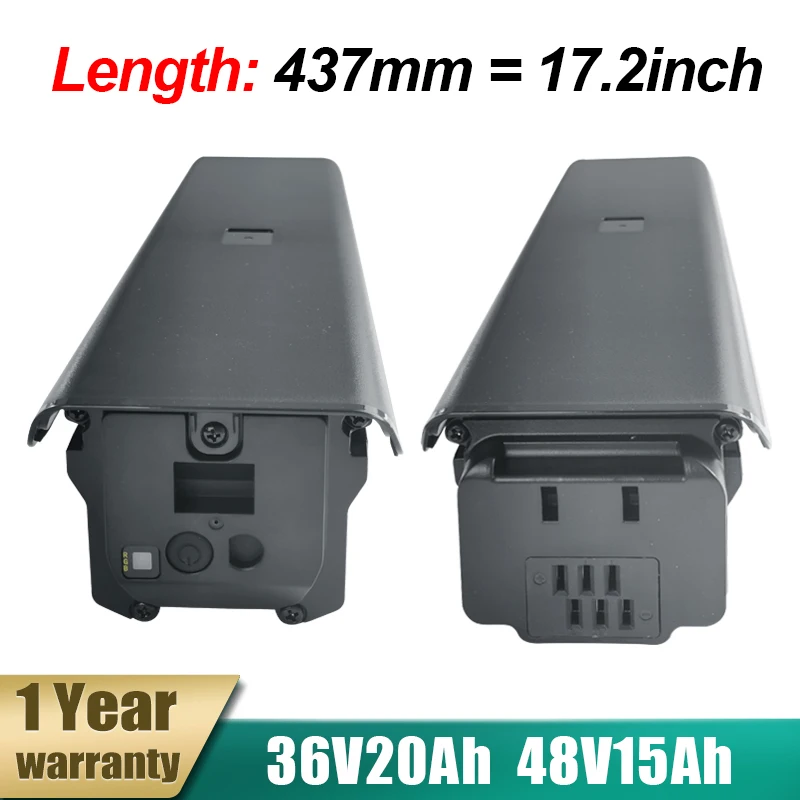
36 V 15 Ah 20 Ah E-Bike-Akku SYR 014 48 V 15 Ah Akkus mit 21700 Samsung-Zelle für FitNord Ranger 700FS Elektro-Mountainbike - AliExpress 18
Smarter Shopping, Better Living! Aliexpress.com
 a.aliexpress.com
Here. 48V 15Ah version.
That would have been great lolJust noticed you’re in the USA, had you asked like 2 weeks ago I would have just sent you mine. I think I finally threw it away after having it sit collecting dust for 9 months just recently.
xtraman122
Well-known member
I seriously had it sitting in my garage since about last April, I had originally tried building an LCE971 but gave up after months of delays with the rear triangle issues and switched to an E82. I had already ordered the battery and other supporting equipment for the frame and then ended up not needing it. It was only recently I went on a cleaning spree and finally tossed the battery hardware knowing I wouldn't have a use for it, bad timing.That would have been great lol
Similar Threads
-
 Dengfu E10 + E23 Carbon Fullsuspension E-Fatbike on Bafang M510
- Started by ncs
- Replies: 14
-

-
 Markhor Kunlun M510 - 190mm - Super Enduro Build-Log
- Started by kaaskopf
- Replies: 172
-
Dengfu E82 - M560 750w Build (Was: LightCarbon LCE971)
- Started by xtraman122
- Replies: 80
-
(New to MTB) Looking for help with my Dengfu E10 build
- Started by Zayd Proctor
- Replies: 96