Who makes the 10mm direct mount stem? I haven’t been able to find one.Yeah, but it was the easiest way to try out the concept. Now I have a yoshimura stem base kit and a 10mm direct mount stem on order to play more with.
Navigation
Install the app
How to install the app on iOS
Follow along with the video below to see how to install our site as a web app on your home screen.
Note: This feature may not be available in some browsers.
More options
Style variation
You are using an out of date browser. It may not display this or other websites correctly.
You should upgrade or use an alternative browser.
You should upgrade or use an alternative browser.
Weird Reversed Stem Geo / Chat
- Thread starter Rob Rides EMTB
- Start date


Who makes the 10mm direct mount stem? I haven’t been able to find one.
Onoff.

flatlander99
New Member
- May 21, 2026
- 9
- 7
POTENCIA ONOFF DH10mm INTEGRADA | Componentes Oferta | Oiartzun BikeWho makes the 10mm direct mount stem? I haven’t been able to find one.

I'm fundamentally on-board with bars being higher and closer ... very much weight through my feet, turning loads are already managed through my feet.
Agree, most load does in fact go through feet and bum.
Edit: and bum
Last edited:
BeMoreBikes
New Member
- Mar 4, 2026
- 66
- 120
I’m accepting preorders now for the direct mount RR stems. Let me know if you have any questions.

Does anyone else find very short stems twitchy, and reversed stems floppy?
I tried a Rulezman 15 mm stem + spacers to get my hands almost exactly where they would be with a BMB-style setup. In both the forward and reversed positions it felt nervous/twitchy. That fits my general experience: once I go much below about 35–40 mm of stem length, the steering starts to feel too reactive and unstable, even if the hand position looks good on paper.
I then tried a 35 mm stem reversed, with different amounts of roll on a 75 mm rise bar. With the bar rolled so the rise was roughly in line with the fork/steerer, it actually felt pretty good once moving. The downside is that it shortens the effective reach by roughly 70 mm compared with the same stem forward, so it would feel cramped on most bikes. It only partly works because this frame is already too long for me.
When I rolled the bar forward to regain some reach, the bike became twitchy again. I suppose that rolling a high-rise bar forward moves the grips farther forward relative to the steering axis, so small body movements and hand inputs feed into the steering more easily, like having a shorter stem.
The separate issue is slow-speed flop. With the stem reversed, the front wheel feels like it wants to tuck or jackknife at walking pace: once the wheel starts to turn, it wants to fall farther into the turn and pulls the bars with it. I assume the stem is not actually increasing trail or changing the bike’s inherent wheel flop. Rather, it changes my hand position relative to the steering axis, so I have less natural leverage/damping against the flop that is already there from the slack head angle, long front centre, high trail, and heavy front end.
So, from my experience so far, it seems the BMB 15mm reversed stem would be unsuitable for me on both grounds: the short length would make steering twitchy, and the reversed-ness would make it floppy. However, I do like an upright riding position to take weight off my dainty hands and back, so I'd like to know if there's some way of mitigating these issues to make a BMB-style setup work. Has anyone else had these problems, and if so, did you manage to solve them? I suppose steepening the head angle would address the flop, but might make the twitch worse.
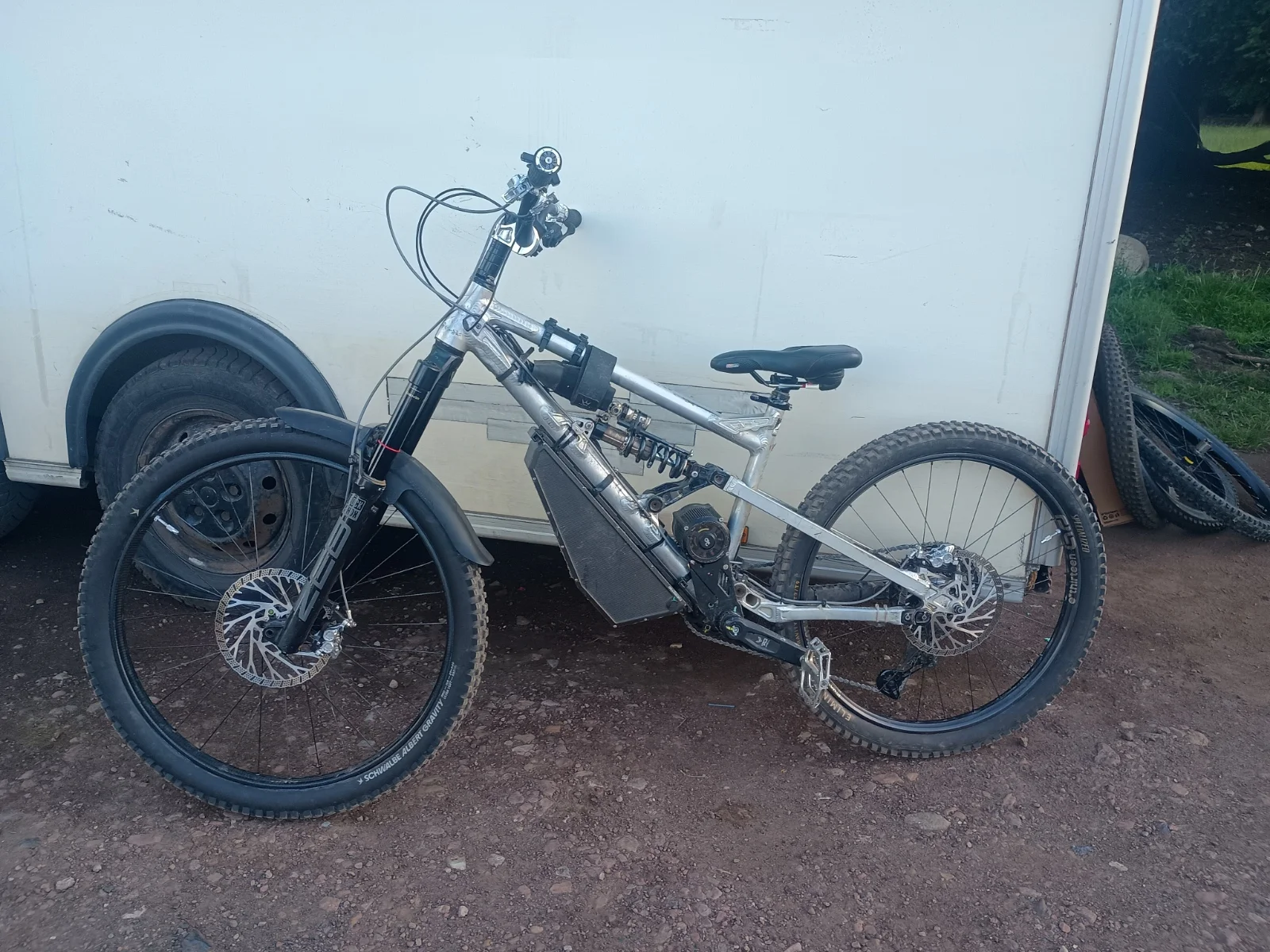
I tried a Rulezman 15 mm stem + spacers to get my hands almost exactly where they would be with a BMB-style setup. In both the forward and reversed positions it felt nervous/twitchy. That fits my general experience: once I go much below about 35–40 mm of stem length, the steering starts to feel too reactive and unstable, even if the hand position looks good on paper.
I then tried a 35 mm stem reversed, with different amounts of roll on a 75 mm rise bar. With the bar rolled so the rise was roughly in line with the fork/steerer, it actually felt pretty good once moving. The downside is that it shortens the effective reach by roughly 70 mm compared with the same stem forward, so it would feel cramped on most bikes. It only partly works because this frame is already too long for me.
When I rolled the bar forward to regain some reach, the bike became twitchy again. I suppose that rolling a high-rise bar forward moves the grips farther forward relative to the steering axis, so small body movements and hand inputs feed into the steering more easily, like having a shorter stem.
The separate issue is slow-speed flop. With the stem reversed, the front wheel feels like it wants to tuck or jackknife at walking pace: once the wheel starts to turn, it wants to fall farther into the turn and pulls the bars with it. I assume the stem is not actually increasing trail or changing the bike’s inherent wheel flop. Rather, it changes my hand position relative to the steering axis, so I have less natural leverage/damping against the flop that is already there from the slack head angle, long front centre, high trail, and heavy front end.
So, from my experience so far, it seems the BMB 15mm reversed stem would be unsuitable for me on both grounds: the short length would make steering twitchy, and the reversed-ness would make it floppy. However, I do like an upright riding position to take weight off my dainty hands and back, so I'd like to know if there's some way of mitigating these issues to make a BMB-style setup work. Has anyone else had these problems, and if so, did you manage to solve them? I suppose steepening the head angle would address the flop, but might make the twitch worse.

Bufort
New Member
- Mar 26, 2026
- 38
- 37
It sounds to me like you should stick with what you're already comfortable with, and that you need a shorter frame. Experiment with high rise bars/stems, so this would give you the bar feel you already like and are familiar with, and give you a more upright position, without the odd feeling of negative reach. Why do you want to make the BMB setup work?Does anyone else find very short stems twitchy, and reversed stems floppy?
I tried a Rulezman 15 mm stem + spacers to get my hands almost exactly where they would be with a BMB-style setup. In both the forward and reversed positions it felt nervous/twitchy. That fits my general experience: once I go much below about 35–40 mm of stem length, the steering starts to feel too reactive and unstable, even if the hand position looks good on paper.
I then tried a 35 mm stem reversed, with different amounts of roll on a 75 mm rise bar. With the bar rolled so the rise was roughly in line with the fork/steerer, it actually felt pretty good once moving. The downside is that it shortens the effective reach by roughly 70 mm compared with the same stem forward, so it would feel cramped on most bikes. It only partly works because this frame is already too long for me.
When I rolled the bar forward to regain some reach, the bike became twitchy again. I suppose that rolling a high-rise bar forward moves the grips farther forward relative to the steering axis, so small body movements and hand inputs feed into the steering more easily, like having a shorter stem.
The separate issue is slow-speed flop. With the stem reversed, the front wheel feels like it wants to tuck or jackknife at walking pace: once the wheel starts to turn, it wants to fall farther into the turn and pulls the bars with it. I assume the stem is not actually increasing trail or changing the bike’s inherent wheel flop. Rather, it changes my hand position relative to the steering axis, so I have less natural leverage/damping against the flop that is already there from the slack head angle, long front centre, high trail, and heavy front end.
So, from my experience so far, it seems the BMB 15mm reversed stem would be unsuitable for me on both grounds: the short length would make steering twitchy, and the reversed-ness would make it floppy. However, I do like an upright riding position to take weight off my dainty hands and back, so I'd like to know if there's some way of mitigating these issues to make a BMB-style setup work. Has anyone else had these problems, and if so, did you manage to solve them? I suppose steepening the head angle would address the flop, but might make the twitch worse.View attachment 187484
I haven't yet found a setup I really like. I previously had really high forward bars on this bike, but it didn't allow rapid changes of direction because (a) high bars (forward or back) need to travel further to achieve the same lean angle, and (b) I'm not very tall, so I don't have a huge range of movement that would allow me to tip the bike far enough. With a reverse stem, I can have the upright riding position I need for comfort with the grips lower and closer than with the forward stem, making it easier to tip the bike side to side. There is also some added stability/confidence from having so much bike in front of you, at the cost of reduced agility in tight corners and wheel flop at slow speed. (The fastest setup I tried is low forward bars, but I'm willing to sacrifice some speed for comfort and confidence on steep stuff.)It sounds to me like you should stick with what you're already comfortable with, and that you need a shorter frame. Experiment with high rise bars/stems, so this would give you the bar feel you already like and are familiar with, and give you a more upright position, without the odd feeling of negative reach. Why do you want to make the BMB setup work?
You're probably right that a shorter bike with high forward bars would be best for me. At 172cm I'm right in between the Small and Medium recommended height for the Geometron G1. I find Medium in most other brands is a bit too short once I've raised the bars to my preferred height, as that reduces the effective reach.
In any case, I'm curious why the proponents of short reverse stems don't seem to find it twitchy or floppy. Am I doing something wrong in the setup? Is it specific to my long, slack frame?
Bufort
New Member
- Mar 26, 2026
- 38
- 37
Well I run a 10mm OnOff and a Rulezman 15mm stem, putting my actual hands approximately inline with the steerer or just behind. I don't find it floppy, my head angles are pretty average for these days, and I use a medium frame, correct for my height, but end up with a slightly shorter setup due to the short stem. I've always run high bars and short stems though, 50mm in 2000, down to 30mm more recently, and now 15mm. A 50-60mm stem to me now feels terrible, so I think a lot of it is simply down to preference and riding style.I haven't yet found a setup I really like. I previously had really high forward bars on this bike, but it didn't allow rapid changes of direction because (a) high bars (forward or back) need to travel further to achieve the same lean angle, and (b) I'm not very tall, so I don't have a huge range of movement that would allow me to tip the bike far enough. With a reverse stem, I can have the upright riding position I need for comfort with the grips lower and closer than with the forward stem, making it easier to tip the bike side to side. There is also some added stability/confidence from having so much bike in front of you, at the cost of reduced agility in tight corners and wheel flop at slow speed. (The fastest setup I tried is low forward bars, but I'm willing to sacrifice some speed for comfort and confidence on steep stuff.)
You're probably right that a shorter bike with high forward bars would be best for me. At 172cm I'm right in between the Small and Medium recommended height for the Geometron G1. I find Medium in most other brands is a bit too short once I've raised the bars to my preferred height, as that reduces the effective reach.
In any case, I'm curious why the proponents of short reverse stems don't seem to find it twitchy or floppy. Am I doing something wrong in the setup? Is it specific to my long, slack frame?
BeMoreBikes
New Member
- Mar 4, 2026
- 66
- 120
Does anyone else find very short stems twitchy, and reversed stems floppy?
I tried a Rulezman 15 mm stem + spacers to get my hands almost exactly where they would be with a BMB-style setup. In both the forward and reversed positions it felt nervous/twitchy. That fits my general experience: once I go much below about 35–40 mm of stem length, the steering starts to feel too reactive and unstable, even if the hand position looks good on paper.
I then tried a 35 mm stem reversed, with different amounts of roll on a 75 mm rise bar. With the bar rolled so the rise was roughly in line with the fork/steerer, it actually felt pretty good once moving. The downside is that it shortens the effective reach by roughly 70 mm compared with the same stem forward, so it would feel cramped on most bikes. It only partly works because this frame is already too long for me.
When I rolled the bar forward to regain some reach, the bike became twitchy again. I suppose that rolling a high-rise bar forward moves the grips farther forward relative to the steering axis, so small body movements and hand inputs feed into the steering more easily, like having a shorter stem.
The separate issue is slow-speed flop. With the stem reversed, the front wheel feels like it wants to tuck or jackknife at walking pace: once the wheel starts to turn, it wants to fall farther into the turn and pulls the bars with it. I assume the stem is not actually increasing trail or changing the bike’s inherent wheel flop. Rather, it changes my hand position relative to the steering axis, so I have less natural leverage/damping against the flop that is already there from the slack head angle, long front centre, high trail, and heavy front end.
So, from my experience so far, it seems the BMB 15mm reversed stem would be unsuitable for me on both grounds: the short length would make steering twitchy, and the reversed-ness would make it floppy. However, I do like an upright riding position to take weight off my dainty hands and back, so I'd like to know if there's some way of mitigating these issues to make a BMB-style setup work. Has anyone else had these problems, and if so, did you manage to solve them? I suppose steepening the head angle would address the flop, but might make the twitch worse.View attachment 187484

Bronson Moore on Instagram: "#whatsthatwednesday Do you want more direct front tire feel with less wheel flop? The RR (Raised Reversed) stem is both Raised up and Reversed in offset so that your hands are ultimately behind the steering axis instead
35 likes, 1 comments - bemorebikes on March 5, 2025: "#whatsthatwednesday Do you want more direct front tire feel with less wheel flop? The RR (Raised Reversed) stem is both Raised up and Reversed in offset so that your hands are ultimately behind the steering axis instead of in front as is...
 www.instagram.com
In this video I talk all about this concept. From a strictly technical perspective, a reversed offset reduces wheel flop at the bars relative to the frame and ground whereas a forward offset increases wheel flop at the bars relative to the frame and ground. Wheel flop is a function of trail and headtube angle. The longer the trail and even more so the slacker the headtube angle, the more wheel flop you get. You can measure this basically by looking at the mechanical trail on a frame which is the trail measured perpendicular to the steering axis instead of along the ground. The higher up vertically along the steering axis that the perpendicular trail line sits, the more wheelflop you have because as you turn the bars, the headtube of the frame will lower that amount down as it moves to the side. This is a simplified model, as a fully accurate model would also need to account for wheel diameter, tire profile and width, wheelbase, and assumes the bike is kept upright, but the general principles are accurate enough to get an idea.
You can think of this in a sense like as the wheel turns right, the headtube moves over to the right and drops down some amount as a function of wheel flop. When you turn the bars to the right, a forward offset sweeps further away to the right side from the headtube and drops further down as a function of headtube angle and bar offset forward since the center of the stem sits above the perpendicular of its extension from the steering axis since the steering axis is at an angle back. When you turn the bars to the right, a reversed offset sweeps to the left of the headtube countering some of its movement to the right and comes up countering some of the headtube drop as a function of headtube angle and bar offset rearward since the center of the stem sits below the perpendicular of its extension from the steering axis since the steering axis is at an angle back. As such a forward offset amplifies the movement at the headtube that we call wheel flop, and a reversed offset counters the movement at the headtube that we call wheel flop leading to less wheel flop felt at the hands.
With that said, there is still the real world experience of something that you are calling wheel flop happening. I suspect it’s not strictly speaking wheel flop, but instead a different response at the bar that I would need more detail to parse out. I suspect you might be a rider who tends to lean your body more than the bike in turns which I would argue is incorrect technique and most mtb coaches advise against it instead recommending to lean the bike more than the body. Whether you agree with that technique being preferable or not isn’t really relevant though as the more important point is that a forward stem responds best to leaning the bike more, and a reversed offset stem responds even better to leaning the bike more while a forward offset stem responds ok to leaning the body more than the bike while a reversed offset stem may respond worse to leaning the body more than the bike sometimes leading to awkward or twitchy feelings. You can see an example in the video here.

Bronson Moore on Instagram: "You’ve got to keep them separated! One of the most common mistakes I see cornering is improper bike body separation where riders lean their body a lot, keep the bike upright, and steer the bike around a turn. Bike body se
241 likes, 7 comments - bemorebikes on October 10, 2025: "You’ve got to keep them separated! One of the most common mistakes I see cornering is improper bike body separation where riders lean their body a lot, keep the bike upright, and steer the bike around a turn. Bike body separation is all...
www.instagram.com
I’m exaggerating the technique a little for illustrative ease, but exaggerating good technique typically doesn’t do anything bad. If you have a right turn, and your instinct is to move your hips to the right to the inside of the turn, then it will be harder to get enough bike lean to carve instead of steer. You can check for this by feeling for the frame or seat between your legs. If you feel the frame or seat touch your left leg on a right turn then you are leaning your body in and keeping the bike upright. If you can feel the bike on your right leg in a right turn, then you are leaning the bike in and keeping the body up correctly.
A forward offset stem moves the bars to the inside of the bike during a turn, so when a rider moves their body to the inside of the bike during a turn by leaning their body in and keeping the bike upright, they follow along with the bar’s movement more in essence following the flop as they rely on steering at the bars. When you do the same body in and bike upright movement on a reversed offset, the bars move away from you towards the outside of the bike as you try to steer them in which can lead to awkward handling. If your tendency when it feels like the wheel is flopping over to the right is to try and chase it by moving your body in to the right and standing the bike up to the left, then the reversed offset would give you less feel of the flop at the hands due to its reduced hand flop making you follow the flop less, subsequently feeling like you have less control of the flop. The solution in essence is to try and move the bike over to the right to counter the flop instead of your body while keeping your body upright and calm. The more things you can do to keep your torso and especially head calm and more still while letting the bike move and follow terrain underneath you, the better and smoother you will ride generally with easier ability to see down the trail.
When you rely more on bike lean and less on bar steer to corner, by leaning the bike more than your body, the bike responds better, with better sideknob engagement, a calmer and more predictable drift response that’s easier to catch, and a kinematically tighter turn for a given steer at the bars. This is true both for forward and reversed offset stems as this is about what the bike responds best to. A Reversed offset stem helps you lean the bike more because for a given steer and lean of the bars from the rider, the bike will be further leaned over, and we can only lean the bike away from us as far as we can reach the bars. You can see this illustrated here.

Bronson Moore on Instagram: "A common misconception people have with the RR stem is that you corner it fundamentally differently, and the bars are going to be way up in your face impossible to get on top of. If you are using good technique ie. leanin
144 likes, 15 comments - bemorebikes on November 26, 2025: "A common misconception people have with the RR stem is that you corner it fundamentally differently, and the bars are going to be way up in your face impossible to get on top of. If you are using good technique ie. leaning the bike more...
www.instagram.com
Let me know if you have any questions from in this, or if any of it is unclear and please tell me more about when you are feeling the wheel flop, and what it feels like so I can better understand it and help. Also, have you made any suspension adjustments going from a traditional stem and bar height to the notably taller and reversed stem setup you are running there?
flatlander99
New Member
- May 21, 2026
- 9
- 7
First proper test with the yoshimura adapter and 10mm stem. Was a lift access day so I tried all possible positions -10, 0 and +10.
At -10 it was quickly obvious that bumping up rear spring rate 25lbs wasn't enough to correct suspension. Front end was too stiff and lacking traction. Body position also felt a bit too upright and unstable on fast berm stacks. This setup felt much better on steeper natural tracks, no surprise really.
Next was the 0 offset setup and this already felt better on the berm tracks, but front end was clearly still too stiff.
Then wen't to +10 and it felt the best with more weight on the fork. Most confident on the faster tracks. I like this setup more than my old setup with 40mm stem.
I need to put a softer spring in the fork and try the 0 and +10mm setups again. I think the -10mm is too much for now.
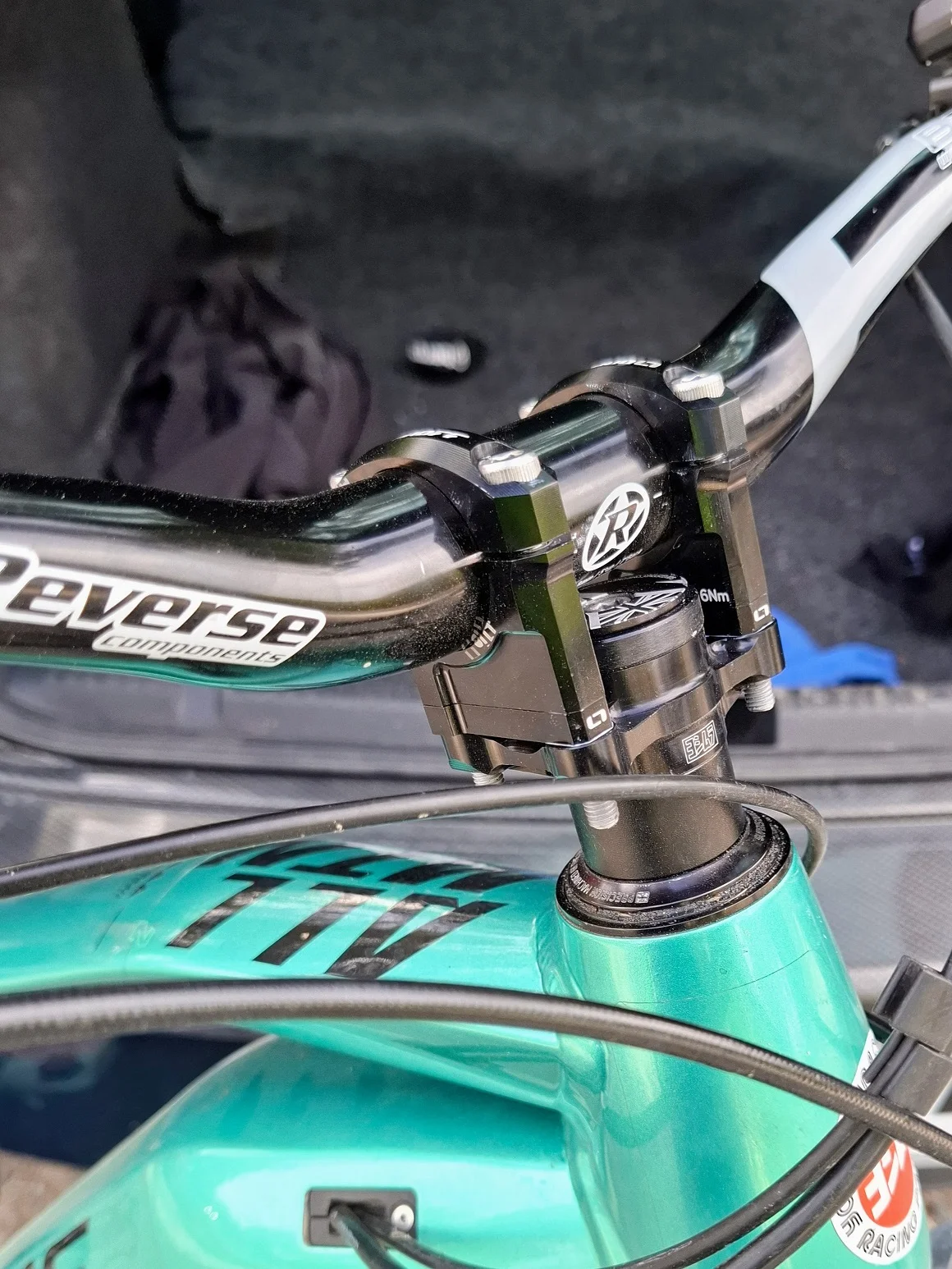
At -10 it was quickly obvious that bumping up rear spring rate 25lbs wasn't enough to correct suspension. Front end was too stiff and lacking traction. Body position also felt a bit too upright and unstable on fast berm stacks. This setup felt much better on steeper natural tracks, no surprise really.
Next was the 0 offset setup and this already felt better on the berm tracks, but front end was clearly still too stiff.
Then wen't to +10 and it felt the best with more weight on the fork. Most confident on the faster tracks. I like this setup more than my old setup with 40mm stem.
I need to put a softer spring in the fork and try the 0 and +10mm setups again. I think the -10mm is too much for now.
Last edited:
Bufort
New Member
- Mar 26, 2026
- 38
- 37
The Yoshimura DM adaptor is slightly different offset to standard DM, so it'll be more like +8mm or +12mm, depending on which way you run everything.First proper test with the yoshimura adapter and 10mm stem. Was a lift access day so I tried all possible positions -10, 0 and +10.
At -10 it was quickly obvious that bumping up rear spring rate 25lbs wasn't enough to correct suspension. Front end was too stiff and lacking traction. Body position also felt a bit too upright and unstable on fast berm stacks. This setup felt much better on steeper natural tracks, no surprise really.
Next was the 0 offset setup and this already felt better on the berm tracks, but front end was clearly still too stiff.
Then wen't to +10 and it felt the best with more weight on the fork. Most confident on the faster tracks. I like this setup more than my old setup with 40mm stem.
I need to put a softer spring in the fork and try the 0 and +10mm setups again. I think the -10mm is too much for now.
View attachment 187671View attachment 187672
flatlander99
New Member
- May 21, 2026
- 9
- 7
Oh, thats good to know. I must have tested +-12mm and something in between then. Standard DM offset is 5mm?The Yoshimura DM adaptor is slightly different offset to standard DM, so it'll be more like +8mm or +12mm, depending on which way you run everything.
Bufort
New Member
- Mar 26, 2026
- 38
- 37
Looking at my schematics from when I was doing my own research, normal DM has the holes -10mm and +20mm of centreline, so that's -5mm offset.Oh, thats good to know. I must have tested +-12mm and something in between then. Standard DM offset is 5mm?
Yoshimura is -18mm and +12mm, so that's 8mm further back, -13mm offset.
Onoff 10mm stem on a normal DM mount will be 10mm, reversing the stem only makes it 0mm.
Onoff 10mm stem on Yoshimura ENDH will be 2mm, reversing the stem only will make it -8mm.
If you flip the Yoshimura mount around, you can get your Onoff stem to be +8mm.
flatlander99
New Member
- May 21, 2026
- 9
- 7
Thanks, that makes sense. That means I've actually tested -8mm, +2mm and +8mm positions.Looking at my schematics from when I was doing my own research, normal DM has the holes -10mm and +20mm of centreline, so that's -5mm offset.
Yoshimura is -18mm and +12mm, so that's 8mm further back, -13mm offset.
Onoff 10mm stem on a normal DM mount will be 10mm, reversing the stem only makes it 0mm.
Onoff 10mm stem on Yoshimura ENDH will be 2mm, reversing the stem only will make it -8mm.
If you flip the Yoshimura mount around, you can get your Onoff stem to be +8mm.
Bufort
New Member
- Mar 26, 2026
- 38
- 37
Here's a cheat sheet for you.Thanks, that makes sense. That means I've actually tested -8mm, +2mm and +8mm positions.
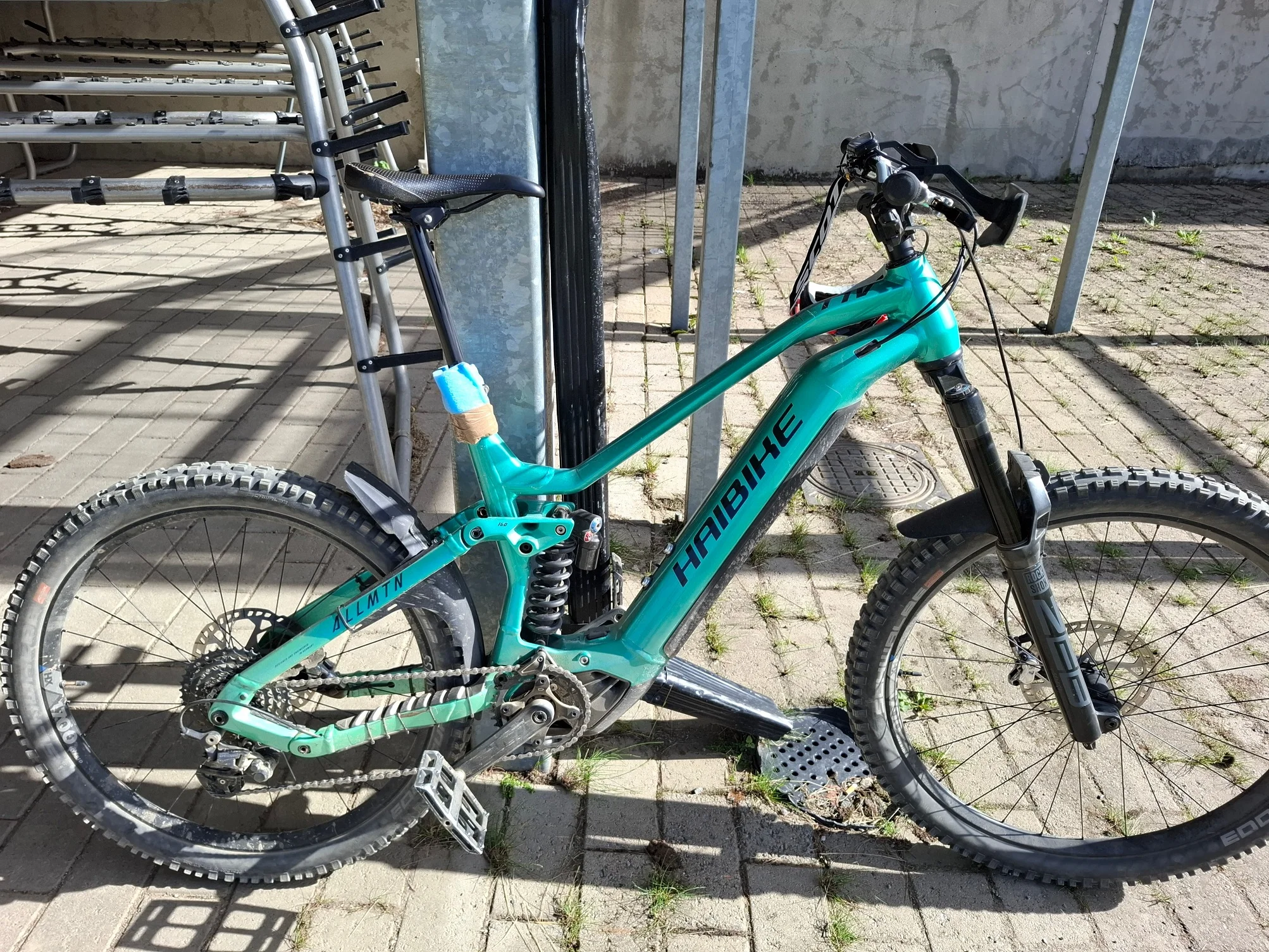
Maybe the photo? But your head angle looks to be incredibly slack, like 50 degrees or something. Almost certainly going to skew things compared to mid 60's head angles..
Bufort
New Member
- Mar 26, 2026
- 38
- 37
Looks like a pretty standard 63° ish HA to me.Maybe the photo? But your head angle looks to be incredibly slack, like 50 degrees or something. Almost certainly going to skew things compared to mid 60's head angles..
It's about 60-61. It's got a 9point8 brand 2-degree angleset on it to get it steeper but the lower race adds 14mm so it doesn't make that much difference on net. I'll swap the fork spring from 180 to 170 this week and maybe get a Works Components angleset, which has a slimmer lower race. But it was designed around a 160mm fork and 62.2 head angle so there's only so much I can do. I could use bigger seat stay mutators but that raises the BB as well as steepening the head angle.Maybe the photo? But your head angle looks to be incredibly slack, like 50 degrees or something. Almost certainly going to skew things compared to mid 60's head angles..
I think that will definitely be contributing, have you measured it at that or just worked it out from the original spec? I think Geometron will be pretty good but there is always a tolerance on the headangle and tyre size, shock length, etc etc can start to add up, so I would always advocate actually measuring (phone app is fine).It's about 60-61. It's got a 9point8 brand 2-degree angleset on it to get it steeper but the lower race adds 14mm so it doesn't make that much difference on net. I'll swap the fork spring from 180 to 170 this week and maybe get a Works Components angleset, which has a slimmer lower race. But it was designed around a 160mm fork and 62.2 head angle so there's only so much I can do. I could use bigger seat stay mutators but that raises the BB as well as steepening the head angle.
Yes, I measured with a phone app and a digital angle meter. The tricky part is finding perfectly level and even ground, holding the bike perfectly upright, holding the bars perfectly straight, and holding the meter at the correct angle. The measurements seem very sensitive to even small deviations from any of the above.I think that will definitely be contributing, have you measured it at that or just worked it out from the original spec? I think Geometron will be pretty good but there is always a tolerance on the headangle and tyre size, shock length, etc etc can start to add up, so I would always advocate actually measuring (phone app is fine).
I'm not sure I followed all of that, but here are some brief responses:Bronson Moore on Instagram: "#whatsthatwednesday Do you want more direct front tire feel with less wheel flop? The RR (Raised Reversed) stem is both Raised up and Reversed in offset so that your hands are ultimately behind the steering axis instead
35 likes, 1 comments - bemorebikes on March 5, 2025: "#whatsthatwednesday Do you want more direct front tire feel with less wheel flop? The RR (Raised Reversed) stem is both Raised up and Reversed in offset so that your hands are ultimately behind the steering axis instead of in front as is...
In this video I talk all about this concept. From a strictly technical perspective, a reversed offset reduces wheel flop at the bars relative to the frame and ground whereas a forward offset increases wheel flop at the bars relative to the frame and ground. Wheel flop is a function of trail and headtube angle. The longer the trail and even more so the slacker the headtube angle, the more wheel flop you get. You can measure this basically by looking at the mechanical trail on a frame which is the trail measured perpendicular to the steering axis instead of along the ground. The higher up vertically along the steering axis that the perpendicular trail line sits, the more wheelflop you have because as you turn the bars, the headtube of the frame will lower that amount down as it moves to the side. This is a simplified model, as a fully accurate model would also need to account for wheel diameter, tire profile and width, wheelbase, and assumes the bike is kept upright, but the general principles are accurate enough to get an idea.
You can think of this in a sense like as the wheel turns right, the headtube moves over to the right and drops down some amount as a function of wheel flop. When you turn the bars to the right, a forward offset sweeps further away to the right side from the headtube and drops further down as a function of headtube angle and bar offset forward since the center of the stem sits above the perpendicular of its extension from the steering axis since the steering axis is at an angle back. When you turn the bars to the right, a reversed offset sweeps to the left of the headtube countering some of its movement to the right and comes up countering some of the headtube drop as a function of headtube angle and bar offset rearward since the center of the stem sits below the perpendicular of its extension from the steering axis since the steering axis is at an angle back. As such a forward offset amplifies the movement at the headtube that we call wheel flop, and a reversed offset counters the movement at the headtube that we call wheel flop leading to less wheel flop felt at the hands.
With that said, there is still the real world experience of something that you are calling wheel flop happening. I suspect it’s not strictly speaking wheel flop, but instead a different response at the bar that I would need more detail to parse out. I suspect you might be a rider who tends to lean your body more than the bike in turns which I would argue is incorrect technique and most mtb coaches advise against it instead recommending to lean the bike more than the body. Whether you agree with that technique being preferable or not isn’t really relevant though as the more important point is that a forward stem responds best to leaning the bike more, and a reversed offset stem responds even better to leaning the bike more while a forward offset stem responds ok to leaning the body more than the bike while a reversed offset stem may respond worse to leaning the body more than the bike sometimes leading to awkward or twitchy feelings. You can see an example in the video here.
Bronson Moore on Instagram: "You’ve got to keep them separated! One of the most common mistakes I see cornering is improper bike body separation where riders lean their body a lot, keep the bike upright, and steer the bike around a turn. Bike body se
241 likes, 7 comments - bemorebikes on October 10, 2025: "You’ve got to keep them separated! One of the most common mistakes I see cornering is improper bike body separation where riders lean their body a lot, keep the bike upright, and steer the bike around a turn. Bike body separation is all...
I’m exaggerating the technique a little for illustrative ease, but exaggerating good technique typically doesn’t do anything bad. If you have a right turn, and your instinct is to move your hips to the right to the inside of the turn, then it will be harder to get enough bike lean to carve instead of steer. You can check for this by feeling for the frame or seat between your legs. If you feel the frame or seat touch your left leg on a right turn then you are leaning your body in and keeping the bike upright. If you can feel the bike on your right leg in a right turn, then you are leaning the bike in and keeping the body up correctly.
A forward offset stem moves the bars to the inside of the bike during a turn, so when a rider moves their body to the inside of the bike during a turn by leaning their body in and keeping the bike upright, they follow along with the bar’s movement more in essence following the flop as they rely on steering at the bars. When you do the same body in and bike upright movement on a reversed offset, the bars move away from you towards the outside of the bike as you try to steer them in which can lead to awkward handling. If your tendency when it feels like the wheel is flopping over to the right is to try and chase it by moving your body in to the right and standing the bike up to the left, then the reversed offset would give you less feel of the flop at the hands due to its reduced hand flop making you follow the flop less, subsequently feeling like you have less control of the flop. The solution in essence is to try and move the bike over to the right to counter the flop instead of your body while keeping your body upright and calm. The more things you can do to keep your torso and especially head calm and more still while letting the bike move and follow terrain underneath you, the better and smoother you will ride generally with easier ability to see down the trail.
When you rely more on bike lean and less on bar steer to corner, by leaning the bike more than your body, the bike responds better, with better sideknob engagement, a calmer and more predictable drift response that’s easier to catch, and a kinematically tighter turn for a given steer at the bars. This is true both for forward and reversed offset stems as this is about what the bike responds best to. A Reversed offset stem helps you lean the bike more because for a given steer and lean of the bars from the rider, the bike will be further leaned over, and we can only lean the bike away from us as far as we can reach the bars. You can see this illustrated here.
Bronson Moore on Instagram: "A common misconception people have with the RR stem is that you corner it fundamentally differently, and the bars are going to be way up in your face impossible to get on top of. If you are using good technique ie. leanin
144 likes, 15 comments - bemorebikes on November 26, 2025: "A common misconception people have with the RR stem is that you corner it fundamentally differently, and the bars are going to be way up in your face impossible to get on top of. If you are using good technique ie. leaning the bike more...
Let me know if you have any questions from in this, or if any of it is unclear and please tell me more about when you are feeling the wheel flop, and what it feels like so I can better understand it and help. Also, have you made any suspension adjustments going from a traditional stem and bar height to the notably taller and reversed stem setup you are running there?
You may be right that 'flop' is not the correct term for what I'm describing. It is also true that sometimes I lean my body more than the bike. But that seems partly due to the high/reverse setup, because when I have low+forward bars I use proper technique, with good bike-body separation, bike leaned further than the body to engage the side knobs. With high bars (forward or reverse), the bike seems harder to lean. I think this is partly because of simple physics: with higher bars, the distance between the ground and the bars is greater, so you have to move the bars further along that radius to achieve the same lean angle. I'm under 5'8 (172cm) so my arms aren't that long, so there is a pretty tight limit to how far I can separate the bike from the body, and that is obviously more apparent with high bars. Sometimes I try to compensate for this by leaning my body further as well, but then the front often washes out, or I oversteer and the rear washes out, because the weight is not centred over the bike/side knobs.
But I'm not sure that's the whole story either. With a reverse stem, it feels like there is some force making the bike want to stand up when I'm trying to corner. It's hard to explain, but it's as if the bike is sort of self-stabilising, kind of like a gyroscopic effect that resists being leaned or turned. Sometimes that leads to my leaning the body more than the bike, as you described.
The exception is at very slow speed when I'm turning very tightly, which is when I feel the bars being dragged heavily into a jackknife. It feels kind of like someone is holding the front of the wheel and pulling it downwards. This has caused accidents when riding in ruts, where the front wheel has to be kept away from the sides of the ruts.
Perhaps relatedly, the front of the bike feels heavier with a reverse stem. I guess it's like holding (say) a golf club further from the heavy end: there is more 'leverage' over your grip, making it harder to lift. This can be an issue on drops and some jumps, when I need to lift the front of the bike. Raising the stem helps counteract that effect but can worsen the other problems above. Obviously this is a bigger issue on my heavy ebike than on most people's machines.
I have gone up to a 750lb spring (26% sag) and had my shock revalved with a heavier tune, as I was bottoming out harshly. I'm still experimenting with fork pressures but I don't like the feeling of being pitched forward so don't want to go too soft. I'll reduce fork travel by 10mm this week in an effort to steepen the head angle and reduce the stapler effect, which may help mitigate some of the issues above.
flatlander99
New Member
- May 21, 2026
- 9
- 7
What is the rest of the geometry like on your bike? BB height, chainstay length, rear wheel size? How wide is your handlebar? With all the adjustment options that bike has it should be possible to find a setup that works.It's about 60-61. It's got a 9point8 brand 2-degree angleset on it to get it steeper but the lower race adds 14mm so it doesn't make that much difference on net. I'll swap the fork spring from 180 to 170 this week and maybe get a Works Components angleset, which has a slimmer lower race. But it was designed around a 160mm fork and 62.2 head angle so there's only so much I can do. I could use bigger seat stay mutators but that raises the BB as well as steepening the head angle.
I measured the head angle again yesterday and it seems to be about 61.5.What is the rest of the geometry like on your bike? BB height, chainstay length, rear wheel size? How wide is your handlebar? With all the adjustment options that bike has it should be possible to find a setup that works.
The BB is currently 335. I could increase it as much as I want, which would steepen the head angle a bit, but the low BB is often better for cornering and steeps. Ground clearance hasn't been a problem with 26% sag on the shock.
CS currently 445. Might go back to 452 but that makes it harder to lift the front with the heavy battery, and the long wheelbase can worsen cornering.
27.5 rear wheel. Tried 29 but didn't like it. I like the handling of full 27.5 but I swapped to a bigger front wheel and radial tyre to reduce hand pain. Might try full 27.5 again at some point.
780mm bar. I could go wider to reduce twitch/flop/whatever steering issues, but that also reduces the bike-body separation.
I got this frame because I thought it would be easy to experiment with different geo, but it's not as flexible as it might seem at first. For example: the seat stay mutators raise the BB at the same time as steepening head angle; the 62.2 stock head angle is so slack already that the geo becomes silly with a fork longer than the stock 160mm; extending the chainstays lowers the BB and slackens the head angle further; the seat tube on the medium is 438mm, so I can't get the saddle fully out of the way on descents; and the head tube is 44/56 so there's not much room for adjusting reach. The v2 of this frame is a bit better, with a 56/56 headset and steeper head angle.
flatlander99
New Member
- May 21, 2026
- 9
- 7
That HA might be the main issue. Single-crown forks tend to start bind up with a head angle much slacker than 63°. The fork starts to bend rather than engage its travel. The bike then wants to stay too slack in corners and pushes wide. Someone called it the "wheelbarrow effect": the front end flops from side to side instead of steering.I measured the head angle again yesterday and it seems to be about 61.5.
The BB is currently 335. I could increase it as much as I want, which would steepen the head angle a bit, but the low BB is often better for cornering and steeps. Ground clearance hasn't been a problem with 26% sag on the shock.
CS currently 445. Might go back to 452 but that makes it harder to lift the front with the heavy battery, and the long wheelbase can worsen cornering.
27.5 rear wheel. Tried 29 but didn't like it. I like the handling of full 27.5 but I swapped to a bigger front wheel and radial tyre to reduce hand pain. Might try full 27.5 again at some point.
780mm bar. I could go wider to reduce twitch/flop/whatever steering issues, but that also reduces the bike-body separation.
I got this frame because I thought it would be easy to experiment with different geo, but it's not as flexible as it might seem at first. For example: the seat stay mutators raise the BB at the same time as steepening head angle; the 62.2 stock head angle is so slack already that the geo becomes silly with a fork longer than the stock 160mm; extending the chainstays lowers the BB and slackens the head angle further; the seat tube on the medium is 438mm, so I can't get the saddle fully out of the way on descents; and the head tube is 44/56 so there's not much room for adjusting reach. The v2 of this frame is a bit better, with a 56/56 headset and steeper head angle.
A low BB feels good when cornering, but it has a tendency to actually stand the bike up when you lean into corners, meaning you have to work more with your arms. A higher BB would let the bike tip into corners more naturally and actually make lifting the front end easier.
My suggestion would be to get the HA closer to 63°, the BB height between 340-350mm, and the chainstay between 450-460mm.
Are you running the bike in the 175mm travel mode? You could try the shorter travel option to reduce the leverage ratio on the shock so the bike isn't so eager to sit deep in its rear travel.
A 780mm bar is probably as wide as you want to go. I think having more arm travel is better with these longer-reach bikes. I'm running 775mm bar at 185cm tall, and my bar ends measure 115cm from the floor.
OK cheers. I sometimes struggle to predict how various combinations of geo adjustments will affect handling, and to diagnose the source of a problem. I dropped the fork down to 170mm today at the first 50h service interval, so I'll see how that rides first, then try raising the BB again (which will further steepen the head angle). I'm a bit reluctant to extend the chainstays at the moment because I've got a heavy battery holding the front down, but it might be okay on non-jump trails. I did prefer the 162 travel mode when I had a light motor and battery, or as an analogue bike, but found it too harsh on tech when the spring/damping is high enough to resist bottoming out. It might be worth doing on jump days though. Also, I've just had the EXT shock retuned to give more HSC and rebound damping so hopefully I'll have all the support I need. Ideally I'll be able to drop down to a 700lb spring (28-29% sag) as 750 (26-27%) isn't much fun on the chatter.That HA might be the main issue. Single-crown forks tend to start bind up with a head angle much slacker than 63°. The fork starts to bend rather than engage its travel. The bike then wants to stay too slack in corners and pushes wide. Someone called it the "wheelbarrow effect": the front end flops from side to side instead of steering.
A low BB feels good when cornering, but it has a tendency to actually stand the bike up when you lean into corners, meaning you have to work more with your arms. A higher BB would let the bike tip into corners more naturally and actually make lifting the front end easier.
My suggestion would be to get the HA closer to 63°, the BB height between 340-350mm, and the chainstay between 450-460mm.
Are you running the bike in the 175mm travel mode? You could try the shorter travel option to reduce the leverage ratio on the shock so the bike isn't so eager to sit deep in its rear travel.
A 780mm bar is probably as wide as you want to go. I think having more arm travel is better with these longer-reach bikes. I'm running 775mm bar at 185cm tall, and my bar ends measure 115cm from the floor.