Navigation
Install the app
How to install the app on iOS
Follow along with the video below to see how to install our site as a web app on your home screen.
Note: This feature may not be available in some browsers.
More options
Style variation
You are using an out of date browser. It may not display this or other websites correctly.
You should upgrade or use an alternative browser.
You should upgrade or use an alternative browser.
Atherton S.170E eMTB
- Thread starter Zimmerframe
- Start date

⚡ EMTB PRO
25% off e*thirteen, Peaty’s & more with PRO
Member-only deals from e*thirteen, Peaty’s, PEMBREE and Magicshine · ad-free browsing · PRO badge · Living Intelligence Reports
See the deals →
From £1.99/month

Thanks for the challenge @Zimmerframe, I have some stuff going on, didn't really have time to give it a go yesterday. Ok, I really doubt they would opt for the 18650 cells, it does alow for thighter packaging length in a 6cm diameter tube you could squeeze in a 10S4P but it would only get you to about 500Wh, IMO really outdated tech, best fits for smaller devices as flashlights etc...
I actually didn't pay much attention to this new ebike release, when I first saw the downtube, my first thought was 46... type cell, although quickly dismissed the idea as it's impossible to squeeze 10 cells in series(needed for 36V) with a length of 8cm(4680 most common) into a cca 50cm downtube, there would also be a max current draw limit.
My bet is on the 21700, if they are smart they would use the latest 6,5Ah cells from Molicel or FEB to achieve the maximum possible energy density. I used 56cm downtube length as a base.
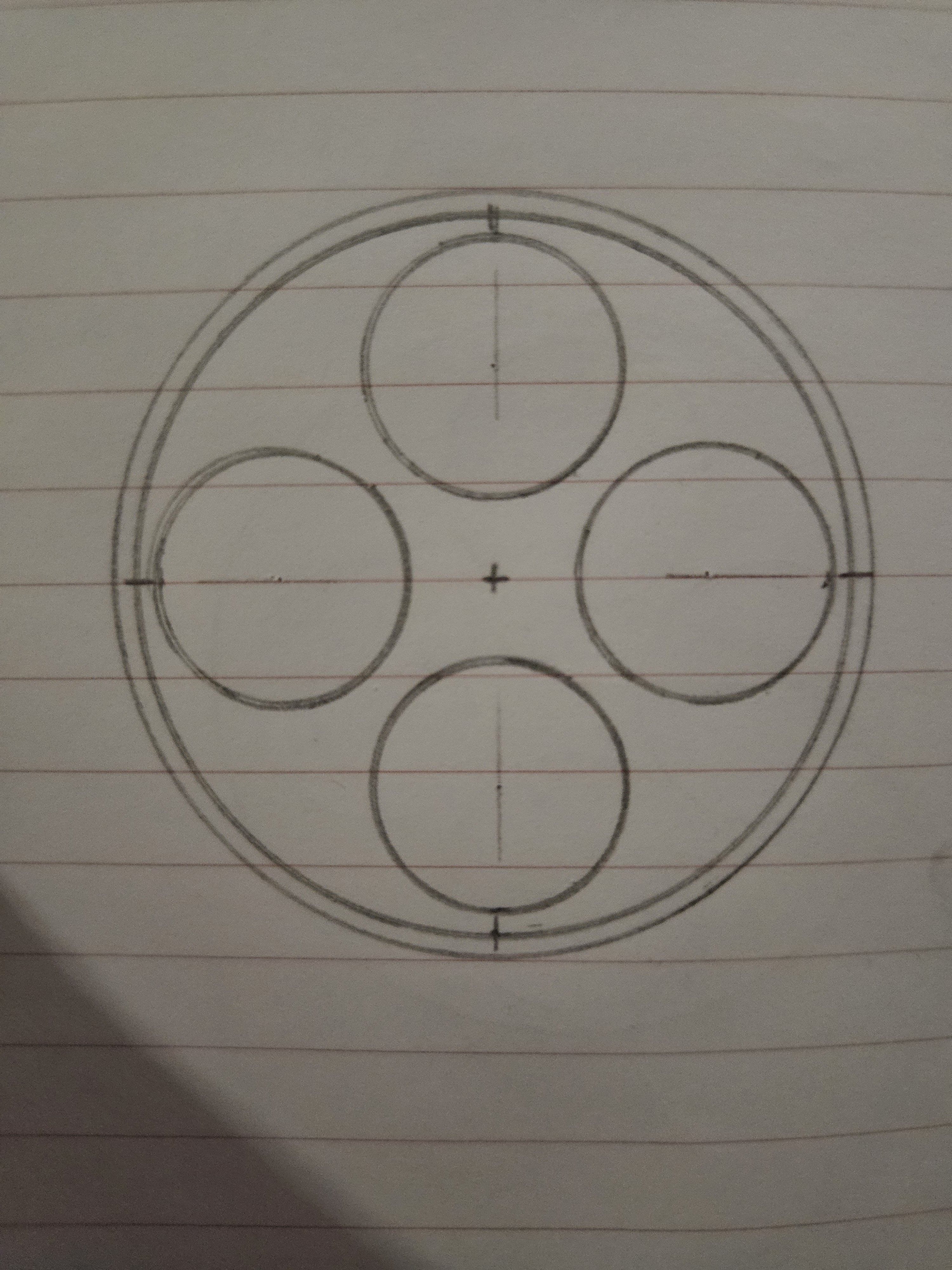
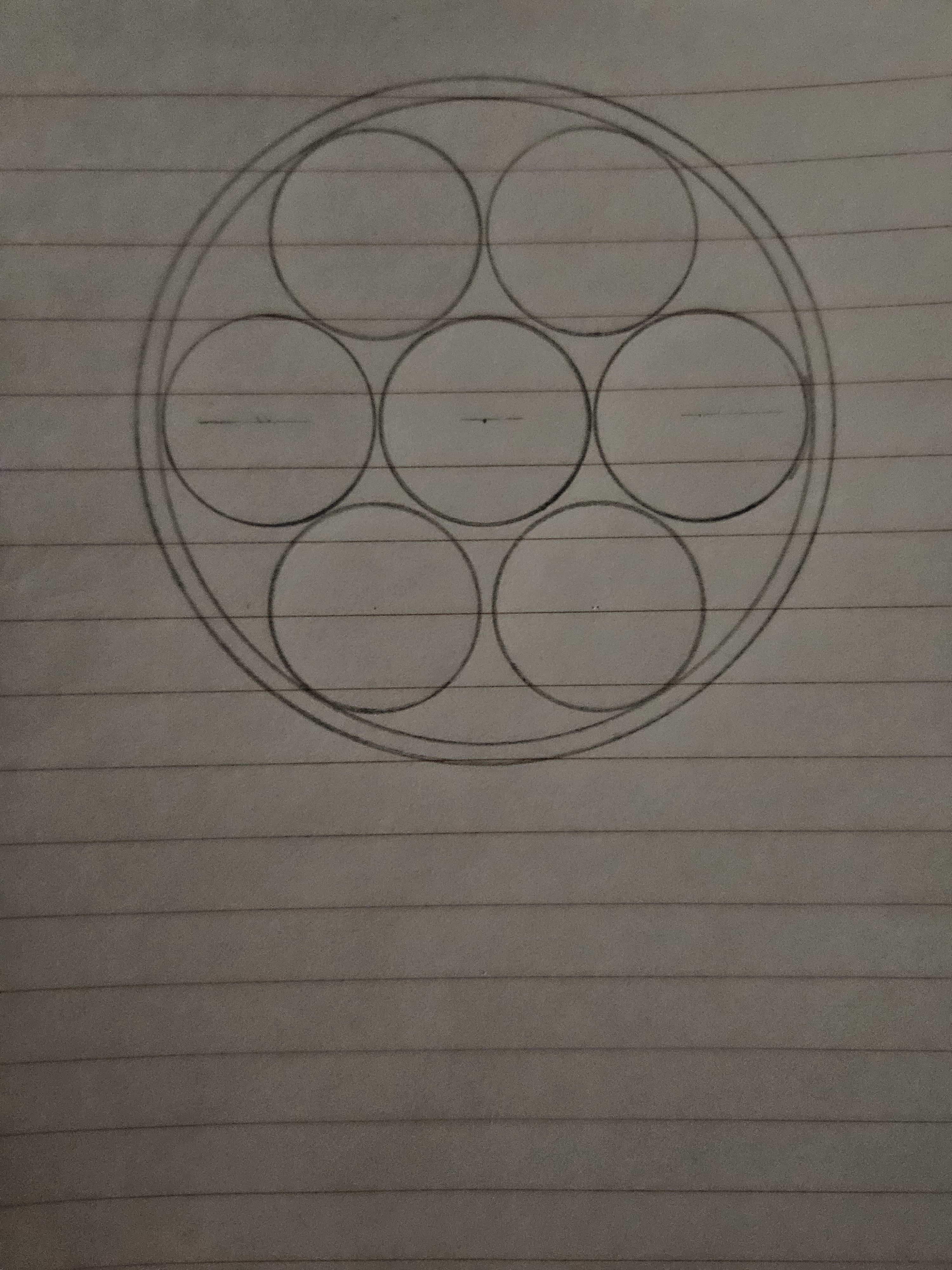
Did some sketching with the 21mm cells also, the first is what fits into a 6cm internal diameter tube and the second one is where I increased the internal diameter to 7cm.
The downtube length would need to be around 56cm to comfortably fit 7 cells in a row along the tube + 3cells in the next row to complete one 10 series group and so on and to have spare space left for the BMS.
I also think the downtube is closer to 7 to 8 cm in diameter as if we use the 6cm it just falls short for a 10S3P configuration by two cells(fits comfortably only 28) we need 30. It would be possible to squeeze in the extra two if the downtube is slightly increased say to 57cm.
So in your suggestion of 50cm length /6cm diameter IMO only a 10S2P configuration is possible cca 470Wh with the best avaliable cells.
For comparison in a 7cm internal diameter tube there is space for 49 realistically and 56 max cells, for a 10S4P pack we need only 40 cells, so with 9 to spare there is also plenty space for the BMS etc...
So with a 56cm long and an 7,5cm diameter(increased for insulation wiring etc) downtube new 21700 6,5Ah cells, some smart wiring and packaging IMO a cca 930+Wh pack would be possible.
If the tube is indeed a bit shorter than my base of 56cm the next lower pack would be a 10S3P with cca 700Wh.
What is interesting, food for thought also, if they due to the way their frames are made somehow certified the downtube as a battery pack housing(completly fixed battery pack) that would remove the common pack housing material weight. Although I doubt it...fire hazard, regulations, etc...don't know all the rules here.
I actually didn't pay much attention to this new ebike release, when I first saw the downtube, my first thought was 46... type cell, although quickly dismissed the idea as it's impossible to squeeze 10 cells in series(needed for 36V) with a length of 8cm(4680 most common) into a cca 50cm downtube, there would also be a max current draw limit.
My bet is on the 21700, if they are smart they would use the latest 6,5Ah cells from Molicel or FEB to achieve the maximum possible energy density. I used 56cm downtube length as a base.
Did some sketching with the 21mm cells also, the first is what fits into a 6cm internal diameter tube and the second one is where I increased the internal diameter to 7cm.
The downtube length would need to be around 56cm to comfortably fit 7 cells in a row along the tube + 3cells in the next row to complete one 10 series group and so on and to have spare space left for the BMS.
I also think the downtube is closer to 7 to 8 cm in diameter as if we use the 6cm it just falls short for a 10S3P configuration by two cells(fits comfortably only 28) we need 30. It would be possible to squeeze in the extra two if the downtube is slightly increased say to 57cm.
So in your suggestion of 50cm length /6cm diameter IMO only a 10S2P configuration is possible cca 470Wh with the best avaliable cells.
For comparison in a 7cm internal diameter tube there is space for 49 realistically and 56 max cells, for a 10S4P pack we need only 40 cells, so with 9 to spare there is also plenty space for the BMS etc...
So with a 56cm long and an 7,5cm diameter(increased for insulation wiring etc) downtube new 21700 6,5Ah cells, some smart wiring and packaging IMO a cca 930+Wh pack would be possible.
If the tube is indeed a bit shorter than my base of 56cm the next lower pack would be a 10S3P with cca 700Wh.
What is interesting, food for thought also, if they due to the way their frames are made somehow certified the downtube as a battery pack housing(completly fixed battery pack) that would remove the common pack housing material weight. Although I doubt it...fire hazard, regulations, etc...don't know all the rules here.
How would the above change of the new motor to 48v? Speculation, just asking as interestedThanks for the challenge @Zimmerframe, I have some stuff going on, didn't really have time to give it a go yesterday. Ok, I really doubt they would opt for the 18650 cells, it does alow for thighter packaging length in a 6cm diameter tube you could squeeze in a 10S4P but it would only get you to about 500Wh, IMO really outdated tech, best fits for smaller devices as flashlights etc...
I actually didn't pay much attention to this new ebike release, when I first saw the downtube, my first thought was 46... type cell, although quickly dismissed the idea as it's impossible to squeeze 10 cells in series(needed for 36V) with a length of 8cm(4680 most common) into a cca 50cm downtube, there would also be a max current draw limit.
My bet is on the 21700, if they are smart they would use the latest 6,5Ah cells from Molicel or FEB to achieve the maximum possible energy density. I used 56cm downtube length as a base.
Did some sketching with the 21mm cells also, the first is what fits into a 6cm internal diameter tube and the second one is where I increased the internal diameter to 7cm.
The downtube length would need to be around 56cm to comfortably fit 7 cells in a row along the tube + 3cells in the next row to complete one 10 series group and so on and to have spare space left for the BMS.
I also think the downtube is closer to 7 to 8 cm in diameter as if we use the 6cm it just falls short for a 10S3P configuration by two cells(fits comfortably only 28) we need 30. It would be possible to squeeze in the extra two if the downtube is slightly increased say to 57cm.
So in your suggestion of 50cm length /6cm diameter IMO only a 10S2P configuration is possible cca 470Wh with the best avaliable cells.
For comparison in a 7cm internal diameter tube there is space for 49 realistically and 56 max cells, for a 10S4P pack we need only 40 cells, so with 9 to spare there is also plenty space for the BMS etc...
So with a 56cm long and an 7,5cm diameter(increased for insulation wiring etc) downtube new 21700 6,5Ah cells, some smart wiring and packaging IMO a cca 930+Wh pack would be possible.
If the tube is indeed a bit shorter than my base of 56cm the next lower pack would be a 10S3P with cca 700Wh.
What is interesting, food for thought also, if they due to the way their frames are made somehow certified the downtube as a battery pack housing(completly fixed battery pack) that would remove the common pack housing material weight. Although I doubt it...fire hazard, regulations, etc...don't know all the rules here.
View attachment 175002View attachment 175003

- Thread starter
- #64
ok, I found a different image. Using the bottle cage bosses (64mm) as a closer size guide, I get the downtube external measurement at 66mm (can't vouch for my accuracy thoughThanks for the challenge @Zimmerframe, I have some stuff going on, didn't really have time to give it a go yesterday. Ok, I really doubt they would opt for the 18650 cells, it does alow for thighter packaging length in a 6cm diameter tube you could squeeze in a 10S4P but it would only get you to about 500Wh, IMO really outdated tech, best fits for smaller devices as flashlights etc...
I actually didn't pay much attention to this new ebike release, when I first saw the downtube, my first thought was 46... type cell, although quickly dismissed the idea as it's impossible to squeeze 10 cells in series(needed for 36V) with a length of 8cm(4680 most common) into a cca 50cm downtube, there would also be a max current draw limit.
My bet is on the 21700, if they are smart they would use the latest 6,5Ah cells from Molicel or FEB to achieve the maximum possible energy density. I used 56cm downtube length as a base.
Did some sketching with the 21mm cells also, the first is what fits into a 6cm internal diameter tube and the second one is where I increased the internal diameter to 7cm.
The downtube length would need to be around 56cm to comfortably fit 7 cells in a row along the tube + 3cells in the next row to complete one 10 series group and so on and to have spare space left for the BMS.
I also think the downtube is closer to 7 to 8 cm in diameter as if we use the 6cm it just falls short for a 10S3P configuration by two cells(fits comfortably only 28) we need 30. It would be possible to squeeze in the extra two if the downtube is slightly increased say to 57cm.
So in your suggestion of 50cm length /6cm diameter IMO only a 10S2P configuration is possible cca 470Wh with the best avaliable cells.
For comparison in a 7cm internal diameter tube there is space for 49 realistically and 56 max cells, for a 10S4P pack we need only 40 cells, so with 9 to spare there is also plenty space for the BMS etc...
So with a 56cm long and an 7,5cm diameter(increased for insulation wiring etc) downtube new 21700 6,5Ah cells, some smart wiring and packaging IMO a cca 930+Wh pack would be possible.
If the tube is indeed a bit shorter than my base of 56cm the next lower pack would be a 10S3P with cca 700Wh.
What is interesting, food for thought also, if they due to the way their frames are made somehow certified the downtube as a battery pack housing(completly fixed battery pack) that would remove the common pack housing material weight. Although I doubt it...fire hazard, regulations, etc...don't know all the rules here.
View attachment 175002View attachment 175003
 )
)Length of 54/56 might be possible, it's difficult to tell how far they'll run into the headstock area and how low it will actually go.
Doesn't look like the cables will run via the top tube/seat tube, so some space will be lost there, but the battery unit might not be 100% round, it might have a slightly flattened top (depending on sell choice/size/layout....) and those cage screws need some length/space.
Interesting. You could get 5 21mm cells in a 57mm bore but guess you'd need some room for insulation, or a carrier, etc. Those bolts/bosses look quite large maybe they are dual purpose for securing a battery and have a thread for a bottle cage. Did you consider Endoriums question about 48v?ok, I found a different image. Using the bottle cage bosses (64mm) as a closer size guide, I get the downtube external measurement at 66mm (can't vouch for my accuracy though
Length of 54/56 might be possible, it's difficult to tell how far they'll run into the headstock area and how low it will actually go.
Doesn't look like the cables will run via the top tube/seat tube, so some space will be lost there, but the battery unit might not be 100% round, it might have a slightly flattened top (depending on sell choice/size/layout....) and those cage screws need some length/space.
View attachment 175047
Good question using my base of 7,5cm diameter and 56cm length in a 48V system only a 3P configuration would fit, that means a 14S3P which means 42 cells in total total that need to fit into the downtube. Comparing it to a 36V 10S4P that is 2 extra cells. Using the latest cells that would bring us to cca 980Wh (42cells x 3,6V each x 6,5 Ah each ).How would the above change of the new motor to 48v? Speculation, just asking as interested
earleb
New Member
It wouldn't make sense to go from 36v to 48v after just a single product generation. Especially one that's only really been on the market for 1 season. The product development team would have some a near term and long term product road map before they even started on developing gen 1 and setting 36v vs 48v would have been very early in the process.
Hmm interesting. Ok let's say we try the minimum possible size the internal diameter it's 66mm and the length is cca 50cm.ok, I found a different image. Using the bottle cage bosses (64mm) as a closer size guide, I get the downtube external measurement at 66mm (can't vouch for my accuracy though
Length of 54/56 might be possible, it's difficult to tell how far they'll run into the headstock area and how low it will actually go.
Doesn't look like the cables will run via the top tube/seat tube, so some space will be lost there, but the battery unit might not be 100% round, it might have a slightly flattened top (depending on sell choice/size/layout....) and those cage screws need some length/space.
View attachment 175047
We are building the pack with 6,5Ah 21700 cells(21mm diameter 70mm length). A 10S3P configuration (cca 700Wh) is possible with plenty of space for a bms and the bottle cage holes, although it would be an extremely tight fit for the cells across the tube as 3 rows of 21mm cells equals to 63mm without separators and insulation. That leaves only 3mm which is definitely not enough for a safe pack. I feel like a downtube so thin creates to much restrains.
I don't know what the philosophy and target audience behind this ebike is, but if reading the emtb crowd, we don't mind a larger battery capacity if in a compact form and reasonable weight, so if they did some homework I kinda doubt they would choose to go less than 700Wh with the possibilities avaliable today.
There is only a question though when exactly they started or will start the certification of the battery pack as the cells avaliable then would most probably be used in the production batches.
My bet is still on a 7 to 8cm diameter downtube as it opens up more possibilites, the option of a 10S3P(30 cells) cca 700Wh pack in the smaller sizes(cca 51cm downtube)and a 10S4P(40cells) cca 930Wh pack in the larger sizes(cca 56cm downtube).

I think the can on a float X2 is 60-65mm and the down tube looks slight thicker than that so defo 65mm+ok, I found a different image. Using the bottle cage bosses (64mm) as a closer size guide, I get the downtube external measurement at 66mm (can't vouch for my accuracy though
Length of 54/56 might be possible, it's difficult to tell how far they'll run into the headstock area and how low it will actually go.
Doesn't look like the cables will run via the top tube/seat tube, so some space will be lost there, but the battery unit might not be 100% round, it might have a slightly flattened top (depending on sell choice/size/layout....) and those cage screws need some length/space.
View attachment 175047
- Thread starter
- #70
A think they've stated something like the battery will be big enough - full power !, but not to too big to affect handling (meaning it's not 800/900 presumably). So I'm guessing 650-700 which seems feasible on your ideas.Hmm interesting. Ok let's say we try the minimum possible size the internal diameter it's 66mm and the length is cca 50cm.
We are building the pack with 6,5Ah 21700 cells(21mm diameter 70mm length). A 10S3P configuration (cca 700Wh) is possible with plenty of space for a bms and the bottle cage holes, although it would be an extremely tight fit for the cells across the tube as 3 rows of 21mm cells equals to 63mm without separators and insulation. That leaves only 3mm which is definitely not enough for a safe pack. I feel like a downtube so thin creates to much restrains.
I don't know what the philosophy and target audience behind this ebike is, but if reading the emtb crowd, we don't mind a larger battery capacity if in a compact form and reasonable weight, so if they did some homework I kinda doubt they would choose to go less than 700Wh with the possibilities avaliable today.
There is only a question though when exactly they started or will start the certification of the battery pack as the cells avaliable then would most probably be used in the production batches.
My bet is still on a 7 to 8cm diameter downtube as it opens up more possibilites, the option of a 10S3P(30 cells) cca 700Wh pack in the smaller sizes(cca 51cm downtube)and a 10S4P(40cells) cca 930Wh pack in the larger sizes(cca 56cm downtube).
You should be able to fit in a 10sp3 - 30 cells (ergo 700wh) ?? 6 long and 5 in profile - then just be creative on how you connect them all together to get the 10sp3 ???(which will cost you some length)
5 fit into 57mm - giving 9mm for the tube and battery case. Don't make the case perfectly round (think star nut shape) and you have space for bottle screws and cable runs.
Shame all that space is wasted in the middle, can we have a thin tube BMS ??


Like the way you're thinkingA think they've stated something like the battery will be big enough - full power !, but not to too big to affect handling (meaning it's not 800/900 presumably). So I'm guessing 650-700 which seems feasible on your ideas.
You should be able to fit in a 10sp3 - 30 cells (ergo 700wh) ?? 6 long and 5 in profile - then just be creative on how you connect them all together to get the 10sp3 ???(which will cost you some length)
5 fit into 57mm - giving 9mm for the tube and battery case. Don't make the case perfectly round (think star nut shape) and you have space for bottle screws and cable runs.
View attachment 175057
Shame all that space is wasted in the middle, can we have a thin tube BMS ??
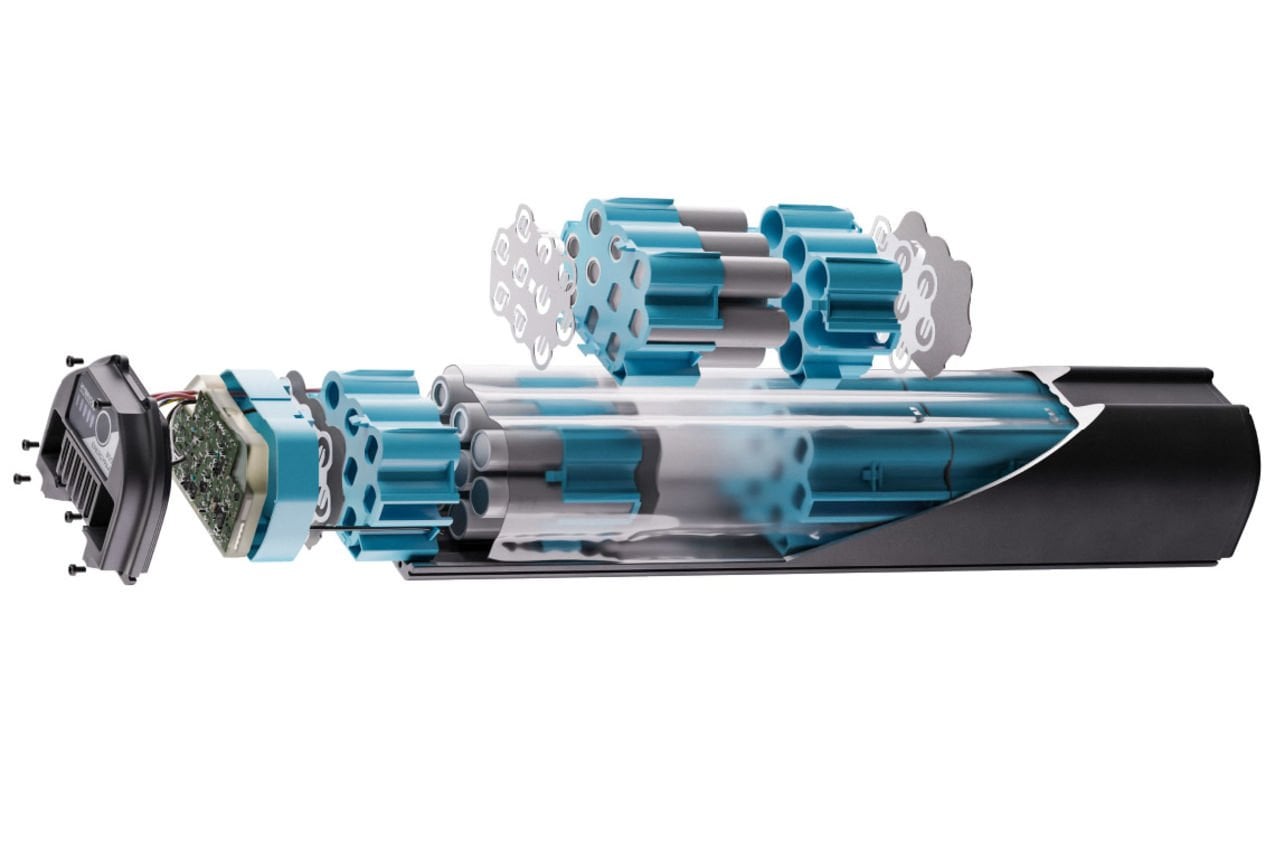
 , it's definitely an option, not sure about a tube shaped BMS...at least haven't seen one so far...maybe if made on order it would be possible. For example(attached) the BMS in a Giant battery pack is really small.
I still can't get the idea out of my head of using the downtube as the actual battery pack housing due to it's sealed design.


Last edited:
Eduardoramundo
E*POWAH Master
700wh ish plus a range extender would be nice.

slickrock
Well-known member
Every single A-Series frame that Atherton has offered over its entire existence uses DW6. It became the bedrock of the brand. Was this a consequence of "no other choice" when it comes to additive manufacturing as a fab approach? Perhaps, but a six-bar ends up being the better play for long-travel bikes and Weagle figured this out some time ago, and Pivot understood this as well. The Yeti LTE, another six-bar incarnation, has been getting accolades as well. What the design allows is knocking out anti-squat and unwanted pedal-kickback when you need it the least - toward the latter half of travel; otherwise you're gonna most likely need an E13 or Ochain. Additionally, the lower anti-rise provides better brake isolation and more active platform, which IMO is need with heavy ebikes.Why does dw4 versus dw6 matter? Both have positives and negatives. Dw4 might actually suit an ebike more. I also don't see anyone complaining about how the existing alloy Enduro and DH bikes feel and they use dw4. I go off feel. I don't care if it's the latest etc. if it handles and feels good, that's what matters. Dw4 is very easy to get feeling good. Has a wide range. I think for 99% of people it's a good choice. For the 1%, they will have a race team supporting them
While Atherton has been tight-lipped with their kinematics, here are some graphs of DW6 I found on the AM-150:
As you can see, anti-squat diving about half way through the travel.
And on the anti-rise front, it's high enough to keep the active geometry intact, but low enough to keep suspension active during downhill braking.
That said, I kinda agree with you that for the non-discerning deep-pocketed buyer, so long as the bike operates at a decent valence, they won't be disappointed with this bike, like I guess with people who are happy with the M-Series offerings. But this is Atherton, and perhaps after this launch they will eventually come up with a true flagship DW6 edition; something I'd be more inclined to spring for.

sethimus
😠 Temu Gary 😠
how could sam hill even just ride down a hill with this inferior design /sEvery single A-Series frame that Atherton has offered over its entire existence uses DW6. It became the bedrock of the brand. Was this a consequence of "no other choice" when it comes to additive manufacturing as a fab approach? Perhaps, but a six-bar ends up being the better play for long-travel bikes and Weagle figured this out some time ago, and Pivot understood this as well. The Yeti LTE, another six-bar incarnation, has been getting accolades as well. What the design allows is knocking out anti-squat and unwanted pedal-kickback when you need it the least - toward the latter half of travel; otherwise you're gonna most likely need an E13 or Ochain. Additionally, the lower anti-rise provides better brake isolation and more active platform, which IMO is need with heavy ebikes.
While Atherton has been tight-lipped with their kinematics, here are some graphs of DW6 I found on the AM-150: View attachment 175052
As you can see, anti-squat diving about half way through the travel.
View attachment 175056
And on the anti-rise front, it's high enough to keep the active geometry intact, but low enough to keep suspension active during downhill braking.
That said, I kinda agree with you that for the non-discerning deep-pocketed buyer, so long as the bike operates at a decent valence, they won't be disappointed with this bike, like I guess with people who are happy with the M-Series offerings. But this is Atherton, and perhaps after this launch they will eventually come up with a true flagship DW6 edition; something I'd be more inclined to spring for.
From seeing it first hand and running timed runs with a fast lad, there's not a lot wrong with a DW4 (or S Range bike) that's for sure.Every single A-Series frame that Atherton has offered over its entire existence uses DW6. It became the bedrock of the brand. Was this a consequence of "no other choice" when it comes to additive manufacturing as a fab approach? Perhaps, but a six-bar ends up being the better play for long-travel bikes and Weagle figured this out some time ago, and Pivot understood this as well. The Yeti LTE, another six-bar incarnation, has been getting accolades as well. What the design allows is knocking out anti-squat and unwanted pedal-kickback when you need it the least - toward the latter half of travel; otherwise you're gonna most likely need an E13 or Ochain. Additionally, the lower anti-rise provides better brake isolation and more active platform, which IMO is need with heavy ebikes.
While Atherton has been tight-lipped with their kinematics, here are some graphs of DW6 I found on the AM-150: View attachment 175052
As you can see, anti-squat diving about half way through the travel.
View attachment 175056
And on the anti-rise front, it's high enough to keep the active geometry intact, but low enough to keep suspension active during downhill braking.
That said, I kinda agree with you that for the non-discerning deep-pocketed buyer, so long as the bike operates at a decent valence, they won't be disappointed with this bike, like I guess with people who are happy with the M-Series offerings. But this is Atherton, and perhaps after this launch they will eventually come up with a true flagship DW6 edition; something I'd be more inclined to spring for.
Rider did 9 runs splitting between the A200, S200 and Trek Session. The S200 was just 2.8s off the pace of the Session (which was his own bike and fully setup for him with telemetry etc) over a 4mins 30 track.
I don't believe a DW6 will happen currently from what i'm seeing. I could easily be wrong of course.
Would i buy a DW4 S Range bike.... heck yes, in a heartbeat

@cream @emtbeast Mental challenge for you if you're interested.
I don't think they will use 18650 cells. I only know of one manufacturer that produce 4000mAh cell in 18650 form factor.
for a 36V battery, you could get with a 10s3p 21700 based form factor, high energy density/medium-high power density cells that should be available this year. We're talking about 6.5Ah-25A discharge/cell. So with 30cells you can have around 700Wh nominal capacity.

You only have to look at the number of videos where Dan & Gee are riding the aluminium bikes, not just their own promotional ones, they are riding them in cameos on other YouTuber vids and also in Dyfi punter vids. It appears they like them.
DW4 suspension is great in its own right. Having fewer bearings is probably an advantage for an ebike which generally cover way more miles than acoustic bikes.
If as mentioned further up the thread the patent is about to end on DW4 we will probably see lots more bike use it in the future maybe becoming as ubiquitous as 4 bar/Horst which seems pretty well liked.
DW4 suspension is great in its own right. Having fewer bearings is probably an advantage for an ebike which generally cover way more miles than acoustic bikes.
If as mentioned further up the thread the patent is about to end on DW4 we will probably see lots more bike use it in the future maybe becoming as ubiquitous as 4 bar/Horst which seems pretty well liked.
ericandrew
New Member
Atherton being tight lipped, understandably, I asked a few questions of them.
Buyers won't know the full spec before the balance is due.
They know they are asking a lot of trust, but we 'wont be disappointed'
Buyers won't know the full spec before the balance is due.
They know they are asking a lot of trust, but we 'wont be disappointed'
Both Gee and Dan were riding the S200 this weekend at Dyfi. I can't actually recall the last time i saw either of them on an A200. I'm assuming they can/could ride either. But they seem to choose the S range.You only have to look at the number of videos where Dan & Gee are riding the aluminium bikes, not just their own promotional ones, they are riding them in cameos on other YouTuber vids and also in Dyfi punter vids. It appears they like them.
DW4 suspension is great in its own right. Having fewer bearings is probably an advantage for an ebike which generally cover way more miles than acoustic bikes.
If as mentioned further up the thread the patent is about to end on DW4 we will probably see lots more bike use it in the future maybe becoming as ubiquitous as 4 bar/Horst which seems pretty well liked.
The thing i was told by the rider testing is that the S range was much more poppy and fun to ride, but the A range was arguably more stable and fast. This echos what magazine/internet tests have said as well. But that is i guess what people will want, fun poppy bikes that are playful, the outright DH speed being slightly secondary to the ride fun.
Exactly this. AS I mentioned above DW4 is great for 'us', we arent world cup riders. DW6 may give an adavantage there, but doesnt give us anything. I rode the 6 bar yeti lte for a week, its very good. I ride a whyte elyte, its very good. Do any of the linkages give me less confidence and hold me back, of course not. Its mostly just marketing hype. Given the benefits of ease of tuning and setup of dw4 and its all round positives, im very happy with the choice. Its as good going up as it is going down. People get far too hung up on the latest linkages etc.Both Gee and Dan were riding the S200 this weekend at Dyfi. I can't actually recall the last time i saw either of them on an A200. I'm assuming they can/could ride either. But they seem to choose the S range.
The thing i was told by the rider testing is that the S range was much more poppy and fun to ride, but the A range was arguably more stable and fast. This echos what magazine/internet tests have said as well. But that is i guess what people will want, fun poppy bikes that are playful, the outright DH speed being slightly secondary to the ride fun.

ozzybmx
Well-known member
how could sam hill even just ride down a hill with this inferior design /s
Unobtaninium, hope your rant doesn't need another re-quote old Sethimusk

sethimus
😠 Temu Gary 😠
sarcasm is not for everyone

"Sarcasm is the lowest form of wit, but the highest form of intelligence." 
- Oscar Wilde -
- Oscar Wilde -

Because 700 800 or 900 makes no difference to many ? My last Eeeb was 540, the one before that was 600, i didn't care either wayWithout knowing the size of the battery why would anyone put money down?
Has any company ever sold a bike without posting complete specs and pictures?
Most people do care. Not everyone rides flat ground.Because 700 800 or 900 makes no difference to many ? My last Eeeb was 540, the one before that was 600, i didn't care either way
We ride 35-40 mile rides with 8000ft vert. We need more than a 600wh. You'd be walking most of the time if you rode with my crew. Most of us have extenders or spare batteries and are in great shape. Even riding in ECO all the time we drain our batteries.
With the size of the down tube pic, it looks like it's gonna have a 600wh battery.
How did the A200 stack up?From seeing it first hand and running timed runs with a fast lad, there's not a lot wrong with a DW4 (or S Range bike) that's for sure.
Rider did 9 runs splitting between the A200, S200 and Trek Session. The S200 was just 2.8s off the pace of the Session (which was his own bike and fully setup for him with telemetry etc) over a 4mins 30 track.
I don't believe a DW6 will happen currently from what i'm seeing. I could easily be wrong of course.
Would i buy a DW4 S Range bike.... heck yes, in a heartbeat
I don't really think Atherton are targeting this sort of demographic tbh. You also have to remember this is a UK company and most of their bikes are being bought by UK based riders. 600-800wh battery is generally fine for most in the UK I'd wager. Avinox has a fast charger too for those at the bike park. Plug it in at lunch and you are good to go again in 60-90 mins.Most people do care. Not everyone rides flat ground.
We ride 35-40 mile rides with 8000ft vert.
The A200 was 1.1 second slower than the Session. But in it's defence it was running brakes that were not as good as his Mavens, tyres that were not as grippy, along with Forks and Shock he'd never used before and were not fully setup.How did the A200 stack up?
We then bought the A200 and have since had it fully set up with telemetry etc. However, as it's winter we've not tested it in a race yet as the season doesn't begin for a while. But he loves the A200 and 'feels' fast
How fast, i have no clue yet.I did, will be bigger than my current battery as it'll be my first eMTBWithout knowing the size of the battery why would anyone put money down?
Has any company ever sold a bike without posting complete specs and pictures?
Similar Threads

Free account
Join 43,113
eMTB riders
eMTB riders
One tap. No forms. Fewer ads.
or sign up with email
Already a member? Log in