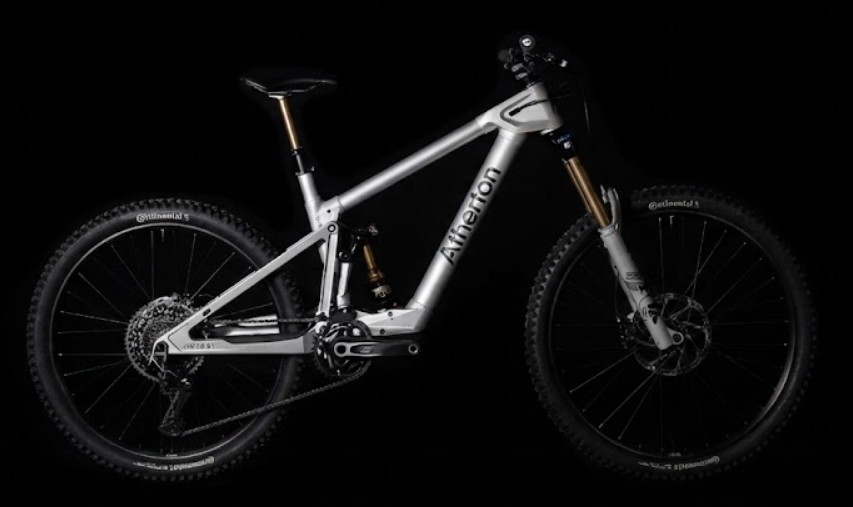
Atherton S.170E eMTB

Zimmerframe

MUPPET
EMTB Pro
Joined
Jun 12, 2019
Messages
15,140
Reaction score
23,838
Location
Brittany, France
The other thread seems totally convoluted and presently full of none relevant conversation.

Original thread : Atherton Dyf-E bike coming soon...

Therefore, here's a thread relevant to the actual bike.

Tidied up image from @GatorXman

1769172137408.png


Launches April 2026. Pre-orders are open now for the first 50 bikes (Total £8999 - S.170E.1 / S.170E-2 - £7799 / £6999 - S.170E.3), with delivery scheduled for April and May. (Deposit £1000, Balance due 30/03/26) - Example Pre order S.170E.1 bike : Fox Factory suspension and SRAM X0 Eagle Transmission

Atherton bikes direct link :


Basic Specs :

Avinox drive unit
Full-sized battery inside downtube
DW4 suspension with 170mm rear wheel travel, 180mm fork, and MX wheels
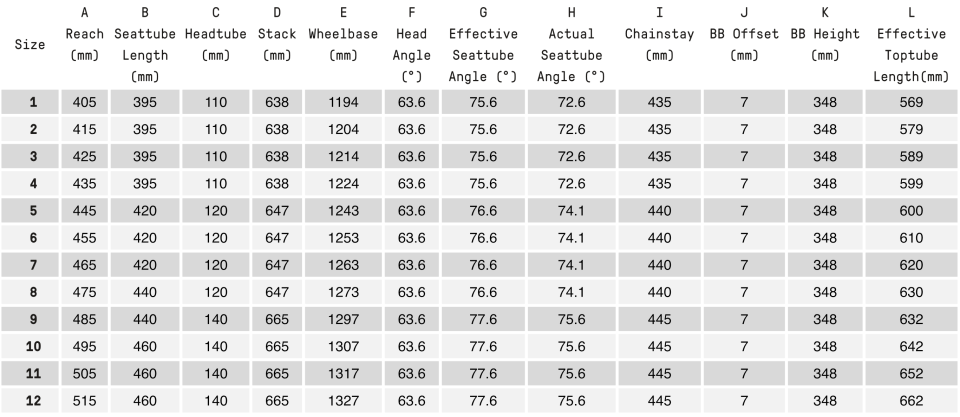
63.6° head angle, 75.6-77.6° seat angle, 435-445mm chainstays
Machined lugs and 7075 alloy tubes
12 sizes, 405-515 mm reach
Mavic E Deemax mullet wheels, Hayes Dominion A4 brakes, and FSA Gradient cockpit

All sizes will have the same size battery - battery size yet to be confirmed.

Geo :

1769171678096.png

1769171691963.png
 
⚡ EMTB Pro Go Pro — exclusive discounts & ad-free Peaty's 25% off & more · Ad-free browsing · Pro badge See the deals →
Pre-orders are open now for the first 50 bikes (Total £8999 - S.170E.1 / S.170E-2 - £7799 / £6999 - S.170E.3), with delivery scheduled for April and May. (Deposit £1000, Balance due 30/03/26) - Example Pre order S.170E.1 bike : Fox Factory suspension and SRAM X0 Eagle Transmission

Atherton bikes direct link :

Pre-order is for all variants, not just the Factory-specced edition. Link below.

 
I was quick (and lucky) enough to secure the S.170E.1 from the 1st batch, but I’m EU-based (Croatia) and a bit concerned about import taxes and duties.

Atherton states that their bikes come with a Certificate of UK Origin and should be exempt from customs duty under the EU–UK TCA, with only local VAT and a handling fee due. Still, given that most components are sourced outside the UK/EU, I’m unsure how this works in practice for a complete bike.

Has anyone here imported a full bike from the UK into the EU recently and can share real-world experience with the process, VAT, duties, and total costs?
 
I was quick (and lucky) enough to secure the S.170E.1 from the 1st batch, but I’m EU-based (Croatia) and a bit concerned about import taxes and duties.

Atherton states that their bikes come with a Certificate of UK Origin and should be exempt from customs duty under the EU–UK TCA, with only local VAT and a handling fee due. Still, given that most components are sourced outside the UK/EU, I’m unsure how this works in practice for a complete bike.

Has anyone here imported a full bike from the UK into the EU recently and can share real-world experience with the process, VAT, duties, and total costs?
It is really simple and everything is explain on their website.

The UE prices are excluding VAT, you will pay the taxes when important the bike towards UE, at your charge, might be 20% + custody thing. You will nevertheless be contacted once it will be blocked.

Depending on the price you can count on a pretty nice bump in price, it should reach the pound price approximately ...
 
It is really simple and everything is explain on their website.

The UE prices are excluding VAT, you will pay the taxes when important the bike towards UE, at your charge, might be 20% + custody thing. You will nevertheless be contacted once it will be blocked.

Depending on the price you can count on a pretty nice bump in price, it should reach the pound price approximately ...

I’ve read their website and understand what they’re stating. What I’m really looking for is first-hand experience from someone EU-based who has actually purchased a complete bike from the UK.

I’ve had a very bad experience with my local customs office in the past when ordering car suspension from the UK, even though it came with a Certificate of UK Origin. I was asked to pay VAT, which was fine, but also customs duty, which shouldn’t have applied under the EU-UK Trade and Cooperation Agreement. I went back and forth with customs by email trying to prove it qualified for zero duty, but they wouldn’t budge.

In the end, I had to return the suspension to the UK store. I felt especially bad for the shop, as they ended up footing the bill.

That’s why I’m a bit cautious here and would really appreciate hearing real-world experiences rather than just what’s written on the website.
 
It will you are mistaken here, VAT+custom duty, been there done that last year. There is no such agreement ...

It really depends on custom for payment, sometimes it is them, sometimes it is through the transporter directly for payment.

Honestly if I ever buy an Atherton, I will pick it directly from UK through a trip :D
 
It will you are mistaken here, VAT+custom duty, been there done that last year. There is no such agreement ...

If that’s the case, then the information on the Atherton website isn’t fully accurate.

Screenshot_20260123_232543_Samsung Internet.jpg


That’s exactly why I’m trying to verify this with real-world EU import experiences, because what’s written on the website and what some people are reporting don’t seem to fully line up.
 
No actual pictures and no battery size is just ridiculous. I cant believe people would pre-order one without all the info. Is it April already?
The deposit is refundable and they only do 50 in the first batch…
 
Super interested ... I'll grab a frame kit, when it will be available ... hope so :unsure:
 
But full balance is required before the production starts. After that it's Ts & Cs.
More info will be available for sure that time, they people can decide what to do.
 
Why? Makes a lot of sense for ebikes. Also, does t mean.ots going to be heavy, as it won't be
Strength to weight ratio is worse for alloy. So if its the same weight its weaker. Or same strength its heavier. On average 500grams heavier for a frame for the same strength alloy.

Also, I can fix carbon fiber in my garage with hand tools. Then if the company goes under I can fix my own bike without relying on the manufacturer.

So...... if im going to get an expense as fuck boutique bike, its not going to be alloy. Ive made that mistake once.... never again.

If I was going to lower myself to alloy it would be some bog standard cheap shitter.
 
Strength to weight ratio is worse for alloy. So if its the same weight its weaker. Or same strength its heavier. On average 500grams heavier for a frame for the same strength alloy.

Also, I can fix carbon fiber in my garage with hand tools. Then if the company goes under I can fix my own bike without relying on the manufacturer.

So...... if im going to get an expense as fuck boutique bike, its not going to be alloy. Ive made that mistake once.... never again.

If I was going to lower myself to alloy it would be some bog standard cheap shitter.
You can't fix structural carbon fiber in your garage. Alloy can be welded. 500 grams on an ebike is nothing as well. If this was carbon I would be a lot more expensive. It all makes perfect sense. Keep costs down, weight dedicate means nothing, they have more control over it as the alloy is all made in house instead of bespoke carbon tube for it. Saying alloy is worse than carbon males zero sense. Alloy is far superior in many ways.. I think they have chosen very well
 
Personally I'd rather have a drink in my aluminium frame than a crack in my (more expensive) carbon frame . .
 
You can't fix structural carbon fiber in your garage. Alloy can be welded. 500 grams on an ebike is nothing as well. If this was carbon I would be a lot more expensive. It all makes perfect sense. Keep costs down, weight dedicate means nothing, they have more control over it as the alloy is all made in house instead of bespoke carbon tube for it. Saying alloy is worse than carbon males zero sense. Alloy is far superior in many ways.. I think they have chosen very well
Yes i can fix carbon in my garage. I have done so in the past and will do again.

500 grams is important to me on an e-bike. I don't want a dog heavy e-bike so i will make it as light as i can. Particularly if im paying big $$ of a an expensive ebike.

Alloy can be welded but for an effective repair needs to be normalised an heat treated back to its hardened state. or it will just fail again quickly thereafter. Re-heat treating is an expensive process, plus any paint or lacquer needs to be removed and repainted. Usually attempting to repair alloy properly is cost prohibitive.

Alloy is a perfect fine material for low and mid range price point bikes. Its cheaper to manufacture, requires less jigging. But it is heavier or weaker comparing apples with apples.

I personally simply wont buy a high cost alloy bike. If i want a cheaper thrash bike. i'll be all in for a low cost alloy shitter.
 
Do you see any way that the down tube has the volume for an 800wh battery ?
Looks like it will be smaller...
 
Yes i can fix carbon in my garage. I have done so in the past and will do again.

500 grams is important to me on an e-bike. I don't want a dog heavy e-bike so i will make it as light as i can. Particularly if im paying big $$ of a an expensive ebike.

Alloy can be welded but for an effective repair needs to be normalised an heat treated back to its hardened state. or it will just fail again quickly thereafter. Re-heat treating is an expensive process, plus any paint or lacquer needs to be removed and repainted. Usually attempting to repair alloy properly is cost prohibitive.

Alloy is a perfect fine material for low and mid range price point bikes. Its cheaper to manufacture, requires less jigging. But it is heavier or weaker comparing apples with apples.

I personally simply wont buy a high cost alloy bike. If i want a cheaper thrash bike. i'll be all in for a low cost alloy shitter.
Again, you can't fix structural Carbon in your garage. It's an extremely.specialozed job. Needs a lot of specialist equipment. It's not fibre glass where you just layer it on with epoxy coating. Also, not a chance you notice 500g difference in an ebike. That doesn't make it heavy. Saying alloy is low and mid frame spec material shows you just don't understand it. Plus there is hundreds of grades of alloy. Also I think your understanding of jigging is also wrong. Alloy needs jogging, carbon in general doesn't. Although the way the Atherton build frames it does.
 
Too bad it's not not a six-bar, like their downhill bike.
The reason for that is simply speed and machining. They only have 1 3-d printing titanium machine and that works at full capacity anyway, so adding in 100 Ebikes, they or the A range would never get finished. The machine is over a million quid to buy, so a massive outlay to make it into a 6 bar design.
 
The reason for that is simply speed and machining. They only have 1 3-d printing titanium machine and that works at full capacity anyway, so adding in 100 Ebikes, they or the A range would never get finished. The machine is over a million quid to buy, so a massive outlay to make it into a 6 bar design.
The whole allure of Atherton is their additive TI manufacturing with carbon tubes. And the DW6! This should have been an A.170E. The main cost reduction is the unified alloy rear triangle, which relegates it to a mere DW4. Since you are stuck with a DW4, anybody looking at this bike should seriously consider a Crestline as an Avinox alternative (the VPP is a close cousin to the DW4, albeit rockers moving in different directions), and it's CF and will likely come in lighter. But I'll hold judgement until at least the kinematics, bike weights, and size options (size options being a tunable strong point of Atherton) are revealed after this silly tease phase.
 
Again, you can't fix structural Carbon in your garage. It's an extremely.specialozed job. Needs a lot of specialist equipment. It's not fibre glass where you just layer it on with epoxy coating. Also, not a chance you notice 500g difference in an ebike. That doesn't make it heavy. Saying alloy is low and mid frame spec material shows you just don't understand it. Plus there is hundreds of grades of alloy. Also I think your understanding of jigging is also wrong. Alloy needs jogging, carbon in general doesn't. Although the way the Atherton build frames it does.
hehehe, I'm reminded of the old proverb "The person saying it cannot be done should not interupt the person doing it....

Below is one of the frames I fixed. Cracked the top tube right through. Performed a carbon repair in my garage and then stress tested that repair for 4 years as my huck it and hope bike with zero failure. As evidenced by the below sizable huck. That photo is 4 years after the repaired.

Can carbon be repaired? yes it can. If you have the knowledge its quite easy and can be done with basic tools.

Regarding weight. I most definitely can tell the difference in 500 grams. However total weight savings is the sum of all weight savings initiatives.... Carbon frame and wheels, integrated carbon bar/stem, ti bolts, smaller battery options ect. then i'm into 1.5 kgs lighter which is really noticable. To me it seems pretty silly to put all that light stuff onto a heavy frame......

Re my alloy knowledge. I would say i likely have more alloy knowledge than most on this forum having spent several years manufacturing aircraft components in varying grades of alloy in generally 2000, 6000 and 7000 series (and carbon fibre products too). In general terms we form components in 0 condition then heat treaded to T6. Various machined parts 7000 series already heat treated to T6.

Atherton have chosen to use 7075 alloy. Likely T6 heat treatment.

7075-T6 is very hard to weld and not something that is easily undertaken in your garage or at all and it definitely requires heat treatment if you can achieve welding at all. Why would they use 7075-T6 rather than the more traditional 6061-T6?
Because uts of 7075-T6 at 572mpa is 85% stronger than 6061-T6.

Side note. I owned a Pole Voima Made from bonded 7075-T6 and that was the worst bike decision I have made. I will not touch a bonded alloy bike ever again.......

I do enjoy a boutique frame manufacturer. But they do have a tendency to go out of business. Current bike notwithstanding the last two bike brands i have owned have gone out of business. Pole and Deviate. The Pole was not practically repairable at all. It was a freaken desk weight when it cracked. At least i'll be able to fix my Claymore if i break it.,,,,,,

Thus my original reasoning. I dont want to throw down a load of cash on to a boutique builder made from a frame material that isnt easily repairable.


PS Just for you, here's some ai detail on the weldability of 7075-T6 and comparing it to carbon fibre so you can get a bit of a better understanding about what im talking about.


"Weldability of 7075-T6
7075-T6 is notoriously difficult to weld because the very heat treatments that provide its strength also make it vulnerable during the welding process.

  • Hot Cracking: The high copper and zinc content leads to a wide solidification temperature range, making the alloy extremely sensitive to solidification cracking as it cools.
  • Heat-Affected Zone (HAZ) Softening: The intense heat of welding causes the carefully formed strengthening precipitates (
    1769411986372.gif

    MgZn2cap M g cap Z n sub 2
    ) in the T6 matrix to coarsen or dissolve. This creates a "softened" zone that is significantly weaker than the base metal.
  • Joint Performance: As-welded 7075-T6 typically retains only 50% to 60% of the base metal's original strength.
  • Post-Weld Heat Treatment (PWHT): To recover strength, welded 7075-T6 components often require a full Post-Weld T6 Treatment (SHT + Quench + Aging).
    • This can restore up to 80%–97% of the original tensile strength.
    • Limitation: PWHT can significantly improve strength but offers only marginal improvements in ductility, and the risk of grain coarsening or residual stress remains.
  • Preferred Joining Methods: Due to these fusion welding risks, industry standards often prefer mechanical fastening (riveting) or Friction Stir Welding (FSW), a solid-state process that avoids melting the material.
Carbon fiber composite products exhibit a significantly higher strength-to-weight ratio than 7075-T6 aluminum alloy, with a specific tensile strength that is approximately 3.8 times greater.

UTS and Weight Comparison (Specific Strength)
The specific strength is calculated by dividing the Ultimate Tensile Strength (UTS) by the density. This "weight to MPa rating" is a key metric in weight-sensitive engineering, such as in aerospace applications.

Property 7075-T6 Aluminum AlloyCarbon Fibre Composite Product
UTS (MPa)~572 MPaUp to 6,000 MPa (typical range 2,500 - 6,000 MPa)
Density (g/cm³)~2.81 g/cm³~1.6 g/cm³ (for a carbon-epoxy composite)
Specific Strength (MPa·cm³/g)~203.5Up to ~3,750
  • 7075-T6 Specific Strength: 572 MPa / 2.81 g/cm³ ≈ 203.5 MPa·cm³/g
  • Carbon Fibre Composite Specific Strength: Up to 6,000 MPa / 1.6 g/cm³ ≈ 3,750 MPa·cm³/g

Key Takeaways
  • Superior Efficiency: Carbon fiber composite materials offer exceptional performance for their weight, allowing for structures that are significantly lighter yet stronger than those made from 7075-T6 aluminum.
  • Strength is Directional: The strength of carbon fiber composites is highly dependent on fiber orientation. The high values listed above typically refer to loads applied in the direction of the fibers. In contrast, 7075-T6 aluminum is an isotropic material, meaning its strength is consistent in all directions.
  • Design Complexity: Designing with carbon fiber requires more complex engineering due to its anisotropic nature, failure characteristics (brittle failure vs. yielding in metal), and higher cost."


Send it Sunday.png

IMG_20190328_175829.jpg
IMG_20190413_142708.jpg
20211230_172334.jpg
 
The whole allure of Atherton is their additive TI manufacturing with carbon tubes. And the DW6! This should have been an A.170E. The main cost reduction is the unified alloy rear triangle, which relegates it to a mere DW4. Since you are stuck with a DW4, anybody looking at this bike should seriously consider a Crestline as an Avinox alternative (the VPP is a close cousin to the DW4, albeit rockers moving in different directions), and it's CF and will likely come in lighter. But I'll hold judgement until at least the kinematics, bike weights, and size options (size options being a tunable strong point of Atherton) are revealed after this silly tease phase.
I can't explain any better why that's not actually going to happen mate. Making it the TI version simply isn't viable currently. Unless laying out a million+ to get another 3-d printing machine.

Trust me, i know how good the A200 is, i'm just about to go in the garage to finish cleaning one after a day at Dyfi yesterday :D
 
hehehe, I'm reminded of the old proverb "The person saying it cannot be done should not interupt the person doing it....

Below is one of the frames I fixed. Cracked the top tube right through. Performed a carbon repair in my garage and then stress tested that repair for 4 years as my huck it and hope bike with zero failure. As evidenced by the below sizable huck. That photo is 4 years after the repaired.

Can carbon be repaired? yes it can. If you have the knowledge its quite easy and can be done with basic tools.

Regarding weight. I most definitely can tell the difference in 500 grams. However total weight savings is the sum of all weight savings initiatives.... Carbon frame and wheels, integrated carbon bar/stem, ti bolts, smaller battery options ect. then i'm into 1.5 kgs lighter which is really noticable. To me it seems pretty silly to put all that light stuff onto a heavy frame......

Re my alloy knowledge. I would say i likely have more alloy knowledge than most on this forum having spent several years manufacturing aircraft components in varying grades of alloy in generally 2000, 6000 and 7000 series (and carbon fibre products too). In general terms we form components in 0 condition then heat treaded to T6. Various machined parts 7000 series already heat treated to T6.

Atherton have chosen to use 7075 alloy. Likely T6 heat treatment.

7075-T6 is very hard to weld and not something that is easily undertaken in your garage or at all and it definitely requires heat treatment if you can achieve welding at all. Why would they use 7075-T6 rather than the more traditional 6061-T6?
Because uts of 7075-T6 at 572mpa is 85% stronger than 6061-T6.

Side note. I owned a Pole Voima Made from bonded 7075-T6 and that was the worst bike decision I have made. I will not touch a bonded alloy bike ever again.......

I do enjoy a boutique frame manufacturer. But they do have a tendency to go out of business. Current bike notwithstanding the last two bike brands i have owned have gone out of business. Pole and Deviate. The Pole was not practically repairable at all. It was a freaken desk weight when it cracked. At least i'll be able to fix my Claymore if i break it.,,,,,,

Thus my original reasoning. I dont want to throw down a load of cash on to a boutique builder made from a frame material that isnt easily repairable.


PS Just for you, here's some ai detail on the weldability of 7075-T6 and comparing it to carbon fibre so you can get a bit of a better understanding about what im talking about.


"Weldability of 7075-T6
7075-T6 is notoriously difficult to weld because the very heat treatments that provide its strength also make it vulnerable during the welding process.

  • Hot Cracking: The high copper and zinc content leads to a wide solidification temperature range, making the alloy extremely sensitive to solidification cracking as it cools.
  • Heat-Affected Zone (HAZ) Softening: The intense heat of welding causes the carefully formed strengthening precipitates (
    View attachment 174914
    MgZn2cap M g cap Z n sub 2
    ) in the T6 matrix to coarsen or dissolve. This creates a "softened" zone that is significantly weaker than the base metal.
  • Joint Performance: As-welded 7075-T6 typically retains only 50% to 60% of the base metal's original strength.
  • Post-Weld Heat Treatment (PWHT): To recover strength, welded 7075-T6 components often require a full Post-Weld T6 Treatment(SHT + Quench + Aging).
    • This can restore up to 80%–97% of the original tensile strength.
    • Limitation: PWHT can significantly improve strength but offers only marginal improvements in ductility, and the risk of grain coarsening or residual stress remains.
  • Preferred Joining Methods: Due to these fusion welding risks, industry standards often prefer mechanical fastening (riveting) or Friction Stir Welding (FSW), a solid-state process that avoids melting the material.
Carbon fiber composite products exhibit a significantly higher strength-to-weight ratio than 7075-T6 aluminum alloy, with a specific tensile strength that is approximately 3.8 times greater.

UTS and Weight Comparison (Specific Strength)
The specific strength is calculated by dividing the Ultimate Tensile Strength (UTS) by the density. This "weight to MPa rating" is a key metric in weight-sensitive engineering, such as in aerospace applications.

Property7075-T6 Aluminum AlloyCarbon Fibre Composite Product
UTS (MPa)~572 MPaUp to 6,000 MPa (typical range 2,500 - 6,000 MPa)
Density (g/cm³)~2.81 g/cm³~1.6 g/cm³ (for a carbon-epoxy composite)
Specific Strength (MPa·cm³/g)~203.5Up to ~3,750
  • 7075-T6 Specific Strength: 572 MPa / 2.81 g/cm³ ≈ 203.5 MPa·cm³/g
  • Carbon Fibre Composite Specific Strength: Up to 6,000 MPa / 1.6 g/cm³ ≈ 3,750 MPa·cm³/g

Key Takeaways
  • Superior Efficiency: Carbon fiber composite materials offer exceptional performance for their weight, allowing for structures that are significantly lighter yet stronger than those made from 7075-T6 aluminum.
  • Strength is Directional: The strength of carbon fiber composites is highly dependent on fiber orientation. The high values listed above typically refer to loads applied in the direction of the fibers. In contrast, 7075-T6 aluminum is an isotropic material, meaning its strength is consistent in all directions.
  • Design Complexity: Designing with carbon fiber requires more complex engineering due to its anisotropic nature, failure characteristics (brittle failure vs. yielding in metal), and higher cost."


View attachment 174910
View attachment 174911View attachment 174912View attachment 174913
AI detail is useless, I run an engineering company and the people next door to me specialise i n aluminium welding. As for Pole, they had issues from day 1 which is very well documented and it was always doomed to fail. Ive seen one snap at dyfi and split apart. How the Athertons approach bonding is completely different. Its the same way they bond aircraft. Hence people from that industry are on the team. Given your 'knowledge' I assume you should know this? You cant compare one to the other. I could pick holes in your logic for days, but its wasted efforts. keyboard warriors....
 
AI detail is useless, I run an engineering company and the people next door to me specialise i n aluminium welding. As for Pole, they had issues from day 1 which is very well documented and it was always doomed to fail. Ive seen one snap at dyfi and split apart. How the Athertons approach bonding is completely different. Its the same way they bond aircraft. Hence people from that industry are on the team. Given your 'knowledge' I assume you should know this? You cant compare one to the other. I could pick holes in your logic for days, but its wasted efforts. keyboard warriors....

I understand the bonding differences between pole and Atherton. I agree the Atherton method is preferred out of the two. However any bonding of alloy method immediately rules out welding as a repair method.

A bonded alloy frame is the worst frame construction method for local repairing if the manufacture goes out of business.

So far you have stated carbon is not repairable and you have been proven wrong and also incorrectly stated that talked about welding alloy as a repair method which is most definitely not practical repair method for bonded Atherton frames.

Maybe go next door and talk to your alloy specialists and ask them to teach you about the best repair method for cracked or damaged bonded 7075-T6.
 
I understand the bonding differences between pole and Atherton. I agree the Atherton method is preferred out of the two. However any bonding of alloy method immediately rules out welding as a repair method.

A bonded alloy frame is the worst frame construction method for local repairing if the manufacture goes out of business.

So far you have stated carbon is not repairable and you have been proven wrong and also incorrectly stated that talked about welding alloy as a repair method which is most definitely not practical repair method for bonded Atherton frames.

Maybe go next door and talk to your alloy specialists and ask them to teach you about the best repair method for cracked or damaged bonded 7075-T6.
ive seen no evidence of a carbon repair, you have shown a comestic layer crackle which you bonded over. Thats not a carbon repair. If that had properly cracked, your repair would of never held. There are specialist. carbon repair companies for a reason. You seem to have a real issue with repairing a frame. If you bought a decent bike in the first place, its a none issue. Especially with warranties. Pole were always going out of business, there was enough evidence of that from very early on. Even more so with the owners replies to people .when their frames broke. If anything happened to the atherton frame just give it back to repair. But considering this isnt a new way of doing things and they have sold a lot of aluminium frames without any issues, noone should be concerned. I see how they get treated at atherton bike park every week, they are built to last
 
This thread seems to have gone off on a bit of a tangent (although not as much as the previous one).

I see that the second batch has sold out and the third is on-line for June-July. When chatting to support they obviously can't give out any details and they've said that it's due to embargo. The only thing that seems odd about that is that on the landing page it clealry has the M1 specs, 1000w, 105Nm and 2.52Kg. Has anyone managed to glean anything else? Maybe it's just the battery thats embargoed or maybe it points to it being the 1.1 version being discussed within groups, just a slight update to the seals and a fix for the rattle.
 
Keep reading
    Browse all

    Similar Threads

    Community Stats

    Since 2018
    668K
    Messages
    40,779
    Members
    Join 30,000+ Riders, it's free!
    Back
    Top