Navigation
Install the app
How to install the app on iOS
Follow along with the video below to see how to install our site as a web app on your home screen.
Note: This feature may not be available in some browsers.
More options
Style variation
You are using an out of date browser. It may not display this or other websites correctly.
You should upgrade or use an alternative browser.
You should upgrade or use an alternative browser.
Magura MT7 brakes drive me crazy
- Thread starter Alpsrider
- Start date


Tom Sellers
Member
I don't think trying to measure rotors with calipers will work, you need to use a micrometer.I measured them with a Vernier.

KTMJack
Member
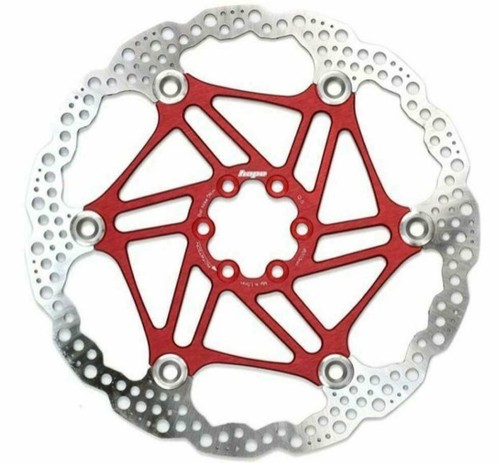
I love my M7 I put Hope rotors and EBC pads and never make noise

Agree. A slight misalignment on the rotor or a ridge on the rotor surface will give the wrong reading.I don't think trying to measure rotors with calipers will work, you need to use a micrometer.
A micrometer will give a truer reading and can be more accurate. The tolerances are much smaller (0-1”) whereas calipers are 0-6”or more.
Sometimes I use the fingernail-drag test across the rotor surface
 to quickly check for excessive wear.
Roundbadge
Member
I dumped the mt7’s for Gustavs
Way less maintenance and more power
Way less maintenance and more power
Tom Sellers
Member
The way I look at it is the lip that gets created between the outer edge of the disc, and the wear surface, I think you refer to it already as the 'ridge'. You cannot really measure wear with a pair of calipers. However, the OP simply seems to want to point out that the original rotor was thinner than the replacement so it's possible for that purpose the calipers served the purpose well enough to illustrate their point.Agree. A slight misalignment on the rotor or a ridge on the rotor surface will give the wrong reading.

Rocketscience66
Member
Had same issue on another bike with mt5 brakeset. In the end the only thing that fixed it was replacing the rotors.
Tom Sellers
Member
I replaced my old rotors last spring with new ones from Ali Express, and the front 180mm one screams like crazy. Even after I followed a rigorous cleaning procedure the noise did not stop. I find the howling works better than a bell for moving pedestrians that are listening to their earbuds. However, it seems I should replace the rotor.
MMBB
Member
Change the rotors out to something else.

Tom Sellers
Member
Will do! I never would have guessed that the rotors could be the culprit. But AI tells me, "metal-on-metal contact caused by high metal content brake pads grinding on cheap rotors can amplify squealing sounds." So I will try to find some better quality rotors rather than change my sintered pads.Change the rotors out to something else.
MMBB
Member
I had multiple mates with same problem and read plenty of posts saying it's the rotors. I'd change them first before changing anything else. Good luck hopefully it fixes itWill do! I never would have guessed that the rotors could be the culprit. But AI tells me, "metal-on-metal contact caused by high metal content brake pads grinding on cheap rotors can amplify squealing sounds." So I will try to find some better quality rotors rather than change my sintered pads.
Tom Sellers
Member
I'm wondering if it's worth it to change to a floating rotor?I had multiple mates with same problem and read plenty of posts saying it's the rotors. I'd change them first before changing anything else. Good luck hopefully it fixes it

Yesterday, I let two of my mates ride the Amflow PL Carbon Pro, which has the MT7s. First comment was how stupid the power is. But second comment was the brakes felt so good.
I rode their bikes whilst we were exchanging. A Pivot and a Scott. Both with Shimano XTR brakes. They were nice brakes. But the MT7s were just that cut above.
I will admit I got a rear puncture on Friday. And I took the rear wheel off to repair. There was the Magura scraping sound when I put it back, just in one spot. Took me nearly 30 mins of alignment to get it fixed. So whilst I agree they are hard to set up. Once set, they are just fantastic.
The problem I could see, is that with no single spring returning the pads on both sides, and just the magnets. The calliper doesn't always centre when you pull the brake with the bolts loosened. And you can have uneven piston extension on each side.
I rode their bikes whilst we were exchanging. A Pivot and a Scott. Both with Shimano XTR brakes. They were nice brakes. But the MT7s were just that cut above.
I will admit I got a rear puncture on Friday. And I took the rear wheel off to repair. There was the Magura scraping sound when I put it back, just in one spot. Took me nearly 30 mins of alignment to get it fixed. So whilst I agree they are hard to set up. Once set, they are just fantastic.
The problem I could see, is that with no single spring returning the pads on both sides, and just the magnets. The calliper doesn't always centre when you pull the brake with the bolts loosened. And you can have uneven piston extension on each side.

MT7's are super finicky and have very tight tolerances, more so than any other mtb brake imo. The most overlooked step is Magura's bed-in process. If you get a new bike chances are the pads were not bed-in. If you just go straight out and ride, then you run a high probability of making noisy brakes because you neglected the bed-in. And, chances are the noise will never go away no matter how much you sand or file the pads or rotors.
If you look up Magura's bed-in process, it is a real pain in the ass, but very much necessary. If you skipped the bed-in process and are frustrated with noise, the best bet to get new rotors and pads and follow the bed-in process to the letter, cannot stress that enough. Also imo is best to stay away from floating rotors, either Magura's or other brand. I have always had best results from Storm HC which sometimes can warp too easily, if that's the case try the MDRC one pc rotors which have more material and stay truer under severe conditions.
If you look up Magura's bed-in process, it is a real pain in the ass, but very much necessary. If you skipped the bed-in process and are frustrated with noise, the best bet to get new rotors and pads and follow the bed-in process to the letter, cannot stress that enough. Also imo is best to stay away from floating rotors, either Magura's or other brand. I have always had best results from Storm HC which sometimes can warp too easily, if that's the case try the MDRC one pc rotors which have more material and stay truer under severe conditions.
Like these?I'm wondering if it's worth it to change to a floating rotor?
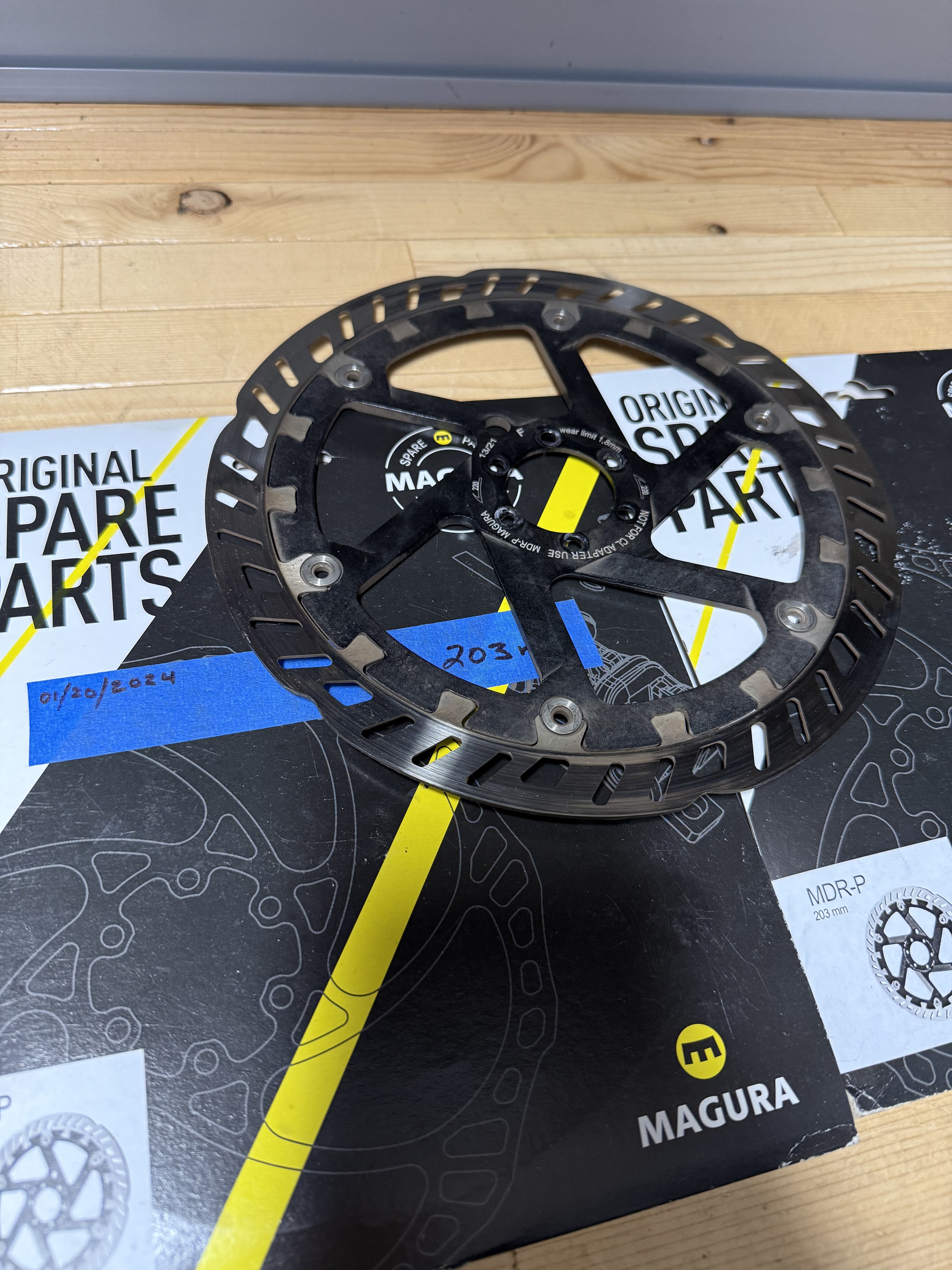
More expensive but most of us have went this way.(8 bikes maybe?)And most of us went 220mm for the front and 203mm for the rear. Better modulation, or more equal modulation. Less rear tire drag. Better stopping power for the front tire where it’s needed.
Really good adapters are important. No stacked washers or cone washers. Properly aligned calliper posts. (Small blob of frame paint can cause calliper misalignment).
Initial calliper to rotor alignment is critical. The pistons should self-align themselves during the bedding-in procedure, which is very important.
MT7’s are good brakes but they need a bit more attention than other brands. More lever bleeds than normal.
Note about floating Magura rotors; a couple of guys in our circle found a great deal on-line from an unknown supplier. As they rode them on chunky trails they sounded like tambourines. The sound drove them nuts. They replaced them with OEM floating rotors from a reputable local Bike Shop.
I suspect that these noisy tambourine rotors were rejects after the QC process. Possibly sold at a discount to a foreign buyer who resold them at a discount.
I guess you get what you pay for.

lol. I use my levers, when you install new pads if your levers are already half way to the bars your rotors are too thin.I use the fingernail-drag test
You can just look at a thin rotor and know its junk, i was going through Shimano rotors every 4 months, and Sram ill get 6 months
Now I never use 1.8mm rotors, and its funny but the 2mm rotors all mic differently. The storm 203 rotors at 1.95 are too thin for my liking and they howl with a harmonic. And are just noisy. I drop 400,000' every 6 months so I go through rotors way to fast. Trying the 2.3mm rotors and they work great, but they are pretty heavy. The sweet spot is the Sram HS2 220 rotors for power and longevity.
That is a two part problem. One the storm rotors are junk, hated them. Second the pad material is why they have a special bed in process. They are harder pad material than most other types. Mine bed in fine but took almost a 90 miles and 13,000' of dropping, and I changed out rotors after 60 miles.MT7's are super finicky
So far I have found these brakes to be outstanding once you add 220 rotors front and rear, I like them a lot better than my Shimano's.
First week of running these I bought pads with a little softer material, which also decreases rotor wear. At the cost pf having to change out pads quicker. These are east enough and more simple than Shimano.

Put Shimano levers on and Galfer purple pads .I have a new Amflow Carbon PL Pro. It would be a great bike if it weren't for...
I've done my first 10 tours (13,000 metres of elevation gain and 320 km). I've taken the bike to the repair shop three times, watched three videos about the well-known Magura problem and spent at least five hours in my workshop myself.
-Cleaned and finely sanded the brake discs.
-Sanded and replaced the brake pads.
-Aligned the brake caliper countless times.
-Reduced the amount of brake fluid.
-Pushed the brake pistons all the way in countless times.
Nothing helped. The brakes continue to squeak and roar merrily along. It's almost unbearable!
If it's a defective part, that can't be normal on a € 10k bike, can it?

jetskier973
Member
Switched from Shimano SLX to Magura MT7. After countless bleeds to get the brakes feeling good, I finally got the trail. Calipers worked great, hated the levers for the plastic feeling, pita bleeding process, and didn't like how "out front" the reservoirs are.
Adapted SLX levers to Magura hose and loved it.
There were other problems though.
The Magura floating rotors; one took a warp and would rub, the other seemed to become loose in the pins connecting inner to outer. Ditched them for SRAM HS2's and loved it.
Another issue was that the calipers would consistently move right at the very last moment to reach torque spec. Grrrrr aggravating!! Searching for answers, I found that the paint on the posts for the calipers could be getting in the way of a clean and perfect interface, and/or the surfaces are not perfect anyway!
The solution to this was to buy expensive tool or find bike shop to do the proper fix with proper tool.
Since both of those options are expensive, I chose the DIY way (probably get some hate for this but whatever). I used a flat file and a black Sharpie marker to achieve flat surfaces. I was careful and meticulous and only removed what needed to be removed.
Now my calipers don't move when approaching torque, and noise is gone.
At this time I'm running Shigura brakes, SRAMHS2 220mm, and Galfer purples.
Adapted SLX levers to Magura hose and loved it.
There were other problems though.
The Magura floating rotors; one took a warp and would rub, the other seemed to become loose in the pins connecting inner to outer. Ditched them for SRAM HS2's and loved it.
Another issue was that the calipers would consistently move right at the very last moment to reach torque spec. Grrrrr aggravating!! Searching for answers, I found that the paint on the posts for the calipers could be getting in the way of a clean and perfect interface, and/or the surfaces are not perfect anyway!
The solution to this was to buy expensive tool or find bike shop to do the proper fix with proper tool.
Since both of those options are expensive, I chose the DIY way (probably get some hate for this but whatever). I used a flat file and a black Sharpie marker to achieve flat surfaces. I was careful and meticulous and only removed what needed to be removed.
Now my calipers don't move when approaching torque, and noise is gone.
At this time I'm running Shigura brakes, SRAMHS2 220mm, and Galfer purples.

Dobrý den, omlouvám se, ale z vašeho komentáře mám dojem, že máte na mysli brzdění vozu Formule 1, nikoli běžného jízdního kola. Brzdy musí fungovat i v blátě, vodě a dalších nepříznivých podmínkách. Nechápu, proč z toho děláte takovou vědu.Myslím, že je vhodné oddělit příznaky problémů s brzdami, abychom se mohli zaměřit na řešení.
Problémy se seřízením brzdových destiček/třmenů způsobí tření brzd a v případě extrémnějších vibrací, které můžete cítit i přes brzdnou páku... a samozřejmě také špatnou brzdnou odezvu. Nic z toho nezpůsobí skřípání při brzdění.
Hlučné problémy s destičkami na rotoru jsou způsobeny špatnou přilnavostí mezi destičkami a rotorem. Klasickými příčinami jsou...
1. Znečištění kotouče. To může být způsobeno různými aerosolovými čističi/leštidly, i když jsou nastříkány v dostatečné vzdálenosti od kola, ale v uzavřeném prostoru. Patří sem také některé obecné neaerosolové čističe a samozřejmě oleje. Pokud na kole používáte jakékoli čisticí/mazací prostředky, je nejlepší nejprve zakrýt kotouče. I dotyk brzdového povrchu rukama může kotouč kontaminovat. Mezi další příčiny patří znečištění vozovky/výfuku, pokud je kolo přepravováno na korbě auta/dodávky, ale pravděpodobně zdaleka největší příčinou je špatný postup zaběhnutí brzdových destiček. Spékané destičky se nejobtížněji zaběhávají.
2. Použití nesourodých destiček a rotorů. Některé rotory jsou navrženy pouze pro pryskyřičné destičky.
Jak tedy zaběhnout destičky? Proces zahrnuje přenos vrstvy živice z destičky na rotor, zatímco vypouštění vzduchu zahřívá rotor. Nejlepší způsob, jak toho dosáhnout, je strávit 10/15 minut na klidném úseku silnice jízdou střední rychlostí a poté silně sešlápnout jednu z brzd, dokud se téměř nezastavíte, a poté brzdu uvolnit. Opakujte několikrát. Po každém sešlápnutí byste měli cítit, že se brzdný účinek zlepšil. Opakujte s druhou brzdou. Klasickým znakem, že jste to neudělali správně, je černý usazenina na rotoru... způsobený teplem!
Jak se zbavit nečistot? Použijte dílenskou utěrku namočenou v roztoku IPA a v případě potřeby otřete obě strany rotoru čistším hadříkem, dokud po otření nezůstanou žádné stopy. (Z mých zkušeností je používání údajné brzdové kapaliny na tento účel horší než k ničemu!). Nevidím důvod používat na rotor jakýkoli abrazivní materiál, pokud není poškrábaný. Nikdy jsem rotor nebrousil!
Podložky lze nejprve čistit IPA a bavlněným hadříkem, poté mokrým a suchým brusným papírem o zrnitosti cca 1200 a poté znovu IPA. Nepoužívejte brusný papír!!
Teď budete muset znovu vložit podložky, i když podruhé to bude rychlejší.
KTMJack
Member
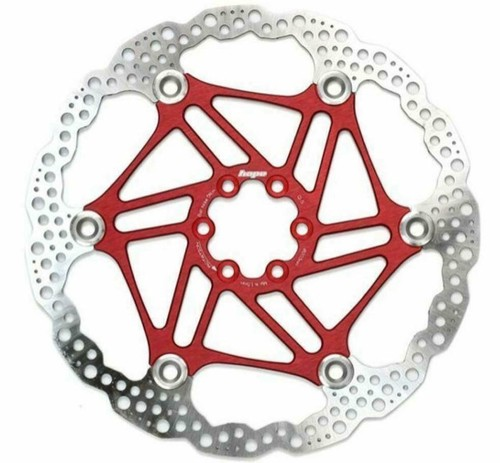
I like my Hope rotors no noise with my MT7s
Last edited:
Too skinny, i would burn them up in 2 months.Hope rotors
KTMJack
Member
I tried the Magura floaters there thicker but too thick with new pads had to put in old pads just so I could get the wheel onToo skinny, i would burn them up in 2 months.
You were doing something wrong, because im using 2.3mm wide rotors and they fit on with ease. The Magura are only 2mm and made for those calipers. Hopefully you took bleed screw out when compressing caliper pistons. Or used bleed port.but too thick
Tom Sellers
Member
I was wondering about this as well.compressing caliper pistons.

I have a set of MT7’s that have been rock solid for 3 years. A good technique will help when it’s time to align caliper to rotor. Every bikes a bit different, but the technique is similar.
You have to get adapters clear of rotor and torqued first
With caliper mounting bolts installed but loose
Squeeze lever 2 outa 5 hard
Firm but not tighten the bolts up while holding lever
Release lever spin wheel, listen
If noise is heard
Loosen 1 of the 2 bolts (1 should be snug still)
Spin wheel and adjust caliper (keeping 1 bolt snug, 1 barely touching caliper to adapter)
When noise is acceptable, hand torque bolts (assuming you can gauge your torque without destroying)
Retrieve torque wrench and do torques
Do this before you install new pads, if done on worn in brakes, expect noises to wake up distant bears.
If this rambling has been covered and you read this. Boy I’m really sorry.
You have to get adapters clear of rotor and torqued first
With caliper mounting bolts installed but loose
Squeeze lever 2 outa 5 hard
Firm but not tighten the bolts up while holding lever
Release lever spin wheel, listen
If noise is heard
Loosen 1 of the 2 bolts (1 should be snug still)
Spin wheel and adjust caliper (keeping 1 bolt snug, 1 barely touching caliper to adapter)
When noise is acceptable, hand torque bolts (assuming you can gauge your torque without destroying)
Retrieve torque wrench and do torques
Do this before you install new pads, if done on worn in brakes, expect noises to wake up distant bears.
If this rambling has been covered and you read this. Boy I’m really sorry.

I’ve only had my Carbon Pro for a short time, but so far the MT7 brakes are in the “suck” category. I have Code silvers, Shimano XTR and Deore on my other bikes and they are WAY better and much stronger.
With that being said I’m sticking with the MT7 brakes because I think (hope) eventually they will improve. I also like the lever feel. I’ve flat sanded the pads, and cleaned with brake cleaner but they still are quite weak and impossible to align with the rotors. Luckily I live in a hilly area and there is a high steep road just outside of my driveway. Great hill for getting speed, then applying brakes, on and off so they don’t get too hot. I suspect the Magura brakes just take more miles to bed in and improve? I have confidence they will get better.
With that being said I’m sticking with the MT7 brakes because I think (hope) eventually they will improve. I also like the lever feel. I’ve flat sanded the pads, and cleaned with brake cleaner but they still are quite weak and impossible to align with the rotors. Luckily I live in a hilly area and there is a high steep road just outside of my driveway. Great hill for getting speed, then applying brakes, on and off so they don’t get too hot. I suspect the Magura brakes just take more miles to bed in and improve? I have confidence
they will get better.100% mine took a 100 miles to bed in. I swapped out rotors and the Magura MT7s are the best brakes I have ever run and I descend over 560,000' this year. No contest against my Shimanos, the mt7s are far better. The storm rotors suck. I suspect the Magura brakes just take more miles to bed in and improve?

I posted this in another thread recently, but I’ve been ‘putting up with’ my MT7’s for years now.
When they work, they’re fantastic… but I’ve grown tired of continually having to adjust and bleed them - so have moved on.
For the first 3 or so years, they were brilliant. No issues at all. It was when I moved them onto a new bike that the problems started.
The MT7’s would feel rock solid when I rode them round the streets after a bleed. It wasn’t until mid technical descent that the front one would just go soft. I had this happen over multiple rides… where I’d spent hours climbing looking forward to the descent - which is then ruined by a lack of brakes!
They were also horrible to align, would frequently scream and howl. I replaced it with another MT7, but it wasn’t any better. Perhaps some of it was user error, but I followed every guide and video I could lay my hands on.
Enough was enough - I wasted the best part of this summer having my rides ruined by them. Last month, I managed to get my hands on Intend Trinity’s, and they’re night and day.
Bleed took about 5 mins rather than 10 attempts whilst putting the bike in various positions to ensure the lever / caliper were at the same height. Rock solid, identical bite on them both. No rubbing.
No fading whilst doing long descents, and I can get loads of power with a single finger.
Expensive - but so far I’m feeling like they’re worth the money.
If the MT7’s aren’t working for you - then change them. No point in suffering with them. I wish I’d changed them back when they started playing silly buggers about 18 months ago. I’d have had many more enjoyable rides!!
When they work, they’re fantastic… but I’ve grown tired of continually having to adjust and bleed them - so have moved on.
For the first 3 or so years, they were brilliant. No issues at all. It was when I moved them onto a new bike that the problems started.
The MT7’s would feel rock solid when I rode them round the streets after a bleed. It wasn’t until mid technical descent that the front one would just go soft. I had this happen over multiple rides… where I’d spent hours climbing looking forward to the descent - which is then ruined by a lack of brakes!
They were also horrible to align, would frequently scream and howl. I replaced it with another MT7, but it wasn’t any better. Perhaps some of it was user error, but I followed every guide and video I could lay my hands on.
Enough was enough - I wasted the best part of this summer having my rides ruined by them. Last month, I managed to get my hands on Intend Trinity’s, and they’re night and day.
Bleed took about 5 mins rather than 10 attempts whilst putting the bike in various positions to ensure the lever / caliper were at the same height. Rock solid, identical bite on them both. No rubbing.
No fading whilst doing long descents, and I can get loads of power with a single finger.
Expensive - but so far I’m feeling like they’re worth the money.
If the MT7’s aren’t working for you - then change them. No point in suffering with them. I wish I’d changed them back when they started playing silly buggers about 18 months ago. I’d have had many more enjoyable rides!!

