1st ride on my Crestline RS 181.1 DJI

...
But I just wanted to point out that there can be some pretty large swings in efficiency between different electric motors.

Here is a review comparing the Fazua 60 in a Relay & the TQ HP50 in a Trek Exe, on a standard climb and using watt power measuring pedals to measure rider input and keep it consistent.

What's relevant is that the F60 used 39 battery wh per climb, where-as the TQ HP50 used 54 wh per climb, while also going slower! That means that the TQ is 38% less efficient even when not adjusted for the speed advantage the F60 had! That's a lot.
...
This is making me take a much longer look at the Maxon Air S motor now and the current bikes that sport it (fledgling amount at the moment). In fact, all the winging on this thread regarding DJI motor noise is all the more reason.
 
⚡ EMTB Pro Go Pro — exclusive discounts & ad-free Peaty's 25% off & more · Ad-free browsing · Pro badge See the deals →
Though I do agree its physics. In practice when we compare same output with same output we see a variation. I see that variation in how the software applies the power. sooner, harder, etc. Different models/brands of motors apply these differently and different mode options make further adjustments which leads to variation that can be considered more/less efficient.

I'm also interesting in how rising heat affects power output. DJI as an example has less cooling fins and likely to overheat or run at hotter less efficient temps. There could be a variation in efficiency due to increased running temp.

Yes, agree that all those things are in play, but it was more that you can thrown a blanket over them in terms of absolute efficiency and range obtainable etc, all other things being equal.

A few hundred watt hours of energy isn’t much in the grand scheme of things, and things like assist limits will have a big impact.

I’m surprised there isn’t an efficiency rating yet for e-bikes actually, I suppose it would be very difficult to come up with one, with being pedal assisted electric bicycles rather than an electric motorbike.
 
Yes, agree that all those things are in play, but it was more that you can thrown a blanket over them in terms of absolute efficiency and range obtainable etc, all other things being equal.

A few hundred watt hours of energy isn’t much in the grand scheme of things, and things like assist limits will have a big impact.

I’m surprised there isn’t an efficiency rating yet for e-bikes actually, I suppose it would be very difficult to come up with one, with being pedal assisted electric bicycles rather than an electric motorbike.
I don't think it'd be that hard to set up a lab rig which could test it.
 
I'm also interesting in how rising heat affects power output. DJI as an example has less cooling fins and likely to overheat or run at hotter less efficient temps. There could be a variation in efficiency due to increased running temp.
I questioned how DJI was dealing with heat as well, looking at how well the motor is integrated into all the frames. (Flush on both sides) Unlike my previous Bosch race motor that stuck out with heat louvers and looked so ugly in comparison.
Now that I have the RS181 I can see there is a large frame opening above the motor and the backside of the motor. The RS181 bash guard also has a large cutout for the DJI louvered heat sink to have access to fresh air. It’s very neat how the DJI louvered heat sink is incorporated….not sure the Amflow has this?
And it’s not likely you will bash the heat sink louvers because of how the RS181 bash guard comes down lower on each side to protect the chainring.
 
Last edited:
I don't think it'd be that hard to set up a lab rig which could test it.
It would be interesting to see the ‘core efficiency’ of all the motors, but I’m assuming the results wouldn’t translate that well to any useful real world information to assist buyers.

Not least because some people seem to want power, whereas others want range or even a ‘natural feel’. Introduce things like assist levels, fitness or otherwise of the rider or even whether they want to assist that much at all, temperatures, terrain, assistance speed limits, tyres and rider and bike weight, battery size etc and I’m not sure what use an ‘A’, ‘B’ or ‘C’ or Wh per mile/km rating etc would be.

As long as it’s good to ride, and sounds like this Crestline is (and the ‘old’ one too), then all is well in the world. 👍
 
Last edited:
Though I do agree its physics. In practice when we compare same output with same output we see a variation. I see that variation in how the software applies the power. sooner, harder, etc. Different models/brands of motors apply these differently and different mode options make further adjustments which leads to variation that can be considered more/less efficient.

I'm also interesting in how rising heat affects power output. DJI as an example has less cooling fins and likely to overheat or run at hotter less efficient temps. There could be a variation in efficiency due to increased running temp.

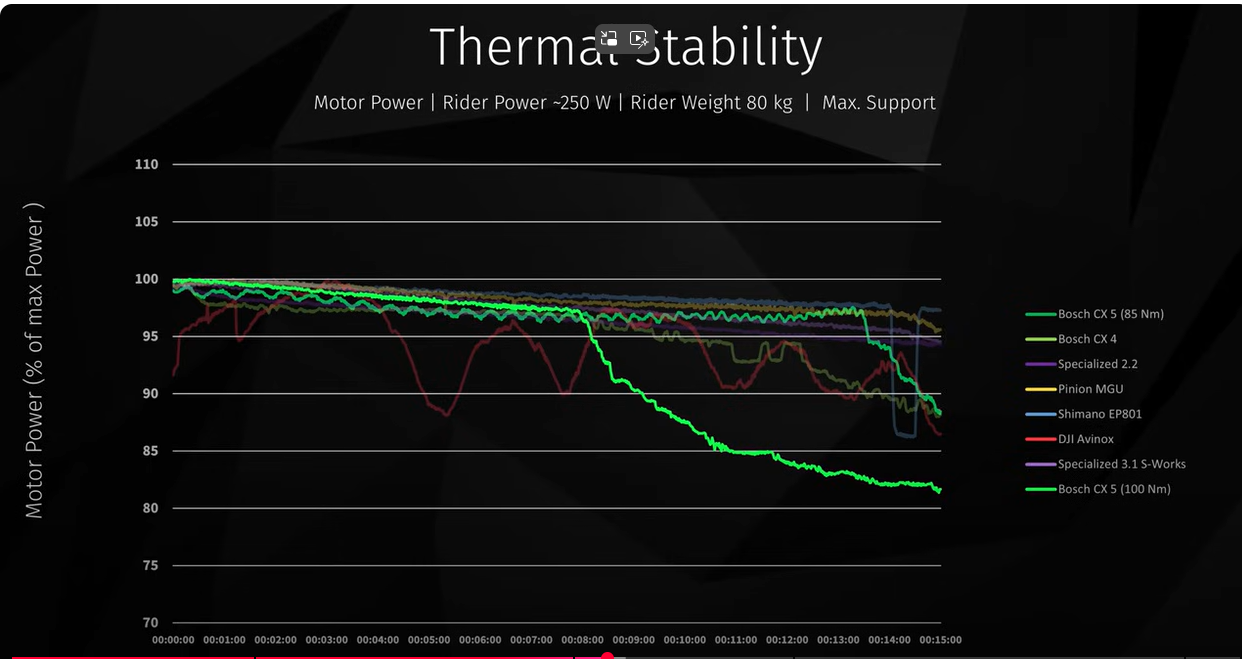
The DJI motor (red graph) does a lot of weird things as it heats up as seen from the Velomotion test results. The Bosch (green graph), typical German engineering, remains very steady and that has a very even fall off that might even be hard to detect. This is with the 100NM upgrade btw. You can also see that the 85NM version of the Bosch has the same pattern, it just takes longer to get derate as it's making less power.

The reason the Bosch Gen 5 85 NM did better in the long (20 mins I think) climb than the DJI might just be because the Bosch has higher average power over a 15 min test on a hot day.

I suspect that the CX-R version of the Bosch will be even more efficiency, as Ceramic bearings have that advantage.

The other thing I'd say is that I'd think one simple way to measure motor friction is, how hard is it to pedal with the power shut off? Isn't the Bosch okay to pedal shut off where-as the DJI is a real bear?

I'll be honest that for my purposes the over heat derate doesn't matter much as my longest steady climbs on an e-bike are only about 12 minutes, and most are shorter.

Screenshot 2025-07-28 164545.png
 
Last edited:
This is making me take a much longer look at the Maxon Air S motor now and the current bikes that sport it (fledgling amount at the moment). In fact, all the winging on this thread regarding DJI motor noise is all the more reason.

I'm into what they are doing but I'm scared of a niche motor now (even though my F60 has been great, resale is crap and it's a dead platform) and will be sticking with Bosch or DJI's.
 
The DJI motor (red graph) does a lot of weird things as it heats up as seen from the Velomotion test results. The Bosch (green graph), typical German engineering, remains very steady and that has a very even fall off that might even be hard to detect. This is with the 100NM upgrade btw. You can also see that the 85NM version of the Bosch has the same pattern, it just takes longer to get derate as it's making less power.

The reason the Bosch Gen 5 85 NM did better in the long (20 mins I think) climb than the DJI might just be because the Bosch has higher average power over a 15 min test on a hot day.

I suspect that the CX-R version of the Bosch will be even more efficiency, as Ceramic bearings have that advantage.

The other thing I'd say is that I'd think one simple way to measure motor friction is, how hard is it to pedal with the power shut off? Isn't the Bosch okay to pedal shut off where-as the DJI is a real bear?

I'll be honest that for my purposes the over heat derate doesn't matter much as my longest steady climbs on an e-bike are only about 12 minutes, and most are shorter.

View attachment 165228
I remember watching that video, as I recall the end conclusion was only super humans purely racing up hill will over heat any of these motors…..most riders not likely
 
I'm into what they are doing but I'm scared of a niche motor now (even though my F60 has been great, resale is crap and it's a dead platform) and will be sticking with Bosch or DJI's.
Well any motor brand with only a mid-power lineup is pretty much doomed. Yeti must be feeling this right about now. We got a full 6-8 months before the more interesting DJI offerings are available (not to mention the RS-181 for all the folks that didn't nab the shoe-drop), that gives those left behind to see how the these motor platforms (both venerable and new) shake out over time so we can sharpen our future bike selections.
 
I remember watching that video, as I recall the end conclusion was only super humans purely racing up hill will over heat any of these motors…..most riders not likely
Depends on your location i guess. My local would be unlikely to overheat motors, But head down the south island in summer and you grind up a 1000mtr + mountain in 30°C + in your lowest gear at snails pace on some super steep tech climb and could easily see a motor over heating.
 
Depends on your location i guess. My local would be unlikely to overheat motors, But head down the south island in summer and you grind up a 1000mtr + mountain in 30°C + in your lowest gear at snails pace on some super steep tech climb and could easily see a motor over heating.
Summers are 90-110F here. I stick to morning rides
 
Depends on your location i guess. My local would be unlikely to overheat motors, But head down the south island in summer and you grind up a 1000mtr + mountain in 30°C + in your lowest gear at snails pace on some super steep tech climb and could easily see a motor over heating.
I think I'd overheat first. :P
 
Thanks! One more question, what is your chain length? Did you use SRAM chain length recommendation? I understand they just recently added RS181 to their list but I’ve heard it’s inaccurate.
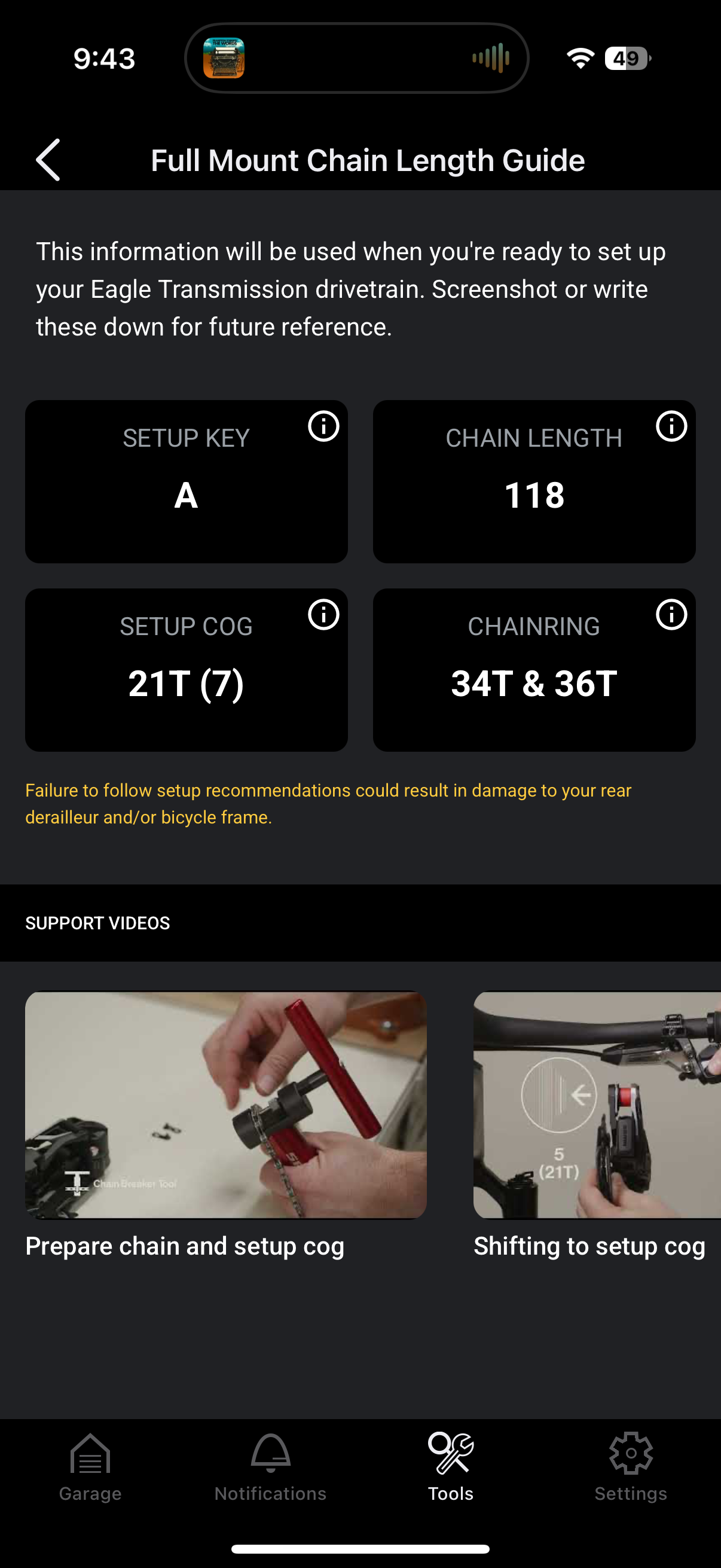
RH2 w XO transmission w 34T chainring and my chain length is 118 links just as indicated in the SRAM set up guide for the RS 181 Spectre. Works perfect!!

IMG_0756.png
 
RH2 w XO transmission w 34T chainring and my chain length is 118 links just as indicated in the SRAM set up guide for the RS 181 Spectre. Works perfect!!

View attachment 165268
What about rear tire and drop out length? Wouldn’t that change the required chain length?
I’m wondering what the required T-type chain length is for my RH-4 MX(27.5) 440mm drop outs and 36T chain ring?
 
What about rear tire and drop out length? Wouldn’t that change the required chain length?
I’m wondering what the required T-type chain length is for my RH-4 MX(27.5) 440mm drop outs and 36T chain ring?
Yes, different dop out/CS lengths and chain ring teeth will change chain length. All of those variables can be selected here:
 
I think I'd overheat first. :p
Yeah, its brutal. Try on the mtb (not E) in full armour because the down is double black goodness.....
At least on the E you get more wind chill with the extra speed. Until you have to hike a bike. Then the E is more hurt locker.
 
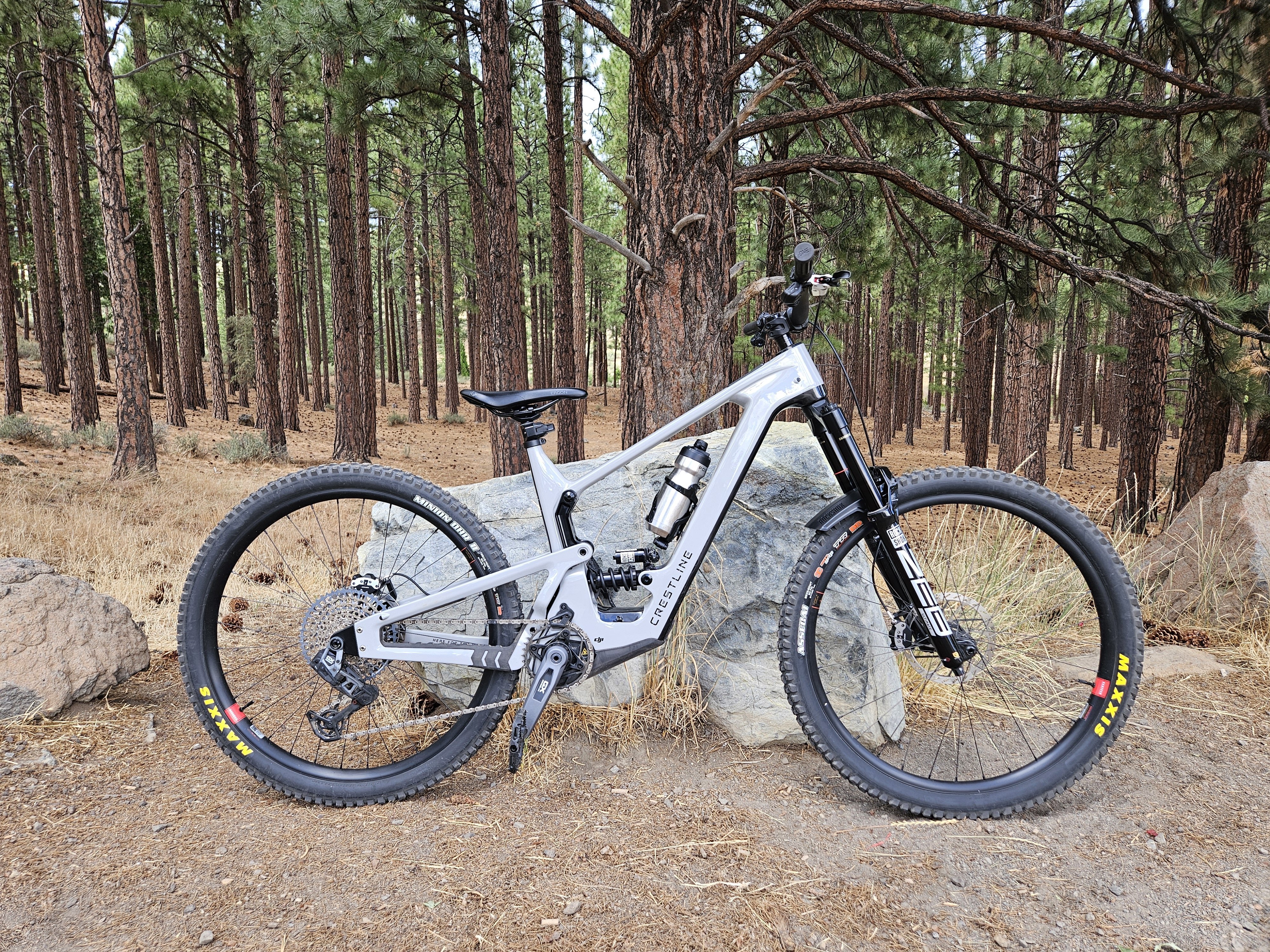
Weighed my bike again today without pedals or the bottle cage/tool. It comes out to 52lbs exactly. If I swapped my coil shock for air and swapped the alloy wheels for carbon It would be around 50.7lbs. This puts it around 1 pound heavier than the Forbidden E-Druid Core and is most likely due to the removable battery hardware on the Crestline. Bike rides like a 35lb bike though out on the trails.

20250729_160845.jpg
 
Last edited:
Weighed my bike again today without pedals or the bottle cage/tool. It comes out to 52lbs exactly. If I swapped my coil shock for air and swapped the alloy wheels for carbon It would be around 50.7lbs. This puts it around 1 pound heavier than the Forbidden E-Druid Core and is most likely due to the removable battery hardware on the Crestline. Bike rides like a 35lb bike though out on the trails.

View attachment 165269
I agree 100 percent. Very nimble in the tights, yet very stable in the steeps. I’ll know more after a couple more rides, but so far it seems to be markedly better than my Gen 1 Crestie..
 
Weighed my bike again today without pedals or the bottle cage/tool. It comes out to 52lbs exactly. If I swapped my coil shock for air and swapped the alloy wheels for carbon It would be around 50.7lbs. This puts it around 1 pound heavier than the Forbidden E-Druid Core and is most likely due to the removable battery hardware on the Crestline. Bike rides like a 35lb bike though out on the trails.

View attachment 165269
Thats pretty respectable weight for an 800wh battery e-bike.
 
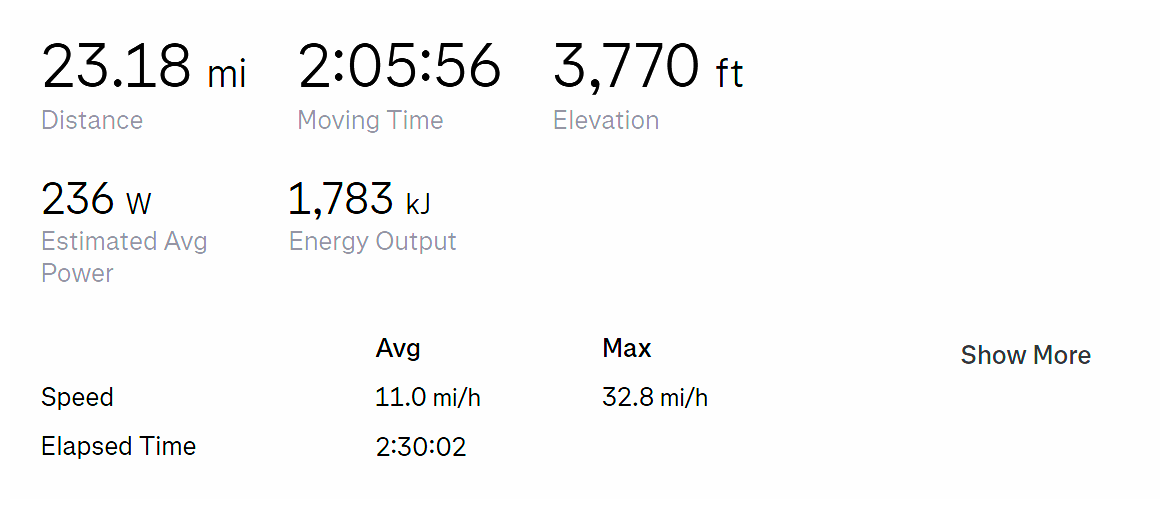
Really digging the range I'm getting. This ride was using 100% Turbo Mode (105nm/800watts) (assist + overrrun maxed out) and ended up with 25% battery left at the end of the ride. Doing the same ride with my Bosch Gen 4 Race Motor running 100% Race Mode I end up with 33% battery left.

Image20250801101006.png
 
Really digging the range I'm getting. This ride was using 100% Turbo Mode (105nm/800watts) (assist + overrrun maxed out) and ended up with 25% battery left at the end of the ride. Doing the same ride with my Bosch Gen 4 Race Motor running 100% Race Mode I end up with 33% battery left.

View attachment 165454

Good data point.

The Gen4 750W battery used .44w/ meter whereas the DJI used .52W/ meter (18% worse efficiency) but maybe was climbing faster. Do you have your average speed on the Gen4? Extraordinarily close to what e-mtb got for their efficiency numbers too when they compared the Gen5 vs. the Avinox. Like so close!

It's a solid comparison, same rider, terrain, model bike, probably tires, etc. Only catch, the older motor for the Bosch.

Either way, this checks out with what I consistently see, the Avinox being about 20% less efficient than the Bosch. If true, that has a 600 watt watt Bosch being equivalent to a 720W Avinox battery. Or an 800w Bosch being equivalent to a 960w Avinox battery.

Thanks for sharing.

PS. I know some don't give a crap about this stuff.
 
Last edited:
Good data point.

The Gen4 750W battery used .44w/ meter whereas the DJI used .52W/ meter (18% worse efficiency) but maybe was climbing faster. Do you have your average speed on the Gen4? Extraordinarily close to what e-mtb got for their efficiency numbers too when they compared the Gen5 vs. the Avinox. Like so close!

It's a solid comparison, same rider, terrain, model bike, probably tires, etc. Only catch, the older motor for the Bosch.

Either way, this checks out with what I consistently see, the Avinox being about 20% less efficient than the Bosch. If true, that has a 600 watt watt Bosch being equivalent to a 720W Avinox battery. Or an 800w Bosch being equivalent to a 960w Avinox battery.

Thanks for sharing.

PS. I know some don't give a crap about this stuff.
My average speed on the Gen 4 was about the same as DJI. Bounces around 1/2 mph difference between rides.
 
Good data point.

The Gen4 750W battery used .44w/ meter whereas the DJI used .52W/ meter (18% worse efficiency) but maybe was climbing faster. Do you have your average speed on the Gen4? Extraordinarily close to what e-mtb got for their efficiency numbers too when they compared the Gen5 vs. the Avinox. Like so close!

It's a solid comparison, same rider, terrain, model bike, probably tires, etc. Only catch, the older motor for the Bosch.

Either way, this checks out with what I consistently see, the Avinox being about 20% less efficient than the Bosch. If true, that has a 600 watt watt Bosch being equivalent to a 720W Avinox battery. Or an 800w Bosch being equivalent to a 960w Avinox battery.

Thanks for sharing.

PS. I know some don't give a crap about this stuff.
Is it motor inefficiency or just more power being outputted so the rider has used less energy at the end of the ride?
The additional battery usage seems to be inline with the additional power output.

Also a full power full turbo ride is fairly inefficient for battery usage. I could crank the same ride and improve the efficiency simply by flicking down modes when there is no more or minimal speed to be gain burning turbo.
 
Ok, but when you ride, you don't see the fat of the tube :LOL:
I guess we live on a time when fat (leanness) of the downtube of a bike is more important than the fat of the rider 🤣

Joking :D (and not referring to you obviously, whom i don't know)
I am also amused with ,multiple peoples enthusiasm for skinny down tubes. So much form over function.....
I my world of function over form. Skinny down tubes and big batteries mean increased forward and high C of G and worse handling characteristics. I prefer shorter fatter batteries which give a lower C of G an reduce forward weight bias......
 
Keep reading
    Browse all

    Similar Threads

    Community Stats

    Since 2018
    669K
    Messages
    40,833
    Members
    Join 30,000+ Riders, it's free!
    Back
    Top