
MountainHead
New Member
I need to discharge the battery for storage from 100% to about 50% on my Specialized Turbo Levo using purely electrical means, avoiding any drivetrain wear.
I got a turbo levo battery cable (S206800004) then found that, bizarrely, the molded elbow is rotated 180 degrees from the way the bike's plug is. It would not plug in with the elbow going down, not up like on the bike. So I had to chop the rubber off the elbow and pull back a washer that locked the wires in. Then I could bend the wires enough to get it plugged in to the bike correctly. If you try this, be very careful not to cut the wires while removing the rubber.
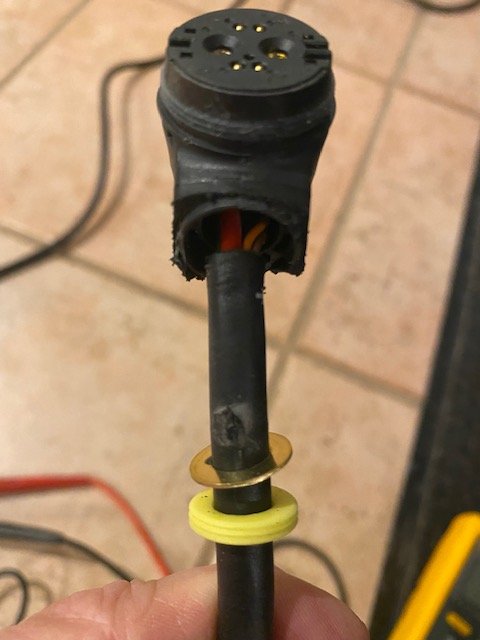
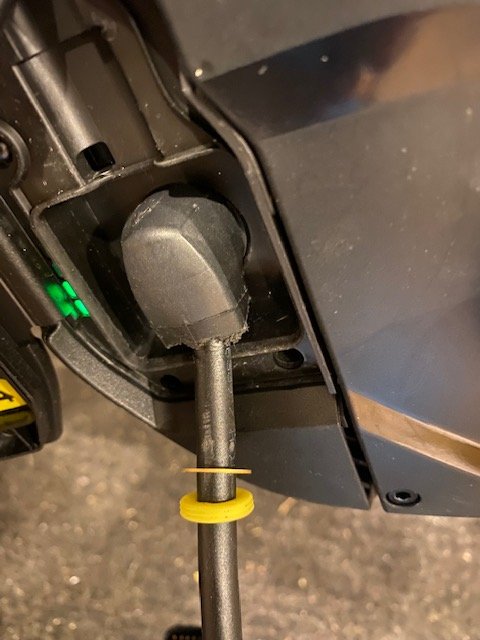
I used a USB charger to put +5 volts on the enable pin relative to ground.
After plugging in the modified cable with +5 volts on the enable pin, the battery powers up for about 60 seconds, then turns off. It needs for the controller to talk to it to stay powered on. To work around this, plug the battery in normally, power up the bike TCU, then pull the plug without turning it off. Now plug in the discharge cable. The power will now stay latched on, and you can start discharging.
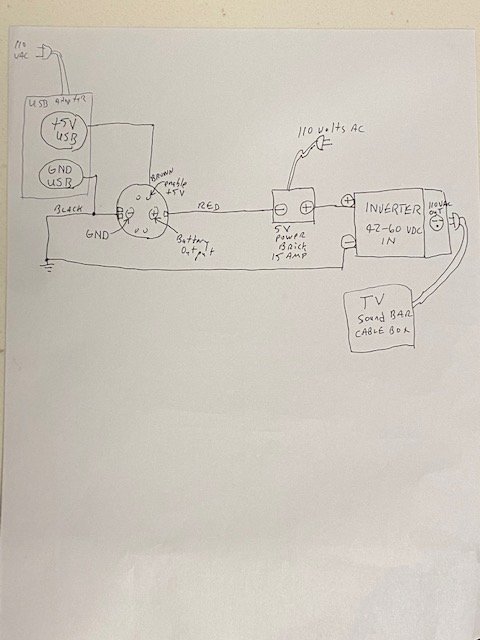
The initial voltage measured across the output with it enabled was 41.31 volts. This is obviously 10 lithium ion cells in series (4.2 volts fully charged). There is an inverter series that takes a DC input of 42-60 volts. So we need to boost the battery voltage a bit. I used a 5 volt, 15 amp power brick to do this. My inverter is 600 watts max. So at 41.31 volts, the max current is 600/41.31 = 14.5 amps. The "booster" brick must be able to carry this much current since its in series with the battery.
Now connect the booster brick in series with the battery. The total voltage is now 41.31 + 5 = 46.31 volts. In the range for the inverter to operate. Additionally, when the voltage drops to 42 volts and the inverter drops out, the battery voltage will be 42 - 5 = 37 volts. Which is the recommended target voltage to store lithium ion batteries at. So this will discharge to the 37 volt target, then stop.
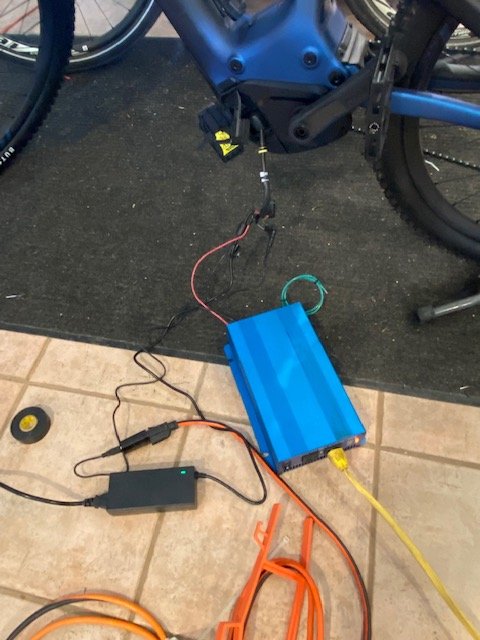
Here is the schematic:
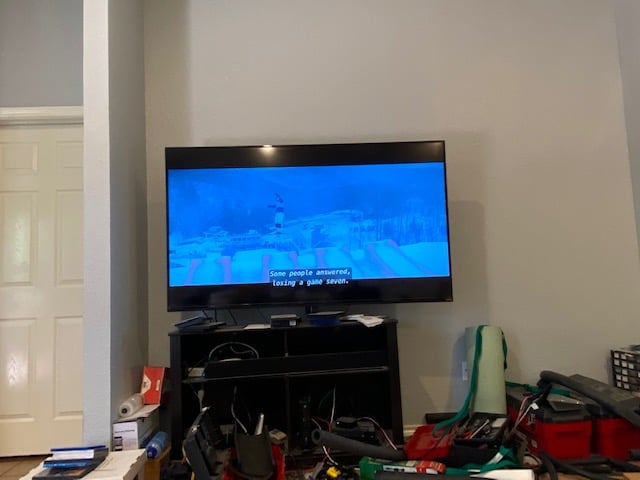
Now comes the fun part: watching Netflicks using your Turbo Levo battery as the power supply.
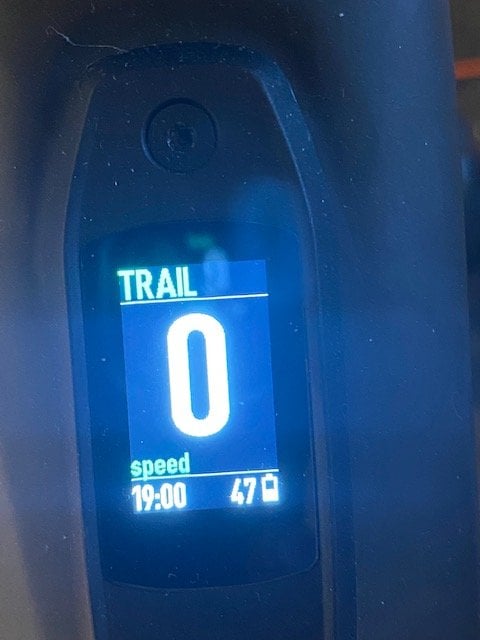
When the TV went dark my battery had 47% remaining.
Success!
I got a turbo levo battery cable (S206800004) then found that, bizarrely, the molded elbow is rotated 180 degrees from the way the bike's plug is. It would not plug in with the elbow going down, not up like on the bike. So I had to chop the rubber off the elbow and pull back a washer that locked the wires in. Then I could bend the wires enough to get it plugged in to the bike correctly. If you try this, be very careful not to cut the wires while removing the rubber.
I used a USB charger to put +5 volts on the enable pin relative to ground.
After plugging in the modified cable with +5 volts on the enable pin, the battery powers up for about 60 seconds, then turns off. It needs for the controller to talk to it to stay powered on. To work around this, plug the battery in normally, power up the bike TCU, then pull the plug without turning it off. Now plug in the discharge cable. The power will now stay latched on, and you can start discharging.
The initial voltage measured across the output with it enabled was 41.31 volts. This is obviously 10 lithium ion cells in series (4.2 volts fully charged). There is an inverter series that takes a DC input of 42-60 volts. So we need to boost the battery voltage a bit. I used a 5 volt, 15 amp power brick to do this. My inverter is 600 watts max. So at 41.31 volts, the max current is 600/41.31 = 14.5 amps. The "booster" brick must be able to carry this much current since its in series with the battery.
Now connect the booster brick in series with the battery. The total voltage is now 41.31 + 5 = 46.31 volts. In the range for the inverter to operate. Additionally, when the voltage drops to 42 volts and the inverter drops out, the battery voltage will be 42 - 5 = 37 volts. Which is the recommended target voltage to store lithium ion batteries at. So this will discharge to the 37 volt target, then stop.
Here is the schematic:
Now comes the fun part: watching Netflicks using your Turbo Levo battery as the power supply.
When the TV went dark my battery had 47% remaining.
Success!


