The caps are not for retention. The caps are for preload ("pre" as in "before tightening"). If you crank falls off, it's not because of the cap. It's because the crank bolts were loose. The caps don't have enough torque or material to keep your cranks on under any non-trivial load.
The plastic design of the Shimano caps is to prevent you for over-tightening the preload, not to retain the crank at different temperatures.
I agree that the caps are not for retention generally, but they clearly play a part. From my pov/experience... it seems that there is some amount of deformation of the aluminum ep8 spindle occurring. Whether that's from the installation of the pinch bolts on the cranks, or if it's from heat cycles of the spindle or if it's from the interface (splined along with threaded pre-load end cap along with taper/friction from the portion of the crank that pinches on the non-splined part of the spindle...) I do not know. What seems clear to me... is that there are a few things at play causing this, and it's not as simple as pull a rubber spindle spacer and use loctite.
It seems that either the plastic pre-load end cap threads are deforming, or the whole pre-load end cap is deforming and that is stopping the pre-load cap from working it's way out. Which is a contributing factor to the fact that the shimano cranks, do not come loose. The truth is, the e13 cranks are not falling off with the aluminum pre-load end cap still attached to the spindle. Which points to the fact that the first domino, is the pre-load end cap coming off. Then the splined interface and pinch bolts, seem to fail at their respective tasks, which causes the crank arm to walk off.
I believe, if it were as simple as, "the end cap does nothing more then stop you from over-tightening the pre-load", then the e13 aluminum end cap would stay in place. Instead, there is something going on with the metallurgy and resulting design of shimano's system, that makes that more reliable. I can only assume, that the pre-load end cap is deforming in concert with the end of the spindle, which allows the crank tightening bolts to hold torque better, and to not work slop into the splined interface to the spindle. I do on the face of it, think that their purpose is that simple, but it seems that there is some deeper engineering going on.
After all, shimano is really a metallurgy and forging company at its' core, that makes bike and fishing products. If they had the opportunity to leverage their in house forging or machining, they are going to. The whole situation from top to bottom, has me looking at their hollowtech II interface, thinking that there is just more going on then what you see at surface value... especially since they were confident enough to use a hollow spindle on the ep8 when it was tested with their own cranks.


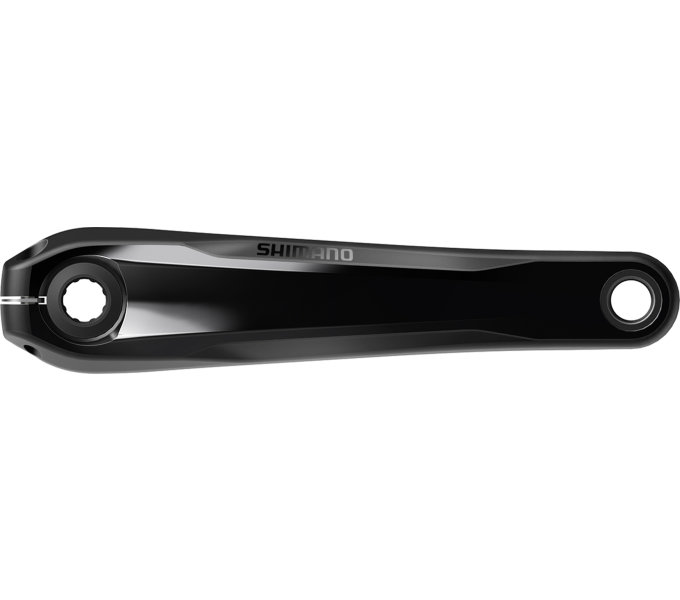

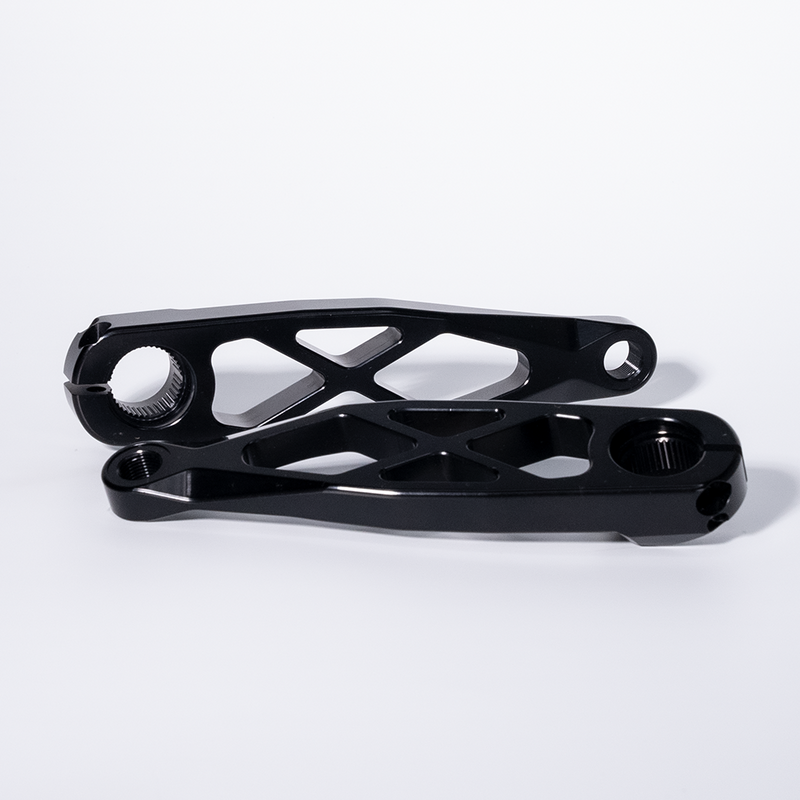


 . They are made of aerospace grade aluminum and CNC machined from a single billet. Not cheap cast crap aluminum. As mentioned, if $ is not an issue and you like having something unique, go for it. Personally I have never had an issue with Shimano cranks (other than not being able to find them for sale) or E13 cranks for that matter.
 (slow speed uphill thankfully)


