Navigation
Install the app
How to install the app on iOS
Follow along with the video below to see how to install our site as a web app on your home screen.
Note: This feature may not be available in some browsers.
More options
Style variation
You are using an out of date browser. It may not display this or other websites correctly.
You should upgrade or use an alternative browser.
You should upgrade or use an alternative browser.
how does weight affect range
- Thread starter Django
- Start date


Velociraptor
Member
It has a big effect if you are climbing.

What is N/M meaning for torque? - QuoraDoes anyone know how the biker weight effects the range of an e-bike?

As they said. But keep in mind that undulating terrain where you might not think you're climbing much can also use more power than you think.
Speed and constant hard acceleration, pedalling downhill before assistance stops will all eat battery.
I'm less than 70kgs and will normally be flat in about 28k max. 20k if I'm being stupid and I think 8k is my record. Terrain and how you choose to ride it makes a huge difference.
I rode on the road the other day. 25k and 10% battery used because I turned into a massive wet sweaty rag with dead legs trying to stay above the assistance limit.
A couple of day later I went out and ride slowly and only used 30% in 20k and 700m. There are so many variables
Make sure you keep your cadence up.
Speed and constant hard acceleration, pedalling downhill before assistance stops will all eat battery.
I'm less than 70kgs and will normally be flat in about 28k max. 20k if I'm being stupid and I think 8k is my record. Terrain and how you choose to ride it makes a huge difference.
I rode on the road the other day. 25k and 10% battery used because I turned into a massive wet sweaty rag with dead legs trying to stay above the assistance limit.
A couple of day later I went out and ride slowly and only used 30% in 20k and 700m. There are so many variables
Make sure you keep your cadence up.

The energy required increases with the square of the velocity, flat or climbing.
The energy required to overcome resistance from the air is proportional to the square of the velocity.
Energy required when climbing is proportional to mass.
Energy required when climbing is proportional to height gained.
Unless you are prepared to go on a crash diet, the only one that you control is how fast you go, particularly when climbing and accelerating.
The energy required to overcome resistance from the air is proportional to the square of the velocity.
Energy required when climbing is proportional to mass.
Energy required when climbing is proportional to height gained.
Unless you are prepared to go on a crash diet, the only one that you control is how fast you go, particularly when climbing and accelerating.

wildsau2
Active member
climbing and acceleration is weight dependend. zimm made good examples.

PhilBaker
Well-known member
Here's the video...
How much of the energy usage is due to air resistance when cycling? I know the roadies spend a lot of time worrying about it, but would assume other losses are bigger proportion?The energy required increases with the square of the velocity, flat or climbing.
The energy required to overcome resistance from the air is proportional to the square of the velocity.
Energy required when climbing is proportional to mass.
Energy required when climbing is proportional to height gained.
Unless you are prepared to go on a crash diet, the only one that you control is how fast you go, particularly when climbing and accelerating.
No idea though.

Rosemount
E*POWAH Elite
Assistance level .
If you are heavier you need to make up the difference through your own out put to use the same amount of battery as a lighter person .
The range in different modes can be substantially different .
If you are heavier you need to make up the difference through your own out put to use the same amount of battery as a lighter person .
The range in different modes can be substantially different .
PhilBaker
Well-known member
What do you mean Paul? Not sure I understand your comment.don`t get into wonderland that a 625 battery is going
to get you further in distance
Velociraptor
Member
My experience is that I weigh 87 kilos and my three riding buddies all weigh a lot less with one rider only 60 kilos. All my friends are on Specialized Turbo Levo bikes with the 90nm Brose motor and the 700wh battery. I am on a SC Heckler with the 70nm Shimano E8000 motor and a 504wh battery. It is not unusual for us to do climbs of thousands of feet. I have a triple disadvantage. I am the heaviest, my motor makes less power, and my battery is smaller. All that means that I have to carry an extra battery. Because of my weight I am not a great climber but on the other hand I am a decent distance runner so probably have the best aerobic system of all of us. The 60kg guy in our group has never burned through more than half his battery on our rides whereas I might be getting low on the first battery or have to change the battery. I currently have a SC Bullit on order and hope the 85nm E8 motor and the 630wh battery will improve my range a lot, but won't know until I do some rides.
I have no idea of the exact proportion, because "it will depend...." But I would put climbing at speed at the top and air resistance at the bottom.How much of the energy usage is due to air resistance when cycling? I know the roadies spend a lot of time worrying about it, but would assume other losses are bigger proportion?
No idea though.


Beekeeper
🍯Honey Monster🍯
For each additional kg load it costs £41000 Extra In fuel to carry it into space.
Carrying a 1kg flask of Horlicks up Leith Hill does not seem to cause such an issue on my Cube I’m pleased to say.

Carrying a 1kg flask of Horlicks up Leith Hill does not seem to cause such an issue on my Cube I’m pleased to say.
Pan
New Member
I am convinced the weight makes an important difference, especially in the climbs. This said the relative energy given by the rider (energy / rider kg) would i think be the no 1 element. Just to say, often the slim riders are the higher energy ones (w/kg). But not always.

Bosch range calculator it's just a guide obviously

Fatbap
Well-known member
Went to BPW last Sunday with my mate. Both of us are on Yt decoys 2019 both had full battery’s goin. I weigh 20ish st, he weighs 14ish st
I had 1 bar battery left after 12mi so we swapped as he had 3bars remaining. When we finished my battery fitted to his bike was on the brink of dying an his battery still had 3bars left.
Both of us rode same pace an most of the time on the climbs same gear, both used same power modes.
So yes my belly makes a big difference in how far I can go
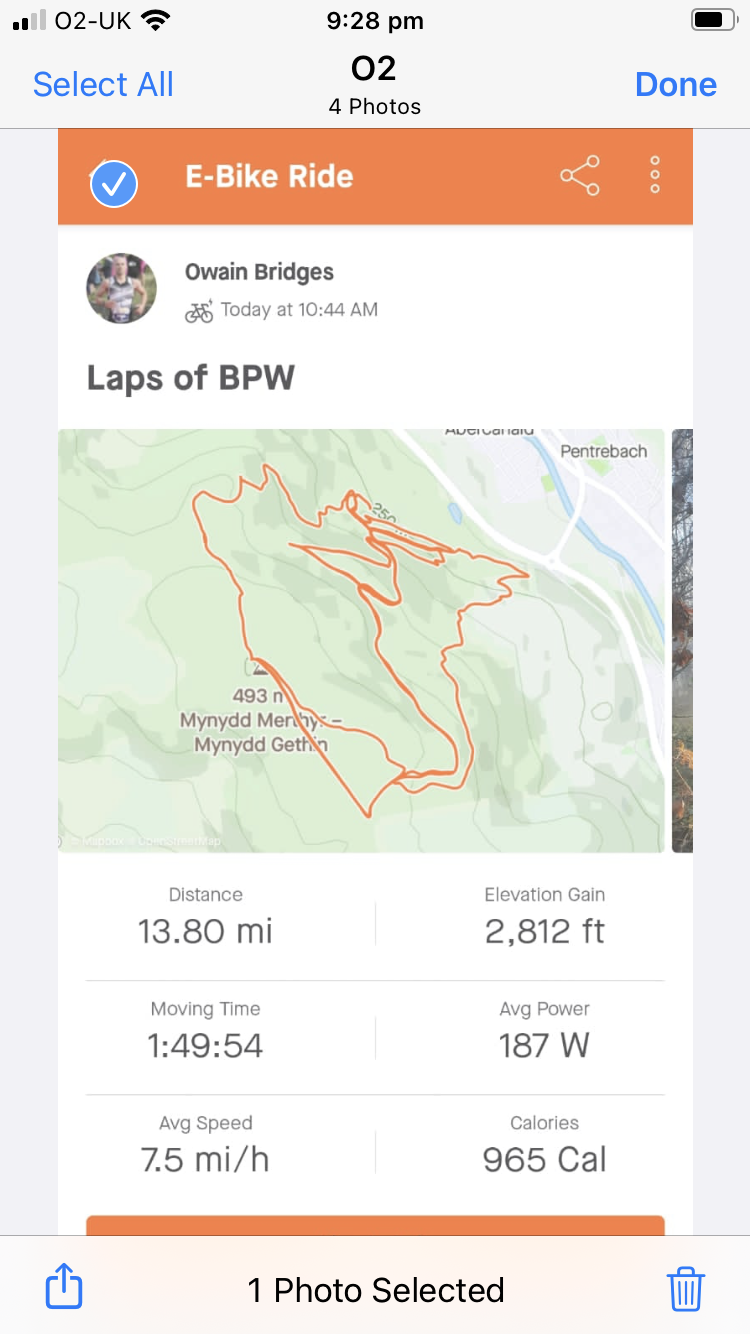
I had 1 bar battery left after 12mi so we swapped as he had 3bars remaining. When we finished my battery fitted to his bike was on the brink of dying an his battery still had 3bars left.
Both of us rode same pace an most of the time on the climbs same gear, both used same power modes.
So yes my belly makes a big difference in how far I can go

GrandPaBrogan
⚡ eGeezer ⚡
10% ??? ... no comprende, senior!I rode on the road the other day. 25k and 10% battery used...
So how many battery bars is that in plain spanglish?
Pan
New Member
Yepp knew that, tks anyway. I actually used it to get an idea of my wife running SL vs me on ff. The calculator offers different battery sizes, motor torques, assistance levels and rider weight & cadence, so you can fiddle around and get an idea. No direct comparison possible but with print screen you can easily compare Scenarios.Bosch range calculator it's just a guide obviously
It convinced me that my wife on an Sl running boost mode did pretty much equal me on a ff running on sport mode with regards to potential km. Climbing speed and rider input perhaps another story.
Similar Threads
-
-
-
 My yeti lte does not fit the range extender. It hits the shock. Manual says that size M is ok with the extender.
- Started by Pedropaiva
- Replies: 7
-
-
 Amflow/avinox possible range extender? Also wondering about Amflow cascade link?
- Started by Mr.Mastor
- Replies: 8