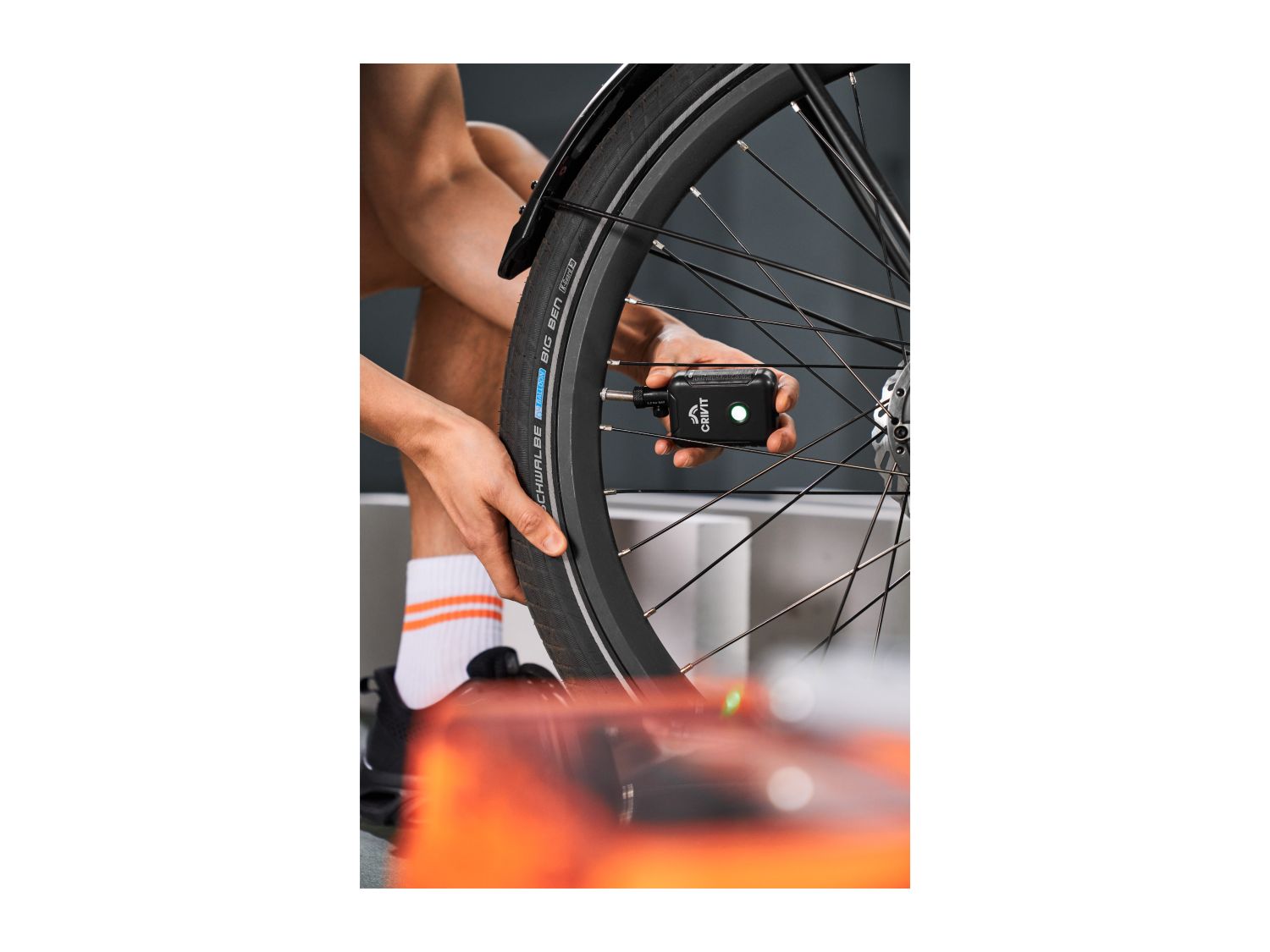
I use a Cyplus AS2 Pro and it is much quieter than a Muckoff pump for example. Accurate psi and the battery lasts surprisingly long. Lighter than my manual Crankbrothers mini pump.
Follow along with the video below to see how to install our site as a web app on your home screen.
Note: This feature may not be available in some browsers.


Hello,
When I first read about these my thought was I don`t want or need any battery operated pump. Then I started to think that maybe it would be easy way to check and inflate the tires every time before ride what I do with pressure gauge and floor pump. After reading all the reviews I ordered cycplus pro. First test, empty tire, vow, this is so easy…and loud. Second test for the use why I bought it for, fill up couple of psi before ride, nothing, it just bursted some air and stopped. I tested it about twenty times, different wheels etc. but it worked only to empty tires. I was so dissapointed and returned it. I whatched all the reviews again and everybody just filling empty tires. I thought f*ck this sh*t but the my friend bought muc off airmach pro. I tested it and it works as I thought they all should work, just filling up couple of psi before ride. So maybe cycplus what I had was just broken…anyway I got the airmach pro also and it’s sweet, soooo easy now to fill up check pressures/fill up tires before ride and I probably take it to bigger rides for emergencies. So thumps up, at least in my case to airmach
Electric mini-pumps make a lot of sense except for one thing: they all have a battery built into them which makes them larger, heavier, and more costly than they need to be. If e-bike manufacturers would put 48V power ports on their batteries then accessories makers could design pumps and other accessories that simply plug into that.Hello,
When I first read about these my thought was I don`t want or need any battery operated pump. Then I started to think that maybe it would be easy way to check and inflate the tires every time before ride what I do with pressure gauge and floor pump. After reading all the reviews I ordered cycplus pro. First test, empty tire, vow, this is so easy…and loud. Second test for the use why I bought it for, fill up couple of psi before ride, nothing, it just bursted some air and stopped. I tested it about twenty times, different wheels etc. but it worked only to empty tires. I was so dissapointed and returned it. I whatched all the reviews again and everybody just filling empty tires. I thought f*ck this sh*t but the my friend bought muc off airmach pro. I tested it and it works as I thought they all should work, just filling up couple of psi before ride. So maybe cycplus what I had was just broken…anyway I got the airmach pro also and it’s sweet, soooo easy now to fill up check pressures/fill up tires before ride and I probably take it to bigger rides for emergencies. So thumps up, at least in my case to airmach

where would you store the long ass cable that’s needed for that?Electric mini-pumps make a lot of sense except for one thing: they all have a battery built into them which makes them larger, heavier, and more costly than they need to be. If e-bike manufacturers would put 48V power ports on their batteries then accessories makers could design pumps and other accessories that simply plug into that.
It makes little sense to carry little milliamp batteries for each device when you're packing around 600-800 watt hours of bike battery.
where would you store the long ass cable that’s needed for that?
I am very pleased with the Fanttik X9 Ace. Probably too heavy to take on a ride but brilliant for a pre ride top up especially as I check a couple of bikes regularly. Easy to use with a digital gauge and auto cut off at desired pressure. Big battery that lasts a long time. Game changer for meHello,
When I first read about these my thought was I don`t want or need any battery operated pump. Then I started to think that maybe it would be easy way to check and inflate the tires every time before ride what I do with pressure gauge and floor pump. After reading all the reviews I ordered cycplus pro. First test, empty tire, vow, this is so easy…and loud. Second test for the use why I bought it for, fill up couple of psi before ride, nothing, it just bursted some air and stopped. I tested it about twenty times, different wheels etc. but it worked only to empty tires. I was so dissapointed and returned it. I whatched all the reviews again and everybody just filling empty tires. I thought f*ck this sh*t but the my friend bought muc off airmach pro. I tested it and it works as I thought they all should work, just filling up couple of psi before ride. So maybe cycplus what I had was just broken…anyway I got the airmach pro also and it’s sweet, soooo easy now to fill up check pressures/fill up tires before ride and I probably take it to bigger rides for emergencies. So thumps up, at least in my case to airmach

Try the Fanttik X10. Much smaller & lightweight. I carry one on each bike with a spare TPU for emergencies. Works great! Two years of use & it works like new. I'm in varied terrain and tend to adjust the air in my tires for it. Pumping back up is just a few seconds & I'm back on the trails.I am very pleased with the Fanttik X9 Ace. Probably too heavy to take on a ride but brilliant for a pre ride top up especially as I check a couple of bikes regularly. Easy to use with a digital gauge and auto cut off at desired pressure. Big battery that lasts a long time. Game changer for me
I use TPU tubes now, so I stopped packing my CO2 in favor of the Fanttik X10. The unit isn't much larger than a CO2 kit with 2 refills. I find it extra handy to use on my front sus. The noise really isn't a bother for the 60sec it's saving my a$$ from a long, hard walk out. If you use a phone or Garmin on the trail & its battery dies, this little bugger can reverse feed enough charge to get you home. It's a permanent part of my emergency trail tool kit.Co2 in the pack. Use electric at the car pre ride. The mini ones are way too loud. Here in the US I picked up a craftsman inflater from Lowe’s. Cheap, fast and quiet. I did replace the head with a better quality specialized one from a damaged floor pump
I’m liking the tech talk! A wire smaller that the thinnest shoelaceIt would only need to be 2 feet long. And the beauty of 48 volts is the wires could be super thin and flexible to carry the low amperage of a compact bicycle tire pump. At 48V a wire smaller than the thinnest shoelace would suffice, it could wrap around a small spool area on the outside body of the pump designed to store the wire.
The storage of the wire would take up insignificant space. With 48V even the power plugs could be micro-miniature.


where would you store the long ass cable that’s needed for that?
The 48v motors you want are simply not available in a size that would make this feasible. 12v is the go to for size, torque & speed. You would need an additional DC/DC step down converter to make it work SAFELY. Why reinvent the wheel when the available options for current mini pumps is vast. You are talking WAY more fiddle fecking around than really necessary.It would only need to be 2 feet long. And the beauty of 48 volts is the wires could be super thin and flexible to carry the low amperage of a compact bicycle tire pump. At 48V a wire smaller than the thinnest shoelace would suffice, it could wrap around a small spool area on the outside body of the pump designed to store the wire.
The storage of the wire would take up insignificant space. With 48V even the power plugs could be micro-miniature.
The 48v motors you want are simply not available in a size that would make this feasible. 12v is the go to for size, torque & speed. You would need an additional DC/DC step down converter to make it work SAFELY. Why reinvent the wheel when the available options for current mini pumps is vast. You are talking WAY more fiddle fecking around than really necessary.
Nope. Didn't miss your point one iota. I really don't see a battery or bike mfg being overly concerned with this specific issue, as I have already stated, the market for micro pumps is robust. Is the 32-70gms that an 18650/21700 weighs going to bust the bank? If a sh!t ton of riders were hankering for this, or even needed it, the mfg's would respond.Maybe you missed the point. Just because something is not already available off the shelf, doesn't mean it never will be.
My main point was that e-MTB manufacturers should give us 48V power ports (the native voltage of most EMTB's) sufficient for tiny tire pumps, headlights, etc. The accessory manufacturers would engineer superior accessories if the power ports were available.
It's sad that there is a catch-22 caused by the power ports not being available. For example, in the automotive world there were almost zero 48V accessories but Tesla put two 48 Volt accessory circuits in the Cybertruck and released an off-road lightbar that runs off 48V. Most of the Cybertruck (including the steering system) runs off 48V even though the traction motors run off 800V. They also released a guide for other manufacturers to upgrade their 12V systems to 48V to increase the 48V ecosystem. This has big weight and cost savings since modern cars have so much wiring that can be greatly reduced in size and weight. 12V is sub-optimal. I ran two skinny wires from the 48V accessory frunk feed of the Cybertruck into the cabin and hooked a Starlink Mini up directly to it. It get's great high speed Internet, even in remote areas. It's far more efficient than using a 12V converter since 48V is native in the Cybertruck (just like in most EMTB's). Tesla not only designed some 48V motors to use in the Cybertruck, they had their suppliers re-engineer 12V motors to run natively on 48 volts. It costs less to manufacture an equivalent 48 volt motor, but few are doing it because automotive systems seem stuck on 12V. The advantages are real.
Someone has to take the first step or we will be stuck at a sub-optimal 12V forever.
 BTW... I build all forms of energy storage for fun in my home lab. I'm long retired from my own consulting business, designing, building & troubleshooting testing platforms and control systems for the military, so I needed something to keep me out of trouble & my hand busy.
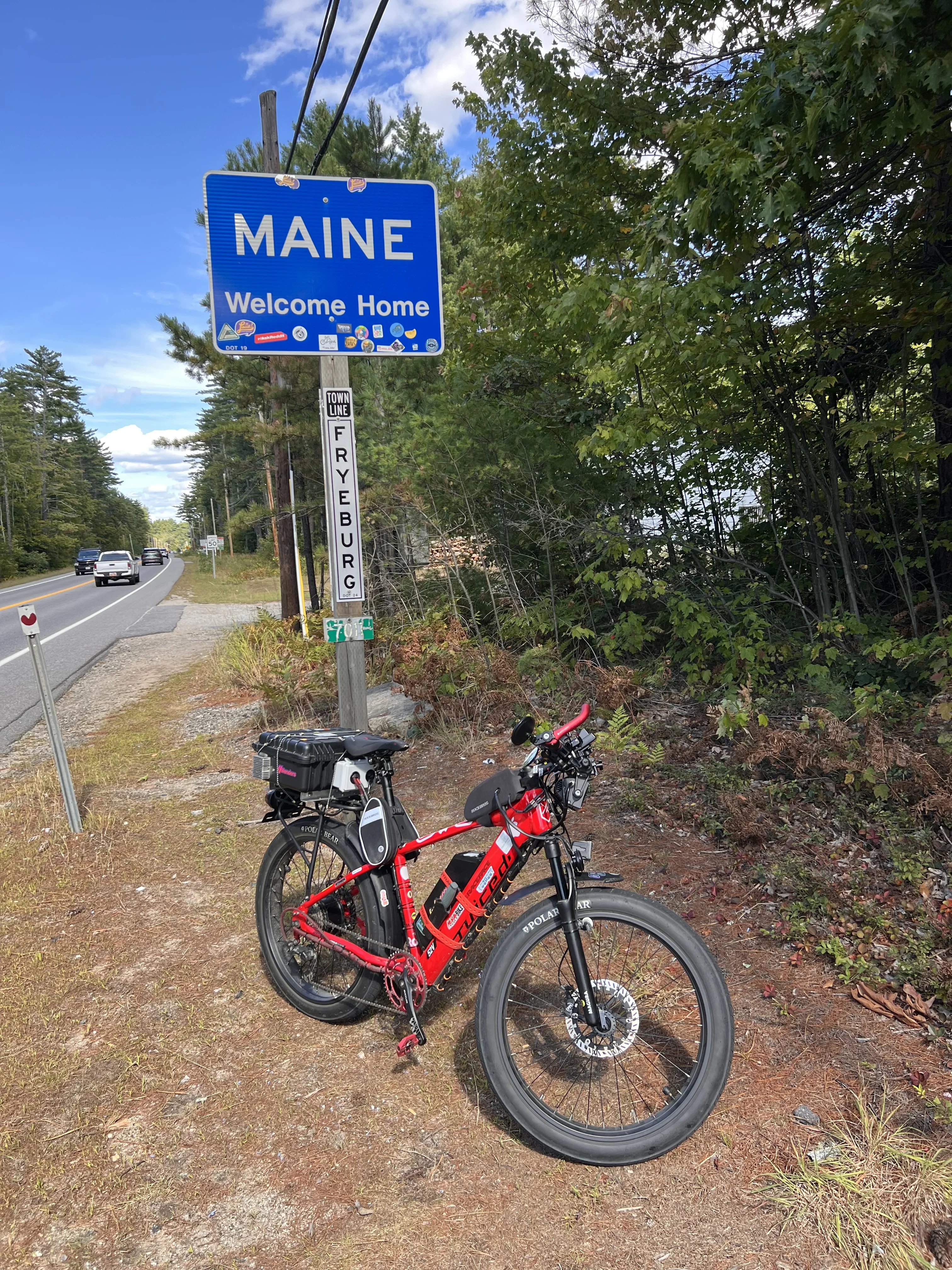

Afaik DJI, Bosch, Brose, Shimano, Yamaha are all 36v so not sure where your "most" comes from.Maybe you missed the point. Just because something is not already available off the shelf, doesn't mean it never will be.
My main point was that e-MTB manufacturers should give us 48V power ports (the native voltage of most EMTB's) sufficient for tiny tire pumps, headlights, etc. The accessory manufacturers would engineer superior accessories if the power ports were available.
It's sad that there is a catch-22 caused by the power ports not being available. For example, in the automotive world there were almost zero 48V accessories but Tesla put two 48 Volt accessory circuits in the Cybertruck and released an off-road lightbar that runs off 48V. Most of the Cybertruck (including the steering system) runs off 48V even though the traction motors run off 800V. They also released a guide for other manufacturers to upgrade their 12V systems to 48V to increase the 48V ecosystem. This has big weight and cost savings since modern cars have so much wiring that can be greatly reduced in size and weight. 12V is sub-optimal. I ran two skinny wires from the 48V accessory frunk feed of the Cybertruck into the cabin and hooked a Starlink Mini up directly to it. It get's great high speed Internet, even in remote areas. It's far more efficient than using a 12V converter since 48V is native in the Cybertruck (just like in most EMTB's). Tesla not only designed some 48V motors to use in the Cybertruck, they had their suppliers re-engineer 12V motors to run natively on 48 volts. It costs less to manufacture an equivalent 48 volt motor, but few are doing it because automotive systems seem stuck on 12V. The advantages are real.
Someone has to take the first step or we will be stuck at a sub-optimal 12V forever.
36V is the nominal voltage, not the peak. I don't know what you would call a port designed for 48 V max, maybe it would be a 42V port.Afaik DJI, Bosch, Brose, Shimano, Yamaha are all 36v so not sure where your "most" comes from.
Not that I particularly care about a 36/48 whatever voltage pump that needs a cable (what a pain to fold and unfold etc..), exposed port, where these mini and lightweight pumps do the job.
Hey Mtnbud... this horse died before you mounted it, time to stop whipping it.36V is the nominal voltage, not the peak. I don't know what you would call a port designed for 48 V max, maybe it would be a 42V port.


I’m all for that coming to market (like we’re seeing with lights), however I don’t see myself buying such a device. I find value in having a completely portable, self-contained, electric pump. I don’t want to have to plug it in to use it.Electric mini-pumps make a lot of sense except for one thing: they all have a battery built into them which makes them larger, heavier, and more costly than they need to be. If e-bike manufacturers would put 48V power ports on their batteries then accessories makers could design pumps and other accessories that simply plug into that.
It makes little sense to carry little milliamp batteries for each device when you're packing around 600-800 watt hours of bike battery.

 )
)A Cycplus A2pro weighs 90 g. Less the battery plus cable, dc/dc and usb-c port electronics one may save max... 20 g?
Now, the overall weight of an e-MTB exceeds 20 kg. The cyclist, dress, shoes and a few tools are at least 70 kg. Total 90 kg, but usually more than 100 (120 in my case...
This means by providing direct power from the e-MTB battery we may save 0.02/90 = 0.022% of the overall weight.
Unless you are racing for an Olympics Gold Medal not worth the effort, except for the fact that a USB-C port may help in general, specially on long rides.
Please read until the last two lines of my post before replying: I wrote exactly this. I totally agree that having a USB-C port would be really helpful and would improve the situation, expecially safety in emergency situation, e.g. to charge a phone, a light, or other devices.Everything isn't about the weight. It's kind of dumb for everything to have it's own separate battery when the bike is packing a massive power supply. Maintaining the charge of one power supply is easier than separately charging lights, trip computer/GPS. tire pumps, etc.
it would cost next to nothing for bike manufacturers to integrate a power port. Less than having rechargable batteries for each accessory.

It is not the way it works. You cannot offer a port and label it 42v that drops to 30-33v when the battery is low.36V is the nominal voltage, not the peak. I don't know what you would call a port designed for 48 V max, maybe it would be a 42V port.
It is not the way it works. You cannot offer a port and label it 42v that drops to 30-33v when the battery is low.
The way they do is to have a DC to DC buck so they could offer 12v (as they do) or for example 24v but not 42v as it will be only at full battery.

4.5 bar is about 65 psi!Just purchased Topump tb2 pro mini from the Bay £21.50. Used it to inflate 3 tyres to 4.5 bar no problem. Apart from being far noisier than expected I'm pleased. It did get hot, but no hotter than my mates Muckoff pump. It's certainly better than using a hand pump.