🔋 Semi-Solid-State batteries revolution!

BikeBert

E*POWAH Master
Joined
Dec 10, 2022
Messages
270
Reaction score
1,275
Location
Croatia
Just read about semi-solid-state batteries entering the e-bike space. Claimed benefits are higher energy density, lower weight, faster charging, and better safety than current Li-ion packs.
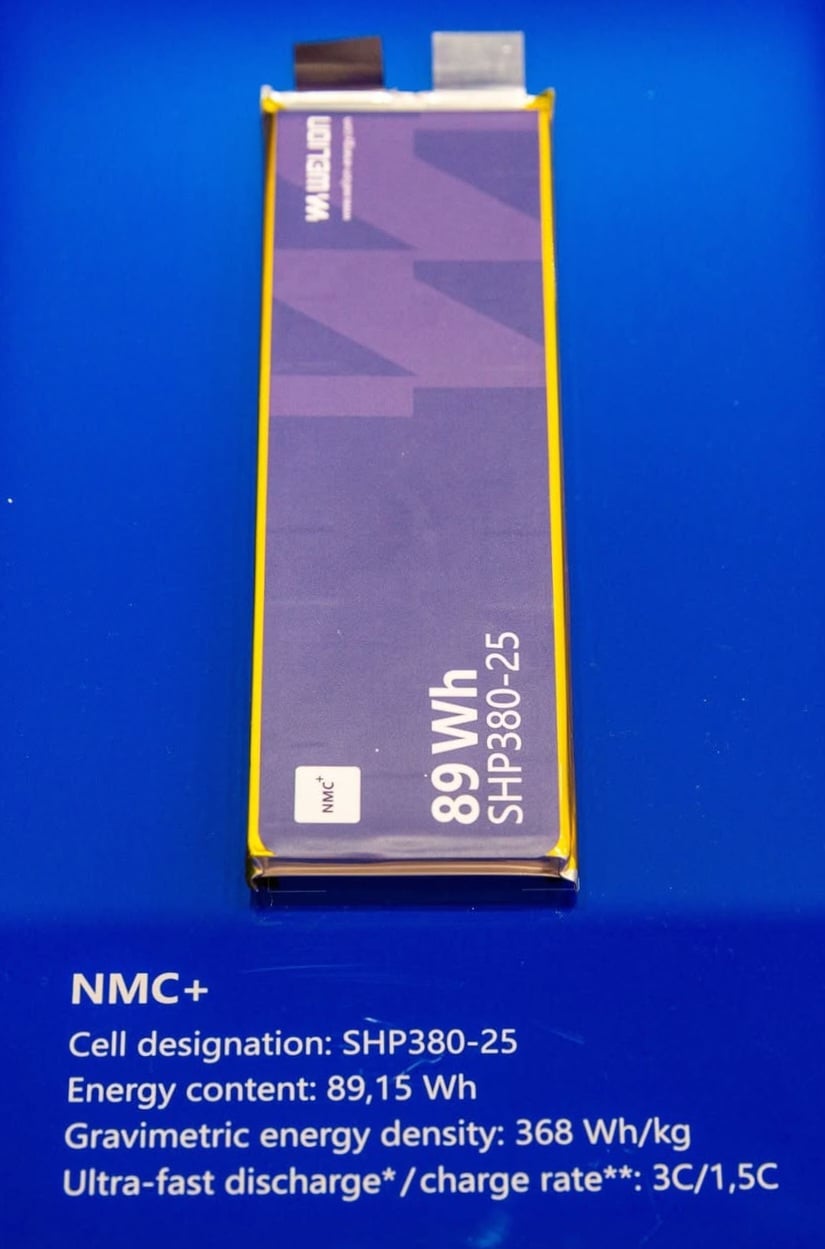
SPH380-25.jpg


Interesting part: Kalle Nicolai (founder of Nicolai Bikes), through his company Universal Transmissions (UT), is already offering patented battery modules using WELION semi-solid-state cells for e-bikes.
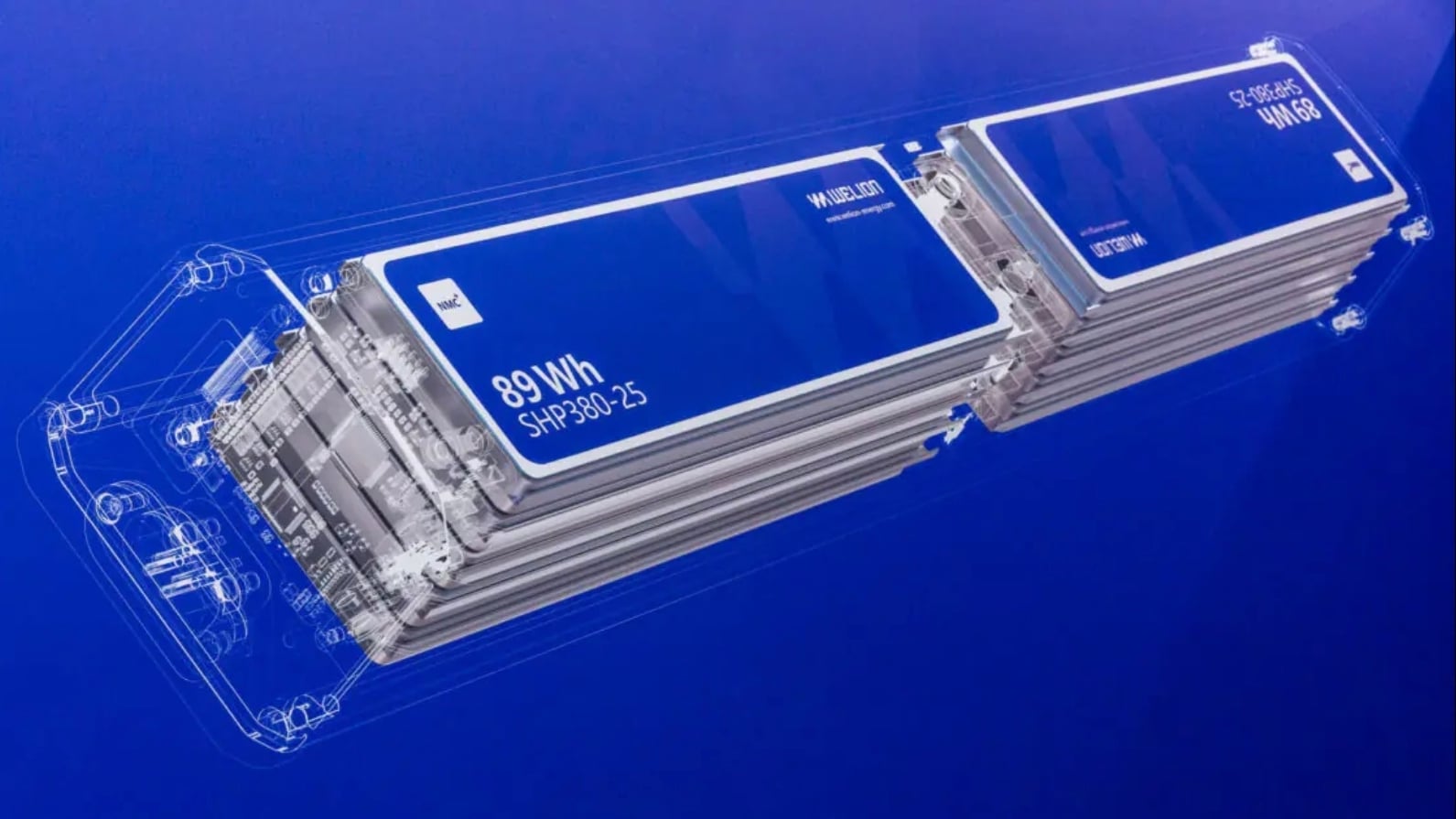
UT battery drawing .jpg


UT battery.jpg


They use two e-bike-specific cell versions:
- 20.3 Ah / 9 mm – 71.3 Wh (SPH380-20)
- 25.4 Ah / 11 mm – 89 Wh (SPH380-25)

Based on these cells, UT mentions a 712 Wh battery pack at just 3.1 kg, which is pretty wild on paper.

No timeline announced, but knowing Nicolai’s R&D mindset and engineering focus, I wouldn’t be surprised to see these batteries on Nicolai bikes in 2026, with other brands hopefully following.

What do you think?

Is it real step forward for eMTBs or still early hype?

How fast do you see this tech spreading beyond niche brands?

Curious to hear your takes and predictions.


Sources:
1. Semi-Solid-State Batteries: The Next Quantum Leap for E-Bikes?
2.
https://www.linkedin.com/posts/welion-energy_patented-module-technology-activity-7361720521303949313-Iui4
3. WeLion achieves 824 Wh/kg energy density in lab for solid-state battery - electrive.com
 
Last edited:
⚡ EMTB Pro Go Pro — exclusive discounts & ad-free Peaty's 25% off & more · Ad-free browsing · Pro badge See the deals →
Based on these cells, UT mentions a 712 Wh battery pack at just 3.1 kg, which is pretty wild on paper.
Is it? For comparison the current Bosch batteries are 3.0kg (600wh) and 3.9kg (800wh) according to a quick google. So let's say a 700wh version (of it existed) might come in at about 3.5kg.

On the other hand the casing looks pretty substantial in those pics so maybe there's a good bit of extra weight coming from that compared to a Bosch powertube casing.
 
Is it? For comparison the current Bosch batteries are 3.0kg (600wh) and 3.9kg (800wh) according to a quick google. So let's say a 700wh version (of it existed) might come in at about 3.5kg.

On the other hand the casing looks pretty substantial in those pics so maybe there's a good bit of extra weight coming from that compared to a Bosch powertube casing.

True, the total weight alone doesn’t tell the full story, energy density is what really matters.

Semi-solid-state is still in its early phase, acting as a middle ground toward full solid-state cells.

For context: Conventional LFP cells today reach about 150–180 Wh/kg. WELION has achieved 824 Wh/kg in lab tests for solid-state batteries.

The semi-solid-state cells UT is using already have an energy density of 368 Wh/kg.

It’s just the beginning, but if development picks up, especially for automotive, this could eventually trickle down to eMTBs and really change the game.
 
It will come down to cost: *manufacture in the form factors bike manufacturers want. *Second is performance compared to LI batteries. *Third is reliable operation under use and charging. Solid state batteries are here, and they will be in Ebikes soon.
 
I've read the article on E-mountainbike magazine: Semi-Solid-State Batteries: The Next Quantum Leap for E-Bikes?

They're an incremental upgrade rather than next "Quantum Leap".Electrolyte composition tweaks in context of the same NMC (NMC+) or LFP chemistries.
This is a good thing for emtbs as I suspect 2026 will offer slightly better batteries in terms of energy density and longevity (cycles).

Using pouch cells in ebike batteries could alter the cost a bit as you need to carefully design a case that will hold them together to prevent swelling. I would rather use prismatic format or cylindrical for safety reasons. They also evolved, lately. Molicel announced 350Wh/Kg in 21700 format, for example.

Exciting times...
 
format is even mostly dead at tesla


That's incorrect. Tesla is still manufacturing the 4680 format while actively developing cheaper, more advanced manufacturing techniques to further increase production volumes. The story cited is designed to be an anti-Tesla hit piece. While the facts cited are accurate, the conclusions are not. Tesla maintains robust supply chains by having alternate suppliers. The fact that the Cybertruck has been selling in below anticipated volumes is the most likely reason this supplier was largely cancelled. Another potential reason is a design change in the next generation of 4680 batteries.

There are at least two other major battery manufacturers also producing cells in the 4680 format. That means the format is not going away in the next two or three decades. That said, I think the 2170 cell makes more sense for Ebikes (because they don't have liquid-based thermal management systems and the smaller cells are easier to thermally regulate naturally).
 
It is cool for sure, now as Nicolai bike are the most heavy bikes out there ... do the maths :D
 
Just read about semi-solid-state batteries entering the e-bike space. Claimed benefits are higher energy density, lower weight, faster charging, and better safety than current Li-ion packs.

No timeline announced, but knowing Nicolai’s R&D mindset and engineering focus, I wouldn’t be surprised to see these batteries on Nicolai bikes in 2026, with other brands hopefully following.

What do you think?
[/QUOTE]

Use your head. No timeline announced means not anytime soon. It also means no pricing announced. For solid state cells to be viable in the mass market they have to improve upon the cost per Wh. Sure, more energy density is great but, if it comes at a steep price premium, it will not be for the mass-market.
Is it real step forward for eMTBs or still early hype?

How fast do you see this tech spreading beyond niche brands?

Curious to hear your takes and predictions.
[/QUOTE]

It's still early hype. Toyota has claimed for years they had a solid-state battery with amazing specs ready for commercialization in 2 years, for at least the last 12 years running! Where are they? They are always two years out. So, don't be gullible. Announcing a future product is cheap. Not bringing it to market for over 12 years just shows how far companies are willing to go to hype something, even before it has any reasonable path to the mass market.
 
I don't think price is a major consideration for e-bikes however. The batteries are ultimately small and we're very weight sensitive.
Many bikers, including myself, would gladly pay an extra $500+ to drop a kg. That math just doesn't work for most mass produced EV cars
 
I don't think price is a major consideration for e-bikes however. The batteries are ultimately small and we're very weight sensitive.
Many bikers, including myself, would gladly pay an extra $500+ to drop a kg. That math just doesn't work for most mass produced EV cars
I figure that to save eMTB weight it's worth paying up to £1 per gram (or £1,000 per kilo).
 
I'm going stick with my 2029 prediction for solid state battery implementation. On a side note, does anyone still buy Teslas?

Why wouldn't people still buy the best-value, most advanced EVs on the planet?

The Tesla Model Y just closed out it's third year in a row of being the best-selling car in the world (and that includes cars with gasoline powered drivetrains). Yes, it's outselling every gasoline powered car offered.

I think you have been listening too much to the corrupt mainstream media. You will never get an accurate picture of Tesla that way. Tesla doesn't give them a dime of advertising revenue (as Tesla eats into the sales of auto brands that spend billions of dollars on advertising). Now you know why the mainstream media tries to steer you away from Tesla, they are simply protecting their ad revenue streams from legacy auto makers.
 
I don't think price is a major consideration for e-bikes however. The batteries are ultimately small and we're very weight sensitive.
Many bikers, including myself, would gladly pay an extra $500+ to drop a kg. That math just doesn't work for most mass produced EV cars
This is not really true for car to be honest. We do not care at gram but we care about mass. Current battery are increasing by a lot the car which generate tons of issue.

For your information, UE, dummy as they are, instead of taxing China or finding any better idea, have decided to place huge weight limit on car weight. The result we cannot have for example the big big long range battery in europe with paying 20-70k of malus.

I just purchased a car in December, forced myself to do it before 2026, 01/01/2026, the same car cost now +29k ... crazy right.

This is the official unofficial reason I got from the people I work with at UE.
 
I was not aware of the weight limits. Those penalty taxes for weight sound painful, I can see a huge case for lighter battery technology! And yes EV's are "stone crushingly heavy"
 
True, the total weight alone doesn’t tell the full story, energy density is what really matters.

Semi-solid-state is still in its early phase, acting as a middle ground toward full solid-state cells.

For context: Conventional LFP cells today reach about 150–180 Wh/kg. WELION has achieved 824 Wh/kg in lab tests for solid-state batteries.

The semi-solid-state cells UT is using already have an energy density of 368 Wh/kg.

It’s just the beginning, but if development picks up, especially for automotive, this could eventually trickle down to eMTBs and really change the game.
Do you think it possible that solid of semi state batteries would be compatible with current motors?
 
I was not aware of the weight limits. Those penalty taxes for weight sound painful, I can see a huge case for lighter battery technology! And yes EV's are "stone crushingly heavy"

Modern EVs like a Tesla Model 3 or Model Y aren't all that much heavier than a ICE vehicle of comparable roominess and performance, especially once you fill up the gas tank (ICE curb weights never include a full tank of gasoline). Sure, the EV tends to weigh anywhere from 100-300 lbs. more, but the EV is still generally quicker and corners with less body sway since the weight is all down low.

My EVs don't feel heavy at all when I drive them, unlike all my gas cars.

The EU (proper English abbreviation for the European Union) has gone off the rails when it comes to automobiles and even E-bikes. They want to regulate everything according to their leftist principles, and then tax the hell out of it to make it only affordable to wealthy people. The weight tax primarily affects large SUVs and Luxury cars. Some EVs are heavy enough to be included, but France deserves credit for exempting most EVs from the weight tax.

Norway starts the weight tax at every kg over 500 kg (around 1,100 lbs.) so all cars are subject to it. We live in an age of taxation that is insane, and then they rub salt in the wound by redistributing the money to people who have done nothing to deserve it. In many cases, the eligible recipients of tax money are eligible for the handouts for no better reason than they have done nothing!
 
Wow a 500 kg basis is featherweight numbers. Of my vehicles, other than the emtb my favorite to drive is the Mazda Miata which is so light I do not have to brake to take turns that I would otherwise, but it is well above 500 kg and about as light as I have found around here. I do notice that EV's in general tend to be heavier than the ice cars. I know that with bikes we are very aware of weight when riding and I overthink it when driving my mid size pickup, and wait till empty, to fill the tank to avoid carring around the extra pounds :)
 
I've read the article on E-mountainbike magazine: Semi-Solid-State Batteries: The Next Quantum Leap for E-Bikes?

They're an incremental upgrade rather than next "Quantum Leap".Electrolyte composition tweaks in context of the same NMC (NMC+) or LFP chemistries.
This is a good thing for emtbs as I suspect 2026 will offer slightly better batteries in terms of energy density and longevity (cycles).

Using pouch cells in ebike batteries could alter the cost a bit as you need to carefully design a case that will hold them together to prevent swelling. I would rather use prismatic format or cylindrical for safety reasons. They also evolved, lately. Molicel announced 350Wh/Kg in 21700 format, for example.

Exciting times...
I totally agree with the cautions regarding pouch cells. All pouch cells have specs regarding large compressive forces required to avoid swelling. Putting them in a rigid enclosure is an alternative that negates a portion of the weight advantages.
 
I was not aware of the weight limits. Those penalty taxes for weight sound painful, I can see a huge case for lighter battery technology! And yes EV's are "stone crushingly heavy"
They are indeed "stone crushingly heavy" which combined with huge torque levels causes severe damage to road surfaces designed for use by non-EVs.

I have also seen research that shows that because of their high weight and torque output EV's also require extra heavy duty tyres which as they wear generate up to seven times the particulates as non-EV's.

My understanding is that these particulates are what are thought to kill relatively large numbers of people in cities where airborne particulate density is high.

Now all the above might be dismissed as left wing/green/anti-eco propaganda by EV proponents, but then truth regularly gets lost in propaganda wars.

So yes, lighter batteries are key to reducing EV environmental damage.
 
Last edited:
Modern EVs like a Tesla Model 3 or Model Y aren't all that much heavier than a ICE vehicle of comparable roominess and performance, especially once you fill up the gas tank (ICE curb weights never include a full tank of gasoline). Sure, the EV tends to weigh anywhere from 100-300 lbs. more, but the EV is still generally quicker and corners with less body sway since the weight is all down low.
Actually, we're talking about up to 500-700lbs difference between an ICE and EV the same size. For example a 2022 Opel Corsa-e has a curb weight of 1530kg and Ice powered version has 1262kg. That weight difference would have an impact of handling/braking.

While an electric motor has >90% efficiency compared with 30-40% for ICE, battery tech needs to catch up for the ICE powered cars to finally step out completely. There are other problems associated with batteries other than increased mass. For example, active thermal management of battery internals would bring the overall efficiency down. On cold weater, again, you'll loose energy in form of heat (either by preconditioning process or by heat from the cells). I think it will take some time before seeing new tech (other than li ion derivatives) in consumer products. Remember it took us over 30 years to mass produce blue LED which paved the way for efficient lightning (white LED is actually a blue LED with phosphor on top) and modern displays.

As for the pollution from tyres, maybe it's a bit higher on EVs, but particulate from brake pads is less, for sure :-) I wouldn't worry much, but I might be mistaken. Some studies are biased and/or exagerated. It's also in direct relation with the driving style. It's true, many people with EVs, like to accelerate hard from a complete stop :)

For now, I think EVs are perfect for city driving (stop and go) or moderate speeds they're efficient being that many of them don't have a gearbox, they're usually single speed. I would love to breath air when riding my bike in the city instead of exhaust gas from cars stalled in traffic(some of them pretty old, with no maintance).

As a bonus on highways, if you have a powerful EV (>=400Hp) you're less prone on getting a speeding ticket than with an ICE equivalent :)
 
As a bonus on highways, if you have a powerful EV (>=400Hp) you're less prone on getting a speeding ticket than with an ICE equivalent :)
Interesting, the police picking up on the noise maybe? you would struggle to get an EV to sound as good as a Ferrari!;)
 
Keep reading
    Browse all

    Similar Threads

    Community Stats

    Since 2018
    668K
    Messages
    40,733
    Members
    Join 30,000+ Riders, it's free!
    Back
    Top