Hello,
Great forum. It took a few hours to me reading the 32 pages. I was looking for long time on how the de restriction works, but I did not found much before this forum.
I was reading about megabobra's arduino nano based solution, great. Is that still working with current sw on the Gen5 with rim magnet?
Anyway, I'm very curious of a few things. First of all, how the motor's controller finds out that it is de-restricted or tampered?
Do you know examples what the controller sense and realize something is wrong?
I thought inside the motor it is not a reed switch (would need a strooong magnet anyway from the distance), but probably a hall sensor. I see it is confirmed now, but do we know if Bosch use one dimension hall sensing or 2, 3?
Another important thing, I did not found anyone would just let every second impulse go through = doubling the speed limit and display half the real speed all the time. This way the odometer would be usable also, we would just need to double in mind.
At #415 I see the sensor may need to see + - field changes, which would require +- current in the coil what is faking the rim magnet, driven by a H bridge probably this case. Do we know this is needed?
I'm thinking of making a circuit (for fun, open, and not for sale) with a controller with a few timers. With one timer I would measure the real time between pulses, with another 2 timers I would generate the output to the coil. I'm thinking to just simply use a multiplier and when incoming signal stops, output stops. Should that work?
For the coil, I would use a half ferrite with a coil, because that has direction, would face the open to the motor. That way I would need less energy to fake the magnet. Before that and under that, I would still put a thin coil, but not to fake the magnet. I'm thinking to put a flat pick up coil to the motor housing and measure/see with an oscilloscope the pulses what the original rim magnet makes. After that, I would adjust the fake impulses to make it similar (big question is if I need 2 direction magnetic field or one is enough).
Another thing, is the "on" pulse width matter or not? I mean, in real life, not only the time between pulses vary, but as the speed goes up, the magnet travels faster in front of the sensor and makes shorter impulse. If that does not matter, what length you suggest? I would guess, saying at speed like 25km/h, with wheel circumference of 2366 mm, the reel wheel should spin about 3 times in a second, to 333ms for a full turn. I guess the magnet triggers the sensor in only like 10 degrees in a revolution, in this case it would like 9,25ms impulse on the sensor in the motor. Is 10ms a good start?
I hope I would not need to talk with the motor unit, but I consider to use a controller with CAN interface, at least to be able to listen. Maybe, if I can access what button is pressed, I could also make activation/deactivation with the mode buttons.
On the other hand, I have another project, I want to make an automatic cutoff of charging at certain % of charge, already tried to listen between the charger and battery with a CANable 2.0, but need time to find out what are they talking about and how to get the % (I want to cut power of the charger at 80%). I know it is a different topic and different CAN frames, just mention because it is connected.
Let me know if you can help in any way,
Thanks!
giordano


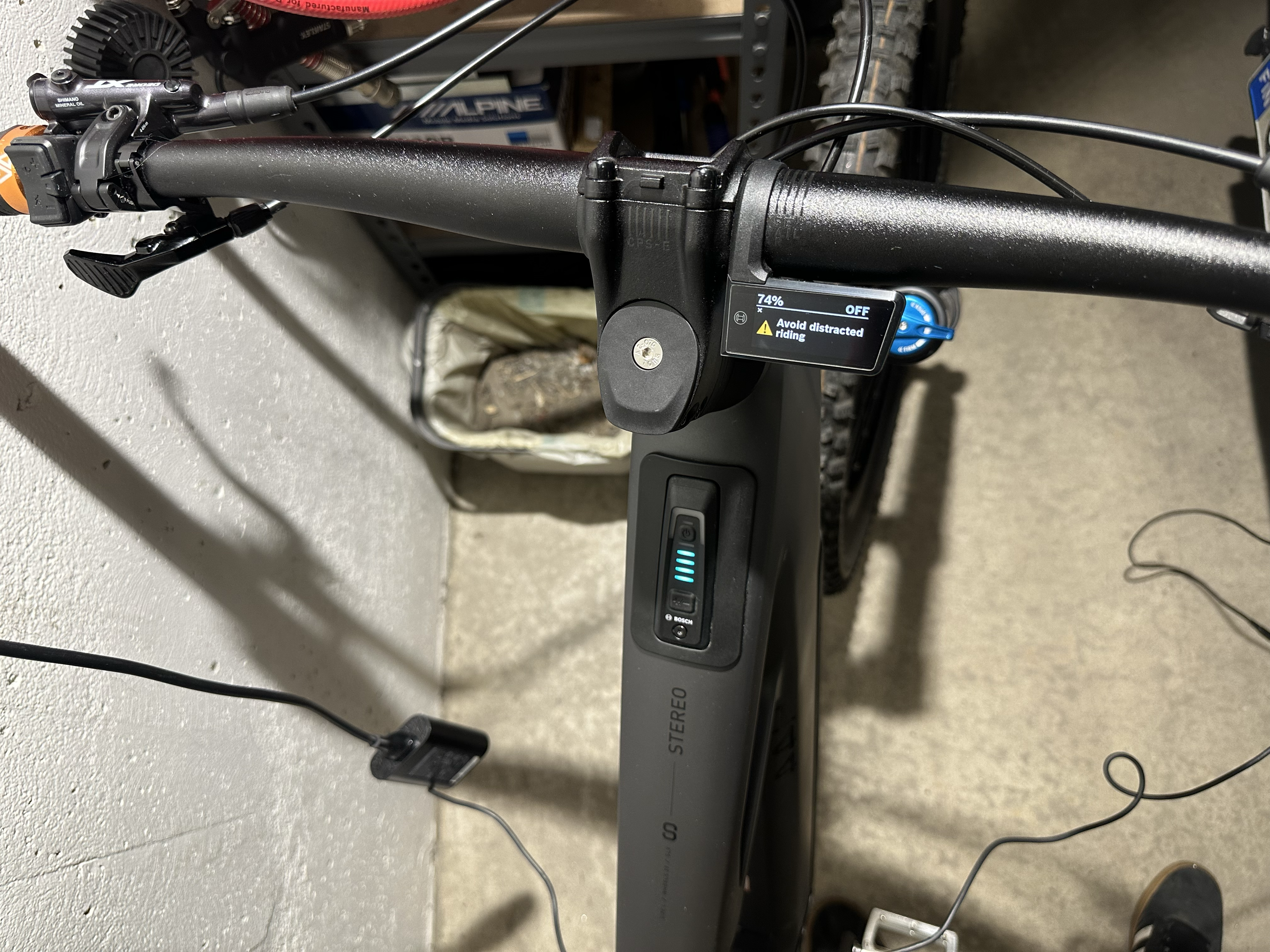
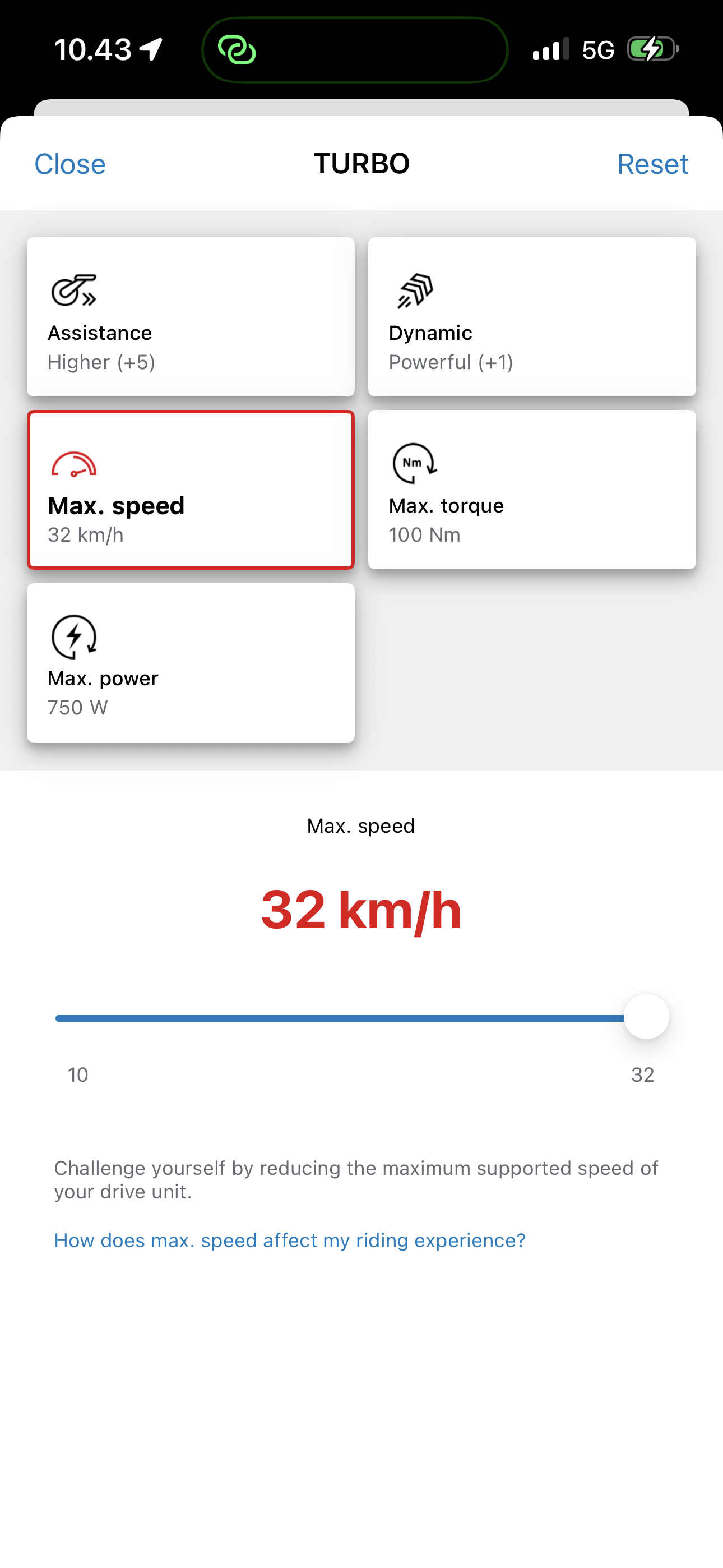


 , are you running flow-app as well or have you disable this?