Bosch CX Gets 750W Power Boost

That was not my takeaway from the comparisons. There are some threads on here with seemingly well put together charts from some German magazines that indicated Bosch motors were more efficient (about 10%) than the competition. From memory, I think those were from before the DJI motor came out, but some anecdotal reports I've seen on the DJI was that it was more power hungry than most, so you have data showing Bosch is more efficient than average, and anecdote showing DJI is less efficient.

Having said all of that, the frustrating thing is the configurable power settings play a huge role in power consumption, and with each motor having it's own app, settings, and algorithms it makes it nearly impossible to do a real-world apples to apples test. Do you test Turbo, regular, or Eco? Then in whichever power mode you choose, do you use the app to adjust the torque to come on nearly instantly, or gradually ramp up in an acceleration, etc...or do you leave all the settings stock? If stock, then you're rewarding the motor maker with the least aggressive tune in whatever mode you've chosen. In addition, my observation is that the German magazines are often sort of fanboys of German products, so along with the mode/settings question, there is also a bit of a question about how impartial the charts I mentioned above are.

I would still like to see some sort of standardized lab test with a known and fixed power input to the motors, so we can see what the relative output is. At the very least, that would help us to see what the frictional losses are of the various designs, even if it isn't entirely reflective of the real world power use. I'm OK with a more power hungry motor if it's due to a more aggressive tune that is contributing to forward propulsion, but I don't want to be burning off my battery juice just to generate heat.

To add to this:

Zee Germans did the following:

1) Used a steady climb, and then coasted back down with the motor off. NO real bike handling skills involved.
2) Ran them till they were dead.
3) Matched the tire pressure and rider weight.
4) Used power pedals to put down 150 watts from the rider and also maintained 75 RPM, with all motor systems.
5) Included total elapsed time AND speed.
6) Ran them until the bikes quit providing assistance.
7) Tested 2 versions of the DJI motor.
8) Lastly, they choose a notably heavy Bosch bike to compete against two notably light DJI bikes, which is a clear disadvantage to the Bosch. They should have normalized the bike weights, minus the 1# difference between the DJI & Bosch motor systems (i.e. the Bosch bike should have remained 1# heavier)

In the end the conclusions were the following:
1) The Bosch bike maintained a higher average speed and climbed further than both DJI bikes.
2) The Bosch bike had a longer elapsed time in spite of the faster speed, because it kept running longer.

Of course, size of tires and the model of tires along with bike weight should have been normalized to really up the Bro science, but they really did this right! I find the results conclusive and believe the Bosch to be notably more efficient. The CX-R version with ceramic bearings should offer additional advantages in efficiency.

I think the E-Druid being a DJI AND HP, is probably going to suck a lot of battery juice. They did the right thing by going with the 800-watt battery in that application.

I really like to do more, with less. Furthermore, I feel that the real-world efficiency makes the Bosch to have the same real-world weight after meters that can be climbed is taken in to account, and I care about weight quite a bit so this waws a hang up for me. I'm going Bosch with a 600 watt battery for my next bike this year; it's settled for me. Just waiting until I can get the CX-R in a Regulator.
 
Last edited:
⚡ EMTB Pro Go Pro — exclusive discounts & ad-free Peaty's 25% off & more · Ad-free browsing · Pro badge See the deals →
That was not my takeaway from the comparisons. There are some threads on here with seemingly well put together charts from some German magazines that indicated Bosch motors were more efficient (about 10%) than the competition. From memory, I think those were from before the DJI motor came out, but some anecdotal reports I've seen on the DJI was that it was more power hungry than most, so you have data showing Bosch is more efficient than average, and anecdote showing DJI is less efficient.

Having said all of that, the frustrating thing is the configurable power settings play a huge role in power consumption, and with each motor having it's own app, settings, and algorithms it makes it nearly impossible to do a real-world apples to apples test. Do you test Turbo, regular, or Eco? Then in whichever power mode you choose, do you use the app to adjust the torque to come on nearly instantly, or gradually ramp up in an acceleration, etc...or do you leave all the settings stock? If stock, then you're rewarding the motor maker with the least aggressive tune in whatever mode you've chosen. In addition, my observation is that the German magazines are often sort of fanboys of German products, so along with the mode/settings question, there is also a bit of a question about how impartial the charts I mentioned above are.

I would still like to see some sort of standardized lab test with a known and fixed power input to the motors, so we can see what the relative output is. At the very least, that would help us to see what the frictional losses are of the various designs, even if it isn't entirely reflective of the real world power use. I'm OK with a more power hungry motor if it's due to a more aggressive tune that is contributing to forward propulsion, but I don't want to be burning off my battery juice just to generate heat.,
With regard range test imho a constant cadence on the same test loop I til battery dies would be good test
 
More power has never been an issue for me and most of my Bosch motor equipped buddies. It is SPEED. Such a buzz kill when you hit that wall at 18.5mph and full cut off at 20mph. on slight downhill singletrack I can go faster on my analog bike. I like what Specialized has done buy allowing class three speed with the proper menu selection and safety acknowledgement. This feature will most likely win me over on my next eBike purchase. I wish Bosch would do the same!
 
Is there any advantage in running turbo if emtb + is optimised for more traction?

I'm looking at having 1 x 100nm mode. I'm either going to ditch turbo an replace it with emtb + or keep turbo at 100nm/750wh.

Noting that the times i currently flick into turbo is to clean steep technical ups. So the most powerful and wheel spin free setting is what i'm looking for.
 
Is there any advantage in running turbo if emtb + is optimised for more traction?

I'm looking at having 1 x 100nm mode. I'm either going to ditch turbo an replace it with emtb + or keep turbo at 100nm/750wh.

Noting that the times i currently flick into turbo is to clean steep technical ups. So the most powerful and wheel spin free setting is what i'm looking for.
Not really to be honest. You only need to be putting in about 115w of leg power to get 750w in EMTB+

In EMTB+ you get Dynamic Control and also 2m of overrun. You dont get that in Turbo.
 
Rob, do you know when the update is going to be released?
 
Not really to be honest. You only need to be putting in about 115w of leg power to get 750w in EMTB+

In EMTB+ you get Dynamic Control and also 2m of overrun. You dont get that in Turbo.
Cheers Rob, that's what I thought.

My only concern is the 2mtr run on. It my stick infested Forrest that can mean torn in half derailleur.
 
Cheers Rob, that's what I thought.

My only concern is the 2mtr run on. It my stick infested Forrest that can mean torn in half derailleur.
It only does the full 2m with a proper push on the pedals (not like race motor which is like an on/off!) - pretty much how it works now in EMTB mode.
 
So what does GEN4 get ... EMTB+? How does that fit into eco/tour/emtb/turbo scheme (where currently my Rail is eco/tour+/emtb/turbo w/Nyon controller)?

I haven't had a firmware upgrade in two years (when motor was replaced) ... have I missed anything? Since the smart system and flow app don't apply to my bike (Gen2 Rail) I haven't been paying any attention, under the assumption that nothing substantial will be done for pre-smart-system.
 
So what does GEN4 get ... EMTB+? How does that fit into eco/tour/emtb/turbo scheme (where currently my Rail is eco/tour+/emtb/turbo w/Nyon controller)?

I haven't had a firmware upgrade in two years (when motor was replaced) ... have I missed anything? Since the smart system and flow app don't apply to my bike (Gen2 Rail) I haven't been paying any attention, under the assumption that nothing substantial will be done for pre-smart-system.

This month alone there have been 2 updates to bosh 4. but as you say, you have to have the flow app and it is connected to the bike to be able to see the updates.

Dont think you missed so Much. The biggest thing is that you can add more than 1 bike in the flow app
 
have I missed anything? Since the smart system and flow app don't apply to my bike
I don‘t think so. To my understanding the eMTB+ update only applies to the smart gen4 motors. For us with the pre-smart gen4 there will be no update.
 
I don‘t think so. To my understanding the eMTB+ update only applies to the smart gen4 motors. For us with the pre-smart gen4 there will be no update.
So the power (85nm) will remain the same but we (gen4 with smart system) will receive eMTB+ mode?
 
So the power (85nm) will remain the same but we (gen4 with smart system) will receive eMTB+ mode?
So the only benefit to gen 4 will be that emtb+ has some sort of traction control
So on steep loose climbs use emtb+ rather than boost
That's the way I'm reading the info am I correct ?
As a owner of a new gen 5 I'd still be more than happy with a gen 4 bike with 750 battery .
Especially if it was at a reduced price
I Owned a gen 4 Trek rail and a Whyte E160 and both bikes and motor were more than enough power for my needs .
IMHO the Gen 5 improvement that I notice the most is how smooth the power is out down
I don't think I need the upgraded torque or power for my needs
More power =less range and I regularly empty my 800 battery
 
So the power (85nm) will remain the same but we (gen4 with smart system) will receive eMTB+ mode?
That’s what I read in some of the early public test reports. They all state that the smart gen4 will also get eMTB+.

But it will lack some of the more advanced features because that motor doesn’t have the required sensors. I suspect it will not come with dynamic control. The main change will be a more aggressive power curve and a longer extended boost. The new power curve will reach the higher support factors with less rider input.

Over all this could make eMTB+ a good alternative to the static Turbo mode.
 
That’s what I read in some of the early public test reports. They all state that the smart gen4 will also get eMTB+.

But it will lack some of the more advanced features because that motor doesn’t have the required sensors. I suspect it will not come with dynamic control. The main change will be a more aggressive power curve and a longer extended boost. The new power curve will reach the higher support factors with less rider input.

Over all this could make eMTB+ a good alternative to the static Turbo mode.
Thank you so much, this was very helpful. Appreciate it.
 
We are going to get two options to play with . Not fully clear to me how power (Nm) and max power (W) works together. For ex if we select max Nm to 100 and restrain max W for ex to 600W. How this affects output compared for ex with this parameters in max? Tks.
 
Bosch Just Got a Serious Power Upgrade – No New Motor Needed
I think more power is long overdue, even more than this. I was riding yesterday and a really long uphill section only at 11 mph the a technical section with some rocks like stairs, wished I has a little umph to unload the front tire. I rode ATVs for years, common trick blip the throttle so the front doesn’t hit hard on the bumps, motocross riders do it too. I was on my Gen 3 Turbo Levo.
 
I think more power is long overdue, even more than this. I was riding yesterday and a really long uphill section only at 11 mph the a technical section with some rocks like stairs, wished I has a little umph to unload the front tire. I rode ATVs for years, common trick blip the throttle so the front doesn’t hit hard on the bumps, motocross riders do it too. I was on my Gen 3 Turbo Levo.
Please correct my ignorance, but this thread is about "Bosch CX Gets 750W Power Boost" and I wasn't aware that Gen 3 Turbo Levos" use Bosch motors. My bad.
 
Please correct my ignorance, but this thread is about "Bosch CX Gets 750W Power Boost" and I wasn't aware that Gen 3 Turbo Levos" use Bosch motors. My bad.
No but a similar dynamic they just came out with the gen 4 Levo with a similar increase in power, was riding with someone last week with the new gen 4 and he easily pulled away. My point it’s nice to have some reserve power to be able to u weight the front wheel when going up hill regardless of the 20 mph max speed, torque helps.
 
Not fully clear to me how power (Nm) and max power (W) works together.
Simply put, torque (Nm) is used to accelerate and max power (W) is used to maintain speed.

If you set max torque to 100 Nm you will get maximum acceleration even at lower cadence. If you restrict max power at the same time to 600 W you will limit motor support at higher cadence and/or speed. While 600 W is still plenty to maintain 25 kph on a flat road, it’s clearly not enough for a steep climb.

Also worth noting is the power output over cadence: Bosch states that the gen5 after update will provide a maximum of 750 W. But at a cadence of 70 it will produce only 700 W as opposed to the 85 Nm version which delivers the max 600 W already at 70 rpm.

One more thing - after update the max support is 400%. So to get 750 W from the motor you need to provide nearly 190 W on your own.
 
Last edited:
Simply put, torque (Nm) is used to accelerate and max power (W) is used to maintain speed.

If you set max torque to 100 Nm you will get maximum acceleration even at lower cadence. If you restrict max power at the same time to 600 W you will limit motor support at higher cadence and/or speed. While 600 W is still plenty to maintain 25 kph on a flat road, it’s clearly not enough for a steep climb.

Also worth noting is the power output over cadence: Bosch states that the gen5 after update will provide a maximum of 750 W. But at a cadence of 70 it will produce only 700 W as opposed to the 85 Nm version which delivers the max 600 W already at 70 rpm.

One more thing - after update the max support is 400%. So to get 750 W from the motor you need to provide nearly 190 W on your own.
I built race motors and did some pro motorsports competition in my past. Torque is twisting force, horsepower is work done. Torque X RPM/5252= horsepower. Anytime you see a car magazine with a torque and HP graph and the two are not equal at 5252 RPM their graph is BS. Amazing how many writers at car mags don't know that and their graphs are made up.
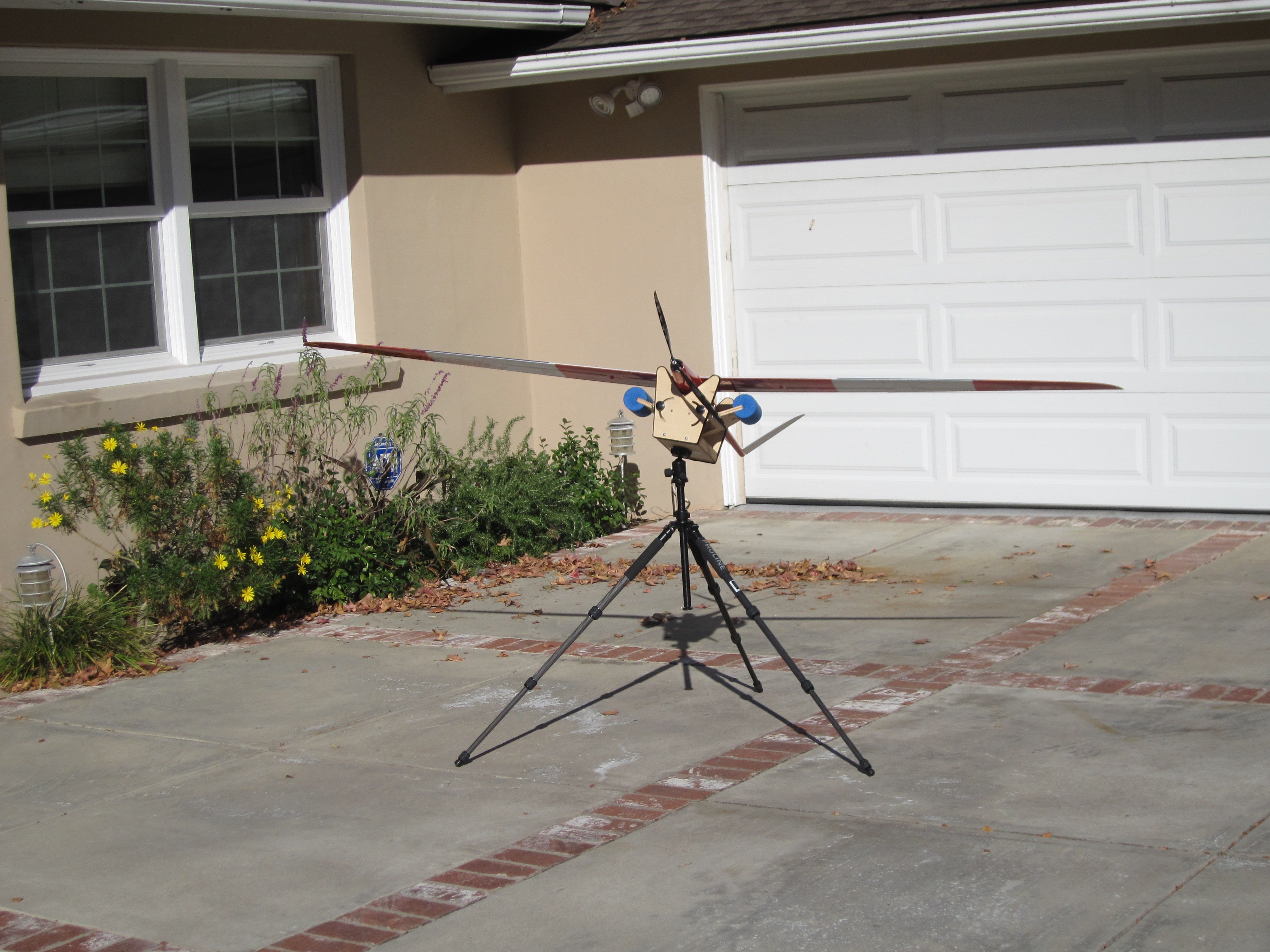
The RC carbon fiber plane in this photo makes 6,800 watts, does 0-180 mph in 3-4 seconds, weighs 5.5 lbs. I use a 6.7:1 gear box, it allows me to spin a larger diameter prop to create higher thrust, like torque. The gearbox is torque multiplication. In theory 746 watts = 1 HP, some is lost as heat. I sometimes run lower ratios like 5.2:1 or direct drive spin a smaller diameter prop, less acceleration and higher top speed. Just like the gears on our MTB's.
What I was proposing for the industry in a nutshell is screw the wattage limit, the bikes are limited to 20 mph, motor starts dropping off around 19 mph, that's a given. But why cant I burst 500% or 600% or 700% if I am going 11 mph up a hill and I hit the pedals hard and want to unweight the front tire a bit to clear a bump. And that is what DJI has done. They deal with the same motors/gearboxes/props on their drones as my plane in the photo. They have their 120 nm torque and their argument is the same as mine, don't cap watts or torque if that make the ride better as long as we are under the 20 mph limit and it is "reasonable". Yeah 300 nm it will probably just do burnouts and wheelies and not really an E-MTB.
It's that E-MTB definition. I have a buddy that calls my EMTB's mopeds, then I open my apple fitness and show him my HR 120-140 bpm, it is pedal assist not a moped. I want more available torque on hills.
IMG_0840.JPG
 
There is this Vala vs. Bullet comparison:


...and the topic of motor efficiency same up.

One of the reviewers has the old Bullitt with a 630-watt Shimano battery and he said that he struggles to get 4K' on that battery.

However, on the Gen5 Bosch with a 600-watt battery he can do 5K'.

Clearly there are differences in motor efficiencies way beyond the fractions of a percent that others have indicated.
 
Clearly there are differences in motor efficiencies way beyond the fractions of a percent that others have indicated.
Or differences in the motor tune. Shimano ramps up the power with increasing rider input quite a lot.
 
There is this Vala vs. Bullet comparison:


...and the topic of motor efficiency same up.

One of the reviewers has the old Bullitt with a 630-watt Shimano battery and he said that he struggles to get 4K' on that battery.

However, on the Gen5 Bosch with a 600-watt battery he can do 5K'.

Clearly there are differences in motor efficiencies way beyond the fractions of a percent that others have indicated.
Or the old Shimano battery is old and has diminished capacity.
 
Wish the update would hurry up. I’m looking forward to trying it.
 
Keep reading
    Browse all

    Similar Threads

    Community Stats

    Since 2018
    668K
    Messages
    40,773
    Members
    Join 30,000+ Riders, it's free!
    Back
    Top