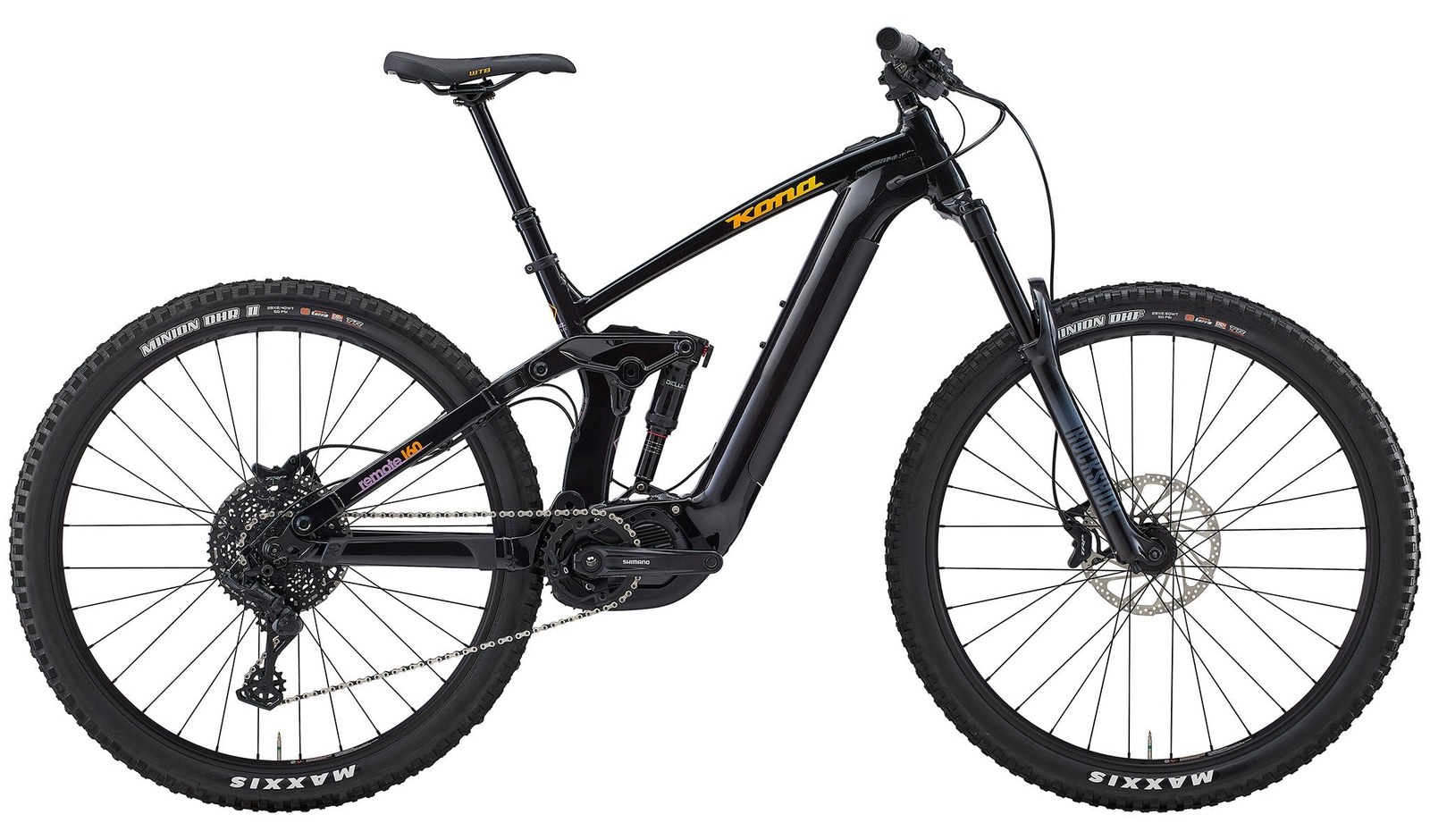
Motors · Shimano
Shimano · STEPS E7000 (DU-E7000)

E7000

Shimano's 2018 mid-tier eMTB drive: 60 Nm and a deliberately gentle, natural delivery aimed at leisure trail riders rather than uphill racers. Lighter and quieter than the E8000 it sat beneath, it now lives on mainly in the second-hand market.
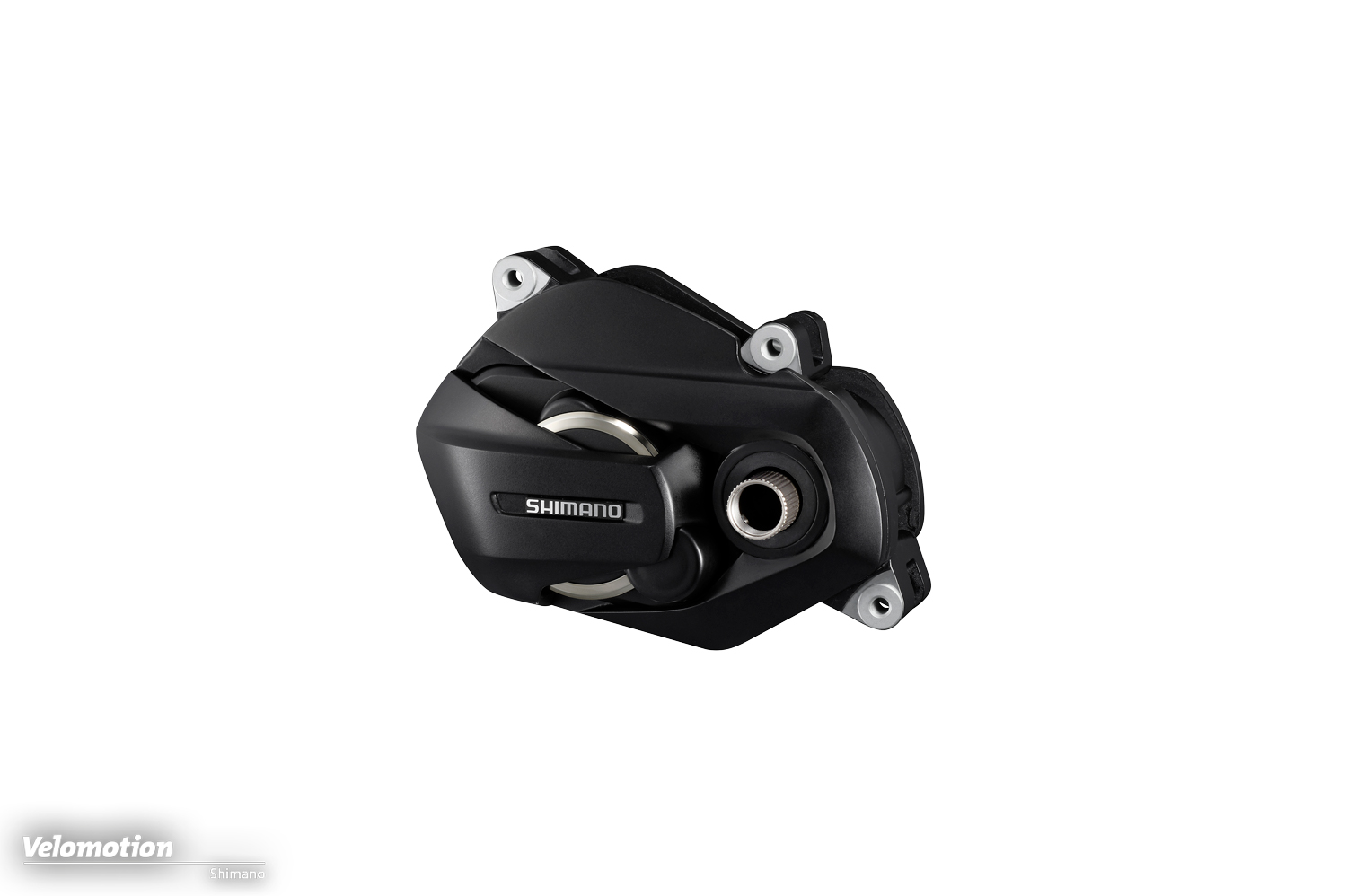
E7000 eMTB motor
The Shimano STEPS DU-E7000 drive unit — lighter and more compact than the E8000 it sat beneath.
0250406080100120350 Wcadence (rpm) →power (W)

Classic older-STEPS shape: strong early support that holds best around 70-90 rpm, then fades as cadence climbs past roughly 105 rpm and drops away below 50 rpm. Shape is inferred from same-generation E8000 bench behaviour (GRAN FONDO); no dyno trace has been published for the E7000 itself.

The verdict

Shimano E7000 was never built to win the torque war. Launched in July 2018 as the affordable sibling to the trail-focused E8000, it trades 10 Nm of peak grunt (60 Nm versus 70 Nm) for a softer, more measured power delivery that suits exactly the rider it was designed for: someone who wants assistance to flatten the climbs, not to be catapulted up them.

The character is classic older STEPS. Power arrives smoothly and predictably, the unit is light at an official 2.88 kg (DU-E7000 manual), and it stays comparatively quiet under load. Shimano never published a peak-power figure or an assist ratio for this STEPS-era unit, so the only honest numbers are the 60 Nm and 250 W rated figures; the often-quoted ~500 W peak and 300% assist are estimates borrowed from the E8000, not measured or official for the E7000. On the bench the E8000 family makes its best support around 70-90 rpm and fades away below 50 and above roughly 105 rpm (GRAN FONDO), and the E7000 behaves the same way: strong early, tapering as the cranks spin up.

Thermally it is an old-school STEPS unit with no published dyno endurance data, but in service it holds its modest rated output well on moderate climbs without the dramatic de-rate of higher-output modern motors. In 2026 the E7000 is a legacy proposition: it was superseded by the EP6 (DU-EP600) from 2022 and runs the Gen.1 battery and display ecosystem (BT-E8035 504 Wh / BT-E8036 630 Wh / external BT-E8014) that does not cross-shop with current EP-class hardware. For a used trekking or entry trail eMTB it remains a sound, low-drama motor; just don't expect it to keep pace with an 85 Nm modern Shimano, a Bosch Performance Line CX (85 Nm, up to ~750 W) or a DJI Avinox (105 Nm continuous, 1,000 W peak).

“Built to flatten the climbs, not to catapult you up them.”

Character

Rider input
Shimano never published a support ratio for the E7000. It offers the named STEPS modes (Eco, Trail and Boost); the 300% figure sometimes attached to it is the E8000's number, not an official E7000 spec. In feel, Boost gives firm, steady support that rewards measured pedalling rather than the fierce wind-up of newer high-torque motors.
On the trail
Smooth, natural and unintimidating, the E7000 favours predictable modulation over outright punch, which is exactly why leisure and trekking riders warmed to it over the racier E8000.
Noise
No measured dBA figure exists for the E7000. Subjectively it is a mid-volume whirr under load and is noticeably quieter than the E8000, which testers rated as 'relatively loud' for its day (GRAN FONDO); it sits roughly on par with the later EP6 for refinement. The typical STEPS coast rattle on rough ground is present.
Efficiency
Low internal resistance keeps pedalling smooth above the 25 km/h cut-off and unassisted, helping range on a modest 250 W rated draw. Paired with the Gen.1 batteries it shipped with (BT-E8035 504 Wh, BT-E8036 630 Wh, or the external BT-E8014 504 Wh), real-world trail range is competitive for the era precisely because the motor never asks for the current a 600-1000 W modern unit does.

The case for and against

Strengths

  • Smooth, natural, easy-to-modulate delivery
  • Light at an official 2.88 kg
  • Quieter than the E8000
  • Low pedalling resistance above the cut-off
  • Plentiful and affordable on the used market

Compromises

  • Only 60 Nm — modest by modern standards
  • Gen.1 battery/display only, no EP-class cross-compatibility
  • Discontinued; superseded by EP6 in 2022
  • No officially published peak-power figure or assist ratio
How it stacks up

It sits a clear step below the 70 Nm E8000 of its day and two generations behind the modern 85 Nm EP-class. Against today's benchmarks the gap is concrete: a Bosch Performance Line CX makes 85 Nm and up to roughly 750 W, and a DJI Avinox makes 105 Nm of continuous torque with a 1,000 W peak, so both out-torque and comfortably out-power the E7000's 60 Nm / 250 W rated drive. The E7000's appeal now is light weight (2.88 kg), quiet running and second-hand value rather than headline numbers.
OWNER INTELLIGENCE
Most owners report no problems · 7,377 posts from 870 members analysed.
66E010 / W013 torque-sensor death - the write-off that defined the E8000 era · typical onset: Scattered from 90 miles to 6,500 km; the dense cluster is 800-2,500 miles / 1,200-4,000…
48Main axle / BB bearing failure and crank-axle play - the E8000's signature wear · typical onset: Usage-dependent more than mileage-dependent: 800-1,000 miles for hard riders, ~1,400 km…
40Water: connector-bay corrosion (common) vs water inside the motor (rarer than reputed) · typical onset: Seasonal (wet winters, jet-washing, heavy-rain rides) rather than mileage-based.
30,000 km and 23,000 km on two E8000s, zero problems, by the forum's highest-mileage Shimano owner - who still bought a backup drive unit from an independent…
Read the full owner report →
Back
Top