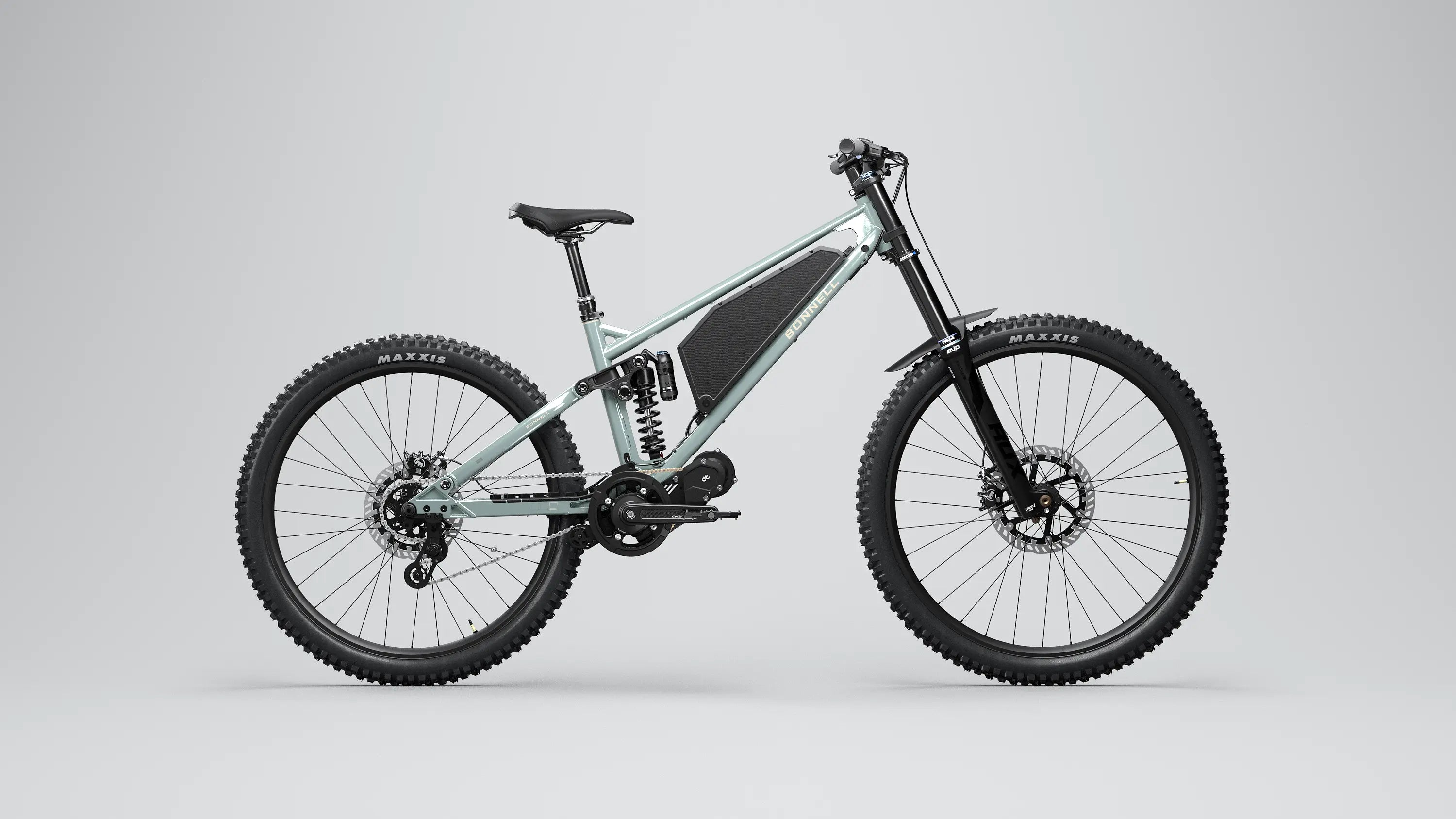
How much motor power is enough?

robikinkela

Active member
Joined
Oct 11, 2018
Messages
118
Reaction score
302
Location
Aosta IT

From Emountainbike magazine:​

"How much motor power is enough? The peak power race with S-Works 3.1 and DJI Avinox M1​

Since the launch of the DJI Avinox M1, a new hype has emerged around maximum power and torque – and we get the excitement. More always sounds better, right? Same with cars. But long-term, this trend could backfire, and we believe it’s time to settle on a more reasonable level.

More power and torque also mean more wear and tear, more stress on the motor system, and – especially in steep terrain or depending on the assist mode– significantly less range than you’d expect, even with big batteries. What we need to avoid at all costs is a future where batteries keep getting bigger and bikes heavier, just to deliver range for support modes most riders don’t even use.

Specs might sell bikes – but in the end, traction control and power modulation are far more important than raw output."

It seems to me a very important point on which the future of our beloved electric bicycles is based. What do you think?
 
⚡ EMTB Pro Go Pro — exclusive discounts & ad-free Peaty's 25% off & more · Ad-free browsing · Pro badge See the deals →
The example of the new Turbo Levo is interesting: more powerful, more performing but also heavier without a significant increase in autonomy even if the battery is one of the most capacious on the market... Are our e-bikes increasingly turning into small motorcycles?
 
Last edited:
I ride mostly technical single tracks and bike parks. I have now EP801 and had Levo gen2. Nice motors, I haven`t had any situation that I need more power.. Commuter have BoschCX4, nice motor but I like Specialized and Shimano more in the way how they behave.
 
I ride mostly technical single tracks and bike parks. I have now EP801 and had Levo gen2. Nice motors, I haven`t had any situation that I need more power.. Commuter have BoschCX4, nice motor but I like Specialized and Shimano more in the way how they behave.
I have a Turbo Levo gen. 3 and I don't need more power or more battery life, I would have preferred less weight.
 
I’m fortunate to have 3 EMTBs, none of them cutting edge, a Specialized SL1.1 with the 35Nm Mahle, a Focus with 75Nm Shimano E8000 and a Marin Rift Zone EL with the Bosch SX 55Nm motor.

I’m predominantly a trail rider these days, mostly ride solo, and pack a range extender for all of them for bigger/longer rides. Even the biggest available battery wouldn’t cover those rides though, so of equal interest to me is how the bike rides and pedals with power off, I save the battery for hills, but all of them put a smile on my face.

Others have a requirement for blasting up a fire-road to get back to the head of the downhill trail as quickly as possible, and a bike to match the downs, so in that sense I get the desire for 1000w and 800Wh+ batteries. That’s fine, but it does feel like that requirement is skewing the development? No idea if that’s actually true, just how it feels to me.

I’ve also no idea what the split of sales is between trail/enduro/downhill EMTBs, but it does feel like the ‘industry’ (or at least the headline grabbers) is heading for ever more travel, more slack, more battery and more power.

I kind of agree with the article in the OP that it’s not taking ‘us’ to a good place generally and if you look at ‘affordable’ EMTBs they aren’t particularly well blessed bikes in the looks or spec department.

It’s like everybody is looking for the EMTB equivalent of a Ford Fiesta, but the brands are pushing the latest Supercar with price tags to match.

As ever, time will tell!
 
it depends on what and where you ride and your physical condition. Sometimes 50-60nm will be very enough for everyone and at the same times you will be way more exhausted than having a 80nm.

It might also go with your expectations. If you really want to do more DH, and wants to blast uphills as fast as possible, yeah, I could argue that a more powerfull motor is better.

If you ride from point A to B, and do not have a tight schedule, well 50-80nm might be enough but always depends mentioned above factor.

For mellow trail, long run, I still think you really do not need more than 50nm, it is enough for nearly all section accepting some will tax you more.
 
Own a gasgas with yamaha 70nm motor and put 2400km on it. Compared to 85nm motor not much difference but more mid and up top but not enough if somebody in good shape can make up the difference. I then bought Rocky Mountain Powerplay fatbike for winter. Been a great way to keep riding over winter and quite amazing were you can go with it. The RM has 107nm motor but during the winter on 4.5 inch tires with studs alway had power at 40%-60% and boost at -1. Anymore and would just loose traction and spin out and tires at 4-6 psi so no fast stuff really. Spring hit and I put on some summer tires and started riding normal trails. All I can say is wow. This bike rips 107nm is a huge difference in power. Using 70%-90% power now with +1 on boost. It also the natural feel of power and how adjustable power can set to. So do I need the 107nm to have a fun ride no. Does it help on steep uphills no question. It hard to go back actually once you are use to the power. But it getting close to a dirtbike now.
 
I'm new to EMTB in general (yesterday was my first ride on my new EMTB and my second ride ever on an EMTB), but I've been riding mountain bikes for 30 years and have good climbing legs.

One of the first things I did when I got home from my first ride on my new bike is to turn down the max power and assist level on the "Trail" mode of my EP801 motor. It seemed like complete overkill even just blazing up fire roads, and on the trails, the extra assist made it harder to use as a precision instrument. I also turned down the assist level (but not max power) on the Boost mode.

Maybe I'll change my tune after a few years of riding, but as-is I would consider battery life and power delivery much more important than max power level.
 
There seems to generally be an obsession about more power the better. This inevitably comes with a weight penalty and less nimble handling as a consequence. Power has become addictive for some riders. Personally I like the benefits of less power and weight; the feeling you are still riding a bike opposed to a moped and the better ride characteristics downhill.
 
Easy math, if you use mostly 2x assistance and your legs can do 400 watts for shorter sprints, ideally the motor should provide at least 800 watts peak.
 

From Emountainbike magazine:​

"How much motor power is enough? The peak power race with S-Works 3.1 and DJI Avinox M1​

Since the launch of the DJI Avinox M1, a new hype has emerged around maximum power and torque – and we get the excitement. More always sounds better, right? Same with cars. But long-term, this trend could backfire, and we believe it’s time to settle on a more reasonable level.

More power and torque also mean more wear and tear, more stress on the motor system, and – especially in steep terrain or depending on the assist mode– significantly less range than you’d expect, even with big batteries. What we need to avoid at all costs is a future where batteries keep getting bigger and bikes heavier, just to deliver range for support modes most riders don’t even use.

Specs might sell bikes – but in the end, traction control and power modulation are far more important than raw output."

It seems to me a very important point on which the future of our beloved electric bicycles is based. What do you think?
I don't know....Specs may not sell bikes, the feel does.

No my friend, THERE WILL NEVER BE ENOUGH POWER, to the point that the bike is seriously dangerous to ride for most.

Like my KTM....

EBikes are motorcycles. Just because the motor on a bike, was typically ONLY human, doesn't change that fact.
 
Own a gasgas with yamaha 70nm motor and put 2400km on it. Compared to 85nm motor not much difference but more mid and up top but not enough if somebody in good shape can make up the difference. I then bought Rocky Mountain Powerplay fatbike for winter. Been a great way to keep riding over winter and quite amazing were you can go with it. The RM has 107nm motor but during the winter on 4.5 inch tires with studs alway had power at 40%-60% and boost at -1. Anymore and would just loose traction and spin out and tires at 4-6 psi so no fast stuff really. Spring hit and I put on some summer tires and started riding normal trails. All I can say is wow. This bike rips 107nm is a huge difference in power. Using 70%-90% power now with +1 on boost. It also the natural feel of power and how adjustable power can set to. So do I need the 107nm to have a fun ride no. Does it help on steep uphills no question. It hard to go back actually once you are use to the power. But it getting close to a dirtbike now.
"Getting close to a dirt bike now"

Its about time.

Let the fun, begin.
 
I can't wait, untill the day comes, when my battery has 3000 wH in the same weight, and my bike puts out 2000 watts, at 45 lbs.


:)
Not sure how far we are from that, from idea, prototype and industry wise.

Cannot be the sodium batteries, uber fast to charge, less cycles, safer, too heavy but 15 times less expensive.

Might be graphene battery, extremely fast to charge, more cycles, safer, higher density than Lithium. But so far the (random) prediction of industry is that it should become a reality to be used in 10 years ...
 
The example of the new Turbo Levo is interesting: more powerful, more performing but also heavier without a significant increase in autonomy even if the battery is one of the most capacious on the market... Are our e-bikes increasingly turning into small motorcycles?
Does a few pounds make it a motorcycle?
 
The point everyone seems to be missing, is with a proper EMTB. The motor simply makes your legs more powerful. That's it. In very simple terms. You put 100 watts in through your legs, you get 400 watts out. You put 200watts in. You get 800watts out.

But there's no throttle. You cannot just stand there and motor up the slope. If you put zero watts in. You'll get zero watts. It's like a mechanical advantage tool, except it's electrical.

As long as the power is controllable through the torque you put into your pedals with your legs. There is no limit to the power motors can provide. Stronger legs is always going to be an advantage.

But not everyone can train to have legs that look like Arnie in Terminator. And lots of people ride where they don't need legs like Arnie. But if you enjoy climbing the steepest technical like Chris Akrigg. Then you need the ridiculous power he generates in his legs, or a motor that enhances your own legs.

So as always. It comes down to how you use your EMTB. If charging down technical downhills is your thing, then just using the Motor as a shuttle to get back up. Then you don't need the world's most powerful motor. But if you ride on big adventure rides, where the point to just keep riding, and not needing to stop or walk your bike up difficult terrain, no matter the terrain you come across. Then more controllable power will always help.
 
It's got to be a bicycle first.
My first eBike was full-power and it wasn't long before I wanted something more subtle.

The least-intrusive package that provides reliable climbing assistance & range without detracting from descending performance.

I've had to push/carry dead eBikes out several times, the weight of the full powers can become a real liability.

The combo of a mid-power motor with a larger battery is the sweet spot for me (Trek Slash+). 21kg weight but with massive range.
 
"Getting close to a dirt bike now"

Its about time.

Let the fun, begin.
Ever try a Suro
It's got to be a bicycle first.
My first eBike was full-power and it wasn't long before I wanted something more subtle.

The least-intrusive package that provides reliable climbing assistance & range without detracting from descending performance.

I've had to push/carry dead eBikes out several times, the weight of the full powers can become a real liability.

The combo of a mid-power motor with a larger battery is the sweet spot for me (Trek Slash+). 21kg weight but with massive range.
Everybody has a idea what they like. For me full power and good suspension and weight not critical. But do not need anymore power than 700w and 100nm. 600 battery min.
 
about 6000 watts. this is the future of emtb
 
ep8 with 85w ,more than enough,85% of my time in eco set at 37nM,trail does the next 13% and the last 2% is me just playing around in boost,as I get older this will no doubt change but 85nM and 630wH battery is shed loads.
 
My first eBike was full-power and it wasn't long before I wanted something more subtle
I really don't understand this. You can run a full power EMTB at reduced power, making it identical to a mid power. You have a choice. But with a Mid-Power, there is no option to run it as a Full power.

Why would you change an EMTB just to achieve something you can do by turning the assist down ?
the weight of the full powers can become a real liability.
There are light weight full power options. Orbea, Amflow and Forbidden just to name a few.
I've had to push/carry dead eBikes out several times
How does this happen? There is a battery meter and range calculation on most bikes. I just turn the assist down to ensure I don't run out of battery. On really long rides. Like over 80km. I've carried a spare battery. But as I have electronic gears powered by the motor. I always adjust my assist if the range and distance to home get too close to each other. I need some battery for gear selection.
 
I really don't understand this. You can run a full power EMTB at reduced power, making it identical to a mid power.
So if you turned the power off completely, would it be the same as my Enduro bike? Obviously not. There's the weight difference, CoG & drag from the motor. The assistance on a good SL motor feels a lot different than a full-power turned down, which ends up feeling more "fly-by-wire". Turning the assistance down on a full-power motor feels more like increasing the resistance, rather than feeling more like a non-eBike.

Part of what makes some SL bikes work is that it takes less energy to move a lighter object.

FWIW I'm basing this on the TQ-HPR-50 and Bosch SX (both currently in the garage) compared to a SHimano E8000 and a Turbo Levo 2.2 (Previously owned)

There are light weight full power options. Orbea, Amflow and Forbidden just to name a few.
I have no interest in the Orbea Rise, and the Amflow/Forbidden aren't available here yet. I won't pay a premium to be an early adopter.
How does this happen? There is a battery meter and range calculation on most bikes.
First time was a 5hr back-country epic. Rode only in Eco/Trail and was down to 15% battery, 1/3 into the DH when the trail disappeared due to fire/storm damage. I carried a Norco Sight VLT over at least 30 piles of burnt-out, down trees. It really wasn't a range issue so much as the weight of the bike on unrideable trail.

Then there were many times when the Shimano motor died mid-ride. This could be fixed by pulling the motor, cleaning and applying dielectric grease to the connections- not a trailside repair.

Last time was when a TQ motor died. With that bike being lighter, it wasn't such a hassle- was able to complete the ride with no assist and a little pushing.

I do agree there will likely be a point when full-power and SL bikes might merge. However, I think we're still several years away from that.
 
The point everyone seems to be missing, is with a proper EMTB. The motor simply makes your legs more powerful. That's it. In very simple terms. You put 100 watts in through your legs, you get 400 watts out. You put 200watts in. You get 800watts out.

But there's no throttle. You cannot just stand there and motor up the slope. If you put zero watts in. You'll get zero watts. It's like a mechanical advantage tool, except it's electrical.

As long as the power is controllable through the torque you put into your pedals with your legs. There is no limit to the power motors can provide. Stronger legs is always going to be an advantage.

But not everyone can train to have legs that look like Arnie in Terminator. And lots of people ride where they don't need legs like Arnie. But if you enjoy climbing the steepest technical like Chris Akrigg. Then you need the ridiculous power he generates in his legs, or a motor that enhances your own legs.

So as always. It comes down to how you use your EMTB. If charging down technical downhills is your thing, then just using the Motor as a shuttle to get back up. Then you don't need the world's most powerful motor. But if you ride on big adventure rides, where the point to just keep riding, and not needing to stop or walk your bike up difficult terrain, no matter the terrain you come across. Then more controllable power will always help.
That's not necessarily correct.

Most motors have a setting in the app for how much power each power mode has and how much input you need to apply to get that power.
Take the Specialized Mission Control, there's a support and a peak power setting that can be changed for each power mode. Essentially, the peak power setting is the amount of power the motor will give (0-100%) and the support is how much power YOU have to put in to get that assistance.
You can set it so that is 100%/100% and you only need to turn the cranks to get full power. Most of the other brands have something similar.

I feel that we really don't "need" any more power than the first gen Levo SL, but we are used to the 85Nm power of the full powered bikes of the time, so there was no going back.
The thing is that the brands always want to claim that they have "the most powerful motor on the market" so this peak power limit keeps on getting higher. Most drivetrains are still just non-Ebike chains and cassettes along with free hubs and were never designed for so much power, so the wear on these parts becomes pretty high.
If someone offers you more power, you're not going to knock that back but there has to be a limit somewhere otherwise you may as well just buy a dirt bike. This arms race for ultimate power will end up harming where we can ride Ebikes as well, because there is enough push back as it is in some places with the current EMTBs let alone the latest 1000w motors. At least now it is pretty obvious the difference between a proper pedal assist EMTB and something like a Stark Varg. Make a pedal assist with the power of a Stark Varg but looks just like any other EMTB and you will end up with all EMTBs being banned from places that we would want to ride, because it becomes too difficult to tell the difference between a "normal" powered EMTB and a 2000w monster.
 
Personally i'm happy with the bosch set up. I'm usually in emtb mode and not using the extra grunt of turbo mode.

With that said, I do do turbo sessions and no doubt if i had a 100nb 1000w setting i'd use that on occasion. But then i'd be back in the purple mode or less for the majority of my rides.

I'm not super fussed with the getting a dji motor's bike.
 
Personally i'm happy with the bosch set up
And I am happy with the Shimano EP801 with the race firmware. But I still bought the Amflow PL Carbon Pro as well, because I believe there are climbs, that it will do better.

That's my only point. And my answer to the question posed in the Thread Title. If you can get up a slope, without dabbing a foot, because that bike gives your legs the most power to maintain greater momentum, then I want the bike that allows me to cleanly climb the best.

I don't care about manufacturers arms races. I just want the lightest, playful, best climbing EMTB, that can also do the level of downhill I want to do. I. am 60yo. I'm not going to charge downhill at extreme pace. I just can't afford the injuries, when you get it wrong.
 
Keep reading
    Browse all

    Similar Threads

    Community Stats

    Since 2018
    668K
    Messages
    40,779
    Members
    Join 30,000+ Riders, it's free!
    Back
    Top