DT ratchet teeth 54T vs 36T vs stock 18T for ebike

I never understood how people say 54t contacting at the same time has less secure engagement when an i9 Hydra only has 2 tiny pawls contacting only 2 points on a 108t at a time, 3 pairs in phase....(more than 2 times smaller contact points than a 54t ratchet). I guess the drag in 54t in constant contact creates wear but there's definitely more contact space to spread out torque over 54t than 2 pawls on 108T. Any thoughts? I run 350 hubs on my 2 regular bikes w/ 60T ratchets....no issues yet and I typically put out 1000-1200w when I punch up climbs. My ebike, a Rail, has I9 torch hubs.
 
⚡ EMTB Pro Go Pro — Living Intelligence Reports, exclusive discounts & ad-free Up to 25% off Peaty's, PEMBREE, Magicshine & more · Ad-free browsing · Pro badge See the deals →
Dt Swiss advises not to use more than 24t ratchet with ebike due to the extra forces applied.

They make a special 24t version called 'hybrid' which is reinforced for ebikes (and it's not hollow like the 36/54).

I'm in the process of upgrading my hybrid 1900 spline 3-pawl wheel to ratchet (I've preordered the Ratchet LN 'Hybrid Steel HG' upgrade kit). I thought that would come with 18t ratchet like the others but apparently not. Hybrid ratchets come with 24t.

The 24t has 15 degrees of engagement, half way between the 18's 20 degrees and the 36's 10 degrees.

 
Last edited:
Been running a hollow 54 on my eeb for the last six months. So far so good. I am very mechanically sympathetic though and don’t crash up through the cogs on full chat.
 
Dt Swiss advises not to use more than 24t ratchet with ebike due to the extra forces applied.

They make a special 24t version called 'hybrid' which is reinforced for ebikes (and it's not hollow like the 36/54).

I'm in the process of upgrading my hybrid 1900 spline 3-pawl wheel to ratchet (I've preordered the Ratchet LN 'Hybrid Steel HG' upgrade kit). I thought that would come with 18t ratchet like the others but apparently not. Hybrid ratchets come with 24t.

The 24t has 15 degrees of engagement, half way between the 18's 15 degrees and the 36's 10 degrees.

yep 24t as standard on H1700 wheelset with 12 speed XD driver on my Whyte E180RS. Super easy to service. Checked mine after 300 miles and all good.
 
They are cheap because they never fail ?

It's crazy how much a 54t ratchet set costs in Australia.

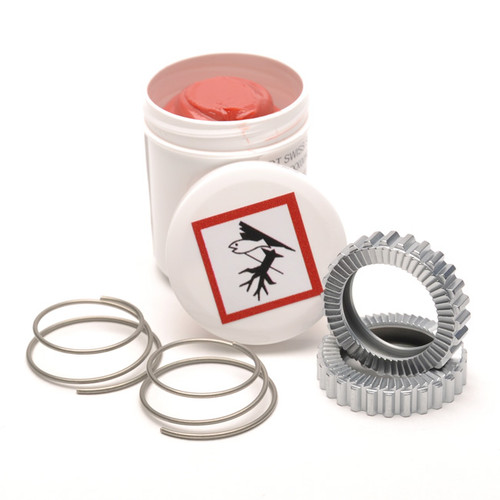
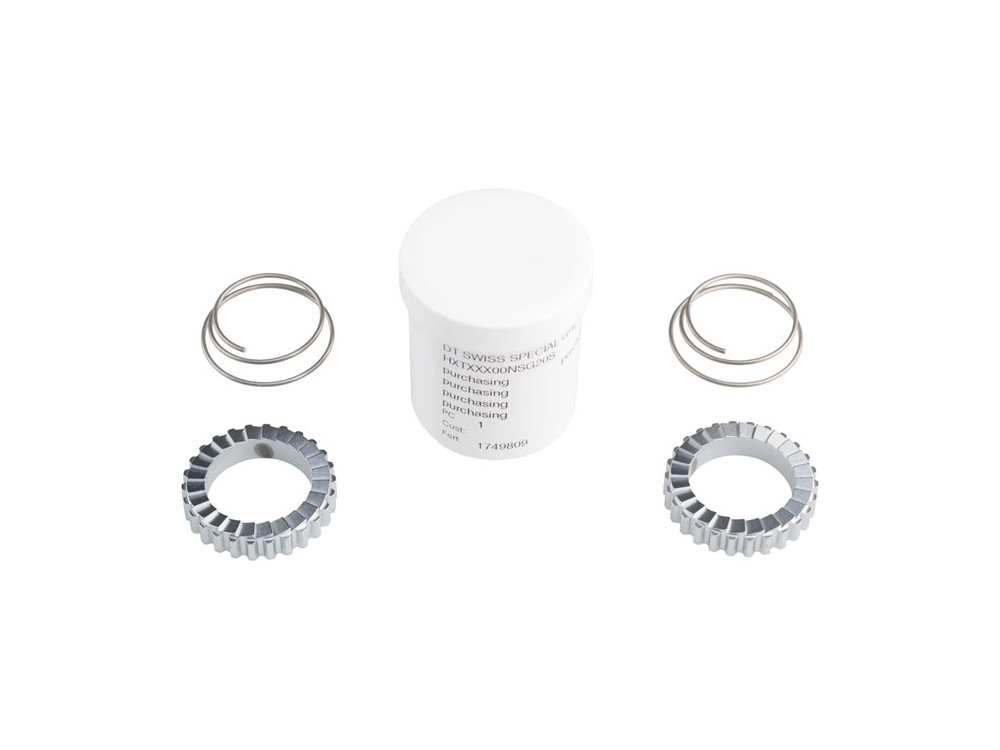
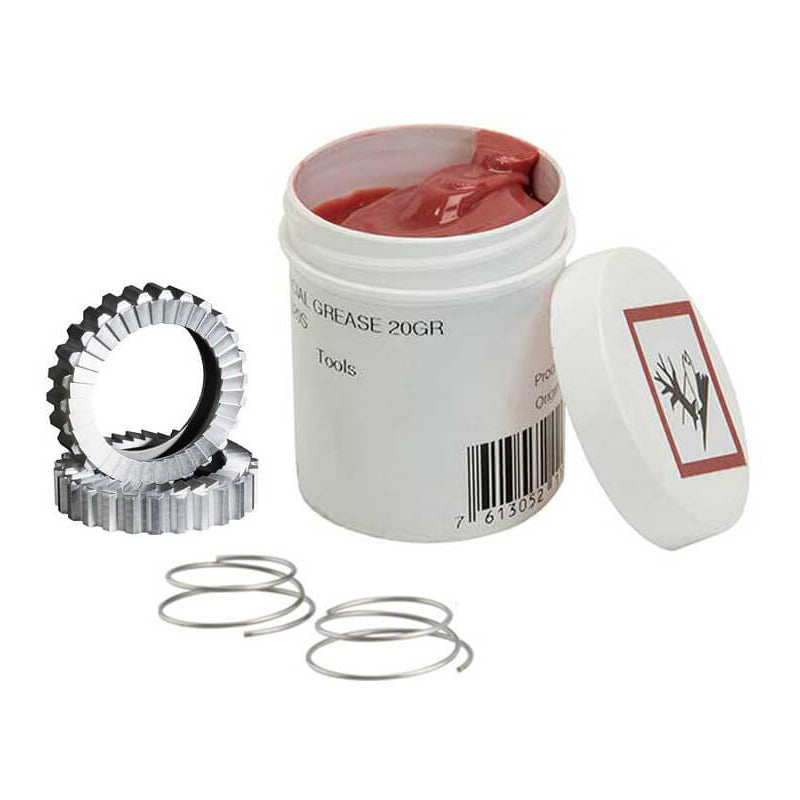
$148 USD for the 54t ratchet, 2 springs and little tub of grease
 
It's crazy how much a 54t ratchet set costs in Australia.

$148 USD for the 54t ratchet, 2 springs and little tub of grease

I can literally buy nearly 5 complete 24t ratchet kits for the price of one 54t.
 
1300 km and my 54t ratchets are done. Started slipping on full leg power / steep climbs. I should have serviced more (I didn't ever service it stupidly) and I reckon I could have gotten more out of it.
 
I am very mechanically sympathetic though and don’t crash up through the cogs on full chat.
That makes no difference to the Freehub pick up mechanism. Just your chain and cassette.
Grinding high gears all the time in high torque modes with high torque stopping and starting would make more difference.
 
1300 km and my 54t ratchets are done. Started slipping on full leg power / steep climbs. I should have serviced more (I didn't ever service it stupidly) and I reckon I could have gotten more out of it.
I guess keeping 24t ratchets in Hybrid hub are way to go for emtbs. Maybe someone share his max mileage with 24t ratchet before needing replacement?
 
I guess keeping 24t ratchets in Hybrid hub are way to go for emtbs. Maybe someone share his max mileage with 24t ratchet before needing replacement?
I swapped out for a spare 24t I had. It'll no doubt last a long time.
 
should have serviced more (I didn't ever service it stupidly) and I reckon I could have gotten more out of it.

Yes, DT Swiss themselves say that the more teeth your ratchet has, is mainly proportional to how much extra service you will need to give it.
 
Did you read my post as I already mentioned how the two types work

Yes. Of course I read your post
The fact that you stated you can't understand how sprung pawls are more secure when engaged compared to ratchet rings says to me you probably haven't actually thought very hard about the mechanics of each design and how the engagement is achieved.

It's not all that difficult to grasp if you simply look at the two designs. Allow me to explain.

neo-product-1-2.gif
images

as you can hopefully see with the above sprung pawl designs (not I9 but same principle) the more force you put into driving the hub when the pawls are engaged the more securely they are pressed into the ratchet

whereas...
1628785475926.jpeg
1628785604695.jpeg
images

with two sprung ratchet rings as the DT Swiss design uses all that is keeping them from slipping (when worn) is the two springs either side.
and the more points of engagement. the finer the ratchet surface required the shallower each tooth. ie. less engagement material in contact. so it stands to reason with wear under high load they will eventually slip.

Nothing is perfect. and yes. As you state with just 2 pawls in contact at any one time in your I9 hub you are asking a lot of the hub shell, freehub body, pawls and ratchet.

...anyways, i was just trying to make a discussion.
And I'm just helping you answer your question within the discussion
 
Yes. Of course I read your post
The fact that you stated you can't understand how sprung pawls are more secure when engaged compared to ratchet rings says to me you probably haven't actually thought very hard about the mechanics of each design and how the engagement is achieved.

It's not all that difficult to grasp if you simply look at the two designs. Allow me to explain.

View attachment 68795
images

as you can hopefully see with the above sprung pawl designs (not I9 but same principle) the more force you put into driving the hub when the pawls are engaged the more securely they are pressed into the ratchet

whereas...
View attachment 68796 View attachment 68797
images

with two sprung ratchet rings as the DT Swiss design uses all that is keeping them from slipping (when worn) is the two springs either side.
and the more points of engagement. the finer the ratchet surface required the shallower each tooth. ie. less engagement material in contact. so it stands to reason with wear under high load they will eventually slip.

Nothing is perfect. and yes. As you state with just 2 pawls in contact at any one time in your I9 hub you are asking a lot of the hub shell, freehub body, pawls and ratchet.


And I'm just helping you answer your question within the discussion
Yes. Of course I read your post
The fact that you stated you can't understand how sprung pawls are more secure when engaged compared to ratchet rings says to me you probably haven't actually thought very hard about the mechanics of each design and how the engagement is achieved.

It's not all that difficult to grasp if you simply look at the two designs. Allow me to explain.

View attachment 68795
images

as you can hopefully see with the above sprung pawl designs (not I9 but same principle) the more force you put into driving the hub when the pawls are engaged the more securely they are pressed into the ratchet

whereas...
View attachment 68796 View attachment 68797
images

with two sprung ratchet rings as the DT Swiss design uses all that is keeping them from slipping (when worn) is the two springs either side.
and the more points of engagement. the finer the ratchet surface required the shallower each tooth. ie. less engagement material in contact. so it stands to reason with wear under high load they will eventually slip.

Nothing is perfect. and yes. As you state with just 2 pawls in contact at any one time in your I9 hub you are asking a lot of the hub shell, freehub body, pawls and ratchet.


And I'm just helping you answer your question within the discussion
Thanks for the response!
 
I would not say anything about DT Swiss ratchet durability based on experiences about chinese knock offs. But as said, 24T has been designed for ebikes and it is stronger than 54T version. I have 24T on my ebike and 36T&54T on my normal bikes and I think I will keep it that way.

Do you have any information on DT SWiss claiming their 24T is designed for eBikes or any stronger than other T versions?
I'm currently running 36T and plan to keep it clean and lubed...Although I'm lazy.
 
1300 km and my 54t ratchets are done. Started slipping on full leg power / steep climbs. I should have serviced more (I didn't ever service it stupidly) and I reckon I could have gotten more out of it.
Old thread I know, sorry. But I'm considering the 54t for my 350 hubs that currently have the 36t. I have about 500 miles on the 36t with zero wear that I can see. I'm probably less aggressive than you at 73 yrs old and less powerful and as you are saying you didn't maintain the 54t as well as you could have. So thinking of trying the 54t. Did the 54t ratchet better (quicker with less motion) or does the motor internal engagement rule out here? Thanks.
 
I like the quicker engagement of the 54t.
I've serviced them twice in about 500-600 miles. No doubt they'll fail at some point but I still have the 24t ones to swap back when they do.
 
I'm running a 240 EXP 36t on a Flyon with 120Nm.
Over 2000Km and no visible wear, i lube it with all-weather chain lube, no grease.
I think the one-spring design of the EXP is doing a good job about engaging the rachets, the minor wear to the alu body is the same as on my analog bikes.
 
I'm running a 240 EXP 36t on a Flyon with 120Nm.
Over 2000Km and no visible wear, i lube it with all-weather chain lube, no grease.
I think the one-spring design of the EXP is doing a good job about engaging the rachets, the minor wear to the alu body is the same as on my analog bikes.
I use the DeMonde freewheel light grease. I guess I will try the 54t for a while and just keep a close eye on it.

I did install the 54t on my SL. The old 36t had about 750 miles on them and looks like very minor wear and maybe a slight nick or two that could probably be burnished out. The quicker engagement was noticed right away and ratcheting to loft the front wheel over an obstacle is now much more possible. Slightly more noise but I'll just keep up with the servicing and will check it again in about 250 miles to see how it's wearing. I rarely hit much over 1000 watts max on my rides so I think I'll be OK.
 
Last edited:
I have just gone through the (painful!) down/upgrade process from H1900 3pawls to ratchet (by default they sell the 18 POEs kit and for this reason I consider a downgrade rather than an upgrade):cry:.. Painful was removal of the pawls ratchet ring after one year of hard ebiking so I had to do several attempts by increasing the heat transfer with a buthan gas torche and increasing the "hammering" on the wrench till I got it released. I have also upgraded directly to a DT 24 t ratchet which is considered the most robust for ebikes applications. Surprisingly it is sounding very quite and less noisy than the 3 pawl system, even with light DT red grease as they reccomend. For this reason I have checked a few times if the installation was OK and it was perfect. Now I am considering to "invest" (=waste) into a 36T vs a 54T ratchet. What is the latest experience you can share about 54T durability target so far on ebikes and heavy duty application? In case is not clear, my only goal is to make noise so to put pressure on my buddies that I am driving with 😅but due to the nature of trails with frequent "turbo" ramps uphill I don't want to have bald ratchets after a few rides. . I am also to considering the chinese knock-off as the latest info exchanges are quite promising. thanks!
 
I have just gone through the (painful!) down/upgrade process from H1900 3pawls to ratchet (by default they sell the 18 POEs kit and for this reason I consider a downgrade rather than an upgrade):cry:.. Painful was removal of the pawls ratchet ring after one year of hard ebiking so I had to do several attempts by increasing the heat transfer with a buthan gas torche and increasing the "hammering" on the wrench till I got it released. I have also upgraded directly to a DT 24 t ratchet which is considered the most robust for ebikes applications. Surprisingly it is sounding very quite and less noisy than the 3 pawl system, even with light DT red grease as they reccomend. For this reason I have checked a few times if the installation was OK and it was perfect. Now I am considering to "invest" (=waste) into a 36T vs a 54T ratchet. What is the latest experience you can share about 54T durability target so far on ebikes and heavy duty application? In case is not clear, my only goal is to make noise so to put pressure on my buddies that I am driving with 😅but due to the nature of trails with frequent "turbo" ramps uphill I don't want to have bald ratchets after a few rides. . I am also to considering the chinese knock-off as the latest info exchanges are quite promising. thanks!
I'm not positive but not sure the 36t and 54t are compatible with the 24t. I did run the 24t on my more powerful Focus Jam2 and it's pretty much indestructible. I had the the 350 Hybrid hub and the DT Swiss site said the the 36t and 54t would not work for that hub. But I don't think I would go with the finer teeth on an ebike with 70+ nM of torque and would stay away from any Chinese knock-off of these since I have heard stories of some nasty failures. I just don't think they are going to give you the best material or gear quality and you don't save that much money on them anyway.
 
When I was looking into swapping the ratchets from 24 to 54, I read the knock off ratchets when serviced show darkening of the grease, indicating metal wear.
I stuck with the official DT Swiss ratchets for this reason alone.
 
I can't find any of the steel hybrid 36 tooth ratchet upgrade kits anywhere, they all seem to be the SL hollow version, anyone seen any about? Am in the UK
 
Isn't Hybrid ratched 24T only?
 
Keep reading
    Browse all

    Similar Threads

    Community Stats

    Since 2018
    675K
    Messages
    41,895
    Members
    Join 30,000+ Riders, it's free!
    Back
    Top