
Tyjay
Well-known member
As the motor just spins the crank doesn’t engage so that just spins aswellWhy don’t you hold the crank on the left side of the motor?
Follow along with the video below to see how to install our site as a web app on your home screen.
Note: This feature may not be available in some browsers.

As the motor just spins the crank doesn’t engage so that just spins aswellWhy don’t you hold the crank on the left side of the motor?
That's half undone. If it's jammed at that point, then it's already f***ed. I'd either whack it hard with a punch, try to shock it loose or carefully dremel through it in one of the spindle valleys, throw it in the bin & get a new one. They're only aluminium.
Can't quite see from your pic but if your tool has a square/hex drive you should be able to hit with a rattle gun.Quick question been given a cube with the lock ring on but no chainring on
so when I turn it clockwise to loosen it, it obviously spins the motor as theres nothing to stop it from spinning
its an oldish bike probably gen 1/2 motor said I’d have a look and get it working again but can’t do anything if I can’t removing locking ring
any Ideas what I can do there’s not much space between lock ring and frame
View attachment 121281
Let me get this right mate, you’re trying to remove the retainer ring to fit a new chainring yeah? if the retainer won’t come off, either cut it extremely carefully, apply some dismantling fluid or take it to your LBS, you could also try to shock it off with a drift and a hammer, just a couple of things to try outAppreciate the reply but there’s nothing to put the chainring on the lock ring is at the end of the threads so nothing to grab onto if u get what I’m saying View attachment 121287


 ...Luckily I believe the male threads of the engine rotor axis looks OK.
 www.emtbforums.com

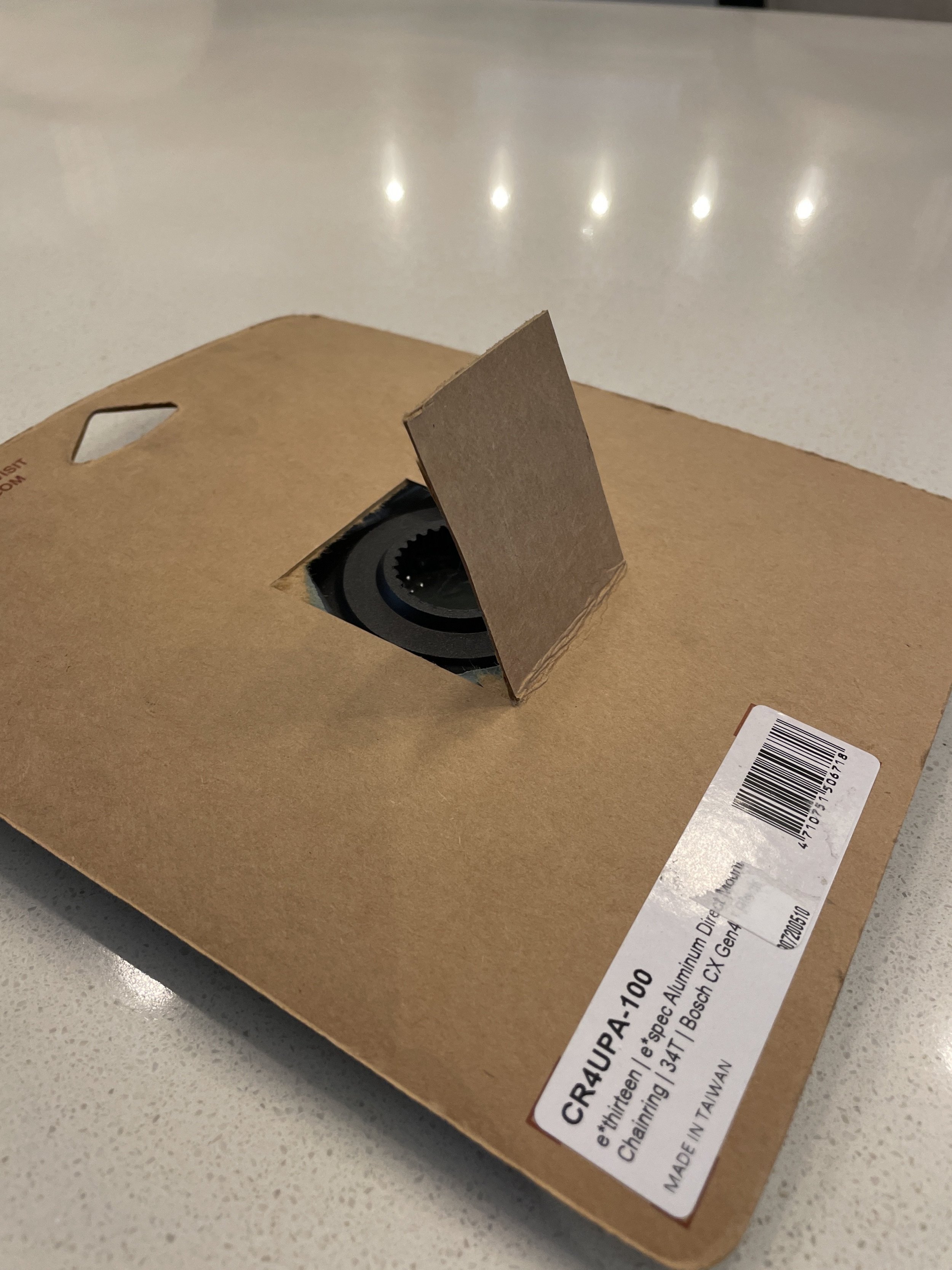

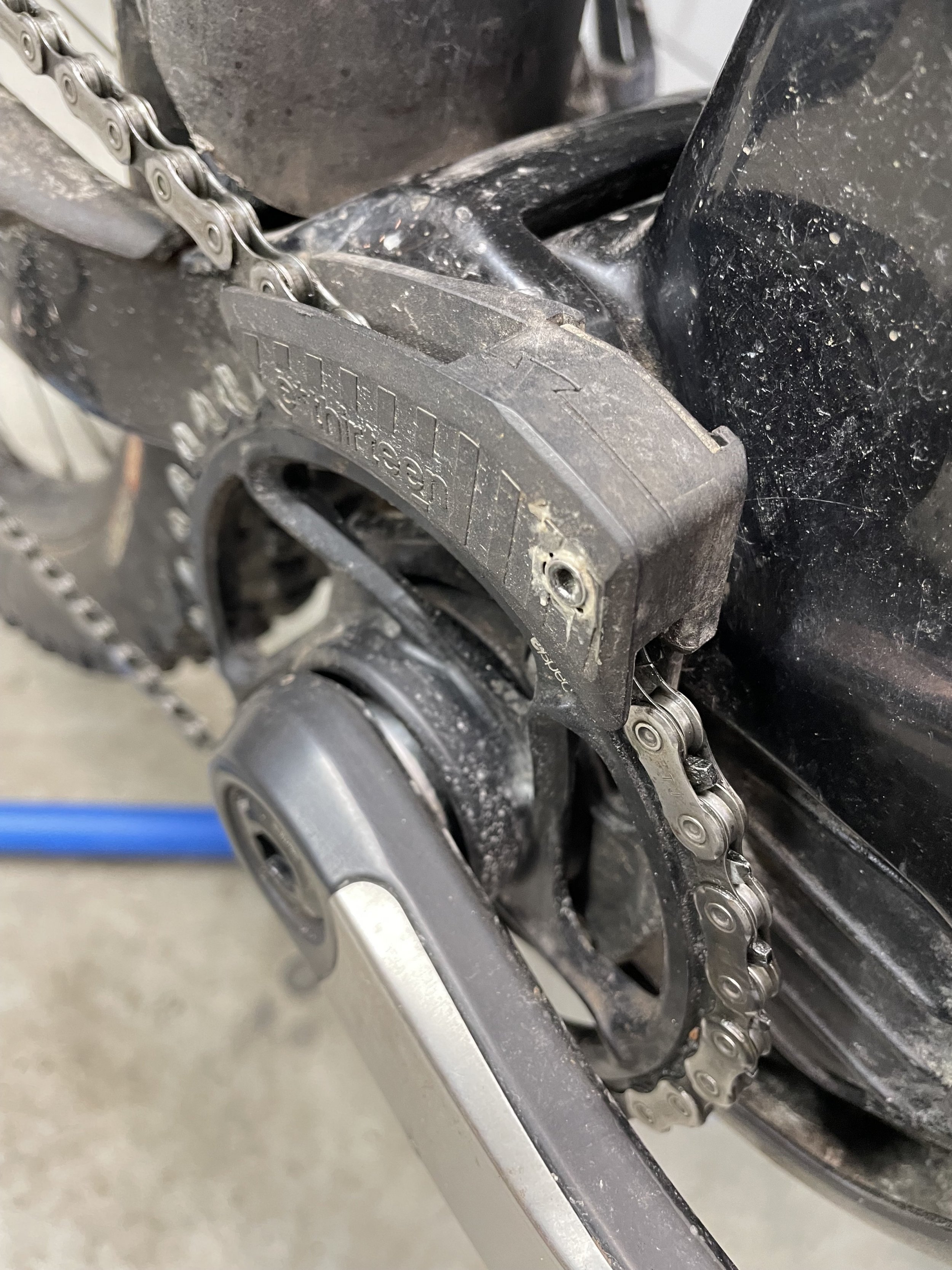
I think that replacing a locking when it becomes loose is an excellent advise.Thought I would add some information for anyone who is upgrading/spec'ing their bike with a SRAM AXS TRANSMISSION Drivetrain. Recently purchased a new Orbea Wild and was having issues with the lockring coming loose on my new bike. I switched out the chainring that came stock on my bike (e13) to the SRAM XX1 EAGLE Transmission chainring. After replacing the lockring twice, decided to take off chainring to measure thickness of SRAM chainring versus the stock e13. The XX1 Transmission chainring is much thicker than the e13 and the bikeshop that installed my the SRAM AXS Transmission Drivetrain left the original aluminum spacer on the Bosch Motor that is need when using the e13 chainring. The Sram chainring comes with the washer "built in" thus being more thicker. After removing the aluminum washer, lockring is fully engaged versus just a couple threads that were holding it on previously. Used a little blue Locktite just in case and have had absolutely no issues with lockring coming loose. Also recommend that if you do need to replace lockring, use a new one. The threads are very fine and seem to distort a little after being tightened.
Thanks!I have said previously when lock rings coming loose has been mentioned that I believe lockrings are single time use only. My reasoning is that a lock ring is secured with very few threads and is a soft ally. Torque of 30nm probably forces some distortion of the thread to achieve maximum thread friction (ie it spreads it a little). The o ring has nothing to do with fit..it is there to protect the motor spigot splines from water/mud etc....ie it is a seal. Similarly any washer is most probably there to achieve a specific chainline.
Finally I believe ally chainrings are probably not a good idea on an emtb due to too much flex. That can also apply to much pressure on the lockring.
So my advice is use a steel chainring and always use a new lockring when changing it.......its only another £10.
That’s a good point.Finally I believe alloy chainrings are probably not a good idea on an emtb due to too much flex. That can also apply to much pressure on the lockring.
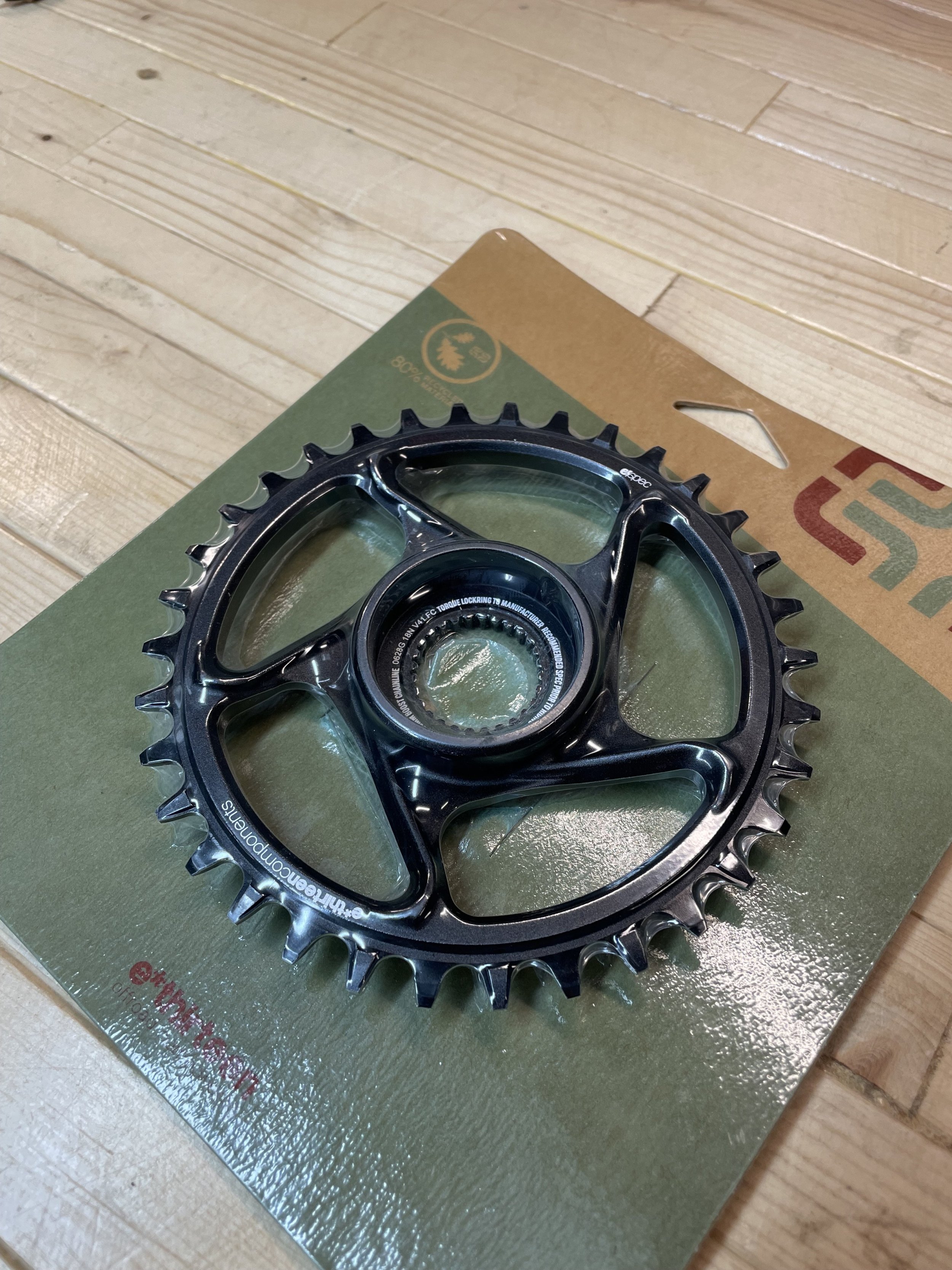

Sorry to disagree there Mike but the e13 alloy sprockets are 7050 alloy and 7050 is up there with the best in the business for these applications. For comparison, Renthal 7050 alloy rear sprockets for motocross bikes in the 450cc range put out around 60HP, I would find it highly unlikely that an ebike would put out enough power/torque to flex a 7050 alloy chainring.Finally I believe ally chainrings are probably not a good idea on an emtb due to too much flex.
no comparison in terms of thickness or design ( e.g. distance between the teeth and the central fixing).......put a MX chain up against a 12 speed MTB chain! chalk and cheese! 7075/T6 is very strong in terms of a relationship with its weight in a tube or square section.............here we are talking a bout neither type of construction. Ally is also softer than steel and therefore subject to more wear...............the main reasons for using ally rather than carbon steel is lighter weight and has better anti corrosion, neither of which is much of an advantage in this application in my opinion.Sorry to disagree there Mike but the e13 alloy sprockets are 7050 alloy and 7050 is up there with the best in the business for these applications. For comparison, Renthal 7050 alloy rear sprockets for motocross bikes in the 450cc range put out around 60HP, I would find it highly unlikely that an ebike would put out enough power/torque to flex a 7050 alloy chainring.
That's correct, we're not talking square section or tubing but apples for apples, two sprockets made out of the same material. Get a Renthal 7050 rear sprocket and place an e13 or Raceface mtb sprocet on top. When you compare the shear forces that the Renthal sprocket goes through on a 450 desert racer, it's no more than 2-3 thicker than the mtb sprocket. I'm not buying that the mtb ones flex unless they're not made of 7050.here we are talking a bout neither type of construction

I would find it highly unlikely that an ebike would put out enough power/torque to flex a 7050 alloy chainring.
Same here, I used to run Talon hubs, rims, spokes and sprockets.sprockets from Talon Engineering
ImpressiveI come back to the topic
TECH NERD ALERT: very long and boring post ?
So, the lockring is threaded ccw. We must take into consideration that these components are designed in such a way that their own inertia acts in favor of tightening.
Let me explain and try to analyze the phenomenon.
Working with such a component, the designer determines the direction of the thread on the basis of the direction of the main stress, which will generate a reaction of the component itself (given by its own inertia) in the opposite direction.
In a system with a spider and its lockring, if the system itself forces the component to turn clockwise, its own inertia will generate an opposite, counterclockwise reaction.
The spider (of course) turns clockwise when pedaling.
I can assume (and I want to clarify it, mine are assumptions as a "nerd" designer) that the Bosch designers have taken into account the accelerations impressed by the rider (raises, starts, etc ...) to the chainring via the pedals, action reinforced by the motor also. Then we have the motor shaft that lets the spider move in a CLOCKWISE direction, dragging the lockring with it, making it snap in the same direction; the lockring is therefore forced to sudden start rotating clockwise. Its inertial reaction will generate an anti-clockwise force (i.e. the inertia of the lockring will tend to oppose the movement that was imposed by the spider, making it rotate counterclockwise). All this is represented in the image below.
Blue disk = spider + chainring
Orange disk = lockring
Blue arrow = rotation force impressed by the spider
Orange arrow = lockring intertial reaction
View attachment 33692
With this consideration, I agree with the Bosch designers: the ccw thread is a correct choice because its inertia works to tighten the lockring threaded connection with the spider.
Off-road, however, there is another stress that can become much more predominant: the kick-back generated by the rear suspension.
The stresses that comes from the rear swingarm in a high speed descent on rockgarden or woods create a reverse chain pull force that pulls the chainring back. These stresses are very impulsive, therefore they create a very strong acceleration (in short, a sudden jerk) that works in the OPPOSITE direction given by pedaling action. The consequence is that the inertia of the lockring works this time in reverse, leading it to unscrew.
It makes me believe (I repeat, they are my assumptions) that these stresses are more violent and above all much more frequent in AM, Freeride, Enduro, etc ... compared to those of pedaling (in Ednuro, AM, freeride, etc .. we're used to pedal quiet till the top then descend "full throttle"). We will therefore have a lockring exposed to a reverse stress, the inertia of which will then push it clockwise, thus tending to unscrew it. Jerk, after jerk, after jerk, the lockring becomes loose.
Having said that, were the Bosch designers wrong? NO. They simply imagined that most of the users with Gen4 will do easy and little off-road rides; in this case, I consider the choice correct.
Based on this, I tried to invent a solution to substantially prevent the lockring from moving clockwise because of the kickback
First, a small 2mm hole
View attachment 33693
... then a tap of a grinding wheel to create a small "pocket" on the inner face
View attachment 33694
View attachment 33695
... and then a nice band of safety iron wire. And since security is never too much, even a bit of threadlocker.
View attachment 33696
Now I just have to screw the ring nut again and practice the safety tie using one of the spider spokes. In this way the lockring is prevented to rotate cw (the one that causes the ring nut to be unscrewed) by the wire. It is the same system that I used on the motorbike on the track, where oil caps, brake screws and other components that could be unscrewed had to have the safety tie for regulation.
View attachment 33697
View attachment 33698
View attachment 33700
Unfortunately, job agenda and bad weather do not allow me to perform tests
I'll come back to you in the next weeks with the first feedbacks from the field


