Chain skipping under load after bike service

pagheca

Active member
Joined
Nov 6, 2022
Messages
531
Reaction score
429
Location
Somewhere in the Galaxy
I took my bike in for a service. Everything seemed fine, but yesterday I finally had a chance to ride it again and noticed that, as soon as I put some torque on the pedals (going uphill or accelerating), the chain starts slipping over the cassette sprocket. It's also quite dangerous, I lost my balance several times while climbing.

I'm going to contact the bike shop that did the work, but in the meantime I'd like to hear your thoughts on what could be causing this. I really don't understand it.

It never happened before the service. Now it happens every time, almost as if the cassette teeth were worn out... but why now? What could have changed?

I took a few photos and noticed two things:
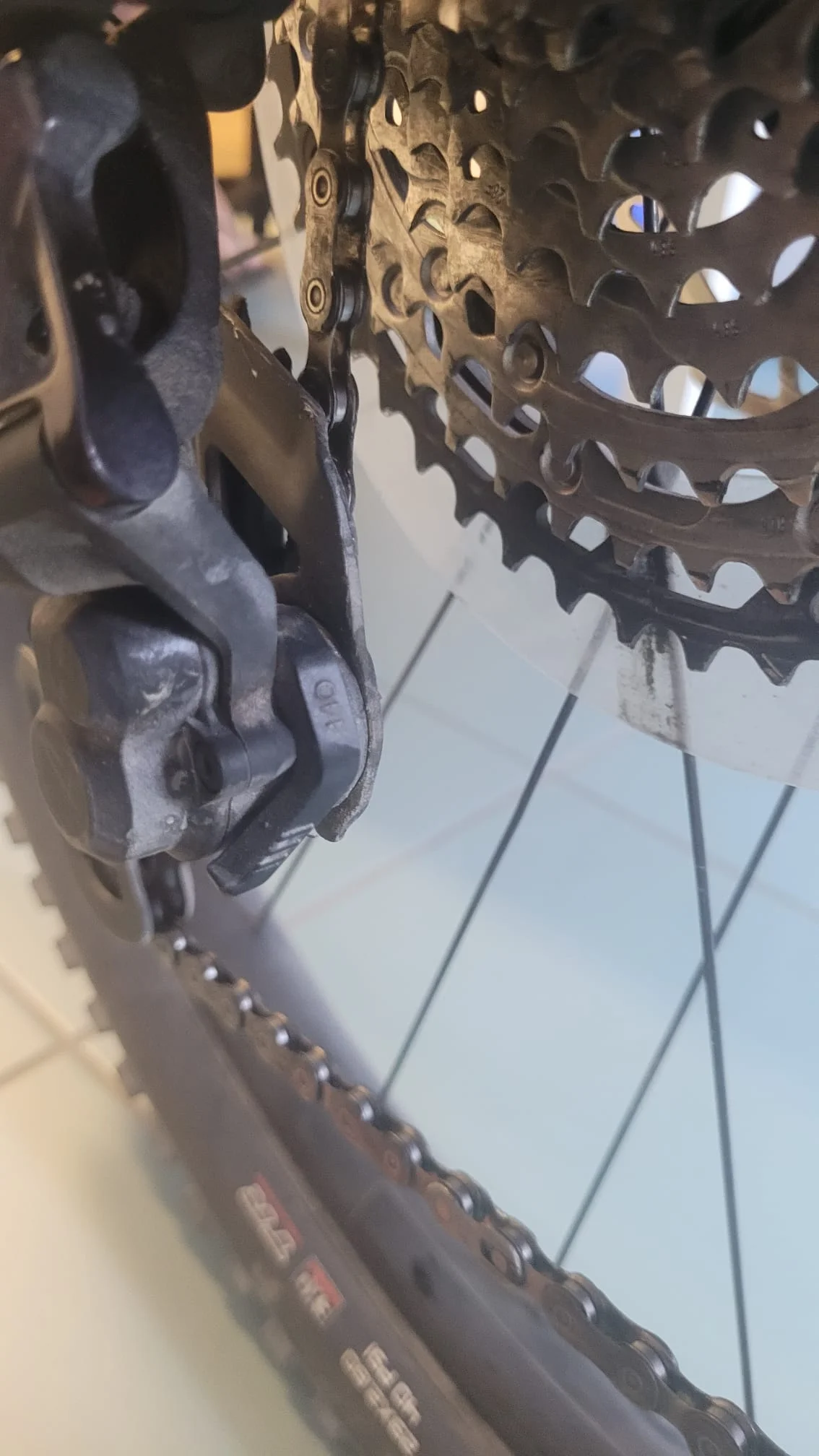
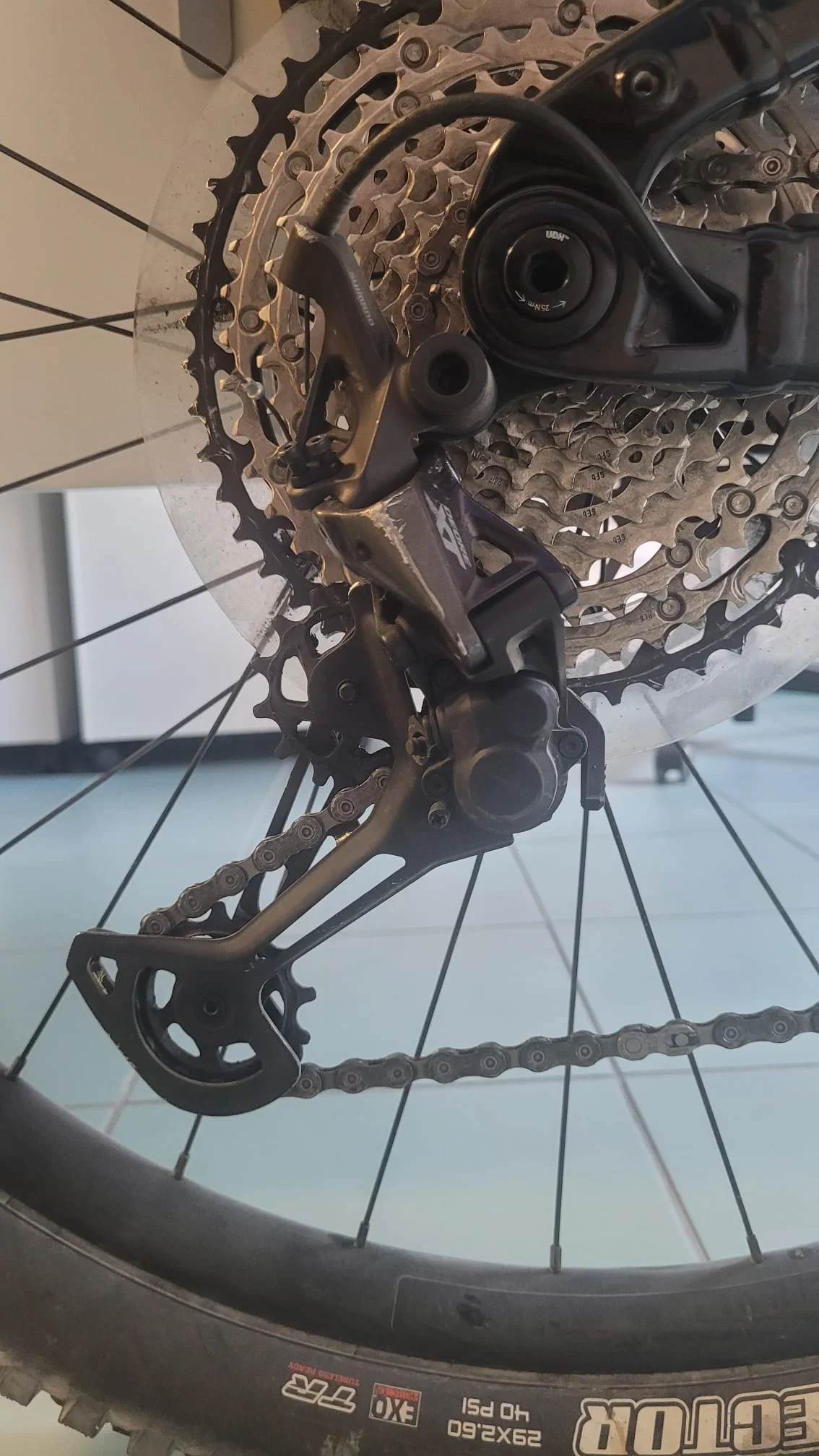
1) There's a small lever that I'd never noticed before. What is it for? How should it be set? Up or down (as it is)?
WhatsApp Image 2026-06-30 at 09.37.55.webp


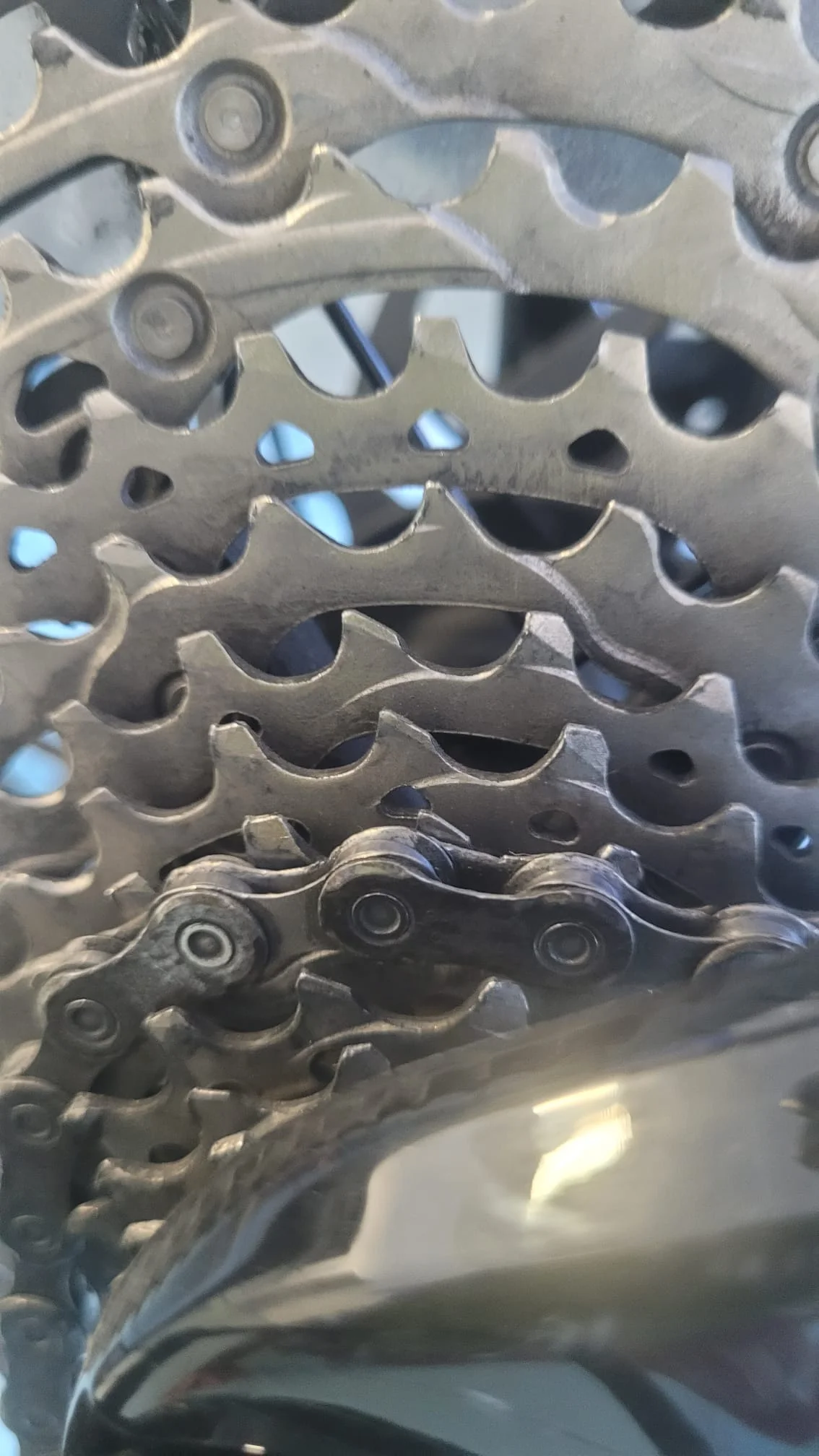
2) The cassette teeth look very uneven. Is the cassette simply worn out? If so, again, why did the problem only start after the service and not before?
WhatsApp Image 2026-06-30 at 09.37.54.webp


Any help would be greatly appreciated. Thanks!

WhatsApp Image 2026-06-30 at 09.37.54 (1).webp


WhatsApp Image 2026-06-30 at 09.37.55 (2).webp
 
Last edited:
⚡ EMTB Pro Go Pro — Living Intelligence Reports, exclusive discounts & ad-free Up to 25% off Peaty's, PEMBREE, Magicshine & more · Ad-free browsing · Pro badge See the deals →
Which is the B screw?
On Shimano derailleurs, the B screw adjusts the distance between the mech & the cassette. Adjusting it is involving & if you don't know where the screw is, the rest will be a challenge. You can look up the process on Youtube or take it back to the bike shop. However, the lever mentioned earlier is your clutch, whose purpose is to add tension to the chain. It appears the shop turned the clutch off, probably to remove the rear wheel & did not turn it back on.

Turning it on will likely improve the shifting & is the first thing you should do. The second thing is adjust the gears at the shifter by turning the barrel adjuster. Turn it away from you to tighten the gear cable & toward you to slacken it until you achieve smooth shifting. Only then should you move on to B screw adjustment.
 
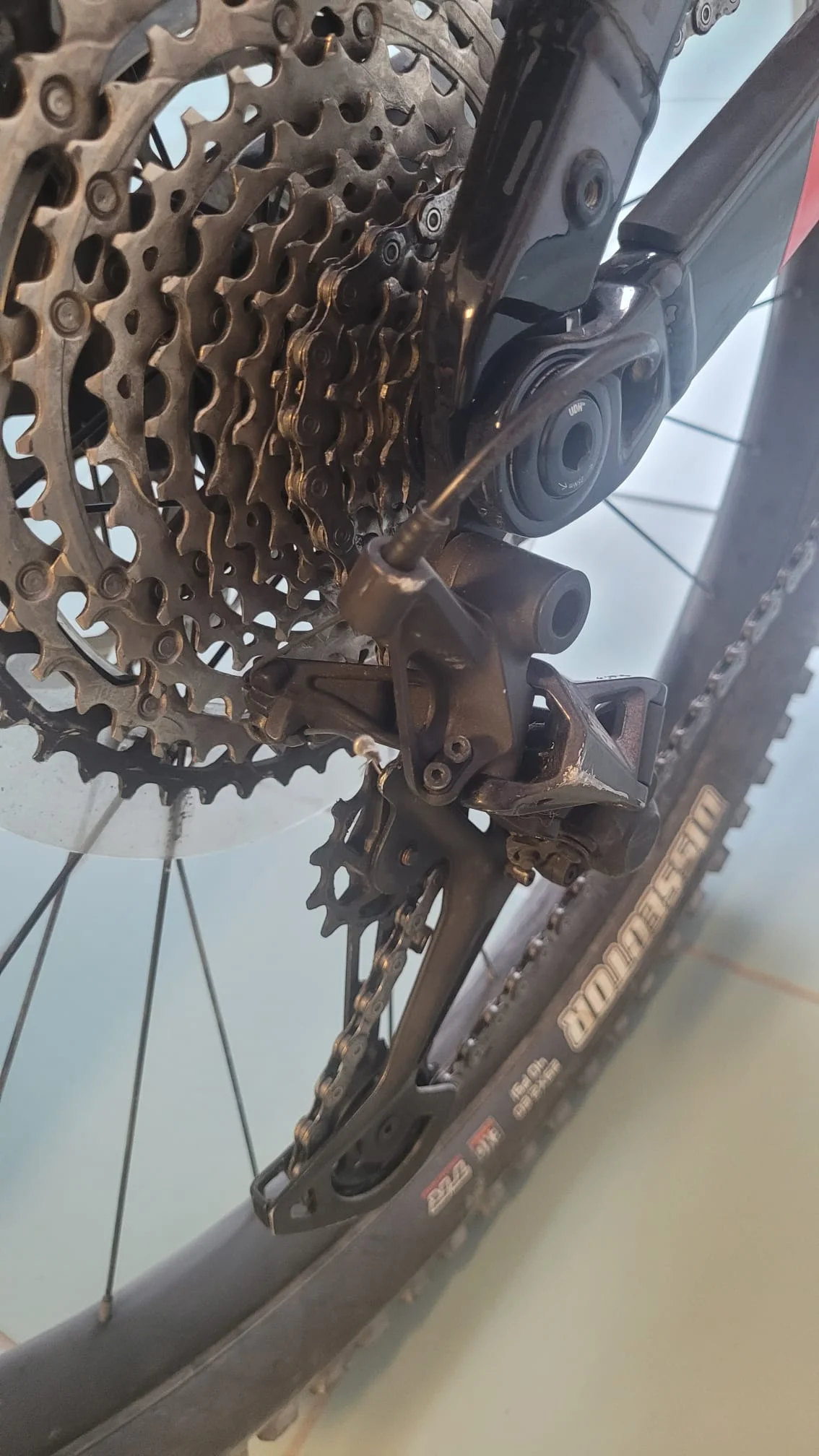
the B screw is the one by itself - easy to see with the long thread pushing against the derailleur hanger
the plastic lever is the clutch switch - you want it ON when riding
if it still slips it might be a worn cassette in the smaller gears
 
Newer shimano derailleurs have a mark showing the correct b tension. Just align your cassette with that mark and you're good to go.
 
The little lever is the clutch and it is to reduce the amount that the lower strand of chain whips up and down when riding over rough ground. If you look at photos of biikes going over rough ground (in bike mags for ex.) you can frequently see that the lower strand is in a horizontal "S" shape, albeit a bit stetched out. That loop in the chain under certain circumstances can reach the ring and come off. Chain devices were an early solution to that and still appear on bikes (I have one on my bike). If you push the lower mech arm towards the front of the bike, with the lever in the on or off position, you will feel the resistance to motion change. Because it stiffens the resistance to movement, it also makes the shifter a bit stiffer and some don't like that. The only time I notice is when the shifter cable needs renewing.

The chain does not look new, but if it was, I would propose that quite often, new chains do not run on old cassettes (depends upon how worn they are). Yes they work in the garage with a light load, but once you put pressure on the chain skips over the teeth. It is really quite disconcerting. Once you get to the stage where you are doing your own chain and cassette renewals, you need to know this. Always keep the old chain until you have run the new one for real. If the new one skips, your cassette is toast and you need to buy a new one. In the meantime, refit the old chain and run it and the cassette for a while longer. But not too long becasue worn chains also wear out the ring! So don't leave it too long before you fit a new cassette and refit the new chain.

Cassette teeth always look odd, even on when new! All the teeth look different to each other, and if you look carefully , some have ledges on the side of the teeth. Those ledges are shifting ramps that help the chain to move from one ring to the next. They are not on every tooth, but more widely spaced than that, 4 or 5 teeth approximately on the large rings. The teeth are different shapes to help that process. I once put a 20T single speed front ring on in place of a 20T granny on a triple ring, because it was all I could get. It worked fine except when I tried to shift into or away from it. All the teeth were the same and there were no shifting ramps.

That cassette is worn, I can see burrs on the teeth. Burrs are caused by heavy loads. The chain forces the metal of the tooth face out of the way and over the edge of the tooth, causing a characeristic burr. Those burrs can snag on the chain and impede smooth shifting. If you want to, you could file them off without damaging anything and that would improve shifting. But what has happened to the tooth face? The tooth face has had metal removed to form the burr and it gets hollow as a consequence. That hollowing will eventually form what is called a "shark fin". Shark fins are a characteristic of a badly worn gear. Shark finned teeth can hang on to the chain instead of allowing it to smoothly leave the gear, causing jams that can have you off or at least damage the gears, maybe snap a chain or even gouge the frame. But I can't see any shark fins in the photograph you have provided.

The pic below shows both burrs and shark fins. To my shame the old gear (at the front) was mine. It is from a triple gear and it was the granny ring. In my defence, it was a long time ago when I didn't know about this stuff. The shark fins are very distictive. Once you've seen them, never forgotten. The burrs are pretty obvious too.

granny1.webp


Other have assisted with the B-screw adustment. It is an important adjustment, so take care with it.

What I am interested to know is what has been done to the bike that would cause your problems? What problems did you have that prompted you to take the bike in for a service?

By the way, judging by the deep scratches, your mech looks to have had several impacts to it. On 11 and 12-speed gearing, the mech is closer to the ground and can receive more impacts. These can bend the mech hanger. The hanger is so short that it never looks bent (if it does you are in trouble!). But even a very small bend can cause the shifting to deteriorate and be unfixable by the usual adjustments to cable tension. You need a mech hanger gauge & adjustment tool. One tool does both. They can be expensive to buy, but they are very quick to use, so the LBS can do the check and fix very cheaply. They can cure seemingly intractable shifting problems. I never had to use a mechnhager tool until I got into 11 and then 12 speed gears. After 3 lots of adjustments by the LBS, at £10-£15 per go, I bought my own tool. Well worth the money!
 
The little lever is the clutch and it is to reduce the amount that the lower strand of chain whips up and down when riding over rough ground. If you look at photos of biikes going over rough ground (in bike mags for ex.) you can frequently see that the lower strand is in a horizontal "S" shape, albeit a bit stetched out. That loop in the chain under certain circumstances can reach the ring and come off. Chain devices were an early solution to that and still appear on bikes (I have one on my bike). If you push the lower mech arm towards the front of the bike, with the lever in the on or off position, you will feel the resistance to motion change. Because it stiffens the resistance to movement, it also makes the shifter a bit stiffer and some don't like that. The only time I notice is when the shifter cable needs renewing.

The chain does not look new, but if it was, I would propose that quite often, new chains do not run on old cassettes (depends upon how worn they are). Yes they work in the garage with a light load, but once you put pressure on the chain skips over the teeth. It is really quite disconcerting. Once you get to the stage where you are doing your own chain and cassette renewals, you need to know this. Always keep the old chain until you have run the new one for real. If the new one skips, your cassette is toast and you need to buy a new one. In the meantime, refit the old chain and run it and the cassette for a while longer. But not too long becasue worn chains also wear out the ring! So don't leave it too long before you fit a new cassette and refit the new chain.

Cassette teeth always look odd, even on when new! All the teeth look different to each other, and if you look carefully , some have ledges on the side of the teeth. Those ledges are shifting ramps that help the chain to move from one ring to the next. They are not on every tooth, but more widely spaced than that, 4 or 5 teeth approximately on the large rings. The teeth are different shapes to help that process. I once put a 20T single speed front ring on in place of a 20T granny on a triple ring, because it was all I could get. It worked fine except when I tried to shift into or away from it. All the teeth were the same and there were no shifting ramps.

That cassette is worn, I can see burrs on the teeth. Burrs are caused by heavy loads. The chain forces the metal of the tooth face out of the way and over the edge of the tooth, causing a characeristic burr. Those burrs can snag on the chain and impede smooth shifting. If you want to, you could file them off without damaging anything and that would improve shifting. But what has happened to the tooth face? The tooth face has had metal removed to form the burr and it gets hollow as a consequence. That hollowing will eventually form what is called a "shark fin". Shark fins are a characteristic of a badly worn gear. Shark finned teeth can hang on to the chain instead of allowing it to smoothly leave the gear, causing jams that can have you off or at least damage the gears, maybe snap a chain or even gouge the frame. But I can't see any shark fins in the photograph you have provided.

The pic below shows both burrs and shark fins. To my shame the old gear (at the front) was mine. It is from a triple gear and it was the granny ring. In my defence, it was a long time ago when I didn't know about this stuff. The shark fins are very distictive. Once you've seen them, never forgotten. The burrs are pretty obvious too.

View attachment 187860

Other have assisted with the B-screw adustment. It is an important adjustment, so take care with it.

What I am interested to know is what has been done to the bike that would cause your problems? What problems did you have that prompted you to take the bike in for a service?

By the way, judging by the deep scratches, your mech looks to have had several impacts to it. On 11 and 12-speed gearing, the mech is closer to the ground and can receive more impacts. These can bend the mech hanger. The hanger is so short that it never looks bent (if it does you are in trouble!). But even a very small bend can cause the shifting to deteriorate and be unfixable by the usual adjustments to cable tension. You need a mech hanger gauge & adjustment tool. One tool does both. They can be expensive to buy, but they are very quick to use, so the LBS can do the check and fix very cheaply. They can cure seemingly intractable shifting problems. I never had to use a mechnhager tool until I got into 11 and then 12 speed gears. After 3 lots of adjustments by the LBS, at £10-£15 per go, I bought my own tool. Well worth the money!
So many things in this comment that I’m not fully aware about… :oops: Thanks a lot, @steve_sordy! To be honest, I will need to go through the information a few more times to properly digest it. That said, just to answer a few of the points you raised:
  1. No, the chain has not been replaced. It’s still the original one, together with the cassette and the rest of the drivetrain. I’ve now done over 2,200 km on this e-MTB. It may not be the best bike in the world, but it has been very reliable and solid.
  2. When I was living in the Canary Islands, I used to ride quite a lot on very rough terrain—sometimes on trails that weren’t really suitable for an e-MTB. I never had any major impacts, just a couple of minor ones at low speed while climbing. That’s likely what caused the marks you spotted.
  3. I brought the bike to the workshop for several issues: motor noise, brake pads and oil replacement, a rear wheel misalignment that was causing some rubbing against the mudguard under heavy torque, and a few minor things like a broken Kiox clip after a small incident. Overall, it was hardly worth the time and effort to fix everything at home. But the drivetrain itself was working perfectly, never had a single issue. I assume they may have partially disassembled the bike for a more thorough cleaning.
I’ll take a look at the "mech hanger", but I need to better understand exactly what it is. My main limitation at the moment is the lack of space in the garage of my current house, which I hope to sort out before the end of this year.

P.S: The workshop let me know that the bike is ready for pickup. I’ll call them later to find out exactly what they’ve done. The staff seem competent (they’re very well regarded here), although they can sometimes be a bit brief when you ask for explanations.
 
This is the confusing part.... they've 'serviced' it ? In what context ? I can see what you've written above, but then i'm still pretty confused.

Their 'service' and mine, seems to differ.
 
Just called the shop: they "regulated tuned the drivetrain gears" and the problem, they said, disappeared. I don't have any further detail by now...
 
Last edited:
Just called the shop: they "regulated the drivetrain" and the problem, they said, disappeared. I don't have any further detail by now...
I'm not sure what regulated means either...
but, I think you need to prepare for buying a new cassette and chain sometime soon...
n.b. you seem to have got a LOT of miles from 1 chain + just 1 chain for those miles will likely mean the cassette won't work with a new chain.
 
I'm not sure what regulated means either...
but, I think you need to prepare for buying a new cassette and chain sometime soon...
n.b. you seem to have got a LOT of miles from 1 chain + just 1 chain for those miles will likely mean the cassette won't work with a new chain.
sorry, I am not an English speaker as a first language, and traslated the italian "abbiamo regolato il cambio" quite literally. Actually it should have been "We tuned the bike's gears"

Yes, I will change chain AND cassette soon.
 
I think it means adjusted, the op's first language isn't English. The :unsure: means any good bike shop should at the very least check for chain wear since a chain with over 2000km on it is almost certain to be worn past the point of replacement & an obvious cause of skipping.
 
I think it means adjusted, the op's first language isn't English. The :unsure: means any good bike shop should at the very least check for chain wear since a chain with over 2000km on it is almost certain to be worn past the point of replacement & an obvious cause of skipping.
I agree with you in general, but explain this: why my e-MTB didn't show any sign of skipping before this service, and only after?
 
why my e-MTB didn't show any sign of skipping before this service, and only after?
Could be coincidence, could be the components worn into each other & disturbed by the bike shop but it doesn't matter, not everything requires an answer, the bike shop should as a matter of routine, checked & replaced the chain if required, they seem not to have done so.
 
Could be coincidence, could be the components worn into each other & disturbed by the bike shop but it doesn't matter, not everything requires an answer, the bike shop should as a matter of routine, checked & replaced the chain if required, they seem not to have done so.
thanks for the suggestion. I will ask about that to them when I will get my e-bike back.
 
Could be coincidence, could be the components worn into each other & disturbed by the bike shop but it doesn't matter, not everything requires an answer, the bike shop should as a matter of routine, checked & replaced the chain if required, they seem not to have done so.
I don't think it's a coincidence. The difference between before and after servicing was way too strong.

My guess is that they disassembled the drivetrain while cleaning the motor assembly and then reassembled it without checking that everything (B-gap, chain wrap and tension, and the rest of the drivetrain setup) was properly adjusted.

And sorry, but failures should always lead to... maybe not a full explanation, but at least an investigation, so you understand what went wrong. Not understanding what happened is the best way to ensure the same failures happen again.

Anyway, thanks very much everyone for your comments, guys! I learned a lot here...
 
Last edited:
And sorry, but failures should always lead to... maybe not a full explanation, but at least an investigation, so you understand what went wrong. Not understanding what happened is the best way to ensure the same failures happen again.
I kind of agree but you haven't experienced a failure, your drivetrain has shifted from working fine to working but with problems. It's what drivetrains do, there are endless threads on the subject in here. What you could do is spend time learning how they work, how to adjust them for best performance, their weaknesses & failure points. That way you wouldn't need a shop nor a thread every time something happens to your bike. Youtube is a digital Narnia for this stuff, there are endless tutorials on how to look after bikes, why not watch a few of them instead of coming here for advice & then questioning it?!
 
My guess is that they disassembled the drivetrain while cleaning the motor assembly and then reassembled it without checking that everything (B-gap, chain wrap and tension, and the rest of the drivetrain setup) was properly adjusted.
There would be no need to guess if you learned how drive trains work. Got to be less complicated than astronomy? ;)
 
I hope that’s a gum shield the rider in the photo is wearing. Otherwise the state of his cassette teeth is the least of his dental problems…
 
Keep reading
    Browse all

    Similar Threads

    Community Stats

    Since 2018
    677K
    Messages
    42,155
    Members
    Join 30,000+ Riders, it's free!
    Back
    Top