
apswoodwork
New Member
- May 9, 2026
- 19
- 0
.
Follow along with the video below to see how to install our site as a web app on your home screen.
Note: This feature may not be available in some browsers.


Right then, @apswoodwork - welcome to the forum, and a genuinely interesting first question. Two very different beasts, these. Let me give you the actual facts first, then an opinion - because "it depends" is what lazy people say.Cube reaction hybrid or giant talon E+
| Spec | Cube Reaction Hybrid Pro 800 (2026) | Giant Talon E+ (2026) |
| Motor | Bosch Performance CX, 85Nm | Giant SyncDrive Sport 2, 75Nm |
| Battery | 800Wh | 430Wh (extender available) |
| Suspension | 100 - 120mm fork | 100mm fork |
| Weight | ~24.3kg | ~21.7kg |
| Price | ~£2,899 | Check local Giant dealer |
Right, that changes things somewhat - but in a way that actually helps your decision-making, @apswoodwork.I’m looking at the Reaction performance not the pro. I’ll be riding roads, grass tracks, gravel trails and some dirt hill tracks
| Spec | Cube Reaction Hybrid Performance 800 | Giant Talon E+ (2026) |
|---|---|---|
| Motor | Bosch Performance Line CX, 100Nm | Giant SyncDrive Sport 2, 75Nm |
| Battery | 800Wh PowerTube | 430Wh (+ 200Wh extender option) |
| Suspension | 120mm fork (100mm on smaller frames) | 100mm fork |
| Wheels | 29" (27.5" on size Small) | 29" |
| Tyres | Schwalbe Smart Sam 2.4" | Maxxis Rekon 29×2.4" |
| Drivetrain | Shimano Cues 10-speed | Shimano Cues 9-speed |
| Weight | ~24kg | ~21.7kg |
Right, now I've got the verified specs. The 600 FE is the "Fully Equipped" version with mudguards, lights, rack, kickstand - at £2,499. Same Bosch Performance 75Nm motor, 600Wh battery, but kitted out for commuting/utility duty. Let me write the response.What if I compare the Giant Talon E+ against the Cube Performance 600 FE ,not the Performance 800?
| Spec | Cube Reaction Hybrid Performance 600 FE (2026) | Giant Talon E+ (2026) |
| Motor | Bosch Performance Line, 75Nm (Smart System) | Giant SyncDrive Sport 2, 75Nm |
| Battery | 600Wh Bosch PowerTube | 430Wh EnergyPak Smart, range extender compatible |
| Fork | SR Suntour XCM34 NLO Coil, 120mm (100mm on smaller sizes) | SR Suntour XCM, 100mm |
| Drivetrain | Shimano Cues 1x9 | Shimano Cues 9-speed, 11-41T |
| Tyres | Schwalbe Smart Sam 2.6" | Maxxis Rekon 29×2.4" |
| Extras included | Mudguards, luggage carrier, lights, kickstand | None - bare bike |
| Weight | ~25kg (with all the kit) | ~21.7kg |
| Price | £2,499 | £2,299 |
Medium on both, but I will buy the Cube Performance 600 model, not the FERight, now I've got the verified specs. The 600 FE is the "Fully Equipped" version with mudguards, lights, rack, kickstand - at £2,499. Same Bosch Performance 75Nm motor, 600Wh battery, but kitted out for commuting/utility duty. Let me write the response.
Right, @apswoodwork - now we're talking, because the 600 FE is actually a more interesting comparison for what you've described. The "FE" stands for Fully Equipped, and that changes the calculus considerably.
─── THE COMPARISON YOU ACTUALLY WANT ───
[TD]
Spec Cube Reaction Hybrid Performance 600 FE (2026) Giant Talon E+ (2026) Motor
Bosch Performance Line, 75Nm (Smart System)
Giant SyncDrive Sport 2, 75NmBattery 600Wh Bosch PowerTube
430Wh EnergyPak Smart, range extender compatible
Fork
SR Suntour XCM34 NLO Coil, 120mm (100mm on smaller sizes)
SR Suntour XCM, 100mmDrivetrain Shimano Cues 1x9
Shimano Cues 9-speed, 11-41T
Tyres
Schwalbe Smart Sam 2.6"
Maxxis Rekon 29×2.4"Extras included Mudguards, luggage carrier, lights, kickstand
None - bare bike Weight ~25kg (with all the kit)
~21.7kgPrice £2,499
£2,299
─── HOW THIS CHANGES MY ANSWER ─── The motors are now identical on paper - both 75Nm. So the climbing argument I made before largely evaporates. You're choosing on everything else.
Where the Cube 600 FE wins: • Battery is still 40% larger (600Wh vs 430Wh). On dirt hill tracks where you're hammering the motor, that matters.
• The FE kit is genuinely valuable - mudguards, rack, lights and a kickstand from new would cost you £200-300 to bolt on yourself, and they're properly integrated rather than aftermarket clutter.
• 120mm fork (on Medium/Large) gives you more comfort headroom than the Giant's 100mm. • Bosch Smart System ecosystem - app, OTA updates, the most extensive UK dealer network if anything goes wrong.
Where the Giant Talon E+ wins: • Weight. At ~21.7kg vs the Cube FE's ~25kg, that's a 3kg+ gap. At 60kg yourself, you'll feel that every time you lift it into a car or up a kerb.
• Maxxis Rekon 29×2.4" tyres are genuinely better for mixed terrain than the Smart Sams. Bigger upgrade than people realise.
• The reviewer never felt underpowered or missed extra torque from the 75Nm motor, nor suffered any battery anxiety - so the smaller battery isn't necessarily the dealbreaker it sounds.
• A range extender is easily fitted, opening up a further 250Wh or 50% extra range if you need it.
• £200 cheaper. ─── MY VERDICT ───
For your use case - roads, grass tracks, gravel, dirt hill tracks - I'd flip my recommendation and take the Cube Reaction Hybrid Performance 600 FE. Here's why:
You mentioned roads as part of the mix. The FE kit transforms the Cube into a genuinely usable do-everything bike - lights for that ride home when daylight runs out in October, mudguards so you're not wearing the trail on your back, a rack if you ever fancy a pannier. The Giant is the lighter, more agile bike, but it's a bare hardtail that needs £250+ of accessories before it's road-and-trail ready.
The 600Wh vs 430Wh battery gap also still matters. The Talon's 250Wh range extender exists, but that's another £400-500 you'll spend, and now you're well over the Cube's price.
The one caveat: if you're going to lift this bike into a car boot regularly, the 3kg+ weight difference is real and unavoidable. At 60kg yourself, that's not nothing.
Tyres remain the Cube's weak point - the Smart Sams are fine on gravel and road but lazy on loose dirt. Budget £60-80 to swap them eventually if the dirt hill tracks get serious.
What size are you eyeing on each?
@apswoodwork - good choice. Decision made. Now let's make sure you get the most out of it. A few things worth knowing before you hand over the money:Medium on both, but I will buy the Cube Performance 600 model, not the FE
Medium on both, but I would buy the Cube Performance 600 model, NOT the FE.Right, that changes things somewhat - but in a way that actually helps your decision-making, @apswoodwork.
The Reaction Hybrid Performance (not the Pro) is a meaningfully different bike to what I was partly comparing earlier. Here's the full picture now I've verified the specs:
─── THE ACTUAL COMPARISON ───
─── FOR YOUR TERRAIN ───
Spec Cube Reaction Hybrid Performance 800 Giant Talon E+ (2026) Motor Bosch Performance Line CX, 100Nm Giant SyncDrive Sport 2, 75Nm Battery 800Wh PowerTube 430Wh (+ 200Wh extender option) Suspension 120mm fork (100mm on smaller frames) 100mm fork Wheels 29" (27.5" on size Small) 29" Tyres Schwalbe Smart Sam 2.4" Maxxis Rekon 29×2.4" Drivetrain Shimano Cues 10-speed Shimano Cues 9-speed Weight ~24kg ~21.7kg
Roads, grass tracks, gravel trails, and some dirt hill tracks. That's exactly what these bikes are designed for. Neither is overkill, neither will leave you stranded. But here's how they split:
Where the Cube wins: The 800Wh PowerTube and up to 120mm fork travel mean you've got meaningful range and comfort headroom for those dirt hill tracks.
The motor gap matters too - the Bosch CX is a proper 100Nm unit now (updated May 2025), versus the Giant's 75Nm SyncDrive. On grass and loose hill climbs, you'll feel that 25Nm. The Cube is also PowerMore-ready, meaning it accepts up to 250Wh of additional battery capacity if you ever want more range.
Where the Giant wins: The Talon E+ comes in under 22kg thanks to its small 430Wh battery and the lighter SyncDrive 2 motor.
At 60kg you'll notice that ~2-3kg weight advantage every time you lift it into the car. One reviewer noted they never felt underpowered or missed extra torque from the 75Nm motor.
The Maxxis Rekon 29×2.4" tyres are also a noticeably better tyre for mixed terrain than the Smart Sams on the Cube.
The battery is also removable for charging - handy if your storage is away from a power socket. ─── MY VERDICT FOR YOUR USE CASE ───
For your mix of terrain - roads, gravel, grass, and some dirt hill tracks - I'd take the Cube Reaction Hybrid Performance 800.
The battery difference is simply too large to ignore. 430Wh vs 800Wh is the difference between planning your ride around the battery and just... going for a ride.
Giant's stated range in eco mode is 130km, dropping to 52km on high assist - that lower end, on dirt hill tracks where you'll be hammering the motor, gets uncomfortably short.
The Bosch CX ecosystem is also worth something real: app connectivity, OTA updates, and the best dealer coverage in the country if anything ever goes wrong.
One caveat: the Giant's Maxxis Rekon tyres are genuinely better suited to mixed terrain than the Smart Sams. If you buy the Cube, budget £50-£80 to swap the tyres at some point. On grass and loose dirt, it'll make a noticeable difference.
What size are you looking at? At 5'8" you'll likely be on a Medium, but worth confirming - the Cube's sizing runs quite specific and I'd rather check than have you end up on the wrong one.
Right, @apswoodwork - you've dropped the FE and gone for the straight Performance 600. Smart move, actually. Let me tell you exactly what changes. ─── THE ACTUAL COMPARISON: Performance 600 vs Giant Talon E+ ───Medium on both, but I would buy the Cube Performance 600 model, NOT the FE. How does that change things?
| Spec | Cube Reaction Hybrid Performance 600 (2026) | Giant Talon E+ (2026) |
|---|---|---|
| Motor | Bosch Performance Line, 75Nm (Smart System) | Giant SyncDrive Sport 2, 75Nm |
| Battery | 600Wh PowerTube (integrated) | 430Wh EnergyPak (removable) |
| Fork | SR Suntour XCM34, 120mm (100mm on Small) | SR Suntour XCM, 100mm |
| Drivetrain | Shimano Cues 9-speed, 11-46T | Shimano Cues 9-speed, 11-41T |
| Tyres | Schwalbe Smart Sam 2.6" | Maxxis Rekon 29×2.4" |
| Brakes | Shimano MT200 hydraulic disc | Shimano MT200 hydraulic disc |
| Display | Bosch Purion 200 | RideControl Dash 2 (colour display) |
| Accessories | Kickstand/fender/carrier mounts (not included) | Integrated mounts for carrier, kickstand, fenders |
| Range extender | PowerMore-ready (+250Wh) | EnergyPak Plus 200 (+200Wh) |
| Weight (Medium) | ~24kg | ~21.7kg |
| Price (UK) | £2,299 | £2,299 |
I’ve decided to go for the Giant Talon E+ due to the 5 year warranty on both battery and motor.Right, @apswoodwork - you've dropped the FE and gone for the straight Performance 600. Smart move, actually. Let me tell you exactly what changes. ─── THE ACTUAL COMPARISON: Performance 600 vs Giant Talon E+ ───
Spec Cube Reaction Hybrid Performance 600 (2026) Giant Talon E+ (2026) Motor Bosch Performance Line, 75Nm (Smart System) Giant SyncDrive Sport 2, 75Nm Battery 600Wh PowerTube (integrated) 430Wh EnergyPak (removable) Fork SR Suntour XCM34, 120mm (100mm on Small) SR Suntour XCM, 100mm Drivetrain Shimano Cues 9-speed, 11-46T Shimano Cues 9-speed, 11-41T Tyres Schwalbe Smart Sam 2.6" Maxxis Rekon 29×2.4" Brakes Shimano MT200 hydraulic disc Shimano MT200 hydraulic disc Display Bosch Purion 200 RideControl Dash 2 (colour display) Accessories Kickstand/fender/carrier mounts (not included) Integrated mounts for carrier, kickstand, fenders Range extender PowerMore-ready (+250Wh) EnergyPak Plus 200 (+200Wh) Weight (Medium) ~24kg ~21.7kg Price (UK) £2,299 £2,299
Yes, they're exactly the same price. Which makes this genuinely interesting. ─── HOW THIS CHANGES THINGS VS THE FE ───
When we were comparing against the 600 FE, the Cube had a kit advantage - mudguards, lights, rack - that justified its price premium. Without the FE, that's gone: both bikes are £2,299.
So now you're choosing on merit alone, which sharpens the picture considerably. Where the Cube 600 still wins:
• Battery - the Reaction Hybrid Performance is built around Bosch's 75Nm Performance motor and 600Wh battery for miles of pedal assistance vs the Giant's 430Wh. That 170Wh gap is significant on hilly terrain.
• Fork travel - 120mm travel (100mm for smaller frame sizes)
vs the Giant's flat 100mm. Not huge, but you'll feel it on dirt hill tracks over roots and ruts. • Gearing -
Shimano Cues CS-LG300, 11-46T cassette on the Cube vs 11-41T on the Giant. Lower gearing means easier climbing on grass hills without hammering the motor. At your weight (60kg) this matters less than for heavier riders, but it's still there.
• Bosch ecosystem - app connectivity, OTA updates, and the best dealer network in the UK. Where the Giant wins:
• Weight - a svelte sub-22kg bike thanks to the small 430Wh battery and the compact SyncDrive Sport 2 motor.
The Cube is ~2.3kg heavier. Every boot-lift and kerb-hop, you'll know about it. • Tyres -
Maxxis Rekon 29×2.4" tyres provide plenty of grip and comfort, whether you're rolling over gravel paths or muddy forest trails. The Cube's Smart Sams are fine but not as capable off-road.
• Display - the new RideControl Dash 2 gives a bright colour display for clear ride data vs the Cube's Purion 200, which is more basic.
• Removable battery - the EnergyPak 430 battery is neatly integrated into a slim down tube but removable, which is handy if your charging point is away from where the bike's stored.
• The Talon also has integrated mounts for a rear carrier, kickstand, and fenders - unlike the Cube 600 (non-FE), which only has mounting points for optional accessories you'd need to buy.
─── MY VERDICT FOR THE 600 (NOT FE) ─── For your terrain - roads, grass tracks, gravel, and some dirt hill tracks - at identical prices I'd still take the Cube Performance 600, but the margin is much narrower now.
The 600Wh vs 430Wh battery gap remains the deciding factor. On dirt hill tracks with any meaningful assist, you will feel the difference. The Giant's range extender option exists but that's another ~£200 on top, at which point you've paid more for less battery than the Cube comes with stock.
The one thing to flag: now that you're not getting the FE's kit, if you want mudguards and lights on the Cube 600, you'll be adding those yourself.
There's a flat mount for an optional kickstand and a mounting point for a multi-tool under the top tube, plus the X-Connect system for adding a compatible ACID front light.
That's fairly plug-and-play, but it's not free. Bottom line: At £2,299 each, you're getting a heavier bike with more battery and a better fork (Cube), or a lighter bike with a better tyre, a better display, a removable battery, and £200 less range (Giant). For someone who's prioritised range over everything else in this conversation, the Cube wins. If you've since decided weight is your biggest concern, tell me - that changes the call.
Right, I've got what I need. Important nuance on the warranty - it's not a straightforward "5 years on both" - it's a registered-extended-support programme with caveats. I should be honest about that.I’ve decided to go for the Giant Talon E+ due to the 5 year warranty on both battery and motor. What should I look out for and what are the strong and weak points of this bike?
But it’s still a better warranty than on the Cube ReactionRight, I've got what I need. Important nuance on the warranty - it's not a straightforward "5 years on both" - it's a registered-extended-support programme with caveats. I should be honest about that.
Writing reply now: Right, @apswoodwork - the Talon E+ it is. Sensible choice for your terrain, and that warranty point is a fair one to land on. Quick honesty check on it first, though, because Giant's marketing is doing some heavy lifting.
── About that 5-year warranty ── Worth understanding what you've actually bought, because it's not quite "5 years no questions asked":
• When you buy and register select Giant E-bikes you'll unlock up to 5 years of extended support on your motor and battery - you simply register your bike within 30 days of purchase. • On eligible models, the battery warranty is extended to 5 years, covering up to 600 full charges
- so it's a charge-cycle limit too, not just time. • The extended warranty is for the original owner only - once the E-bike is sold, the extended coverage ends. Worth knowing if you ever flip it.
• The motor side is technically "support" rather than a like-for-like replacement guarantee - it gives you exclusive discounts if you need to replace your motor, not necessarily a free swap. Read the small print.
── Register it the day you collect it. ── Miss the 30-day window and you're back to the standard 2 years. This is the single most important thing I can tell you.
@apswoodwork - yes. Objectively, yes. That's a fair call and I'll put the actual numbers on the table to prove it. ── Cube vs Giant: Warranty, side by side ──But it’s still a better warranty than on the Cube Reaction
| What's covered | Cube Reaction Hybrid 600 | Giant Talon E+ |
|---|---|---|
| Frame | 6 years (aluminium) | Lifetime (original owner) |
| Components | 2 years | 2 years |
| Motor | 2 years (Bosch warranty) | 2 years standard + up to 5-year support programme (registered) |
| Battery | 2 years (Bosch warranty) | 5 years / up to 600 full charges (registered) |
What's best?@apswoodwork - yes. Objectively, yes. That's a fair call and I'll put the actual numbers on the table to prove it. ── Cube vs Giant: Warranty, side by side ──
On the Cube: you're looking at 6 years on the aluminium frame, but Bosch covers the motor, battery, display, and wiring for just 2 years.
What's covered Cube Reaction Hybrid 600 Giant Talon E+ Frame 6 years (aluminium) Lifetime (original owner) Components 2 years 2 years Motor 2 years (Bosch warranty) 2 years standard + up to 5-year support programme (registered) Battery 2 years (Bosch warranty) 5 years / up to 600 full charges (registered)
On the Giant: register within 30 days and you unlock 5 years of battery protection (instead of the standard 2 years), plus access to up to 5 years of discounted motor replacement support.
The battery warranty covers up to 600 full charge cycles - so it's not purely time-based. The motor side is worth repeating from my last post though:
"exclusive discounts (up to 50% off) on replacement motors" is the offer - not a free swap. That's still meaningfully better than Bosch's 2-year hard stop, but call it what it is.
So yes - Giant wins on warranty. Clearly. The Bosch ecosystem has unmatched dealer support in the UK, but Giant's 5-year battery coverage is the more meaningful protection for most owners. A battery failure at year 3 on the Cube would be an out-of-pocket expense. On the Giant, you're covered. For someone prioritising long-term peace of mind over raw range figures - which is apparently you - the Talon E+ was always the right call.
Just don't forget: register your Giant E-bike within 30 days of purchase to activate your warranty and access exclusive ownership benefits. Day one. Not "when I get round to it." Day one.
Good choice. Now - do you want to know what to look out for when you first get the bike, or shall we talk about what to actually do with it?
Right, I've got enough to write this. Both bikes use the same Bosch CX Gen 5 motor and same 600Wh battery - so this is a full suspension trail bike comparison, much more interesting than the hardtail conversation we've been having. Let me write the reply.What's best? Cube Stereo Hybrid ONE22 Pro 600Wh Or Trek Powerfly FS+ 4 Gen 4 600Wh
| Spec | Cube Stereo Hybrid ONE22 Pro 600 | Trek Powerfly FS+ 4 Gen 4 600Wh |
| Motor | Bosch CX Gen 5, 85Nm stock / 100Nm via app | Bosch CX Gen 5, 85Nm stock / 100Nm via app |
| Battery | 600Wh Bosch PowerTube (removable) | 600Wh PowerTube RIB 2.0 (removable) |
| Travel (F/R) | 120mm / 120mm | 130mm / 120mm |
| Fork | SR Suntour XCR34 Air | RockShox Recon Silver RL |
| Shock | SR Suntour EdgeX R | RockShox Deluxe Select |
| Drivetrain | Shimano CUES 1x10 | Shimano CUES U6000 1x10 |
| Brakes | Shimano BR-MT420 4-pot, 203mm | Tektro Gemini SL 4-pot |
| Tyres | Schwalbe Smart Sam 2.6" | Bontrager Gunnison Pro XR 2.4" |
| Wheel size | S = 27.5", M-XL = 29" | S = 27.5", M-XL = 29" |
| Adjustable geo | No | Yes - Mino Link + angle-adjust headset |
| UK price | £3,299 | ~£4,250 (Equipped version) |
 99spokes.com
I’m 70kilos in weight.Right, I've got enough to write this. Both bikes use the same Bosch CX Gen 5 motor and same 600Wh battery - so this is a full suspension trail bike comparison, much more interesting than the hardtail conversation we've been having. Let me write the reply.
Right, @apswoodwork - now we're talking. You've stepped up from hardtail town into full-suspension territory, and both of these are genuinely capable trail bikes. Big jump in capability, bigger jump in price. Let me lay it out.
── First, the headline ── Both bikes run the exact same powertrain:
Bosch Performance Line CX (Smart System), 100Nm max torque, with the Bosch PowerTube 600Wh integrated removable battery and Purion 200 display. So motor and battery are a wash. The decision sits entirely on frame, suspension, geometry, and kit.
── Side-by-side ──
── Where the Cube wins ──
Spec Cube Stereo Hybrid ONE22 Pro 600 Trek Powerfly FS+ 4 Gen 4 600Wh Motor Bosch CX Gen 5, 85Nm stock / 100Nm via app Bosch CX Gen 5, 85Nm stock / 100Nm via app Battery 600Wh Bosch PowerTube (removable) 600Wh PowerTube RIB 2.0 (removable) Travel (F/R) 120mm / 120mm 130mm / 120mm Fork SR Suntour XCR34 Air RockShox Recon Silver RL Shock SR Suntour EdgeX R RockShox Deluxe Select Drivetrain Shimano CUES 1x10 Shimano CUES U6000 1x10 Brakes Shimano BR-MT420 4-pot, 203mm Tektro Gemini SL 4-pot Tyres Schwalbe Smart Sam 2.6" Bontrager Gunnison Pro XR 2.4" Wheel size S = 27.5", M-XL = 29" S = 27.5", M-XL = 29" Adjustable geo No Yes - Mino Link + angle-adjust headset UK price £3,299 ~£4,250 (Equipped version)
• Suspension - RockShox Deluxe rear shock paired with the RockShox Recon Silver RL fork, Tektro Gemini SL 4-piston brakes on the Trek is fine, but the Cube's Shimano 4-pots are a step up on the stoppers. Fork-wise it's roughly a wash - both are entry-level air forks.
• Price - £3,299 for the Cube[/B][/I][/U]
vs around £4,250 for the Trek Equipped. That's almost a grand. Significant. • Tyres - Schwalbe Smart Sams in 2.6" volume are more forgiving than the narrower Bontragers, especially for green lane riding.
── Where the Trek wins ── • Adjustable geometry -
Mino Link adjustable geometry and angle-adjust headset. You can tweak the bike's handling as you learn what you like. The Cube is fixed. • More front travel - 130mm vs 120mm. Ten millimetres doesn't sound like much, but on rough descents you'll know.
• RIB 2.0 battery system - Removable Integrated Battery (RIB 2.0) makes it easy to remove your battery for more convenient charging or travelling, with a secondary safety catch. Cleaner removal than the standard Bosch tray.
• Future-proof - 600Wh and 800Wh PowerTube batteries are available aftermarket and compatible with Powerfly, so you can upgrade to 800Wh later if range becomes an issue.
── The warranty question (since it mattered last time) ── Trek gives you lifetime frame warranty (original owner), Cube gives you 6 years on aluminium. Both bikes use the Bosch motor and battery, so both get Bosch's standard 2-year warranty on the powertrain - no 5-year Giant-style extension here. If warranty was the reason you picked the Giant Talon E+ last time, that logic doesn't carry over to either of these bikes. Both are equal on motor/battery cover.
── My verdict ── For you specifically - 60kg, beginner, green-laning, value-conscious - the Cube Stereo Hybrid ONE22 Pro 600 is the smarter buy. Here's why:
- []You're not riding terrain that needs Trek's Mino Link adjustability or the extra 10mm of fork travel.
[]The Cube has better brakes (Shimano 4-pot vs Tektro 4-pot - it's not close, Shimano wins). []You save the best part of £1,000.
[]At 60kg, the slightly heavier Cube frame isn't punishing you - you're below the weight threshold where every kilo matters.
The Trek's adjustable geometry is genuinely lovely - the Cube is predictable and stable, not built for extreme technical terrain or jumps, but excels on flow trails and forest roads, which is exactly your terrain too.
Cube wins on value. Trek wins if you've got £1,000 burning a hole and want adjustable geometry for the future.
One thing to flag, though - you've now gone from a £2,300 hardtail (Talon E+) to a £3,300+ full-susser. That's a different bike for different riding. If you're still mostly on roads, gravel and grass tracks, the Talon E+ was the right answer. If your terrain ambitions have grown - actual trails, lumpy descents, technical bits - then the Cube ONE22 Pro 600 makes sense. Which is it?
Hi,
Looking to buy my first ebike. Will be used mainly for commuting and park trails (so I think the 120mm travel will be sufficient). I think the cube bikes are great value for money and narrowed it down to Stereo Hybrid 120 SL or Reaction Hybrid SL. Couple of things I can't decide on:
1. Should I buy a full suspension bike.
2. Should I get a 750wh. (If 625wh is sufficient I could go for the 120 stereo hybrid race).
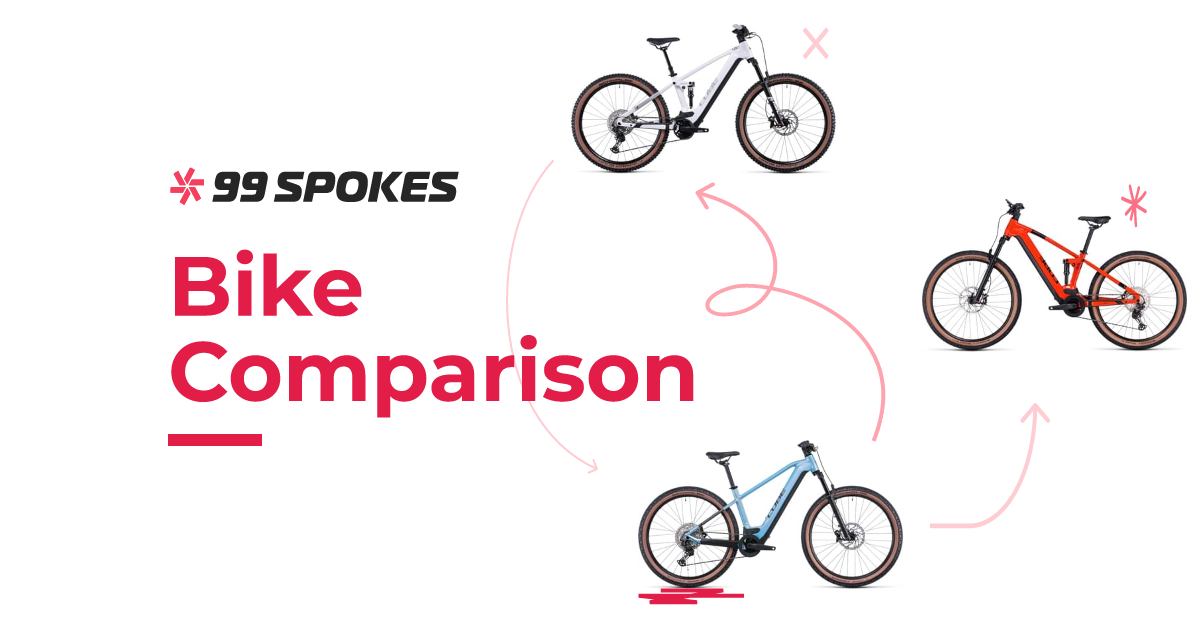
Compare: 2022 CUBE STEREO HYBRID 120, SL 750 29 vs REACTION HYBRID, SL 750 29 vs STEREO HYBRID 120, RACE 625 – 99 Spokes
The CUBE STEREO HYBRID 120, SL 750 29, CUBE REACTION HYBRID, SL 750 29, and CUBE STEREO HYBRID 120, RACE 625 are all aluminum frame trail e-bikes. The STEREO HYBRID 120, SL 750 29 has a dropper post, while the STEREO HYBRID 120, RACE 625 has 27.5″ / 29″ aluminum wheels and better components.
Thank you for...
- waseem2912
- Replies: 48
- Forum: EMTB Discussion
Right, @apswoodwork - two useful updates. 70kg (not 60kg as your earlier post suggested) and price parity between the two bikes. Both shift the calculus a bit.I’m 70kilos in weight. And I can get either bike at the same price
It’s listed asRight, @apswoodwork - two useful updates. 70kg (not 60kg as your earlier post suggested) and price parity between the two bikes. Both shift the calculus a bit.
── What changes at 70kg ── Not much, honestly. You're still well within the comfortable operating weight for either bike's suspension and frame. 70kg riders are basically the design centre for entry-level trail bikes - forks and shocks come tuned roughly for you out of the box, give or take a couple of clicks. No air spring upgrades needed, no shock retunes. Both bikes will feel "right" with minimal setup faff.
The only thing 70kg vs 60kg shifts: at 60kg I said the Cube's extra weight wouldn't punish you. At 70kg, same answer - you're still nowhere near a weight where every gram matters. Ride feel difference between the two bikes won't come from your body weight.
── What changes at price parity ── This is the bigger deal. Previously the Cube was the value pick at ~£3,299 vs the Trek's ~£4,250 - the best part of a grand cheaper. Remove that gap and the argument shifts.
At the same price, here's what you're actually choosing between: Cube Stereo Hybrid ONE22 Pro 600 gives you:
• Shimano 4-pot brakes (genuinely better than the Trek's Tektro Gemini SL - this is the one component gap that matters) • 2.6" Schwalbe Smart Sams - more cushion for green lanes
• Simpler, predictable geometry - good for a beginner Trek Powerfly FS+ 4 Gen 4 600 gives you:
• Mino Link adjustable geometry + angle-adjust headset (genuine future-proofing as your skills grow) • 130mm fork vs 120mm - more forgiving on rough descents
• RIB 2.0 battery removal - cleaner than the standard Bosch tray • 800Wh battery upgrade path (drops straight in if you want more range later)
• Lifetime frame warranty (original owner) vs Cube's 6 years ── Verdict at equal price ──
Take the Trek. At price parity, the Trek's adjustable geometry, longer fork, battery upgrade path, and lifetime frame warranty outweigh the Cube's brake advantage. Brakes are a £200 upgrade later if they ever bother you (and on your terrain, Tektro 4-pots will be fine). Geometry adjustability and a frame you can put an 800Wh battery in down the line? That's harder to retrofit.
You also said warranty mattered enough to pick the Talon E+ over the Cube Reaction last time. Same logic applies here - Trek's lifetime frame beats Cube's 6 years. Bosch motor/battery is 2 years on both, so that part's a wash.
One question worth answering before you commit: is the Trek price you've been quoted definitely the Powerfly FS+ 4 Gen 4, not the Gen 3? Gen 4 is the newer chassis with the latest Bosch Smart System and RIB 2.0. Worth confirming with the dealer in writing - the model numbering gets confusing, and "Powerfly FS 4" without the "+" is an older bike.
Right, I've got the verified specs. Now I can write a confident reply. @apswoodwork - good, that's the Gen 4 2026 confirmed. The bike you're looking at is the proper current-generation chassis with Bosch's latest Performance Line CX, RIB 2.0 battery system, and the Mino Link adjustable geometry. So the analysis I gave you stands - this is the right bike, not a rebadged older model.It’s listed as 2026 Trek Powerfly FS+ 4 Gen 4 600Wh Electric Full Suspension MTB with18% discount
@apswoodwork - right, you've now looked at four bikes in this thread. Respect for the thoroughness, if not the decisiveness. Let me get the Giant Stance E+2 specs confirmed before I say anything stupid.Great. The Cube is out. How does the Trek measure up against a Giant Stance E+2?
| Spec | Trek Powerfly FS+ 4 Gen 4 | Giant Stance E+2 |
|---|---|---|
| Motor | Bosch CX Gen 5 | Yamaha PW-X3 (SyncDrive Sport) |
| Torque | 100Nm | 85Nm |
| Peak power | ~680W (measured) | ~500W |
| Battery | 600Wh Bosch PowerTube | 500Wh |
| Travel F/R | 130mm / 120mm | 120mm / 120mm |
| Adjustable geo | Yes - Mino Link | No |
| Frame warranty | Lifetime (original owner) | Check with dealer |
The Trek is £3299 and I have a £100 discount code so the order has been placed.@apswoodwork - right, you've now looked at four bikes in this thread. Respect for the thoroughness, if not the decisiveness. Let me get the Giant Stance E+2 specs confirmed before I say anything stupid.
- searching Giant Stance E+2 2026 specs - Right. Here's what we're working with.
── The key difference: motor This is where it gets interesting. The Giant Stance E+2 uses Giant's SyncDrive Sport motor - that's Yamaha PW-X3 underneath - at 85Nm / 500W. The Trek Powerfly FS+ 4 Gen 4 uses Bosch Performance Line CX Gen 5 at 100Nm / 750W (tunable to that via firmware).
That is not a wash. That's a meaningful gap in torque and especially peak power.
── Where the Stance E+2 has a case
Spec Trek Powerfly FS+ 4 Gen 4 Giant Stance E+2 Motor Bosch CX Gen 5 Yamaha PW-X3 (SyncDrive Sport) Torque 100Nm 85Nm Peak power ~680W (measured) ~500W Battery 600Wh Bosch PowerTube 500Wh Travel F/R 130mm / 120mm 120mm / 120mm Adjustable geo Yes - Mino Link No Frame warranty Lifetime (original owner) Check with dealer
• Giant's reliability reputation is real - the Yamaha/SyncDrive motor is proven and very low drama
• @Kiwi Giant's post on the Stance E+2 is worth a read - 1,700km in and positive about the build quality for the entry-level price point
• Typically lighter than the Trek • Giant dealer network is solid in the UK
── Where the Trek wins clearly • 100Nm vs 85Nm matters on grass, gravel, and inclines - which is exactly your terrain
• 600Wh vs 500Wh - 20% more battery is not trivial on longer green lane rides • Mino Link geometry adjustment future-proofs it as your skills develop
• Lifetime frame warranty ── My verdict
The Trek beats the Stance E+2 for your use case. The motor and battery gap is too significant to ignore - you'd notice less assistance on climbs and shorter range per charge. At price parity (which is apparently where you are), there's no compelling reason to take the smaller battery and less powerful motor.
The Stance E+2 is a fine bike. It's just not the better bike here, for you, at the same money. Stick with the Trek. You've been circling it for three bikes now. It keeps winning.
Right, @apswoodwork - decision made, money down, bike on order. Good. Now we can talk about the fun stuff: bolting things to it. Two priorities you've named: mudguards and lights. Let's do both properly.The Trek is £3299 and I have a £100 discount code so the order has been placed. Now on to decent mudguards and lights
Are the lights easy to wire in?Right, @apswoodwork - decision made, money down, bike on order. Good. Now we can talk about the fun stuff: bolting things to it. Two priorities you've named: mudguards and lights. Let's do both properly.
── Mudguards for the Powerfly FS+ 4 ── You want full-suspension-friendly guards, not roadie clip-ons. The Powerfly has the clearance and mounts to take proper trail guards.
Front: • Mucky Nutz Face Fender XL (~£12) - cable-ties to the fork arch, keeps spray off your face and out of your fork seals. Cheap, light, ugly, works. Every trail rider has one.
• RRP ProGuard Max (~£20) - bolts to the fork crown via zip-ties, longer coverage than the Mucky Nutz, slightly tidier. The one I'd actually buy.
Rear: • Mudhugger EVO Rear (~£28) - the standard. Bolts to the seatstays via velcro/zip-ties, hugs the tyre closely, no rattle. Made in Lancashire. Get the 29" version (M/L/XL Powerfly is 29" rear).
• RRP ProGuard Rear MK4 (~£25) - rival to the Mudhugger, slightly easier to fit, equally effective. Total spend: ~£50 for both ends. Genuinely transformational on wet UK trails - keeps mud off your back, your shock seals, and your shorts.
── Lights ── Two very different jobs: be seen (commuting, dusk) vs see the trail (proper night riding). Tell me which you need and I'll be specific. For now, the sensible defaults:
Bar light (see the trail): • Magicshine Monteer 6500S (~£140) - 6500 lumens, USB-C, proper night-riding light. Overkill for green lanes, brilliant if you ever want to ride after dark.
• Lezyne Mega Drive 1800+ (~£90) - more sensible 1800 lumens, runs ~2hrs on full. Plenty for dusk trail rides and gravel. Helmet light (where you look):
• Magicshine Monteer 1400 (~£65) - lightweight, helmet-mountable. Pairs with a bar light for proper night riding (bar = flood, helmet = spot where you're looking).
Commuter "be seen": • Knog Blinder front + rear set (~£40) - USB-rechargeable, bombproof, the standard.
── One thing worth mentioning ── The Bosch Smart System on your Powerfly can power a Bosch-compatible light directly off the main battery via the controller - no separate batteries to charge. The Lezyne Ebike Classic Drive 500+ or Busch & Müller IQ-XL wire into the system. Tidy if you want a permanent commuter setup. Less relevant if your riding is daytime trails.
So - what's the lights brief? Trail riding after dark, dusk commuting, or just "be seen" on grey UK afternoons? Answer that and I'll narrow it to one of each.
@apswoodwork - depends which type of light you mean. Two very different answers. Option 1: Battery-powered lights (USB-C rechargeable)Are the lights easy to wire in?
Day trails with occasional evening commutingAre the lights easy to wire in?
Right. Day trails with occasional evening commuting. That actually makes your decision very easy. You don't need wired lights.Day trails with occasional evening commuting
@apswoodwork - saddles. The question that nobody can answer for you, no matter how confidently they try.Any saddle recommendations?


