Using car carrier in the rain

Wollemi

New Member
Joined
Sep 26, 2025
Messages
1
Reaction score
0
Location
Wharfedale
We have for years used a tow ball mounted bike carrier, but now have some nice new e-bikes - Trek Powerfly with Bosch motors. Bosch say not to carry e-bikes on a car carrier in the rain as the air movement at speed can force water past the seals.
Is this a real concern? Or are they just warning about it cover their backs?

We live in the UK where there is always a chance it might rain.

It would great to hear from people who have carried e-bikes on carriers, either roof or tow hitch/ball in the rain - and did this cause you any issues.


Did you do anything to protect your bike(s) in anyway?

Some say to take the battery out, but if I do that the contacts inside the bike are exposed to the weather (there no cover over the battery compartment on these bikes, just a rubber gasket around the battery.

Thanks
 
⚡ EMTB Pro Go Pro — exclusive discounts & ad-free Peaty's 25% off & more · Ad-free browsing · Pro badge See the deals →
I have used bike carrier only in good weather, if it rains I put the bike inside the car. Which makes things bit awkward 😂
 
I would be worried with the oils and debris blasting into the rotors, brake pads, bearings, motor compartment, etc.

It was suggested here that plastic bags be used, to cover some components, during wet road conditions.
 
I suspect the way in which whatever vehicle you use, deals with the airflow at the back of the vehicle will make a difference to how "sheltered" or not the bike is..........as well as the speed of the vehicle in foul weather.
 
I've been using towball/hitch racks for years with MTB's and don't think anything of whether it's raining or not - with my EMTB, I do have a couple of concerns about things like whether the controller on the handlebars might get affected by rain hitting it at 80-100km/h, but I haven't had any issues to date.
 
Thing about water getting past the seals is you don't have a problem until you do. And when you do, it's going to be spendy.
 
We have for years used a tow ball mounted bike carrier, but now have some nice new e-bikes - Trek Powerfly with Bosch motors. Bosch say not to carry e-bikes on a car carrier in the rain as the air movement at speed can force water past the seals.
Is this a real concern? Or are they just warning about it cover their backs?

We live in the UK where there is always a chance it might rain.

It would great to hear from people who have carried e-bikes on carriers, either roof or tow hitch/ball in the rain - and did this cause you any issues.


Did you do anything to protect your bike(s) in anyway?

Some say to take the battery out, but if I do that the contacts inside the bike are exposed to the weather (there no cover over the battery compartment on these bikes, just a rubber gasket around the battery.

Thanks
This is a real issue, and it’s great to see Bosch finally acknowledging what we have been saying for 8 years now.

Way back, we started noticing a pattern: when we told customers their motor had failed due to water ingress, they were often surprised and insist they never rode in the rain, never washed their bike with a hose, and had never been anywhere near water.

But when we asked whether they’d used a car rack recently, and if they’d driven on wet roads in the past few months, the answer was almost always yes.

A lot of these cases involved bikes mounted on the back of motorhomes (RV’s) or vans. At first, I couldn’t figure out how water was getting into the motor in such a seemingly sheltered spot. Then I started paying attention to motorhomes driving in the rain, and that’s when it clicked.

The airflow behind these vehicles creates a turbulent zone that whips up spray and drags it onto the back of the van. So, it wasn’t the water pressure doing the damage, it was air pressure forcing wet air moisture into the motor.

The same thing happens with roof racks: the motor is exposed to 60–70mph of wet wind, and they really don’t like that.
 
There are various velcro neoprene covers available for displays, the down tube and the motor area you could investigate.

Have a look at these products to give you an idea and then just search for sellers in your country;

 
On a vehicle the most efficient airflow at the rear is a saloon shape, hence why they do not need a rear screen wiper. That airflow is however directed off the top of the boot (trunk) lid hitting the carried bikes at that level......probably from halfway up the frame up to the bars. The low pressure vortex behind the vehicle is possibly beyond the bikes depending on vehicle speed.
For estates, hatchbacks and vans the the bikes may be more sheltered from direct air flow but as pointed out above the vortex at the back of the vehicle places the bikes in the centre of that "drag zone" with air pressure effectively hitting the bikes vertically from the road surface upwards.
 
I fitted larger mudflaps to the rear of my car which stops a lot of dirt and spray from wet roads getting on the bike.
Most newer cars have small mud spats rather than a full mud flap.
I also carry a full bike cover in the car to use in heavy rain.
 
I have been carrying my e-bikes on the back of my car on a tow bar mounted rack since Jan'19 (my first emtb). I sold the first bike after three years and I still have the second after just over four years. I have transported them on the back whatever the weather. The first emtb was a Focus Jam2 with a Shimano e8000 motor and my current emtb is the Merida e-One Sixty with a Shimano EP8 motor. I have had zero problems with water ingress on either bike. Maybe it's a Shimano thing? :ROFLMAO: Arent the bikes supposed to be waterproof? :unsure:

Same towbar rack, different cars, but both an A5 sportback, with the sloping back (see pic). The only change I had to make was to cover the brake discs with sandwich bags because each of the exhaust pipes was blasting shit at the discs and I was getting screechy brakes all the time although it may have been the wheels blasting road muck. I settled on the exhaust pipes because even when the road was clean and dry I was still getting the screeching. The sandwich bags did the trick, no more screeching! They last quite a while. Cut one side of the bag at an angle to allow it to slide over the disc.
side view with tow bar rack.jpg
 
We use a PRO Bike Tool bike cover, remove battery (lighter lifting), sticky plastic wrap
over battery connections. It draws snug under bikes.
On the back of the RV, or for you riders on the other side of the pond, caravan. It does add loading time.
 
Keep it greased (especially motor penetrations) with a good water proof grease. Dry asap. It will be ok.

Also regrease seals/motor penetrations every 2-3 washes in wet weather. It does work
I use this on all exterior seals and such
Comes with a little grease gun that makes filling voids in critical areas mess free.
IMG_5787.jpeg
 
I have exclusively used a hitch mount carrier since purchased in 2020. I even mount it to the back of our 5th wheel camper. We have had no issues with it and no cover. I do take them off when camping and put them inside every night and they live in my garage otherwise.
 
I have exclusively used a hitch mount carrier since purchased in 2020. I even mount it to the back of our 5th wheel camper. We have had no issues with it and no cover. I do take them off when camping and put them inside every night and they live in my garage otherwise.
Does it ever rain in Florida though? :unsure:
 
I have a 12 second video on my phone that shows the most amazing deluge, the car had to slow down to 35kph. We should have gone even slower, but we were concerned that we might get rammed into from the rear! You would not believe the speeds of the overtaking cars.

I would post it here, but at 31Mb, I'm not sure how to do it. Any tips?
 
I have a 12 second video on my phone that shows the most amazing deluge, the car had to slow down to 35kph. We should have gone even slower, but we were concerned that we might get rammed into from the rear! You would not believe the speeds of the overtaking cars.

I would post it here, but at 31Mb, I'm not sure how to do it. Any tips?
Upload to you tube and share the link
 
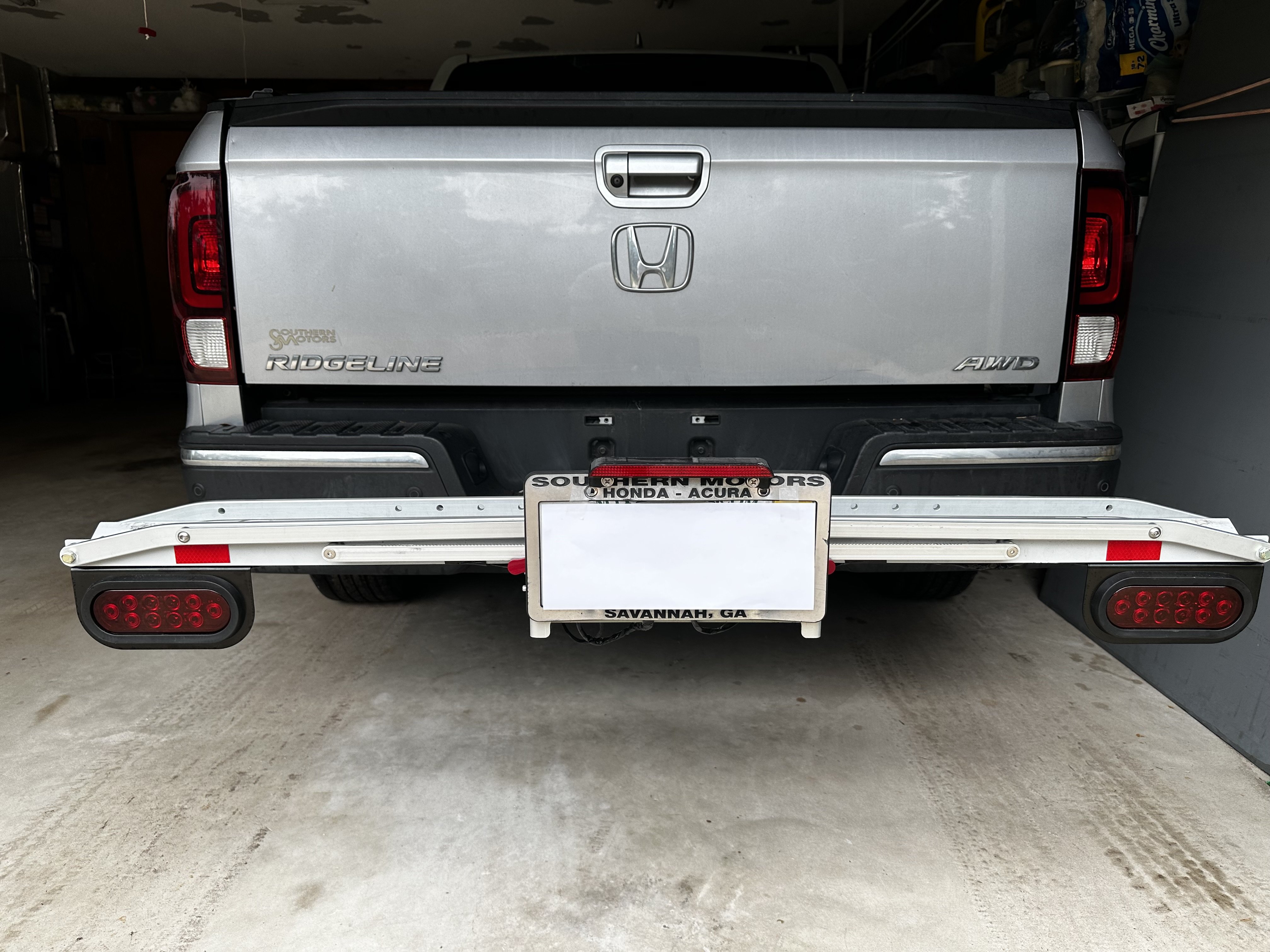
I use a hitch mounted One Up rack on the back of my Honda Ridgeline to transport my Giant Trance EMTB. I also carry with me a cover for the bike that is made for this purpose, so if it looks like rain, I pull over and cover it. After 2 years of riding single track 5 days a week, I had to pull the motor to send in for repair. All the contacts looked brand spanking new. Be advised that you are not allowed to cover the rear tail lights or the tag on the vehicle. What I did was to install tail lights and tag on the rear of the rack. Works for me.

rack Lights.jpeg
 
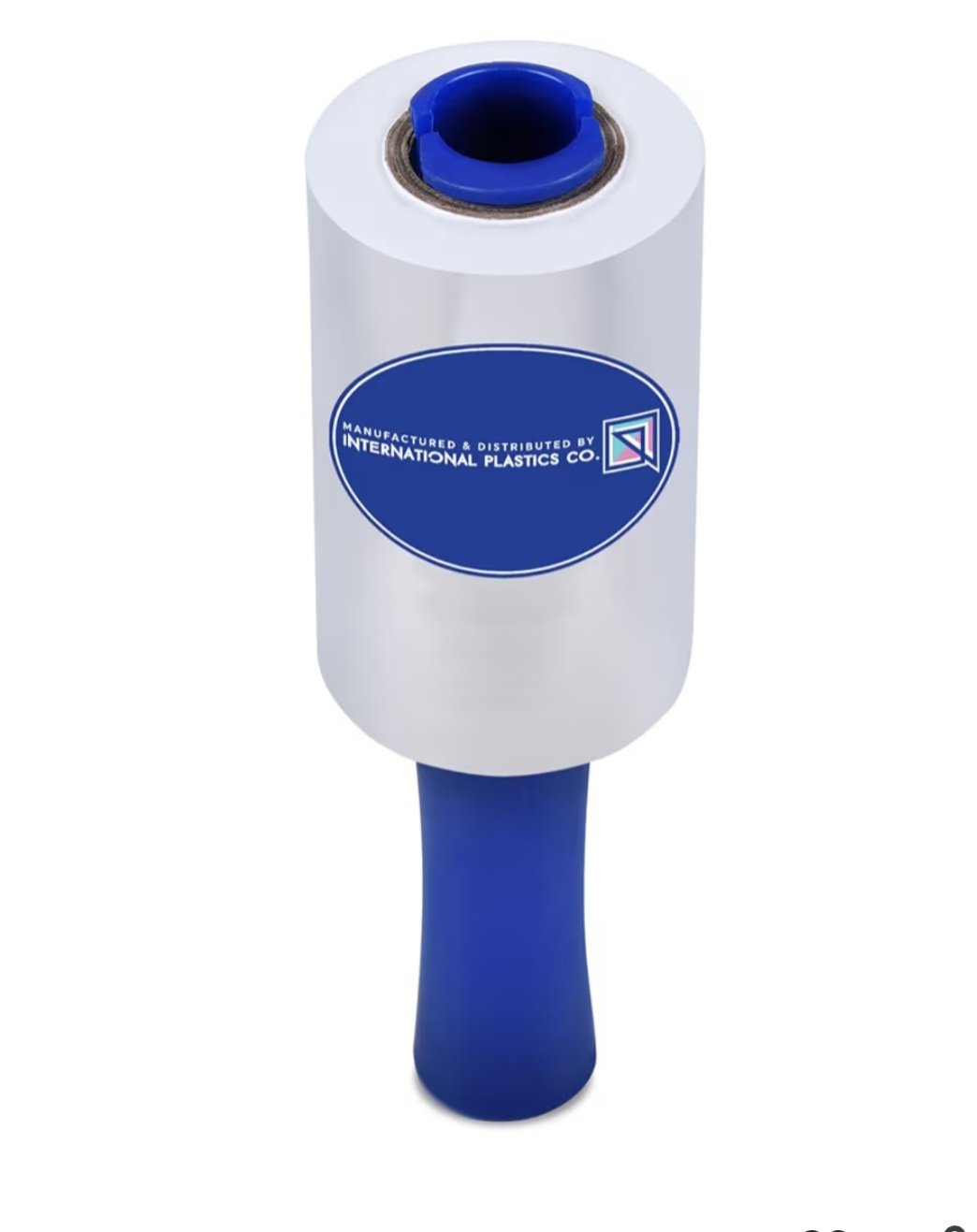
I'm pretty sure I learned the trick from this forum somewhere, but wrapping the motor area, handlebar mounted controller as well as the down tube if there are any seams for the battery with plastic wrap seems to be an easy solution to prevent pressurized water incursion while the bike is on the rack at the back of the vehicle.

Screenshot_20251025_125003_Amazon Shopping.jpg
 
I have data that driving in the rain can damage ebikes. My Sondors bike was on the back during a trip from the Bay Area to Tahoe, where it rained in the mountains. The battery in this bike is inside a large plastic enclosure that appears to protect the pack. But the battery DID get wet, which damaged the battery BMS. The BMS now limits the charging to one of the parallel cell banks, reducing the capacity by 50%.
 
Just out of curiosity, do electric cars (EV's) suffer water ingress in their motors also, or do they have heaters and/or venting? And how does it get in anyway, via the crank seals, harness entries or motor joints (gasket mating faces)? Or is it sucked in, not forced in, from a cooling motor reducing the internal atmospheric pressure (if any)? Or is condensation from normal but damp air already in the motor dropping out into condensation (again from cooling rapidly) when subject to spray, wind on the carrier?
 
Vehicles have used electric motors/ generators since the first ICEs....alternators , starter motors, etc. The issue with emtb motors is twofold. First the need to have low friction for the cranks and second poor and preventable protection of cable connections to the motor, controller and battery. Both are fixable with better design but easy accessibility always seems to be higher priority than water protection throughout the industry.
 
Vehicles have used electric motors/ generators since the first ICEs....alternators , starter motors, etc. The issue with emtb motors is twofold. First the need to have low friction for the cranks and second poor and preventable protection of cable connections to the motor, controller and battery. Both are fixable with better design but easy accessibility always seems to be higher priority than water protection throughout the industry.
For example, mounting controllers in the top tube is stupid.....it is an inhospitable place to fit an electrical component.
 
For example, mounting controllers in the top tube is stupid.....it is an inhospitable place to fit an electrical component.

Surely a simple fix then would be something like a purge system in the motor, pump air in via a valve to say 5psi and another valve let's it out again along with any moisture.
 
Has anyone run into problems when transporting with a pick up truck over the tailgate in Rainy conditions? We’re planning a trip to Florida and that’s how I was going to transport them and I’m coming from Pennsylvania.
 
Keep reading
    Browse all

    Similar Threads

    Community Stats

    Since 2018
    668K
    Messages
    40,764
    Members
    Join 30,000+ Riders, it's free!
    Back
    Top