Power Struggle: Who Controls the Future of E‑MTB?

Rob Rides EMTB

E*POWAH BOSS
Staff member
EMTB Pro
Joined
Jan 14, 2018
Messages
7,244
Reaction score
16,716
Location
Surrey, UK
....
E-bikes aren’t coming — they’re already here. In 2023, over 5.1 million of them were sold across Europe, with traditional bikes only just ahead at 6.6 million. In Germany, e-bikes actually overtook analogue bikes for the first time, grabbing more than half the market. This isn’t a trend anymore — it’s a takeover. And it’s transforming everything: how we ride, how bikes are built, and what the industry believes a bike should be.

Then came the curveball.

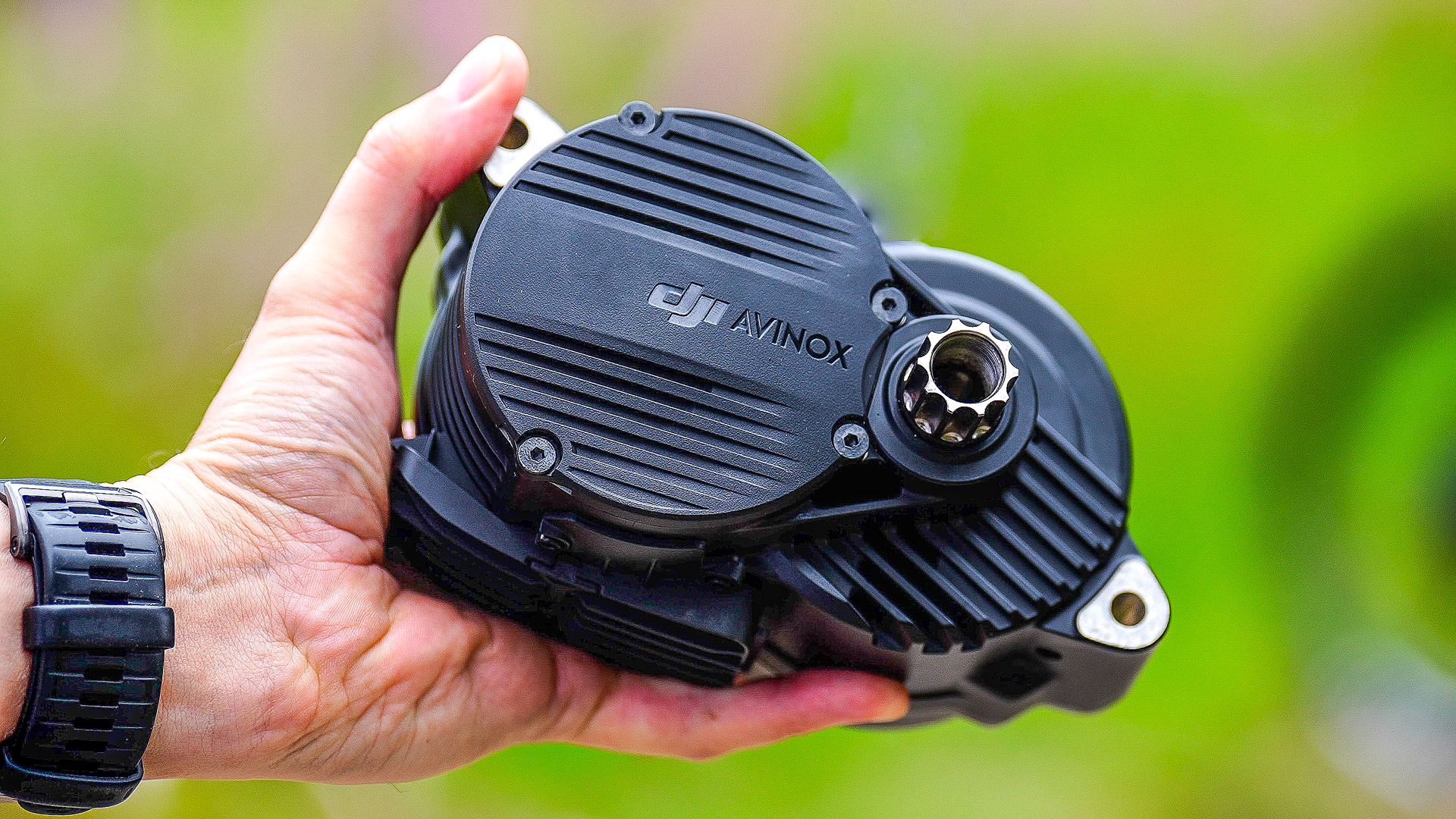
DJI — yes, the drone company — dropped a 1000-watt, 120Nm eMTB system with sleek integration, fast charging, and power to burn. The Avinox system didn’t just raise eyebrows; it kicked the industry’s front door in. Overnight, the usual suspects — Bosch, Shimano, Specialized — found themselves playing defence. Soon after, the eMTB elite huddled in a Think Tank and proposed something unthinkable just a year earlier: a self-imposed cap on motor output.

750 watts. That’s the new line in the dirt.

Is this really about protecting trails and riding responsibly? Or is it a well-dressed panic move from brands caught flat-footed by an outsider with better tech?
In this piece, we dig into what the DJI Avinox launch really triggered — and why older high-powered motors like the Haibike Flyon and Sachs RS never got the same reaction.

Discussion thread for full article:
 
Last edited:
⚡ EMTB Pro Go Pro — exclusive discounts & ad-free Peaty's 25% off & more · Ad-free browsing · Pro badge See the deals →
....
E-bikes aren’t coming — they’re already here. In 2023, over 5.1 million of them were sold across Europe, with traditional bikes only just ahead at 6.6 million. In Germany, e-bikes actually overtook analogue bikes for the first time, grabbing more than half the market. This isn’t a trend anymore — it’s a takeover. And it’s transforming everything: how we ride, how bikes are built, and what the industry believes a bike should be.

Then came the curveball.

DJI — yes, the drone company — dropped a 1000-watt, 120Nm eMTB system with sleek integration, fast charging, and power to burn. The Avinox system didn’t just raise eyebrows; it kicked the industry’s front door in. Overnight, the usual suspects — Bosch, Shimano, Specialized — found themselves playing defence. Soon after, the eMTB elite huddled in a Think Tank and proposed something unthinkable just a year earlier: a self-imposed cap on motor output.

750 watts. That’s the new line in the dirt.

Is this really about protecting trails and riding responsibly? Or is it a well-dressed panic move from brands caught flat-footed by an outsider with better tech?
In this piece, we dig into what the DJI Avinox launch really triggered — and why older high-powered motors like the Haibike Flyon and Sachs RS never got the same reaction.

Discussion thread for full article:
A really well researched and thought-through article. Thought provoking too. It captures what appears to be all the pros and cons of both sides of the argument. I would be happy with a max of 100Nm and 750W. Both are more than I have now, which I am also happy with. If that reduces the amount of money spent on R&D, then that's great, they could redirect that money into increasing the energy density of the batteries.
 
Excellent write up without bias or sensationalism @Rob Rides EMTB

Personally I'm not that worried about having the maximum power, but I would like better looking, lighter bikes.
It's the main reason I'm considering the Amflow. I would have loved to buy another Specialized, but despite not looking pregnant anymore, the new model kinda looks like it ate all the pies and it's heavier than my 5 year old bike.
 
If there is not a limit, then ebikes will get regulated by governments at some point in the future - what the limit is should be agreed by all the manufacturers including DJI. If they do not agree, then we will get ever more powerful motors, and regulators will step in to determine the limits which could result in much lower performance that effectively kills the industry.

Also, limits should push the innovation towards smaller motors which is a better outcome for the industry.
 
Last edited:
Presumably there must come a level of peak power where you exceed the EU nominal/continuous 250w limit, does anyone know what that peak power would be?

Or are the EU rules written in such a way as there is no effective/implied peak power limit? If there is no implied peak power limit then yes the industry needs to agree to one because it won't take much to end up with pedelecs being classed as a motorcycle and being banned from the trails.

I'd rather have a power limit and be treated as if I were riding a push bike(ie able to ride my ebike whereever a pedal bike is allowed and have no requirement to register, insure, pay tax etc) versus having more power but having to follow the same rules/laws a motorcycle has to follow (in the UK).

If I were going to be treated as if I were riding a motorcycle then I'll just buy a proper motorcycle and not mess about with low power (compared to motorcycles) ebikes. In reality I would just go back to a normal pushbike to get my off road thrills.

A pedelecs inherent advantage is the access they have to trails (in the UK) if you get rid of that by classing them as motorbikes then they may as well not exist.
 
Last edited:
What I still fail to understand - and the article (which was a great read, thanks!) doesn’t touch on really - is that all these motors still have the same top speed.

So you’re not going any faster, ergo putting anyone else in more danger, with an DJI motor or a 700w whatever motor - because they share the same top speed.

Likewise I struggle to understand how on one hand the discourse says 85nm/700w is “‘more than enough” but 120nm is too much - if the former is more than enough then that assumes you’re still hitting that top speed often enough - so you’re still all going the same speed. The DJI just gets you there slightly faster.

I ride with people on EP8’s and gen 4 Bosch systems - I’m not tearing off into the distance - because we share the same top speed. On tighter trails your speed is dictated by the trail, and downhill everyone is going faster than that speed anyway.

To me this reeks of Bosch knowing their OEM agreements are in jeopardy (Unno Mith was originally for Bosch and they pivoted) as more manufacturers look at DJI. Perhaps many more have already pivoted to DJI and we don’t know it yet.

Perhaps also Bosch/Shimano etc are already in the development cycle of their next motor which still won’t match DJI, so they expect another 3/4 years behind the curve or to spend lots of money to scrap development and start again.


Either way, I don’t buy the rider safety aspect or even the self regulation angle if we’re also not talking about lowering top speed. If they really cared about those things, we’d be talking about 10mph limits to assistance to ensure we’re all being super dooper safe out there on our little bicycles.
 
Why is riding uphill faster suddenly a problem when all bikes are limited to 25kph ?

Surely riding downhill fast is a far riskier proposition as you have gravity, an acceleration of 9.8 metres per second, per second, acting in the same direction as you are travelling. Meanwhile that same acceleration is acting as a decelerating force when you are going uphill.

Add to this, the fact that your speed downhill can far exceed the 25kph limit, regardless of peak power. Meanwhile, uphill, it would be near impossible to exceed the 25kph limit.

If restricting the speed of EMTBs on trails is the issue. Then surely reducing suspension travel would have a far greater impact, than reducing peak power on an EMTB limited to 25kph assistance. This would not only reduce speeds uphill. But also reduce speeds downhill.

But what do you know. There is zero mention of reducing EMTBs capability to reduce EMTBs speeds on trails.

If the industry proposed to place limits on suspension travel, braking forces, tyre compounds, as well as peak power. Then I would see this as an attempt to reign in EMTB capability and slow bikes down. But the fact they have only targeted the innovation brought by a very successful new player. It is a clear indicator that this is pure old school protectionism. And as an Engineer, I want innovation. Not protectionism.
 
Last edited:
Add to this, the fact that your speed downhill can far exceed the 25kph limit, regardless of peak power. Meanwhile, uphill, it would be near impossible to exceed the 25kph limit.

If restricting the speed of EMTBs on trails is the issue. Then surely reducing suspension travel would have a far greater impact, than reducing peak power on an EMTB limited to 25kph assistance. This would not only reduce speeds uphill. But also reduce speeds downhill.

But what do you know. There is zero mention of reducing EMTBs capability to reduce EMTBs speeds on trails.

If the industry proposed to place limits on suspension travel, braking forces, tyre compounds, as well as peak power. Then I would see this as an attempt to reign in EMTB capability and slow bikes down.
I think your blurring into limiting the sport of riding down hill on a bike - any bike, with the benefits provided by assistance when riding an assisted bike uphill.

People, generally being humans - though far from all having the same ideals, abilities, opinions - quite often like to feel alive by doing things which involve using the effects of gravity - an equaliser for all.

Limiting brakes, making us all have 12 inch wheels, 2 inches of suspension travel, solid tyres with no grip - would most likely just mean more accidents as bikes - all bikes - would be less capable and would invariably lead to a large increase in the number of people moving to downhill wheelbarrow racing - a far cheaper sport, until Specialized decide to get involved and try to sell us the €15,000 87kg S-Works Superfat Wheelevo Barrow.
 
Presumably there must come a level of peak power where you exceed the EU nominal/continuous 250w limit, does anyone know what that peak power would be?

Or are the EU rules written in such a way as there is no effective/implied peak power limit? If there is no implied peak power limit then yes the industry needs to agree to one because it won't take much to end up with pedelecs being classed as a motorcycle and being banned from the trails.

I'd rather have a power limit and be treated as if I were riding a push bike(ie able to ride my ebike whereever a pedal bike is allowed and have no requirement to register, insure, pay tax etc) versus having more power but having to follow the same rules/laws a motorcycle has to follow (in the UK).

If I were going to be treated as if I were riding a motorcycle then I'll just buy a proper motorcycle and not mess about with low power (compared to motorcycles) ebikes. In reality I would just go back to a normal pushbike to get my off road thrills.

A pedelecs inherent advantage is the access they have to trails (in the UK) if you get rid of that by classing them as motorbikes then they may as well not exist.
A while back when the Amflow poped up, I didn't quite get on how they can exceed the peak power numbers etc... like they do, so I did a little bit of online research about the 250W nominal/continuous power limit in EU.

The EU legislation EN15194 is the standard that is most commonly applied. I didn't read everything as it's a bunch off paperwork, so I looked for a summary online that summs it up something like this >>> According to the EU legislation EN15194 there's effectively no limit on power output, the documentation is all about the words and test methods, neither of which pin it down.
The rules state that the manufacturer must not label the motor with more than 250w and a motor with a 250w label mustn't overheat when running at 250w continuous.

The no limit is most probably for the peak power numbers as long as the motor can sustain 250W continuous without overheating.

So basically the manufacturers just have to be careful about terminology, testing and calculations of power delivery without overheating(that's why the Avinox most probably has the wave like power graph(velomotion.net) in the derating tests).

It could probably be said that it's some kind off a quiet gentleman's agreement, which someone not part off can/did challenge at any time.
 
I think your blurring into limiting the sport of riding down hill on a bike - any bike, with the benefits provided by assistance when riding an assisted bike uphill.

People, generally being humans - though far from all having the same ideals, abilities, opinions - quite often like to feel alive by doing things which involve using the effects of gravity - an equaliser for all.

Limiting brakes, making us all have 12 inch wheels, 2 inches of suspension travel, solid tyres with no grip - would most likely just mean more accidents as bikes - all bikes - would be less capable and would invariably lead to a large increase in the number of people moving to downhill wheelbarrow racing - a far cheaper sport, until Specialized decide to get involved and try to sell us the €15,000 87kg S-Works Superfat Wheelevo Barrow.
The comparison to F1 was used in the article. They don't slow F1 cars down by just limiting engine power. They slow them by limiting their entire performance. Tyres, suspension and downforce. Limit their performance and drivers slow down. They don't drive at the same speed and crash.

And when you do crash. The lower speed results in less serious injuries.

My point being. This think tank had nothing to do with slowing EMTBs down and making things safer. It was purely to reduce DJI's advantage.
 
Last edited:
Great summary, although in my opinion specalized opening the door to changing modes to change speed limits is more reckless than DJI creating the highest power lightest motor they can.

It does stink a bit of existing players working towards the USA 750w limit in all their R&D and getting caught out by DJI

Heavier bikes will impart more energy to other trail users in crashes so how about lets self regulate the 750w limit to bikes >22kg

I'm still not convinced it's a genuine problem if we can now go 15mph up a steep hill instead of 10 with these higher powered motors
 
How large a portion of that 5.1 million might be eMTBS? Maybe we've overestimated the impact of DJI here. Electric bikes are much more than just eMTBS. I believe the general public (and maybe politicians) are more concerned what happens on streets where you can see lots of cheap chinese 1000W bikes with thumb throttles etc.
 
Last edited:
How large a portion of that 5.1 million might be eMTBS? Maybe we've overestimated the impact of DJI here. Electric bikes are much more than just electric mountain bikes. I believe the general public (and maybe politicians) are more concerned what happens on streets where you can see lots of cheap chinese 1000W bikes with thumb throttles etc.
Ive made the comment before. A 1000 nominal watt, unrestricted, throttle driven bicycle is not a Pedal-Assist limited to 25kph. It's an electrically powered motorbike that has pedals as footrests. And the world is not ready to allow anyone to ride one without proper licensing and training. And rightly so.
 
The comparison to F1 was used in the article. They don't slow F1 cars down by just limiting engine power. They slow them by limiting their entire performance. Tyres, suspension and downforce. Limit their performance and drivers slow down. They don't drive at the same speed and crash.

And when you do crash. The lower speed results in less serious injuries.

My point being. This think tank had nothing to do with slowing EMTBs down and making things safer. It was purely to reduce DJI's advantage.
Yes, F1 was used as an example in the article and within the meeting. However it wasn't used as a direct broader comparison, to take it as such is missing the point I think. The reference was with regards to power, not all the other changes. Don't forget, despite the F1 regulations, car's lap faster now than ever before - we're getting off topic.

Your suggestions will only make bikes going downhill less safe and reduce choice for people's preferences. At the same time, they'll make MTB/EMTB's faster when they're not being used "on the mountain". Lighter crapper forks, lighter crapper brakes and wheels. Gripless tyres. The Urban lunatic will be causing more chaos straight out of the box.

I don't think any of the regulations being discussed have any reference or interest to "rider" safety. We all know we can go faster using gravity than electricity. They have more relevance to safety of others and sport interpretation and acceptance by those not involved.

How large a portion of that 5.1 million might be eMTBS? Maybe we've overestimated the impact of DJI here. Electric bikes are much more than just electric mountain bikes. I believe the general public (and maybe politicians) are more concerned what happens on streets where you can see lots of cheap chinese 1000W bikes with thumb throttles etc.
The number of EMTB's compared to other electric bikes is absolutely tiny.

DJI's very much entered a niche market rather than a mainstream one.

Personally, I don't see this so much as everyone being up in arms about the DJI system. Yes it's faster and more powerful, but proportionally, not massively so. It's just like most of the bikes we already ride having a Turbo+ option - a lot of people don't ever even use Turbo already. It's more about looking to the future and self regulating now so everyone's on the same page.
 
You must ride a CR125 very slowly then.

According to google a CR125 has max 31.3 kW of power giving a power to weight ratio of 0.2 hp/lb
Max power output: 31.3 kW or 42.6 hp
Dry weight: 88 kg or 194 lbs
Power-to-weight ratio =42.6 hp/194 lbs =0.2195 hp/lb

Using the same calculation for the Amflow (22kg or 48.5 lbs & 1000w or 1.341 hp) gives 0.0276 hp/lb.

Bit of a difference there.

1745507014616.gif 1745507188765.gif
 
Last edited:
I like e-bikes but I don't think that a modern full power e-bike is any slower on a tight trail than say an early CR125.

We better be very careful...
I'm pretty sure a €200 Decathlon mountain bike is faster than a Honda Fireblade on most tight trails.

I'm also sure there's trails I can run faster on than I can ride my EMTB on.

Why don't we have a new thread for comparing all sorts of random different things which are faster or slower in hand picked scenarios favouring one or the other.
 
@Rob Rides EMTB
In the US, it seems that trail advocacy groups have largely warmed up to Class 1 eMTBs, by arguing they don’t cause much more damage or conflict than regular mountain bikes.

How trail advocacy groups feel, doesn't matter much since they don't own, and don't typically manage, the lands.

Truth is, even class-1 EMTB's are technically not allowed on most all singletrack in the US. This is specifically true for trails on federally owned / managed lands (National Parks, Forest Service, Bureau of Land Management). This is rarely enforced, so it's mostly been ignored so far. But there are tensions and user conflicts on crowded multi-use trails, more powerful eBikes will definitely not help.
 
Obviously, this is all coming from a German bicycle industry association (ZIV) position paper at the moment, not EU-wide law, but this is clearly the end-goal, and I think we can expect ZIV’s members at least to self-regulate the output of their motors in line with the position paper.

It will be interesting to see if DJI follow suit, or if they keep their motor outputs as they are (or even take them higher), until they are forced to limit them by law.

It's worth noting that, as well as limiting peak power to 750W, the paper proposes a maximum support ratio of 1:6 up to a speed of 15 km/h, and then a maximum support ratio of 1:4 above that. This means you’d need to put in 125W of your own power to get the full 750W output below 15 km/h and 187.5W of your own power to get 750W out of the motor above 15 km/h.

Here in the UK, the position the Bicycle Association take on this issue will be crucial (as there is nothing saying the UK has to follow Europe’s lead on this).

We will also be dependent on whether bike manufacturers view the UK as a big enough market to provide us with a custom motor configuration, or if bikes sold here are just configured to follow the European norms, whether required to by UK law or not.
 
Last edited:
A while back when the Amflow poped up, I didn't quite get on how they can exceed the peak power numbers etc... like they do, so I did a little bit of online research about the 250W nominal/continuous power limit in EU.

The EU legislation EN15194 is the standard that is most commonly applied. I didn't read everything as it's a bunch off paperwork, so I looked for a summary online that summs it up something like this >>> According to the EU legislation EN15194 there's effectively no limit on power output, the documentation is all about the words and test methods, neither of which pin it down.
The rules state that the manufacturer must not label the motor with more than 250w and a motor with a 250w label mustn't overheat when running at 250w continuous.

The no limit is most probably for the peak power numbers as long as the motor can sustain 250W continuous without overheating.

So basically the manufacturers just have to be careful about terminology, testing and calculations of power delivery without overheating(that's why the Avinox most probably has the wave like power graph(velomotion.net) in the derating tests).

It could probably be said that it's some kind off a quiet gentleman's agreement, which someone not part off can/did challenge at any time.
As I said last week, ! All of this is hilarious, I knew it and the whole industry was kicking on me for calling it out for a week! I knew back in 2023 after testing the Sachs, it was exaggerated then, its exaggerated now!

Call out the press for supporting a power race… who hand selected editors who were paid off, did they all push DJI for free when they launched?

How deep does the rabbit hole go?
 
You must ride a CR125 very slowly then.

According to google a CR125 has max 31.3 kW of power giving a power to weight ratio of 0.2 hp/lb
Max power output: 31.3 kW or 42.6 hp
Dry weight: 88 kg or 194 lbs
Power-to-weight ratio =42.6 hp/194 lbs =0.2195 hp/lb

Using the same calculation for the Amflow (22kg or 48.5 lbs & 1000w or 1.341 hp) gives 0.0276 hp/lb.

Bit of a difference there.

View attachment 159298 View attachment 159299

It really doesn't work that way though. First, those old Elsinore CR125s made about 18 hp, overheated, shit tires, poor suspension, etc. They went slow enough that the riders wore open face helmets. Remind you of another sport?

Secondly, the instant and high torque of an ebike, combined with its very low weight, 12 gears, and low rolling resistance, make them quite the weapon in hard pack on tight trails. Which is why I indicated that a DJI powered e-bike is traveling a similar trail speed, if not outright faster, than an old CR125 in these conditions.

I was never better than an intermediate MXer (but a much faster roadracer), btw. Much later than the 1970s though!

Mountain bike riding has gotten way faster in the 10 years I've been doing it. At times I'm definitely traveling faster than I can control around blind corners, and occasionally this is going uphill (I have a slow e-bike). Thankfully I ride really chunky trails mostly where hikers don't bother going. Once we reach a point where novices are able to maintain 10-18 mph on their e-bike (aka dirt bike speeds), up and down due to all of the power, that becomes a real safety issue. What I'm pointing out is that we are quickly reaching a point where we better self-regulate, lest they do it for us.
 
Last edited:
I think Some self regulation would be great but I wouldn't start whit the power numbers ! Like has been said they all Top out at 25kph (mostly ie. EU or 32kph US) which is fine in the mountains for the most part. I wouldn't mind more Some times like on the the flats or roads you hit the 25kph in no time and you can go way faster on a road bike which doesn't handle as well or stop as fast as a mtb or emtb.
Anyway could go on and on there. But what the so called think tank should of been talking about if they Do want the industry to aline more it shouldn't be about something that can be changed whit the flick of a switch 🤔 hi Bosch this is the second time your done this right !!

What Should they be looking at alineing/standardizing on is battery and motor mounts!!!!!!!
Then we could choose what we want to and more easily get it .
If the motor mounts were all the same it would be cheaper for bike makers to design and make the bikes (which would save us all some money that's a good thing !
And reason enough to make that change.
Give the customer the choice to choose which motor or change from on to another as they see fit for what ever reason. As in the feel the noise the power the app. What ever ..
And then there's the battery and I'm going to dumb this right down. I can pick up an AA battery and put into a. Let's say a TV remote and it will work the make of the battery dose not matter nor does the make of the remote . And not all remotes will use the same power requirements .
So just make the battery's battery's whit all the safety built in put the power filters in the bikes .
This too could save manufacturers and consumers us money!

Well I and we could into way more dept on each of these subjects.
In summary there properly should be a max wh output and im sure there is also a natural limit to were the power just don't make sense.
What that numbers is i don't know.
This all looks like we don't like the new kid and we can't stop him whit laws ot money. But hey we can do this to try bully them. So they do want we want .
Because don't give me this it has to much power . Put your mtb in first gear and pedal as hard as you can you'll probably loop out and lose control . Power is not the issue it's control..... and in more then one way by the looks of it .
Well if you've read this thanks I may of waffled on a bit but I think I may of made some good points.
Thank.
Turinss.
 
I wonder how this is going to pan out.
Why would DJI enter a gentleman's agreement? It would weaken their market position. And the manufactures who now have deals with DJI. They've spent a massive amount of money developing bikes for the DJI motor - they'll lose the DJI USP and maybe sales. They won't be happy.

If the EU change the legislation how would it be applied? Retrospectively? Or a from a manufacturing date going forward?
If retrospectively then how does that affect all the consumers who have already bought the product? As an Amflow owner if I knew this change was coming it would have affected my purchasing decision. It doesn't seem right that a product that was legal (within the ambiguous EU legislation) would be become illegal overnight. How would this be managed? Not everyone will update the software. It shouldn't lie with the consumer to make sure a product they bought is now legal.
Who is responsible? Consumer? Bikeshop? Manufacturer?

Could be very messy.
 
Keep reading
    Browse all

    Similar Threads

    Community Stats

    Since 2018
    669K
    Messages
    40,873
    Members
    Join 30,000+ Riders, it's free!
    Back
    Top