DIY - Custom range extender

Nothing can enable the motor to draw more current. The amount of current it draws is fixed by the design of the motor. The resistance of the windings etc. THe only way it can draw more current than by design is if there is a short somewhere. Since the batteries are in parallel there can't be any "more voltage".
Is the observation of the charge with the original battery or with both?
 
⚡ EMTB Pro Go Pro — exclusive discounts & ad-free Peaty's 25% off & more · Ad-free browsing · Pro badge See the deals →
Nothing can enable the motor to draw more current. The amount of current it draws is fixed by the design of the motor. The resistance of the windings etc. THe only way it can draw more current than by design is if there is a short somewhere. Since the batteries are in parallel there can't be any "more voltage".
Is the observation of the charge with the original battery or with both?
I'm more so wondering if the motor/controller are built for higher wattage than they are rated (I know bosch gen4 cx performance is rated at 250w but can go much higher at peak power) and the fact that I have 2 batteries in parallel, each with their own 30a bms = 60a potential now, could allow for a higher draw than designed thus triggering the error. I dont know really, just thinking about potential possibilities and taking yours into consideration as well. I guess its possible that the external battery is "weaker" than the bosch powertube but I doubt it as its rated for a 500w nominal motor. As far as the voltage of the system after charging I found ANOTHER new piece of data...the voltage reading from the charge port itself falls rapidly after charging to around 38-39v but the voltage of the bosch powertube battery is higher. Since I have those wires connected directly to the motor wires I checked there and it was the same voltage as when it was fresh off the charger. Very odd.
 
Wait a second. I rechecked your picture and seems like you connected the external battery to the charging port? You need to connect to the wires that go from the battery to the motor. What you're trying to do is charge the battery from the other battery like an external charger. That won't work. You need to tap to the other wires between battery connector and the motor.
 
Wait a second. I rechecked your picture and seems like you connected the external battery to the charging port? You need to connect to the wires that go from the battery to the motor. What you're trying to do is charge the battery from the other battery like an external charger. That won't work. You need to tap to the other wires between battery connector and the motor.
Not sure what you are looking at, but I didn’t connect into the charging port, I connected into the red and black wires on the big plug that goes into the motor 👍🏼
 
@maddchadd With all due respect. I am not dissing you. But you don't understand everything you are working with here. LION batteries are dangerous and you can burn down your house if not careful. It is not something you should be experimenting with.
 
@maddchadd With all due respect. I am not dissing you. But you don't understand everything you are working with here. LION batteries are dangerous and you can burn down your house if not careful. It is not something you should be experimenting with.
I understand your concern and appreciate it. I have been working with lithium batteries for over 10 yrs and have built several of my own packs from 18650, 21700 and originally a123 cells. I have also been working with lithium polymer packs and discharging/charging them in parallel for over 10yrs as well. What exactly did I say that leads you to believe I shouldn't be doing this? The only "experiment" here really is with the bosch system itself. There isn't anything wrong with my wiring or how Im charging/discharging the batteries, the bike is throwing an error when both of the batteries are charged to the same voltage. Both batteries have 18650 cells and their own bms built in so honestly I dont see any danger to the batteries themselves in this scenario.
 
The problem with using two parallel batteries without a parallel battery switch is the risk of one battery catastrophically discharging into the other. The bosch system clearly has some smart features making it more than just a standard BMS controlled battery. So there are unknowns. Unknowns can lead to hooking something up in a way that might cause problems. You are guessing, as i would be, as to how things are working.
Just saying be careful, meaning charge it outside with a way to disconnect things fast if something starts to go south.
 
The problem with using two parallel batteries without a parallel battery switch is the risk of one battery catastrophically discharging into the other. The bosch system clearly has some smart features making it more than just a standard BMS controlled battery. So there are unknowns. Unknowns can lead to hooking something up in a way that might cause problems. You are guessing, as i would be, as to how things are working.
Just saying be careful, meaning charge it outside with a way to disconnect things fast if something starts to go south.
I get it. As I said I have quite a bit of experience running lithium batteries in parallel. A parallel switch won't work with the bosch system because the controller won't give any power to the motor if the bosch battery isn't supplying current. I'm thinking of installing an ideal diode on just the external battery line so that current cant flow from the internal battery into the external but the external battery current could still flow to the motor. That would determine whether or not the error was caused by the bosch battery discharging into the external battery while simultaneously sending power to the motor.
 
Ok, so I have been wanting to do something like this since I first got my niner wfo e9 (same bosch system as the cube) and after the inspiration and motivation from @PSaibot I decided to go for it. Instead of splicing and soldering to the motor wires, I wanted a removable solution so I went with Posi tap connectors (very reliable and good connection). I went with a 10s3p 8000mah battery with a built in bms I found on amazon for about $100 (I've built lithium packs in the past but just didnt want to deal with it right now). So I wired everything up, charged the batteries up ran some tests and all seems good to go. Went out for my first actual ride last night and unfortunately every time I attempted a steep climb in "turbo" mode, the system shut down and threw a "550" error (impermissible load)...after rebooting it worked again but subsequently threw the same error every time I was climbing a steep grade. Im not ready to totally scrap the idea so thinking of trying an "ideal diode". Seems like maybe the motor is able to draw too much current now that it has the batteries combined? Or maybe the system has a newer firmware and is more sensitive to tampering? Any ideas or thoughts are much appreciated! @PSaibot @funnel @mike_kelly @TrailwattsUK

View attachment 118631 View attachment 118632 View attachment 118633 View attachment 118634 View attachment 118635 View attachment 118636 View attachment 118637 View attachment 118638

Hi,

I see similar setup as mine the difference is the battery and the way you join the power wires to the main plug (I soldered and you press connected them).

My honest guess here it's that your battery has different discharge rate comparing with the bosch battery.
Before I build my DIY battery I did some research on the internet and I checked something that might be critical.
All the batteries must/should have the same discharge rate per cell, in this case bosch cells have 20A of continuous discharge rate, and so I bought similar cells to build mine, and you are having that error probably because your custom battery has cells with less discharge rate and it's not compensating the discharge and demanding of the motor because that DIY battery its as well high demanding from the main bosch battery.

Also, Your board computer its different than mine as well as the motor casing too, its your bosh a Gen4 Motor?

Other thing that might be the issue.
Your custom battery has 2 main cords, probably one its for charging/discharging and another one for "discharging ONLY" and you are using that Discharge only plug to connect to the bike. Means that that battery will deny the charge from bosch battery and will send a denial signal back and this causes the 550 error.

I had similar error at the beginning because my BMS had a separate charge and discharge plugs.
I realized that the charge port it's as well a discharge port, so what I did was eliminate the discharge ONLY port and used only the charge plug for both charge and discharge, and the error never came back.

Check this as if so this might be the root cause.
 
Hi,

I see similar setup as mine the difference is the battery and the way you join the power wires to the main plug (I soldered and you press connected them).

My honest guess here it's that your battery has different discharge rate comparing with the bosch battery.
Before I build my DIY battery I did some research on the internet and I checked something that might be critical.
All the batteries must/should have the same discharge rate per cell, in this case bosch cells have 20A of continuous discharge rate, and so I bought similar cells to build mine, and you are having that error probably because your custom battery has cells with less discharge rate and it's not compensating the discharge and demanding of the motor because that DIY battery its as well high demanding from the main bosch battery.

Also, Your board computer its different than mine as well as the motor casing too, its your bosh a Gen4 Motor?

Other thing that might be the issue.
Your custom battery has 2 main cords, probably one its for charging/discharging and another one for "discharging ONLY" and you are using that Discharge only plug to connect to the bike. Means that that battery will deny the charge from bosch battery and will send a denial signal back and this causes the 550 error.

I had similar error at the beginning because my BMS had a separate charge and discharge plugs.
I realized that the charge port it's as well a discharge port, so what I did was eliminate the discharge ONLY port and used only the charge plug for both charge and discharge, and the error never came back.

Check this as if so this might be the root cause.
So I tried an ideal diode and still got the same error, so its definitely not an issue of the main battery discharging into the external. The external I have can be charged from the dc port or the xt60 discharge cable so thats not the issue either. I remembered I had another smaller 10s2p pack from a hoverboard I was messing with awhile back and decided to toss that into the mix (yes, I made sure they were the same voltage @mike_kelly 🤣) and low and behold, no errors running that pack in parallel! Its a 4.4ah pack so 2400mah cells but I dont remember the exact details on them. Very interesting stuff. A couple other things to note...when running the bigger 10s3p 8ah external, whenever I checked voltage with my multimeter during test rides, the external was at a lower voltage than the bosch internal battery. Now, with the smaller pack that doesn't give the 550 error when I check its voltage during a test ride, its HIGHER than the internal battery. This is after riding for about an hour. As I said before, clearly the packs arent discharging and balancing into each other as previously suspected. Oh and yes, I am running the bosch gen4 cx performance motor with the 625w power tube, same as your cube @PSaibot I am back to believing its a matter of the larger external pack providing too much current when combined with the bosch battery 🤷🏻‍♂️
 
For example the Giant motors don't trigger any error and don't check anything over the canbus com like mentioned above. I made 20000km with custom external batteries on the Giant without any issues, still works fine. Not sure about the Bosch since I don't have any experience modifing it. Maybe a custom canbus man-in-the-middle type of hack would be needed if this is the case.
Hi, what bike do You have? I try to connect 3rd party battery to my giant trance '19 and it looks that motor is working ok but there is a battery error on ridecontrol. I'm sure this is because lack of canbus messages from battery, because when I short connect only Can_H & Can_L to bike from original battery, everything works very good. Bike read data from original battery, but energy goes from this not original.
 
Hi, what bike do You have? I try to connect 3rd party battery to my giant trance '19 and it looks that motor is working ok but there is a battery error on ridecontrol. I'm sure this is because lack of canbus messages from battery, because when I short connect only Can_H & Can_L to bike from original battery, everything works very good. Bike read data from original battery, but energy goes from this not original.
I left the original battery in. I split the red power cable and soldered a ground cable inline with the existing one that goes to the motor. So I basically disconnect the red power cable and connect my own external battery in place, the canbus remains from the original battery. When the external battery is discharged(monitored by a beeper) I reconnect the power cable back directly to the motor so the original battery gets discharged.
 
Hello Guys,

So here I am to make my first post, apart from the introduction one.

Some context first.
I ride a 2021 Cube Stereo Hybrid HPC 140 TM 625Wh. It's my first ebike and I bought it in second hand few month ago still in 2023.
This ebike its simple gorgeous and very well equipped, I never gave attention to Cube as a brand but now I am a fan. Cube delivers very high end ebikes at very competitive prices comparing both equipment and price with other brands.
So I got positive surprised.

Now Buying a 2021 ebike in current year 2023 means that I will face a 625Wh VS 750Wh Smart System (SS) challenge.
Two of my friends bought a recent 2022 KTM's Macina Prowler Master 750 SS and so they have +/- 25KM more in battery range comparing with me.
This means that every time we have a long ride (more than 50km) I have to be extra careful managing and switching the assist modes in order to arrive home with Battery.

That's why I started to search for battery range extenders. Quickly I found out that Cube doesn't has one and I found a new brand called Volabike that make them but with an high cost (at least for my wallet).

Since I am an electronics enthusiast I start thinking in a way to build my own range extender and I was successful.

Here what its needed:

- Soldering Iron
- Electric tape
- Silicon Electric Wire 18 awg
- XT60 Plugs (Male and Female)
- 10S 30A BMS
- 18650 Lit-Ion Cells
- 18650 Spacers
- 18650 tape
- Spot Welder DIY Kit
- Nickel Stripe
- Side way bottle holder

Seems too much but it isn't.

Usually ebikes, scooters, etc use LG MJ1 18650 cells because they have 10A discharge rate and has 3500mah capacity.
Since LG cells were too expensive I have used Panasonic NCR18650BD cells.
I have built a 10S2P battery, 36V with 6,36Ah and 229Wh that weights +/- 1,2Kg.

For all that concerns Spot Welding and BMS Soldering part there's plenty of videos in youtube explaining step by step.

I have coupled it direct in the Black (negative) and Red (Positive) wires that are in the big plug that connects to bosch motor, so making positive with positive and negative with negative (Parallel=Same Voltage and sum the capacity of each battery).
The battery its hold in the Side way Bottle holder with Velcro.
The setup has a very minimalistic and simple sigh view.

Now I am happy to say the with less than 50€ I have built my own range extender, and now I have 625Wh (from Bosch PowerTube Battery) + 229Wh (from range extender) = 854Wh in total.
I am heavier (body) comparing to my friends and still has more riding range as they have.

I will soon attach some images.

So For those who are thinking in spending thousands in buying a new ebike because of the extra range that 750 ones provide, think twice as with +/- 50 to 100€ you can build a range extender and keep your ebike.
The more cells you add the more range you will have but more heavier the battery will be, and of course you need to respect the maximum Wh that Bosch Motor supports, in what regards to Performance Line CX its 11XX WH but to be in safe side try not to exceed 1000Wh in total.

This not a detailed DIY, I know and sorry for that, but its more to show you that it's possible to build your own a cheap custom battery to improve the range of our ebikes and avoid wasting thousands in a new ebike just to follow the marked tendency.

Regards

View attachment 114986 View attachment 114987 View attachment 114988 View attachment 114989 View attachment 114990 View attachment 114991 View attachment 114992 View attachment 115003
Hi,
I'm starting my DIY range extender projet. Current, Bosch gen 4, Kiox, 2020 Focus Jam2.
Received from Ali a pack, 4p10s, stating 100 Ah.
I intend to connect it the way you did, bur have a concern. I've disconnected the power plug from the motor and checked if there is 36v there prior to activation of the Kiox. No voltage. So if I connect the extender bettery there will be power supplied to the motor all the time. I'm worried about it.
A solution for that will be a manual switch that will connect the battery only after activation of the Kiox or a relay that'll do it automatically.
Please advice me. I'm totally new to Emtb.
 
Hello Guys,

So here I am to make my first post, apart from the introduction one.

Some context first.
I ride a 2021 Cube Stereo Hybrid HPC 140 TM 625Wh. It's my first ebike and I bought it in second hand few month ago still in 2023.
This ebike its simple gorgeous and very well equipped, I never gave attention to Cube as a brand but now I am a fan. Cube delivers very high end ebikes at very competitive prices comparing both equipment and price with other brands.
So I got positive surprised.

Now Buying a 2021 ebike in current year 2023 means that I will face a 625Wh VS 750Wh Smart System (SS) challenge.
Two of my friends bought a recent 2022 KTM's Macina Prowler Master 750 SS and so they have +/- 25KM more in battery range comparing with me.
This means that every time we have a long ride (more than 50km) I have to be extra careful managing and switching the assist modes in order to arrive home with Battery.

That's why I started to search for battery range extenders. Quickly I found out that Cube doesn't has one and I found a new brand called Volabike that make them but with an high cost (at least for my wallet).

Since I am an electronics enthusiast I start thinking in a way to build my own range extender and I was successful.

Here what its needed:

- Soldering Iron
- Electric tape
- Silicon Electric Wire 18 awg
- XT60 Plugs (Male and Female)
- 10S 30A BMS
- 18650 Lit-Ion Cells
- 18650 Spacers
- 18650 tape
- Spot Welder DIY Kit
- Nickel Stripe
- Side way bottle holder

Seems too much but it isn't.

Usually ebikes, scooters, etc use LG MJ1 18650 cells because they have 10A discharge rate and has 3500mah capacity.
Since LG cells were too expensive I have used Panasonic NCR18650BD cells.
I have built a 10S2P battery, 36V with 6,36Ah and 229Wh that weights +/- 1,2Kg.

For all that concerns Spot Welding and BMS Soldering part there's plenty of videos in youtube explaining step by step.

I have coupled it direct in the Black (negative) and Red (Positive) wires that are in the big plug that connects to bosch motor, so making positive with positive and negative with negative (Parallel=Same Voltage and sum the capacity of each battery).
The battery its hold in the Side way Bottle holder with Velcro.
The setup has a very minimalistic and simple sigh view.

Now I am happy to say the with less than 50€ I have built my own range extender, and now I have 625Wh (from Bosch PowerTube Battery) + 229Wh (from range extender) = 854Wh in total.
I am heavier (body) comparing to my friends and still has more riding range as they have.

I will soon attach some images.

So For those who are thinking in spending thousands in buying a new ebike because of the extra range that 750 ones provide, think twice as with +/- 50 to 100€ you can build a range extender and keep your ebike.
The more cells you add the more range you will have but more heavier the battery will be, and of course you need to respect the maximum Wh that Bosch Motor supports, in what regards to Performance Line CX its 11XX WH but to be in safe side try not to exceed 1000Wh in total.

This not a detailed DIY, I know and sorry for that, but its more to show you that it's possible to build your own a cheap custom battery to improve the range of our ebikes and avoid wasting thousands in a new ebike just to follow the marked tendency.

Regards

View attachment 114986 View attachment 114987 View attachment 114988 View attachment 114989 View attachment 114990 View attachment 114991 View attachment 114992 View attachment 115003
This is the exact solution I was hoping to do for my Rail. Except using 10x 21700 cells. So, a year after posting, how are you getting on with this DIY range extender? Are there any issues you've found around error messages or charging as one unit on the bike with the Bosch charger?
 
Wait a second. I rechecked your picture and seems like you connected the external battery to the charging port? You need to connect to the wires that go from the battery to the motor. What you're trying to do is charge the battery from the other battery like an external charger. That won't work. You need to tap to the other wires between battery connector and the motor.
Hi experts

Connecting an external battery via the charging port serms like the safest way. Activating the connection we need to supply 5v and than the BMS is connecting. Supplying 5v from the external pack is easy.
Also, what are the charge and the 5v (and other?) Pins on the charging plug.

My question is whether the motor can work - ride while "charging"

Shmulik
 
Hi experts

Connecting an external battery via the charging port serms like the safest way. Activating the connection we need to supply 5v and than the BMS is connecting. Supplying 5v from the external pack is easy.
Also, what are the charge and the 5v (and other?) Pins on the charging plug.

My question is whether the motor can work - ride while "charging"

Shmulik
Hi,

I've found out that the motor will engage while charging so I'll drop the idea, unless someone will find a way around it.
I have Bosch cx gen 4 on Focus Jam2, 12,500 km.
 
Hello Guys,

So here I am to make my first post, apart from the introduction one.

Some context first.
I ride a 2021 Cube Stereo Hybrid HPC 140 TM 625Wh. It's my first ebike and I bought it in second hand few month ago still in 2023.
This ebike its simple gorgeous and very well equipped, I never gave attention to Cube as a brand but now I am a fan. Cube delivers very high end ebikes at very competitive prices comparing both equipment and price with other brands.
So I got positive surprised.

Now Buying a 2021 ebike in current year 2023 means that I will face a 625Wh VS 750Wh Smart System (SS) challenge.
Two of my friends bought a recent 2022 KTM's Macina Prowler Master 750 SS and so they have +/- 25KM more in battery range comparing with me.
This means that every time we have a long ride (more than 50km) I have to be extra careful managing and switching the assist modes in order to arrive home with Battery.

That's why I started to search for battery range extenders. Quickly I found out that Cube doesn't has one and I found a new brand called Volabike that make them but with an high cost (at least for my wallet).

Since I am an electronics enthusiast I start thinking in a way to build my own range extender and I was successful.

Here what its needed:

- Soldering Iron
- Electric tape
- Silicon Electric Wire 18 awg
- XT60 Plugs (Male and Female)
- 10S 30A BMS
- 18650 Lit-Ion Cells
- 18650 Spacers
- 18650 tape
- Spot Welder DIY Kit
- Nickel Stripe
- Side way bottle holder

Seems too much but it isn't.

Usually ebikes, scooters, etc use LG MJ1 18650 cells because they have 10A discharge rate and has 3500mah capacity.
Since LG cells were too expensive I have used Panasonic NCR18650BD cells.
I have built a 10S2P battery, 36V with 6,36Ah and 229Wh that weights +/- 1,2Kg.

For all that concerns Spot Welding and BMS Soldering part there's plenty of videos in youtube explaining step by step.

I have coupled it direct in the Black (negative) and Red (Positive) wires that are in the big plug that connects to bosch motor, so making positive with positive and negative with negative (Parallel=Same Voltage and sum the capacity of each battery).
The battery its hold in the Side way Bottle holder with Velcro.
The setup has a very minimalistic and simple sigh view.

Now I am happy to say the with less than 50€ I have built my own range extender, and now I have 625Wh (from Bosch PowerTube Battery) + 229Wh (from range extender) = 854Wh in total.
I am heavier (body) comparing to my friends and still has more riding range as they have.

I will soon attach some images.

So For those who are thinking in spending thousands in buying a new ebike because of the extra range that 750 ones provide, think twice as with +/- 50 to 100€ you can build a range extender and keep your ebike.
The more cells you add the more range you will have but more heavier the battery will be, and of course you need to respect the maximum Wh that Bosch Motor supports, in what regards to Performance Line CX its 11XX WH but to be in safe side try not to exceed 1000Wh in total.

This not a detailed DIY, I know and sorry for that, but its more to show you that it's possible to build your own a cheap custom battery to improve the range of our ebikes and avoid wasting thousands in a new ebike just to follow the marked tendency.

Regards

View attachment 114986 View attachment 114987 View attachment 114988 View attachment 114989 View attachment 114990 View attachment 114991 View attachment 114992 View attachment 115003
Hi,

Following your post of the range extender I've just now finished mine. I've soldered a parallel connector near the motor plug so I could dissconnect the auxiliary betterywith no wires or connector visible. I've used an AliExpress 10s4p battery. Made a solid cradle mounted to the frame. Equalized the voltage and connected. Charging with the Bosch charger. Waiting to see what gain will I get. Don't know the actual capacity of the auxiliary battery, claim is not real.
Hello Guys,

So here I am to make my first post, apart from the introduction one.

Some context first.
I ride a 2021 Cube Stereo Hybrid HPC 140 TM 625Wh. It's my first ebike and I bought it in second hand few month ago still in 2023.
This ebike its simple gorgeous and very well equipped, I never gave attention to Cube as a brand but now I am a fan. Cube delivers very high end ebikes at very competitive prices comparing both equipment and price with other brands.
So I got positive surprised.

Now Buying a 2021 ebike in current year 2023 means that I will face a 625Wh VS 750Wh Smart System (SS) challenge.
Two of my friends bought a recent 2022 KTM's Macina Prowler Master 750 SS and so they have +/- 25KM more in battery range comparing with me.
This means that every time we have a long ride (more than 50km) I have to be extra careful managing and switching the assist modes in order to arrive home with Battery.

That's why I started to search for battery range extenders. Quickly I found out that Cube doesn't has one and I found a new brand called Volabike that make them but with an high cost (at least for my wallet).

Since I am an electronics enthusiast I start thinking in a way to build my own range extender and I was successful.

Here what its needed:

- Soldering Iron
- Electric tape
- Silicon Electric Wire 18 awg
- XT60 Plugs (Male and Female)
- 10S 30A BMS
- 18650 Lit-Ion Cells
- 18650 Spacers
- 18650 tape
- Spot Welder DIY Kit
- Nickel Stripe
- Side way bottle holder

Seems too much but it isn't.

Usually ebikes, scooters, etc use LG MJ1 18650 cells because they have 10A discharge rate and has 3500mah capacity.
Since LG cells were too expensive I have used Panasonic NCR18650BD cells.
I have built a 10S2P battery, 36V with 6,36Ah and 229Wh that weights +/- 1,2Kg.

For all that concerns Spot Welding and BMS Soldering part there's plenty of videos in youtube explaining step by step.

I have coupled it direct in the Black (negative) and Red (Positive) wires that are in the big plug that connects to bosch motor, so making positive with positive and negative with negative (Parallel=Same Voltage and sum the capacity of each battery).
The battery its hold in the Side way Bottle holder with Velcro.
The setup has a very minimalistic and simple sigh view.

Now I am happy to say the with less than 50€ I have built my own range extender, and now I have 625Wh (from Bosch PowerTube Battery) + 229Wh (from range extender) = 854Wh in total.
I am heavier (body) comparing to my friends and still has more riding range as they have.

I will soon attach some images.

So For those who are thinking in spending thousands in buying a new ebike because of the extra range that 750 ones provide, think twice as with +/- 50 to 100€ you can build a range extender and keep your ebike.
The more cells you add the more range you will have but more heavier the battery will be, and of course you need to respect the maximum Wh that Bosch Motor supports, in what regards to Performance Line CX its 11XX WH but to be in safe side try not to exceed 1000Wh in total.

This not a detailed DIY, I know and sorry for that, but its more to show you that it's possible to build your own a cheap custom battery to improve the range of our ebikes and avoid wasting thousands in a new ebike just to follow the marked tendency.

Regards

View attachment 114986 View attachment 114987 View attachment 114988 View attachment 114989 View attachment 114990 View attachment 114991 View attachment 114992 View attachment 115003
N
 
Hi, I did connect the auxiliary battery parallel to the red/black wires ar the motor after equalization of the voltage. Not to the charging port. Continuing charge to 100% via the bike system. Turned the sts o
However, and thats new, the kiox wouldn't start. Disconnected the auxiliary battery and it starts.
Any ideas?
This is prior to a test range ride....
Assume that after reconnecting the auxiliary battery it'll be okay. Not a big deal but not fun.
At the red/black wires there is no voltage only after charging. When connecting the auxiliary battery we provide voltage prior to the charging. Maybe it's confusing the Bosch logic.....
 
Hello Guys,

So here I am to make my first post, apart from the introduction one.

Some context first.
I ride a 2021 Cube Stereo Hybrid HPC 140 TM 625Wh. It's my first ebike and I bought it in second hand few month ago still in 2023.
This ebike its simple gorgeous and very well equipped, I never gave attention to Cube as a brand but now I am a fan. Cube delivers very high end ebikes at very competitive prices comparing both equipment and price with other brands.
So I got positive surprised.

Now Buying a 2021 ebike in current year 2023 means that I will face a 625Wh VS 750Wh Smart System (SS) challenge.
Two of my friends bought a recent 2022 KTM's Macina Prowler Master 750 SS and so they have +/- 25KM more in battery range comparing with me.
This means that every time we have a long ride (more than 50km) I have to be extra careful managing and switching the assist modes in order to arrive home with Battery.

That's why I started to search for battery range extenders. Quickly I found out that Cube doesn't has one and I found a new brand called Volabike that make them but with an high cost (at least for my wallet).

Since I am an electronics enthusiast I start thinking in a way to build my own range extender and I was successful.

Here what its needed:

- Soldering Iron
- Electric tape
- Silicon Electric Wire 18 awg
- XT60 Plugs (Male and Female)
- 10S 30A BMS
- 18650 Lit-Ion Cells
- 18650 Spacers
- 18650 tape
- Spot Welder DIY Kit
- Nickel Stripe
- Side way bottle holder

Seems too much but it isn't.

Usually ebikes, scooters, etc use LG MJ1 18650 cells because they have 10A discharge rate and has 3500mah capacity.
Since LG cells were too expensive I have used Panasonic NCR18650BD cells.
I have built a 10S2P battery, 36V with 6,36Ah and 229Wh that weights +/- 1,2Kg.

For all that concerns Spot Welding and BMS Soldering part there's plenty of videos in youtube explaining step by step.

I have coupled it direct in the Black (negative) and Red (Positive) wires that are in the big plug that connects to bosch motor, so making positive with positive and negative with negative (Parallel=Same Voltage and sum the capacity of each battery).
The battery its hold in the Side way Bottle holder with Velcro.
The setup has a very minimalistic and simple sigh view.

Now I am happy to say the with less than 50€ I have built my own range extender, and now I have 625Wh (from Bosch PowerTube Battery) + 229Wh (from range extender) = 854Wh in total.
I am heavier (body) comparing to my friends and still has more riding range as they have.

I will soon attach some images.

So For those who are thinking in spending thousands in buying a new ebike because of the extra range that 750 ones provide, think twice as with +/- 50 to 100€ you can build a range extender and keep your ebike.
The more cells you add the more range you will have but more heavier the battery will be, and of course you need to respect the maximum Wh that Bosch Motor supports, in what regards to Performance Line CX its 11XX WH but to be in safe side try not to exceed 1000Wh in total.

This not a detailed DIY, I know and sorry for that, but its more to show you that it's possible to build your own a cheap custom battery to improve the range of our ebikes and avoid wasting thousands in a new ebike just to follow the marked tendency.

Regards

View attachment 114986 View attachment 114987 View attachment 114988 View attachment 114989 View attachment 114990 View attachment 114991 he 5View attachment 114992 View attachment 115003
 
Hello Guys,

So here I am to make my first post, apart from the introduction one.

Some context first.
I ride a 2021 Cube Stereo Hybrid HPC 140 TM 625Wh. It's my first ebike and I bought it in second hand few month ago still in 2023.
This ebike its simple gorgeous and very well equipped, I never gave attention to Cube as a brand but now I am a fan. Cube delivers very high end ebikes at very competitive prices comparing both equipment and price with other brands.
So I got positive surprised.

Now Buying a 2021 ebike in current year 2023 means that I will face a 625Wh VS 750Wh Smart System (SS) challenge.
Two of my friends bought a recent 2022 KTM's Macina Prowler Master 750 SS and so they have +/- 25KM more in battery range comparing with me.
This means that every time we have a long ride (more than 50km) I have to be extra careful managing and switching the assist modes in order to arrive home with Battery.

That's why I started to search for battery range extenders. Quickly I found out that Cube doesn't has one and I found a new brand called Volabike that make them but with an high cost (at least for my wallet).

Since I am an electronics enthusiast I start thinking in a way to build my own range extender and I was successful.

Here what its needed:

- Soldering Iron
- Electric tape
- Silicon Electric Wire 18 awg
- XT60 Plugs (Male and Female)
- 10S 30A BMS
- 18650 Lit-Ion Cells
- 18650 Spacers
- 18650 tape
- Spot Welder DIY Kit
- Nickel Stripe
- Side way bottle holder

Seems too much but it isn't.

Usually ebikes, scooters, etc use LG MJ1 18650 cells because they have 10A discharge rate and has 3500mah capacity.
Since LG cells were too expensive I have used Panasonic NCR18650BD cells.
I have built a 10S2P battery, 36V with 6,36Ah and 229Wh that weights +/- 1,2Kg.

For all that concerns Spot Welding and BMS Soldering part there's plenty of videos in youtube explaining step by step.

I have coupled it direct in the Black (negative) and Red (Positive) wires that are in the big plug that connects to bosch motor, so making positive with positive and negative with negative (Parallel=Same Voltage and sum the capacity of each battery).
The battery its hold in the Side way Bottle holder with Velcro.
The setup has a very minimalistic and simple sigh view.

Now I am happy to say the with less than 50€ I have built my own range extender, and now I have 625Wh (from Bosch PowerTube Battery) + 229Wh (from range extender) = 854Wh in total.
I am heavier (body) comparing to my friends and still has more riding range as they have.

I will soon attach some images.

So For those who are thinking in spending thousands in buying a new ebike because of the extra range that 750 ones provide, think twice as with +/- 50 to 100€ you can build a range extender and keep your ebike.
The more cells you add the more range you will have but more heavier the battery will be, and of course you need to respect the maximum Wh that Bosch Motor supports, in what regards to Performance Line CX its 11XX WH but to be in safe side try not to exceed 1000Wh in total.

This not a detailed DIY, I know and sorry for that, but its more to show you that it's possible to build your own a cheap custom battery to improve the range of our ebikes and avoid wasting thousands in a new ebike just to follow the marked tendency.

Regards

View attachment 114986 View attachment 114987 View attachment 114988 View attachment 114989 View attachment 114990 View attachment 114991 View attachment 114992 View attachment 115003
I
 
Hi,
I'm starting my DIY range extender projet. Current, Bosch gen 4, Kiox, 2020 Focus Jam2.
Received from Ali a pack, 4p10s, stating 100 Ah.
I intend to connect it the way you did, bur have a concern. I've disconnected the power plug from the motor and checked if there is 36v there prior to activation of the Kiox. No voltage. So if I connect the extender bettery there will be power supplied to the motor all the time. I'm worried about it.
A solution for that will be a manual switch that will connect the battery only after activation of the Kiox or a relay that'll do it automatically.
Please advice me. I'm totally new to Emtb.
Hi friends,
A new issue. Ive charged both batteries parallel via the bike charge sys. Achieving 100% I turned the kiox off. Tried to turn it on, doesn't turn on. Turns on only after disconnecting the auxiliary battery. Stays on after reconnecting the auxiliary battery.

Any idea? The bike is a 2020 focus Jam2, bosch cx, 625 (was....)Wh battery, kiox display. Approaching 14,000 Km.
 
Hi friends,
A new issue. Ive charged both batteries parallel via the bike charge sys. Achieving 100% I turned the kiox off. Tried to turn it on, doesn't turn on. Turns on only after disconnecting the auxiliary battery. Stays on after reconnecting the auxiliary battery.

Any idea? The bike is a 2020 focus Jam2, bosch cx, 625 (was....)Wh battery, kiox display. Approaching 14,000 Km.
Friends, fresh news.
At first the range extender seemed to work fine. Felt, maybe, that the response was livelier.
After some km started climbing, a bit faster to what I do regularly and suddeny, motor stops and throws 550 error.
Disconnected the battery, restarted and the rest was normal.
Disappointed.
Any ideas?
My assumption is that the power limitator os in the Bosch battery BMS and when adding a power source after it the motor draws current above its design limitation.
Maybe adding 10s2p or 21700 10s battery with limiting power BMS will work. My battery is 10s4p with a fuse ow 15 Amp.
Removing the battery for the time being
 
Hello Guys,

So here I am to make my first post, apart from the introduction one.

Some context first.
I ride a 2021 Cube Stereo Hybrid HPC 140 TM 625Wh. It's my first ebike and I bought it in second hand few month ago still in 2023.
This ebike its simple gorgeous and very well equipped, I never gave attention to Cube as a brand but now I am a fan. Cube delivers very high end ebikes at very competitive prices comparing both equipment and price with other brands.
So I got positive surprised.

Now Buying a 2021 ebike in current year 2023 means that I will face a 625Wh VS 750Wh Smart System (SS) challenge.
Two of my friends bought a recent 2022 KTM's Macina Prowler Master 750 SS and so they have +/- 25KM more in battery range comparing with me.
This means that every time we have a long ride (more than 50km) I have to be extra careful managing and switching the assist modes in order to arrive home with Battery.

That's why I started to search for battery range extenders. Quickly I found out that Cube doesn't has one and I found a new brand called Volabike that make them but with an high cost (at least for my wallet).

Since I am an electronics enthusiast I start thinking in a way to build my own range extender and I was successful.

Here what its needed:

- Soldering Iron
- Electric tape
- Silicon Electric Wire 18 awg
- XT60 Plugs (Male and Female)
- 10S 30A BMS
- 18650 Lit-Ion Cells
- 18650 Spacers
- 18650 tape
- Spot Welder DIY Kit
- Nickel Stripe
- Side way bottle holder

Seems too much but it isn't.

Usually ebikes, scooters, etc use LG MJ1 18650 cells because they have 10A discharge rate and has 3500mah capacity.
Since LG cells were too expensive I have used Panasonic NCR18650BD cells.
I have built a 10S2P battery, 36V with 6,36Ah and 229Wh that weights +/- 1,2Kg.

For all that concerns Spot Welding and BMS Soldering part there's plenty of videos in youtube explaining step by step.

I have coupled it direct in the Black (negative) and Red (Positive) wires that are in the big plug that connects to bosch motor, so making positive with positive and negative with negative (Parallel=Same Voltage and sum the capacity of each battery).
The battery its hold in the Side way Bottle holder with Velcro.
The setup has a very minimalistic and simple sigh view.

Now I am happy to say the with less than 50€ I have built my own range extender, and now I have 625Wh (from Bosch PowerTube Battery) + 229Wh (from range extender) = 854Wh in total.
I am heavier (body) comparing to my friends and still has more riding range as they have.

I will soon attach some images.

So For those who are thinking in spending thousands in buying a new ebike because of the extra range that 750 ones provide, think twice as with +/- 50 to 100€ you can build a range extender and keep your ebike.
The more cells you add the more range you will have but more heavier the battery will be, and of course you need to respect the maximum Wh that Bosch Motor supports, in what regards to Performance Line CX its 11XX WH but to be in safe side try not to exceed 1000Wh in total.

This not a detailed DIY, I know and sorry for that, but its more to show you that it's possible to build your own a cheap custom battery to improve the range of our ebikes and avoid wasting thousands in a new ebike just to follow the marked tendency.

Regards

View attachment 114986 View attachment 114987 View attachment 114988 View attachment 114989 View attachment 114990 View attachment 114991 View attachment 114992 View attachment 115003
Hi,
Maybe you saw my posts. I did the same as you did. Connected balanced pack, charged together via the bicycle to 100% and took a short test ride. Everything went fine. yesterday i wanted to test the new range. Started climbing in EMTB mode, felt that the bike was faster. After a minute the motor shut down and error 550 jumped. Dissconnected the auxiliary battery and everything was bac to normal and me dissapointed......ill be happy to hear if you have an idea what to do.
 
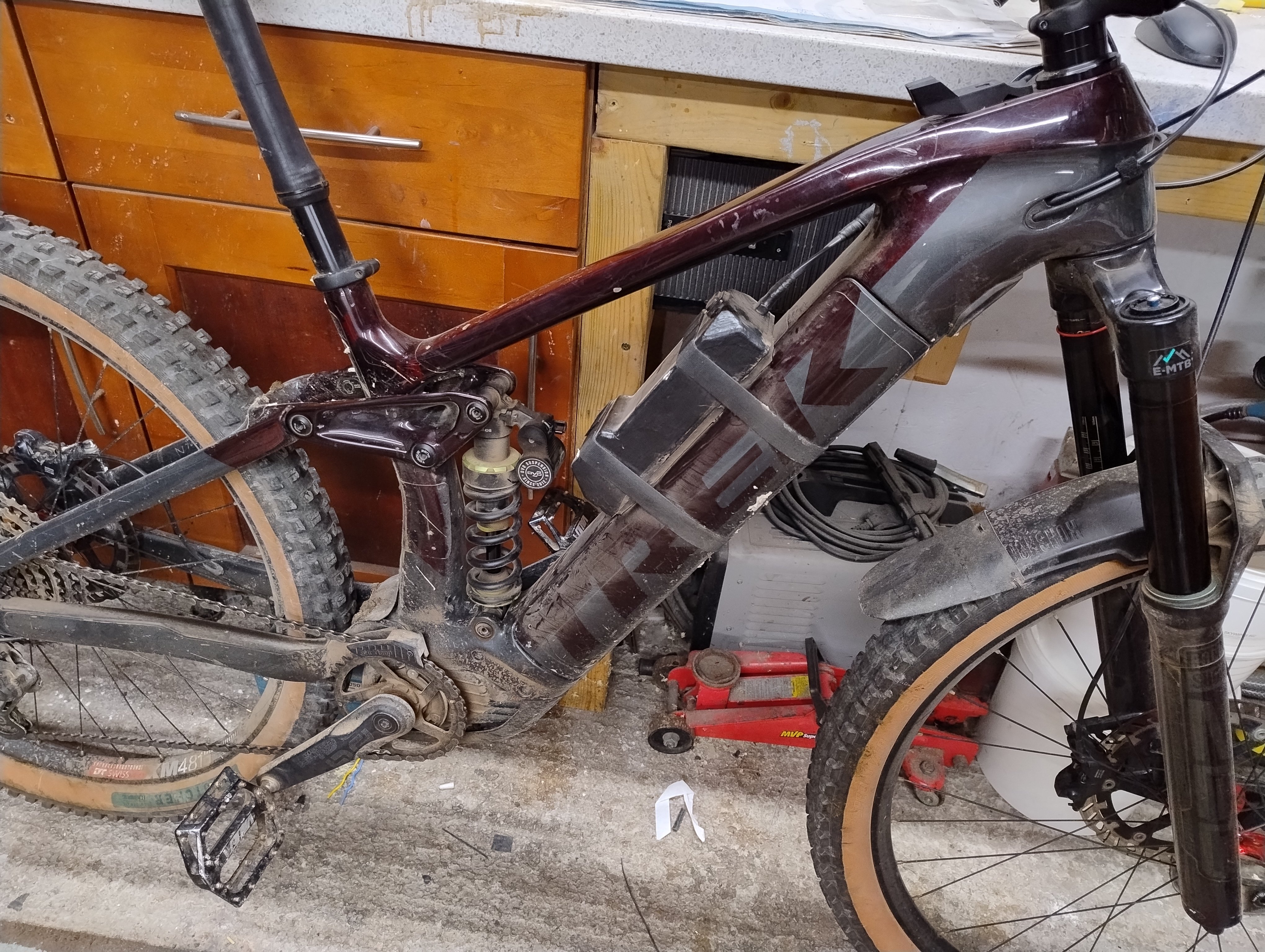
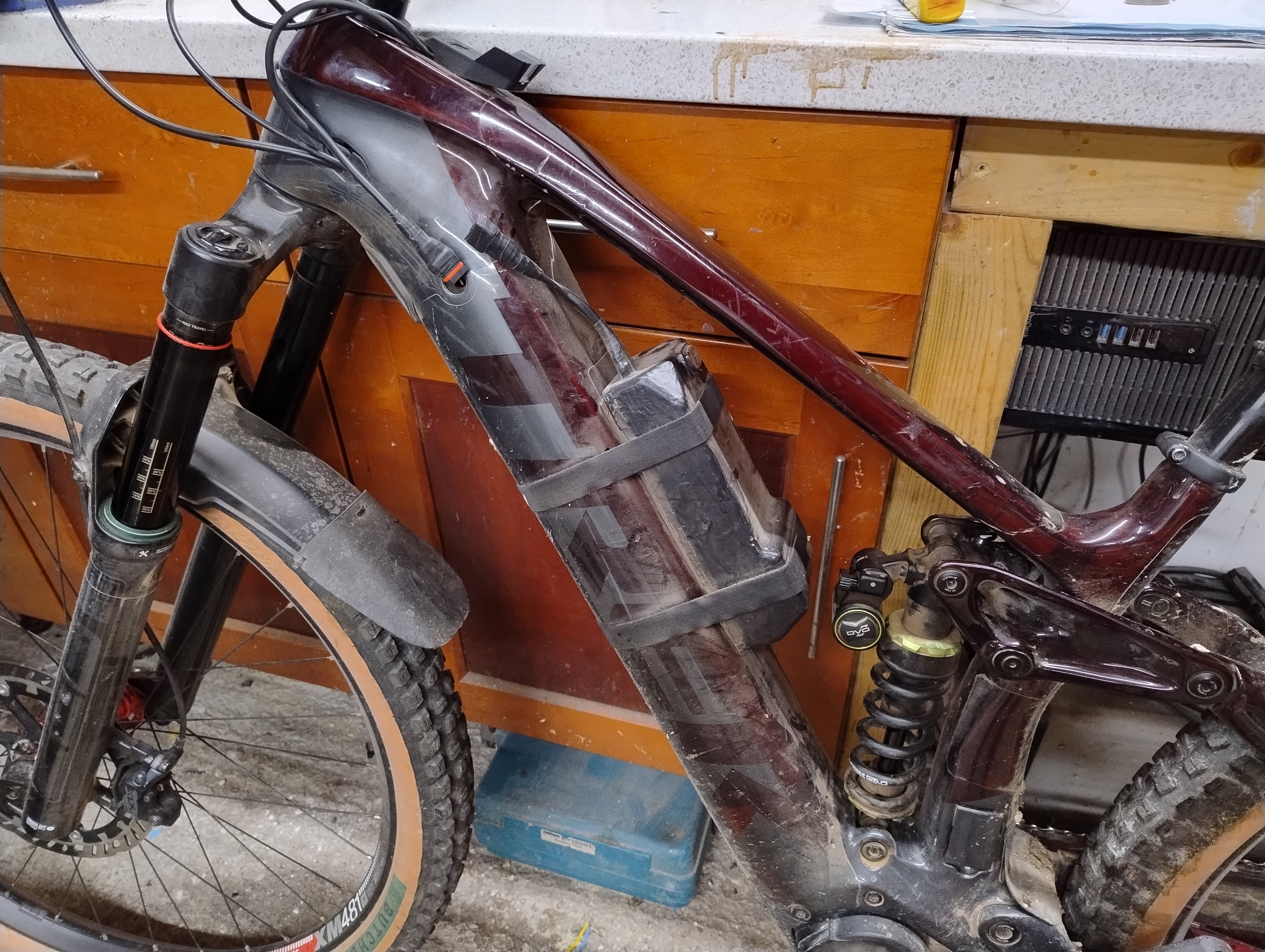
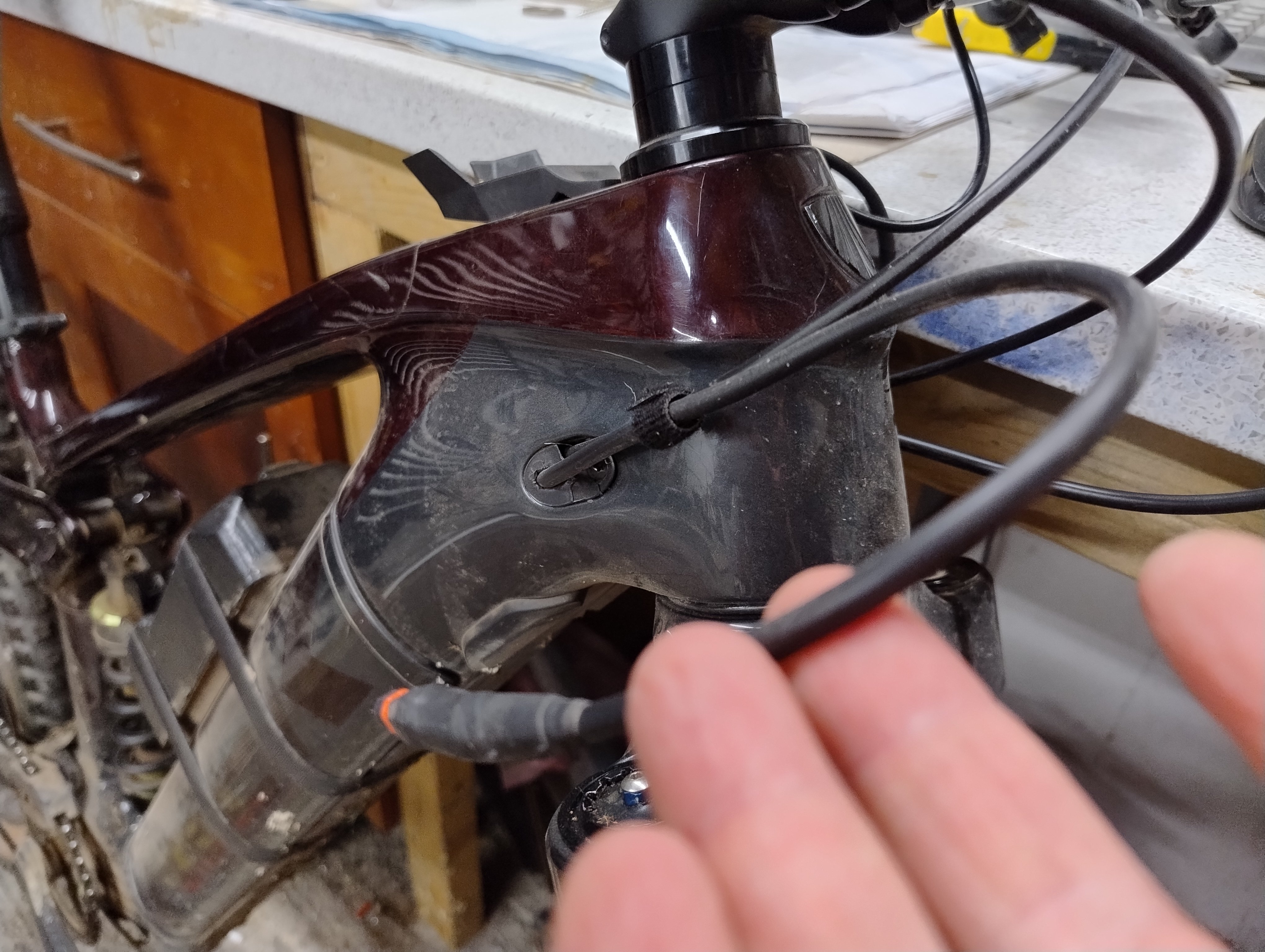
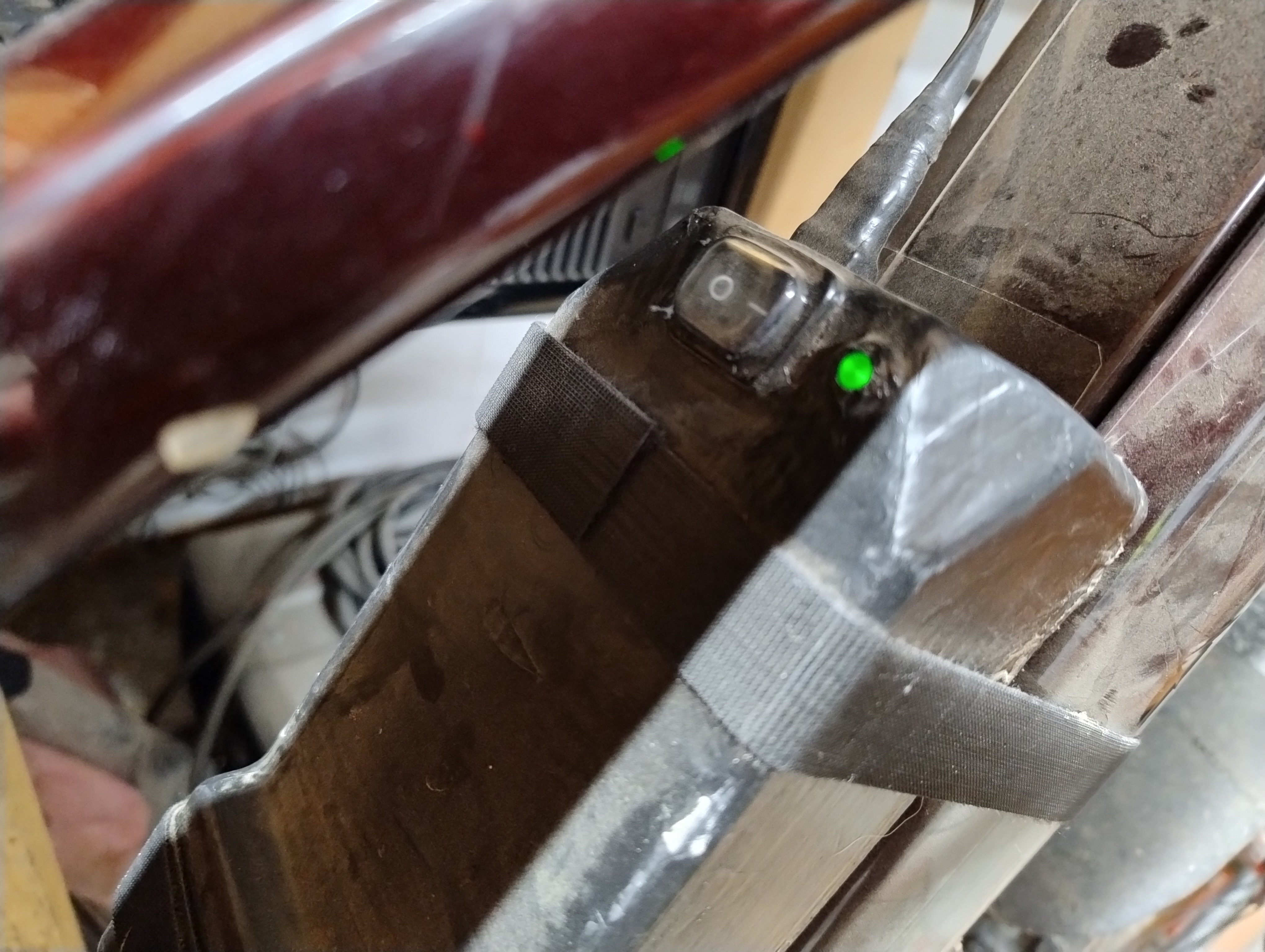
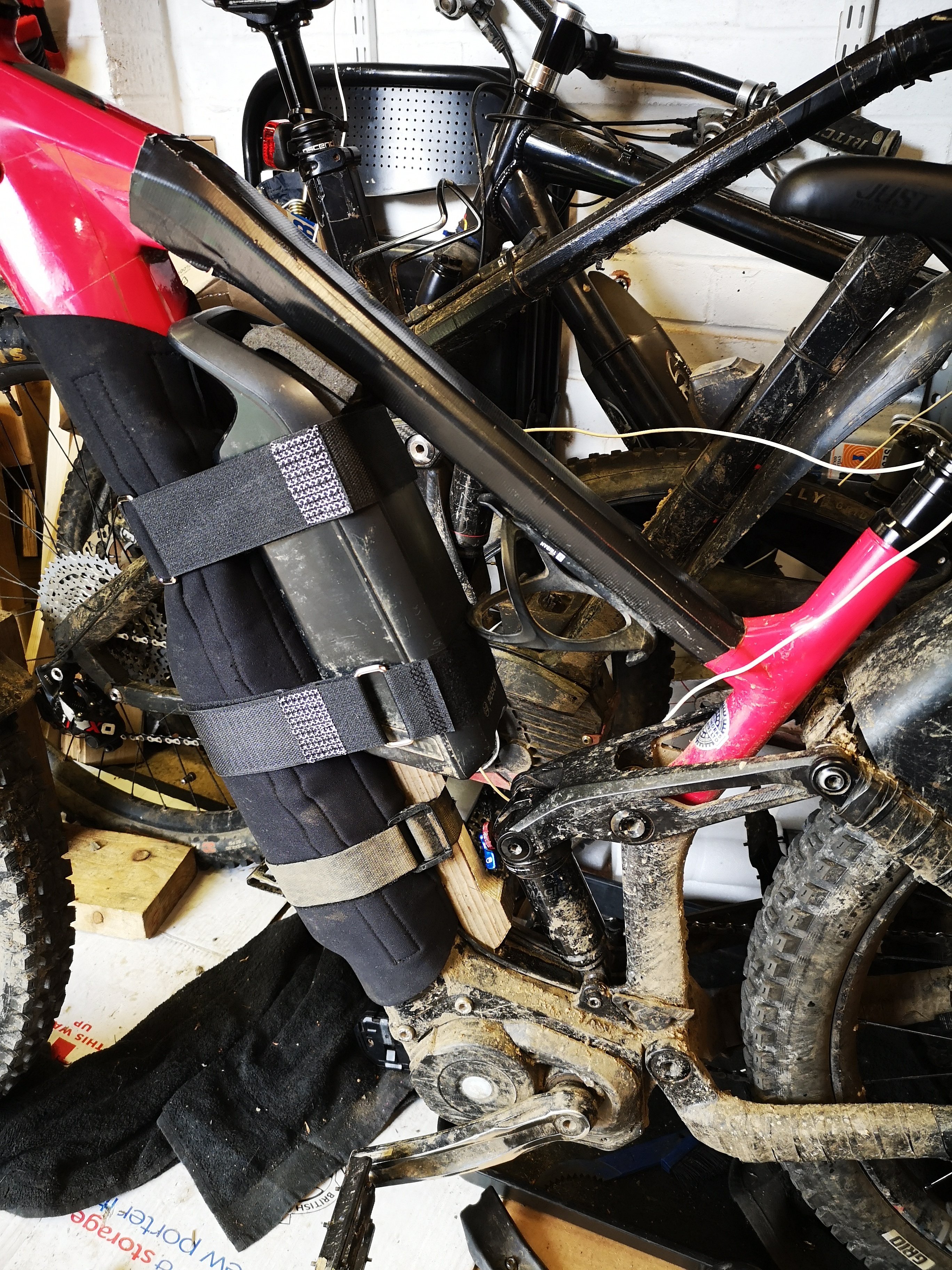
OK, so I've made myself an external pack that functions perfectly. But it hasn't been without some minor hiccups and it is NOT foolproof. In other words, you WILL damage something in a very expensive way if you don't pay strict attention to charge levels etc.

So. I've made a pack with M58T cells, a same port BMS with remote on/off switch, bluetooth cell monitoring (BMS is bulky, but I wanted the functionality) and a small LED to show when the pack is turned on/off. This equates to 200Wh, give or take. I cut and soldered in a flying lead onto the battery harness near the battery connector.

Now - the fun bit. 550 errors after around 10 miles on every ride. I figured the external pack was sagging and the Bosch battery was trying to equalize it causing current draw at low power levels or when stationary, as it tended to happen when backing off after a long climb...

So, I hooked up a power analyzer, the same I use for my RC stuff, and went for a testing session. This consisted of a steep hill of around 300 meters length that I ran repeated pulls up and at the top when stationary the power analyzer would tell me if the external pack was giving or taking power from the Bosch battery. Turns out the Bosch battery was "topping up" the external pack after a pull, indicating the IR of the external setup was considerably less than my 4 year old Bosch pack. So I started adding cable - 50cm at a time until this behavior stopped. Basic, but it works. I then measured this (hilariously long piece of 1.5mm cable!) with a Low Ohm meter and worked out what gauge cable I'd need for the given length.

The bike will not turn on if the external pack is supplying power. You must switch on the bike first, then the external pack. The bike will turn off with the external pack on. The bike will charge with both 4A and 6A chargers, with the caveats previously mentioned.

This setup has worked perfectly for over 700 miles so far. But I'll say this again - this setup is NOT foolproof and unless you know exactly what you are doing (and even if you do) there is a real risk you will cause £££ of damage.

I make no apologies for the state of the bike, or the state of the plasti-dip job on the battery case.:)

IMG_20251009_193356289_HDR.jpg IMG_20251009_193427005_HDR.jpg IMG_20251009_193457311_HDR.jpg IMG_20251009_193509942_HDR.jpg
 
I noticed that there has been a few warnings about potential fire / damage risks in the thread. I am not sure if the advice has been noticed. Please become familiar with the following: Use a BMS designed for parallel connection.

Connecting two lithium batteries in parallel when they have different charge levels (voltages) can be dangerous — even if they’re the same type, capacity, and age. Here’s a breakdown of what can happen and why it’s risky.

The Main Danger: Large Equalization Current

When you connect two lithium batteries with unequal voltages, electricity will immediately flow from the higher-voltage battery into the lower-voltage one in an attempt to equalize the charge.

This current can be extremely high — often hundreds of amps — because lithium batteries have low internal resistance.

That sudden surge can cause:

Overheating of wires and terminals

Melting of connectors or battery tabs

Internal cell damage or thermal runaway (fire risk)

Sudden voltage drop or short circuit–like effects

Permanent damage to one or both batteries (lithium plating, swelling).

Reduced cycle life and capacity imbalance in future use.

BMS (Battery Management System) damage, if present, from reverse or surge currents.


Safe Practices

Always equalize voltages before connecting in parallel.

Bring both batteries to within 0.05V (50mV) of each other.

Use a battery charger or resistor pre-charge circuit to balance them first.

Use a BMS designed for parallel connection.

Fuse each battery individually to prevent a short or runaway event.

Verify same chemistry, age, and capacity.

Never mix Li-ion with LiFePO₄, or old cells with new ones.


If you must connect them: use a resistor to limit inrush/equalizing current, but moving meaningful charge (large amounts of mAh) requires a sustained current for a long time. A few seconds moves only fractions of a mAh.

With the size of our Emtb batteries, you need a dedicated balancing circuit (active or passive) that runs over minutes to hours, to allow safe sustained current, with proper thermal limits and components rated for the power before the full connection to safely equalize voltage.
 
Last edited:
On my Gen 4 bike, I found that the old 500 frame battery fits most of the way into the frame where the front mounted 625 battery fits.
I also managed to get a second 500 frame battery to fit inside the frame triangle.
Admittedly my 1kw bike weighs about 30kg but it didn't involve any electrical work apart from tweeking the plug and it's easy to swap batteries and the Bosch system is happy 👍
IMG_20230705_140329.jpg
IMG_20230705_145454.jpg
 
I noticed that there has been a few warnings about potential fire / damage risks in the thread. I am not sure if the advice has been noticed. Please become familiar with the following: Use a BMS designed for parallel connection.

Connecting two lithium batteries in parallel when they have different charge levels (voltages) can be dangerous — even if they’re the same type, capacity, and age. Here’s a breakdown of what can happen and why it’s risky.

The Main Danger: Large Equalization Current

When you connect two lithium batteries with unequal voltages, electricity will immediately flow from the higher-voltage battery into the lower-voltage one in an attempt to equalize the charge.

This current can be extremely high — often hundreds of amps — because lithium batteries have low internal resistance.

That sudden surge can cause:

Overheating of wires and terminals

Melting of connectors or battery tabs

Internal cell damage or thermal runaway (fire risk)

Sudden voltage drop or short circuit–like effects


Example:

Battery A = 4.2V (fully charged)

Battery B = 3.5V (partially charged)

When connected directly in parallel:

The voltage difference (0.7V) will drive a huge inrush current.

Even if the batteries are the same model, this uncontrolled current spike can exceed their safe discharge Potential Consequences

Fire or explosion risk from overheated cells.

Permanent damage to one or both batteries (lithium plating, swelling).

Reduced cycle life and capacity imbalance in future use.

BMS (Battery Management System) damage, if present, from reverse or surge currents.


Safe Practices

Always equalize voltages before connecting in parallel.

Bring both batteries to within 0.05V (50mV) of each other.

Use a battery charger or resistor pre-charge circuit to balance them first.

Use a BMS designed for parallel connection.

Fuse each battery individually to prevent a short or runaway event.

Verify same chemistry, age, and capacity.

Never mix Li-ion with LiFePO₄, or old cells with new ones.

Tip:

If you must connect them:

Use a pre-charge resistor (e.g., 10–50 Ω for a few seconds) before the full connection to safely equalize voltage.

Then remove the resistor and connect directly once voltages match closely.
Some useful information there, and some very dubious information/recommendations. Did you use AI to come up with this?

Could you please demonstrate using suitable calculations how using a resistor to equalise a pack for a few seconds would be helpful?
 
dubious information/recommendations
Thanks for the feedback, I stand corrected, I did not use a good time frame for the battery equalization, I use lithium batteries with remote control stuff, low capacity batteries, so the time to equalize is not long. However, A resistor does limit inrush/equalizing current, but moving meaningful charge (large amounts of mAh) requires a sustained current for a long time. A few seconds moves only fractions of a mAh.

With the size of our Emtb batteries, you need a dedicated balancing circuit (active or passive) that runs over minutes to hours, to allow safe sustained current, with proper thermal limits and components rated for the power.
 
Last edited:
Thanks for the feedback, I stand corrected, I did not use a good time frame for the battery equalization, I use lithium batteries with remote control stuff, low capacity batteries, so the time to equalize is not long. However, A resistor does limit inrush/equalizing current, but moving meaningful charge (large amounts of mAh) requires a sustained current for a long time. A few seconds moves only fractions of a mAh.

With the size of our Emtb batteries, you need a dedicated balancing circuit (active or passive) that runs over minutes to hours, to allow safe sustained current, with proper thermal limits and components rated for the power.
A charger does this perfectly well. Charge both packs up, connect them. You can't use a dedicated discharging circuit to match (not balancing, it is important to differentiate) the packs by discharging a Bosch battery as you can't turn the pack on to do so. Connecting a fully charged pack with a fully depleted pack equates to a 12V difference, or 1.2A through a 10 ohm resistor - 14.4w peak.

There are no BMS available which will be designed for running in parallel (except large industrial/power bank ones) The way a BMS works naturally lends itself to protecting a pack in parallel, albeit with possible hysteresis issues when both are protecting over discharged packs.

For reference, the peak current I measured when connecting my range extender at 1V difference is 726mA. The biggest danger LONG before any fire or explosion will be to my wallet if I stray out of my 625 powertube's BMS parameters.

RC packs have incredibly low IR and are considerably more 'lively' to deal with than our large, lazy ebike packs.
 
A charger does this perfectly well. Charge both packs up, connect them. You can't use a dedicated discharging circuit to match (not balancing, it is important to differentiate) the packs by discharging a Bosch battery as you can't turn the pack on to do so. Connecting a fully charged pack with a fully depleted pack equates to a 12V difference, or 1.2A through a 10 ohm resistor - 14.4w peak.

There are no BMS available which will be designed for running in parallel (except large industrial/power bank ones) The way a BMS works naturally lends itself to protecting a pack in parallel, albeit with possible hysteresis issues when both are protecting over discharged packs.

For reference, the peak current I measured when connecting my range extender at 1V difference is 726mA. The biggest danger LONG before any fire or explosion will be to my wallet if I stray out of my 625 powertube's BMS parameters.

RC packs have incredibly low IR and are considerably more 'lively' to deal with than our large, lazy ebike packs.
Something like the following: for dual battery protection.

https://www.aliexpress.us/item/3256...&netw=s&device=c&mtctp=e&gatewayAdapt=glo2usa
 
Keep reading
    Browse all

    Similar Threads

    Community Stats

    Since 2018
    669K
    Messages
    40,986
    Members
    Join 30,000+ Riders, it's free!
    Back
    Top