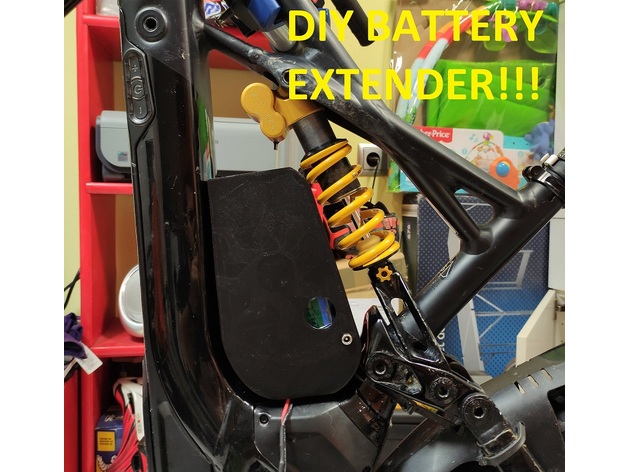
If you are talking two battery packs in parallel then not exactly. If they are isolated thru diodes then that is true until the voltage of the higher voltage battery reaches the voltage of the lower voltage battery it will provide all the current to the motor. As the voltages start to equalize the the lower voltage battery will gradually supply increasing levels of current until both are at the same voltage. At that point capacity and internal resistance will determine how much current each battery provides.
If the two batteries are in parallel and not isolated then it is basically the same except that current will flow from the higher voltage battery to the lower voltage battery as well as to the motor until the voltage equalizes between the two. Connecting batteries with different charge levels/voltages is not a good practice and could result in very high currents that could damage both sets of batteries. The best practice in this scenario would be to connect after fully charging where both batteries at or very near to the exact same voltage. Charging both batteries at the same time with the same charger would be the ideal situation.
If the two batteries are in parallel and not isolated then it is basically the same except that current will flow from the higher voltage battery to the lower voltage battery as well as to the motor until the voltage equalizes between the two. Connecting batteries with different charge levels/voltages is not a good practice and could result in very high currents that could damage both sets of batteries. The best practice in this scenario would be to connect after fully charging where both batteries at or very near to the exact same voltage. Charging both batteries at the same time with the same charger would be the ideal situation.

 .
.