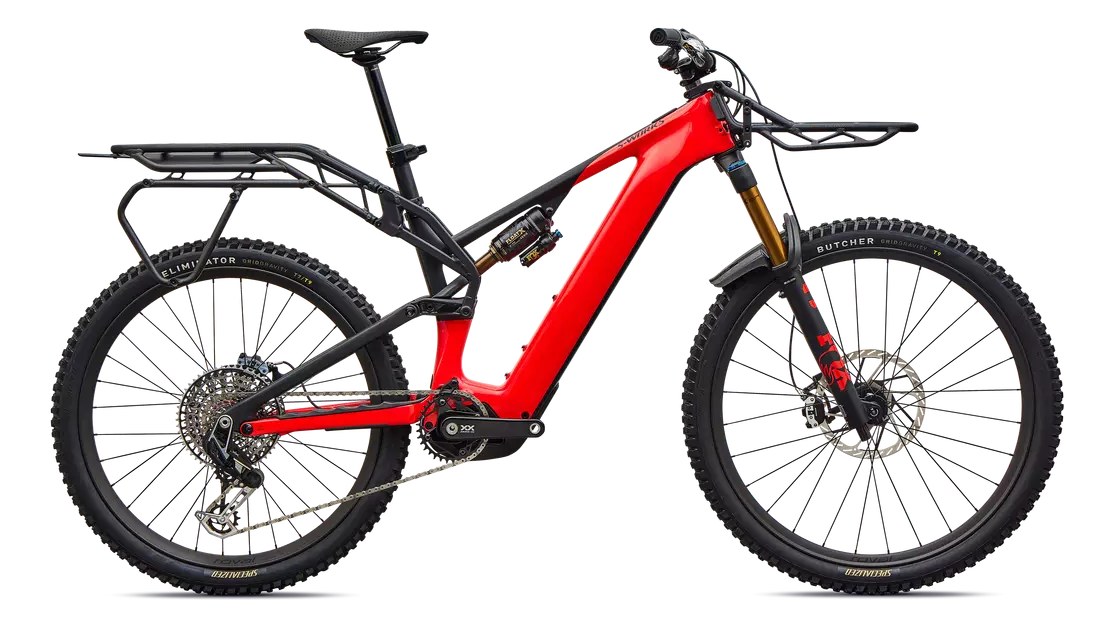
3.1 S-Works
The S-Works tune of Specialized's 3.1 drive unit is the brand's most potent mid-motor yet — a Brose-built, 50-volt unit lifted by a free over-the-air update to a measured 850-watt peak and 111 Nm, and on the ebike-lab dyno it holds its sustained output flat to within 1% for a quarter of an hour, pulling hard long after rivals fade.
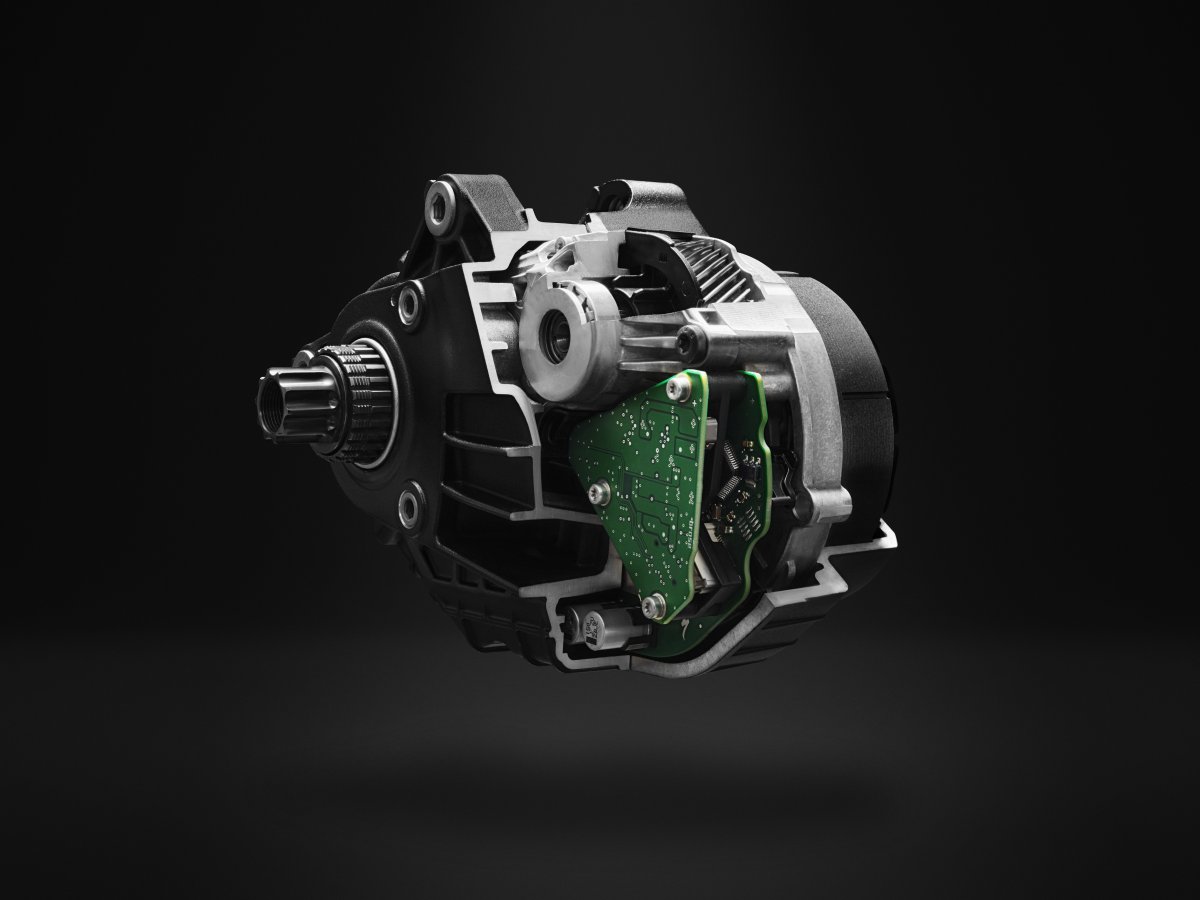
Massive torque from very low rpm builds to a peak around 75 rpm (~850 W), holding flat through the mid-range before easing only at very high cadence near 125-130 rpm.
Specialized 3.1 S-Works is the high-output sibling of the standard 3.1, sharing the exact same physical hardware but unlocked by software to a measured peak of around 850 watts (after the February 2026 OTA update) and 111 Nm of torque. On Velomotion's ebike-lab dyno it tops 840 watts at its roughly 75 rpm sweet spot, with a huge wall of torque available from very low cadence — the kind of low-rpm shove that makes steep, technical pitches feel almost effortless.
What sets it apart isn't headline power, where the DJI Avinox M1 still leads on peak (around 1,000 W), but consistency. Thanks to a 50-volt system and a clever battery-management strategy, under a sustained 250-watt rider input at 75 rpm the 3.1 holds around 750 watts flat to within 1% until thermal derating begins at roughly 15 to 16 minutes. Housing temperatures climb past 90°C before the controller steps in — and when it does, the cut is fairly abrupt at 20–25%, dropping sustained output to a little under 600 watts rather than tapering gently.
Ride character is muscular but controllable. Micro-Tune lets you dial the effort-to-power ratio in fine increments, so the motor amplifies rider input cleanly rather than surging. It's whisper-quiet climbing — reviewers rate it on par with the Bosch CX Gen 5 and a touch quieter than the Avinox — occasionally betrayed by a faint drivetrain rattle on rough descents, and — critically — it delivers maximum power right down to a 2–3% state of charge, so there's no late-ride power sag. In Velomotion's range run it managed 1.52 m of climbing per watt-hour in Turbo (1,279 m climbed on the 840 Wh pack at a 17.5 km/h average).
Sustained power & heat
How long the headline number actually lasts under sustained climbing load.
Holds ~750 W flat to within 1% under 250 W input at 75 rpm until the housing tops 90°C, then cuts 20-25% to a little under 600 W.
Character
The case for and against
Strengths
- 850 W measured peak and 111 Nm — among the strongest mid-motors
- Outstanding thermal consistency: sustained output flat to within 1% for 15+ minutes
- Full power down to 2-3% battery charge
- Free OTA unlock from the standard tune
- Fine Micro-Tune effort-to-power control
Compromises
- Derate, when it comes, is abrupt (20-25%) rather than gradual
- Heavier system than Bosch or Avinox equivalents (3.2 kg motor)
- Trails the Bosch CX Gen 5 on torque (111 vs 120 Nm) and the DJI Avinox on peak power
- Faint drivetrain rattle on rough descents