Rail (625Wh) Rail 7, chain ring nut came loose

andrewgc

Member
Joined
Sep 27, 2023
Messages
50
Reaction score
28
Location
Aubrey Texas
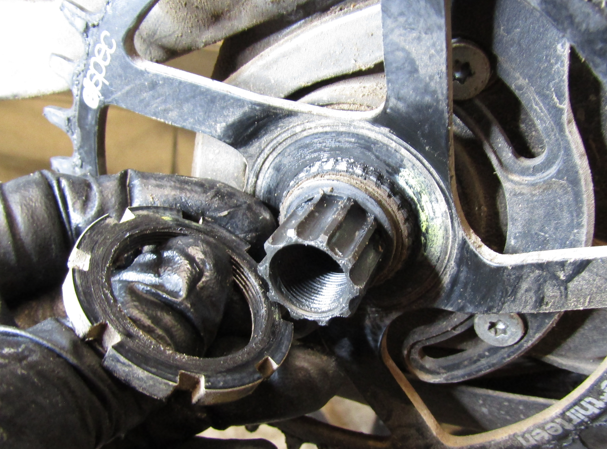
No big deal, but after owning it for 1.5 years, 850 miles, I'd thought it prob wouldnt come loose on its own.
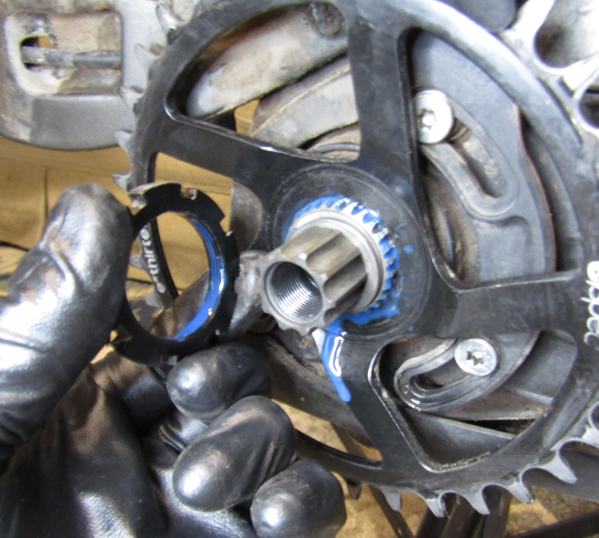
Hopefully the blue Loctite will help. Rode it 25 miles yesterday, and still tight.
1744998781035.png 1744998884360.png
 
⚡ EMTB Pro Go Pro — exclusive discounts & ad-free Peaty's 25% off & more · Ad-free browsing · Pro badge See the deals →
all of the locktite :eek:

on my rail I'd check that nut every ride as its a common issue:rolleyes:

Rich.
probably far more common if the chainring is ally rather than steel since that is the only agent likely to loosen the locknut assuming it was torqued correctly in the first place and an ally chainring will have more flex especially after when well used.............it has been fine for 1.5 years in the post a bove so looks like it was properly torqued initially.
The ISIS crank thread is steel whilst the lock nut is ally.......... and it has very few threads yet is torqued to 25 to 30nm. It means the locknut is torqued very close to its sheer point with the thread pitch stretched to achieve maximum friction. That in turn means once it has come loose it is scrap. Its only c £10 for a new one. Blue Locktite might work for a while but it is not a permanent fix.
 
probably far more common if the chainring is ally rather than steel since that is the only agent likely to loosen the locknut assuming it was torqued correctly in the first place and an ally chainring will have more flex especially after when well used.............it has been fine for 1.5 years in the post a bove so looks like it was properly torqued initially.
The ISIS crank thread is steel whilst the lock nut is ally.......... and it has very few threads yet is torqued to 25 to 30nm. It means the locknut is torqued very close to its sheer point with the thread pitch stretched to achieve maximum friction. That in turn means once it has come loose it is scrap. Its only c £10 for a new one. Blue Locktite might work for a while but it is not a permanent fix.
Thanks, good info. In addition to alloy nut and steel crank threads, the crank is splined thereby eliminating half the threads. So yes, at 25+nm torque that prob right at the shear strength of the threads.
I will order a couple of new nuts, one for a spare.
When I do install the new one, would you suggest red Loctite (272/3), or none at all?
I do appreciate your input.
Thanks, Andrew
 
all of the locktite :eek:

on my rail I'd check that nut every ride as its a common issue:rolleyes:

Rich.
Thank you. I marked the nut postion with a white paint marker when new, and checked it every ride. I guess after a year or so, I kinda quit checking it. My bad.
Thanks, Andrew
 
Thanks, good info. In addition to alloy nut and steel crank threads, the crank is splined thereby eliminating half the threads. So yes, at 25+nm torque that prob right at the shear strength of the threads.
I will order a couple of new nuts, one for a spare.
When I do install the new one, would you suggest red Loctite (272/3), or none at all?
I do appreciate your input.
Thanks, Andrew
Just make sure all threads are clean. I have never seen a spec but i suspect the torque setting is for a dry thread.....locktite or grease will cause over torqueing in that case. As you could probably tell it was not locktited originally.
 
Plenty of info in the below thread:

 
There was bulletin from Bosch to increase the initial torque for a new castle nut…from 25nm to 35nm. Lock tight may not be necessary when installing a new castle nut…but if you plan on using that nut a second time …then yes. A small swipe of blue loc-tight on the female threads only.

You might get away with using a castle nut once or twice …but you still risk the chance of it coming loose.

I keep two spares ($6-10 each). And the new increased torque, on a new nut, can help.
 
blue locktite really only acts as a type of glue. It is mainly effective for nuts/bolts fixed with low torque or higher torque nuts/bolts subject to vibration. Higher strength threadlocks need a pre treatment on non ferrous nuts/bolts ( eg ally) to bond properly and invariably requires heat treatment to break that bond when a nut/bolt needs to be removed.
The likelihood with the chainwheel lockring, is that very small deformations of the chainwheel levers it off. Seems to happen far less with a spider and BCD chainwheel than a DM chainwheel.
 
Keep reading
    Browse all

    Similar Threads

    Community Stats

    Since 2018
    669K
    Messages
    41,003
    Members
    Join 30,000+ Riders, it's free!
    Back
    Top