In our tests and among users, we're seeing increasing problems with the motor mounts of Bosch's current SX and CX e-bike motors. The problem: tolerance deviations that can lead to play and wear on the bushings. Bosch has now commented on the issue and proposed a solution.
Topics in this article
Update from 28.7.25
After discussing the issue in detail with the manufacturer prior to this article, there is now an official statement from Bosch eBike Systems regarding the current issue.
We have added the detailed statement HERE.
Bushing play at Bosch: Wear in everyday testing
Over the past two months, a problem has crept into our test fleet with Bosch's current Performance Line CX motors. The issue first appeared on our
long-term test bike, the Whyte Elyte Evo RS – with noticeable flex and a dull clunking noise in the bottom bracket area.
Ad
| Theme | Short description |
| Problem description | Tolerance variations on Bosch's Performance Line CX & SX engines lead to play and bushing wear on the engine mount. |
| Symptoms | Rattling noises, noticeable flex in the bottom bracket, increased bushing wear. |
| risk | No acute safety risk, but wear and noise are possible. |
| Caused | Plastic bushings on the non-drive side do not adequately compensate for manufacturing tolerances. |
| Solution | Free update kit with revised bushings and bolts (expansion dowel principle), clamp firmly into the frame. |
| From when / models | Available from autumn through Bosch service and specialist retailers; applies to Performance Line CX & SX engines. |
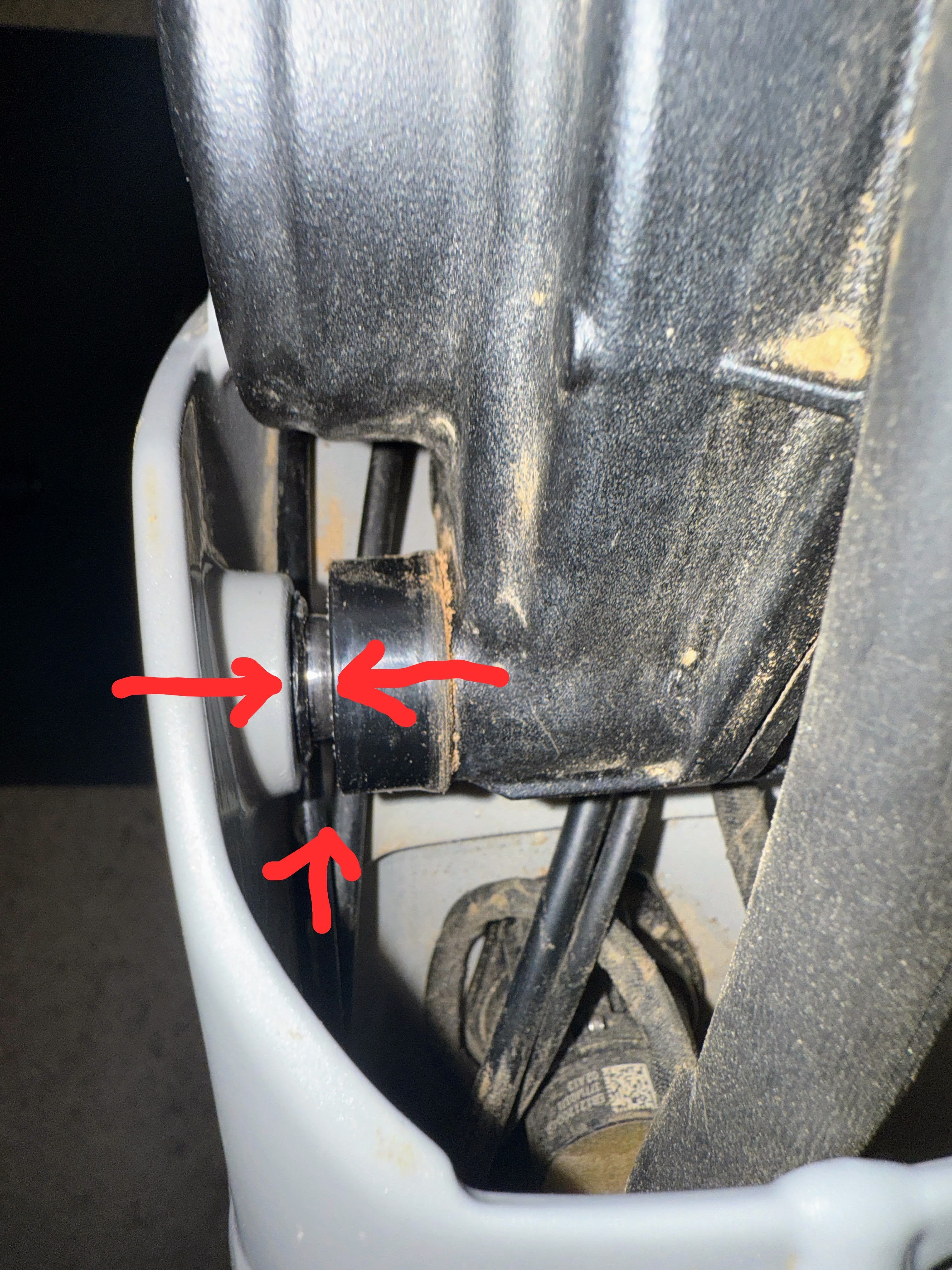
The cause: significant play in the engine mount. Specifically, the two bolts that secure the engine to the frame are visibly wobbling. This is caused by two worn plastic bushings on the left non-drive side. It's important to note: A certain amount of play isn't a problem and, given the "floating" engine mount, is even desirable. However, in some cases, the play worsens or annoying noises occur. Then, action is needed.
External content
privacy policy
Upon re-measuring, we found that the bushing had a 15.9 mm outer diameter and a 16.3 mm wide bushing seat. This discrepancy caused play, which over time resulted in noise or significant wear on the bushings. Hoping for a quick fix, we procured a pair of new bushings as a precaution. However, even before installation, it became clear that these bushings were also undersized for the frame. According to the frame manufacturer, the frame dimensions are correct, so the problem could lie in the fit of the bushings.
Photo: Max Fuchs
Two out of four Bosch bikes in our current E-Enduro test showed the problem – including the Conway Xyron LT 9.0, which had significantly more bushing play than the other candidates.
Briefly explained: Bosch engine mount
With the introduction of the
Light SX drive, Bosch presented a new mounting system for the motor in the frame: Two bolts are said to be sufficient to secure the drive. Both are quick and easy to access from just one side. This is intended to simplify maintenance and service for dealers and end customers. On the drive side, the motor is screwed into corresponding threads with two bolts and clamped there. On the non-drive side, the mounting bolts run "floating" through plastic bushings that are intended to compensate for tolerances between the frame and motor. And this is precisely the problem: On our test bikes – and according to feedback from customers as well – they were unable to adequately compensate for the manufacturing tolerances of various frame manufacturers. The result: too much play in the motor mount on the non-drive side. In extreme cases, this leads to rattling noises, increased flex in the bottom bracket area, or increased bushing wear – as on our Whyte long-term test bike.
Bosch reacts
According to Bosch, the problem has been known for some time, but is limited to a few isolated cases. The manufacturer also emphasizes that minimal play due to the floating bearings is inherent in the design and is unproblematic. Even visible wobbling under load is therefore no cause for concern. Only when the play increases, noises occur, the driving feel deteriorates, or bushings wear out is action required. However, Bosch says it has been working intensively on a revised solution over the past few months due to problematic isolated cases.
Photo: Max Fuchs
The “upgrade kit” (in the picture) works like an expansion dowel: When tightened, a conical bolt head presses the bushing open – which then clamps itself in the frame and now sits firmly in the frame on the side that is not screwed on.
Result: Starting in the fall , new bushings and bolts for the affected engines will be available free of charge from Bosch Service and specialist retailers . The "upgrade kit" works like an expansion bolt: When tightened, a conical bolt head presses the bushing open – which then clamps into the frame and now sits firmly in the frame on the non-screwed side as well. Bosch aims to better compensate for manufacturing tolerances and prevent excessive play in the engine mount. All affected parties can rest assured: According to Bosch, slight bushing play does not pose an acute problem. In any case, there is no safety risk, as the engine itself is supposed to sit firmly in the frame without bushings, thus preventing any risk of falling or anything similar.
The Bosch statement in full
"On eBikes with current Bosch Drive Units (BDU31YY, BDU34YY, and BDU38YY), especially Performance Line SX and CX models from October 2024 onward, play in the motor mount may occur due to excessively large tolerance pairings. The cause lies in the bushing, which is designed as a floating bearing on the non-drive side and ensures that the motor is mounted in a floating manner within the bicycle frame. This design inherently entails certain movement tolerances.


 But I know that he removed the motor from its housing and checked everything, as well as greased other screws


