Hi All
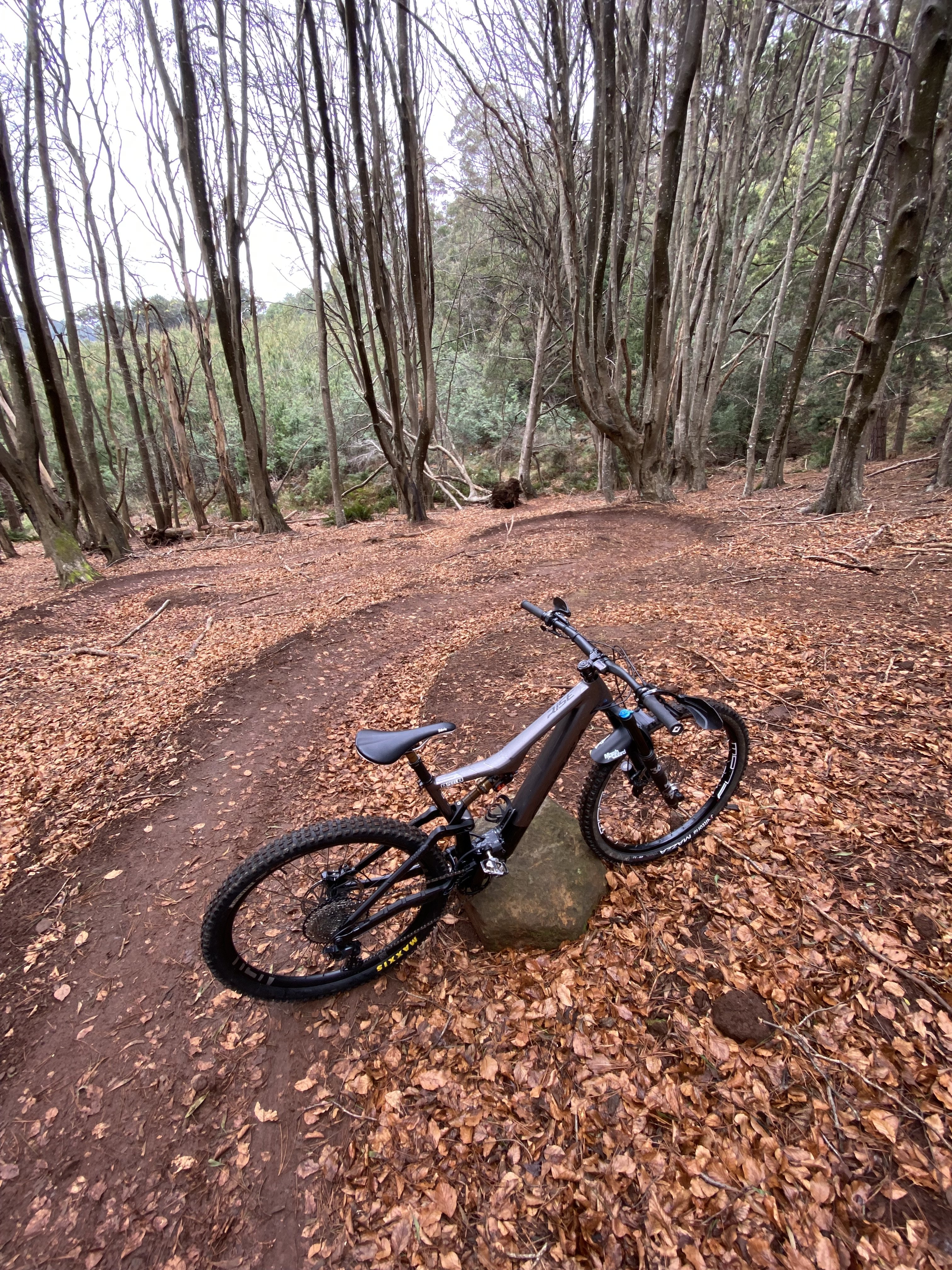
I have a 22 H30 rise that is great and I really enjoy riding but the swing arm flex is bad, I’m a ex DH rider and love to rip turns but the amount the rear tyre rubs on the frame is worrying. Is anyone else experiencing this?
it’s not the wheel flexing as the wheel is strong and tensioned correctly and I have tried different wheels even Carbon wheels to eliminate this, if you hold the main frame and push pull on the wheel you can see the swing arm stays flexing at the shock yoke. the bearings are fine and the preload on the link is set correctly.
My wife has a carbon M frame and it isn’t nearly as flexy.
Does anyone have any suggestions to fix it?
View attachment 125409
Kseven4,
The rear end on the Rise has always been prone to a bit of flexing under really hard turns. I think it's the nature of Orbea's two piece rear triangles.
It looks like you've checked most everything I would check. You don't mention what tire size you are running? The Rise has a really narrow chain stay. I tried 2.5 and 2.6 tires on my Rise, but they rubbed under hard turns. Ultimately, I was forced to run 2.4 wide tires to avoid tire rubbing on the chain stays.
I think I would literally tear the whole rear triangle apart, i.e. chain and seat stays, rear hub, freehub, upper and lower axles, etc. I would slowly go through everything and check axle tolerances and bearings. Leave no stone unturned sort of thing.
Here's something you may want to look at. The weak link in Orbea's rear triangle design is the pinch bolt clamp on the linkage arms. Under hard turning, the linkage arms tend to flex a bit and open up. There's a company called Cascade Components that has developed a new linkage arm for the Orbea Rise. The linkage arm increases rear travel from 140mm to 150mm. You can use your stock rear shock (210mm x 55mm) with Cascade's design.
The cool thing about Cascade's linkage arm design is that they have developed a secondary linkage arm clamping system that prevents the linkage arms from opening up and shifting on the upper axle. Hopefully no more locking compound, setting pre-load or dealing with creaking from a slipped axle. My thought is the clamp may also help stiffen the linkage arm assembly.
Our renowned link for the 2020-2022 Orbea Rise is designed to enhance the ride characteristics like no other modification. It increases travel to 150mm while significantly boosting progression. The increase in progression allows you to tune in a super light off-the-top feel while simultaneously...

cascadecomponents.bike
The picture does not show bearings. New Max bearings come with the linkage.
I really like this preload kit made by Cascade. It's made to work with the linkage arms shown above. Makes you wonder if a person could adapt it to work with the stock Rise linkage arms.
For those reading this post, you should routinely check your rear hub bearings, especially your freehub bearings. The torque from the EP8 motor or any eBike motor for that matter, tends to be really hard on the small freehub bearings, especially the outer free hub bearing which takes most of the abuse from the motor.
When the rear hub/free hub bearing(s) start to wear out, play will develop. The hub and or freehub bearing play will allow the rear hub to shift under hard turning despite the rear hub being clamped by the axle and drop outs. You can typically tell a hub or free hub bearing(s) is starting to wear when you hear the sound of your rear brake rotor rubbing on the rear caliper during a hard "Railing It" type of turn. Another clue will be a creaking/knocking sound while pedaling. The sound will start off soft. As the bearing wear worsens over time, the sound will gradually get louder and you'll swear the noise is coming from your motor. It'll be your rear hub bearings.
It's been my experience that the drive side rear hub and freehub bearing will wear first before the non-drive side hub bearing start to wear out. I've ran both D.T. Swiss and Industry Nine Hydra hubs on my Rise at one time or another. I typically had to replace the drive side rear hub bearings about every 800 to 1,000 miles. The bearings are cheap and you can replace them individually as they wear, however I like to replace everything instead of a single bearing.
To tell if you have a rear hub bearing going bad, place your bike in a stand. Spin the rear tire and place your hand on the chain stay as the wheel spins. You should feel absolute smoothness and no vibration at all. If you feel any hint of vibration or roughness transmitting through the chain stay to your finger tip, you have a rear hub bearing going bad. To check the free hub bearings requires removing the cassette or cassette and freehub and individually spin each bearing with your finger. The bearing should spin silky smooth. If the bearing feels notchy or rough, it needs to be replaced.
I hope this helps.
Be safe,
Rod