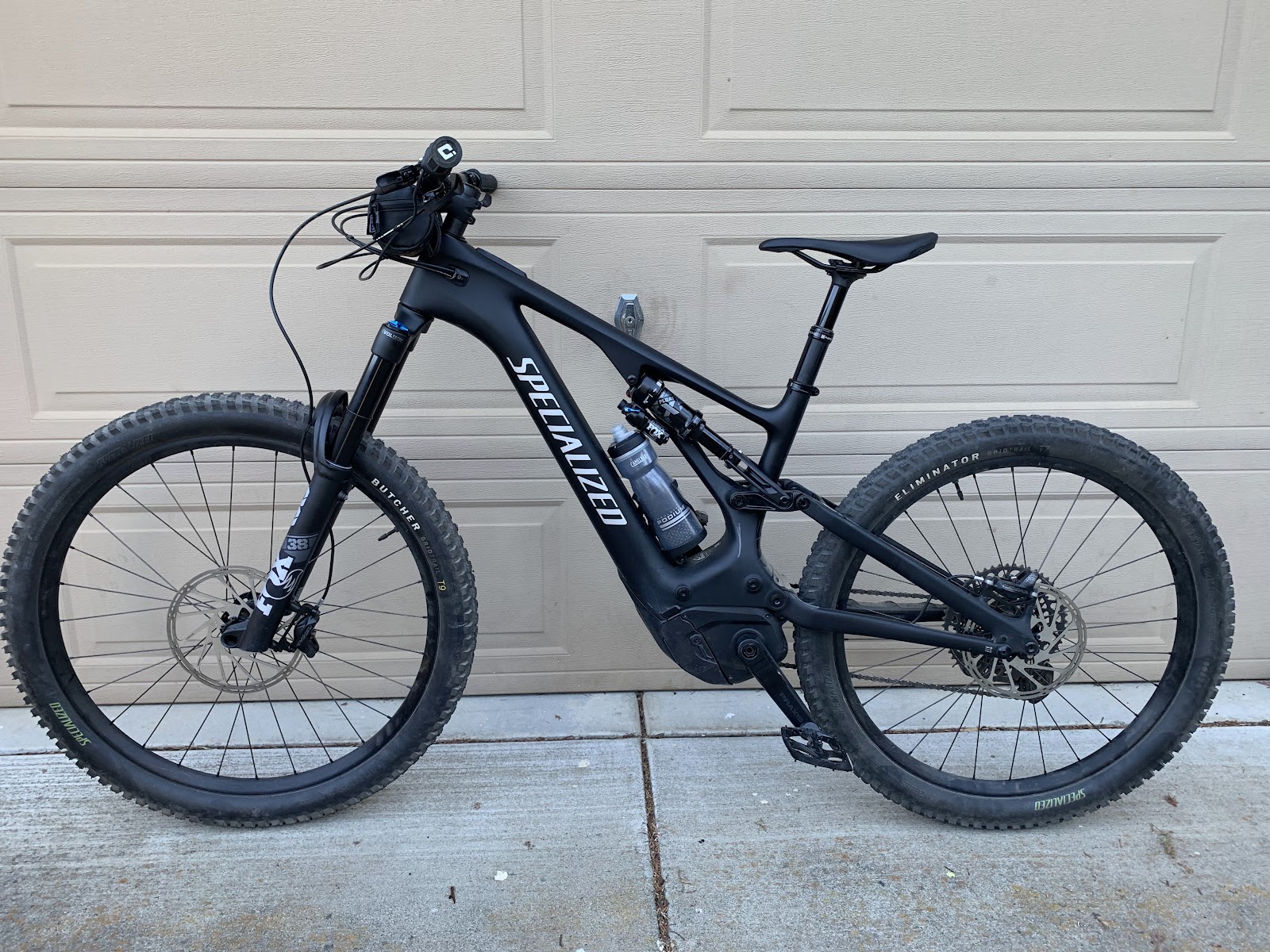
Hoping to hear from other 200lb + riders riding a Levo Comp or Turbo Levo Comp (alloy or carbon) who've decided to upgrade the OEM suspension, why, how, and the results you are getting. Having paid a decent price for my bike new, I guess I should have known this is not much different from dirt motorcycles, where they do their best to provide a universal spec and design, yet it does not always span the different rider weights and valving necessary to meet everyone's needs.
The stock Fox Rythym 36 fork might have been okay for me if I weighed 160lbs, and did not have to air up the fork so much to accommodate more for my rider weight kitted up. Also having the added rigidity of the more robust 38 was "immediately evident" in other's words I've read, there is no chassis twisting or wheel darting around in rough stuff now, again - for my total rider weight. Hope to hear from others doing something similar.
@Rod B. question for ya if you happen to know or have related experience. I live 100miles from Fox Racing, and they just started to put out the new version 2025 Grip X and Grip X2 fork and damper design about 4-5 weeks ago. My local dealer has only seen my backordered fork set come in so far. Still relatively new in my area, more orders trickling out now worldwide seeing comments on forums online as of May 2024. Not much to reference yet as I gather it now.
In your experience and circles do you by chance know if I were to drop from the recommended 110lb psi [for my weight], down to something like 95lb psi, [-15lbs] thus lowering the fork some [to experiment] with front ride height, could i damage the fork internally somehow even with easy riding? What I'm trying to do is simulate a 160mm ride height to first compare to what I had before at 160. Afterwards, I'll air back up, to see what 170mm truly feels like in the chunky stuff. If not recommended to do this, please let me know your thoughts, thanks.
If you haven't had a chance yet, I encourage you to read my suspension articles when you have a free moment. You'll find them very informative. The articles are basic and will help you understand what is going on internally with your fork and rear shock. They will help you understand what happens internally when you lower your air spring pressure which will alter your spring rate. You've paid a lot of money for the suspension on your Levo. You want to get the most bang for your buck by tuning your suspension perfectly to your weight, riding style and local riding conditions.
Lowering the air pressure in your fork
will not damage your fork. I want to add one exception. Internally, at the very bottom of your fork lower tubes there are black rubber bottom out pads. These rubber pads cushion the upper stanchions when they bottom out against the pads at full compression. Think of them as a bump stop. If you repeatedly bottom out your fork hard, i.e. the upper stanchions slam hard into the bottom out pads, you can damage the stanchions, bottom out pads and possibly the seals in the damper and air spring shaft. An occasional bottom out isn't going to do it, however you don't want to make a habit of bottoming your fork and rear shock out. When you bottom out a fork or rear shock, it places stress on the head tube, down tube or the rear triangle on the bike.
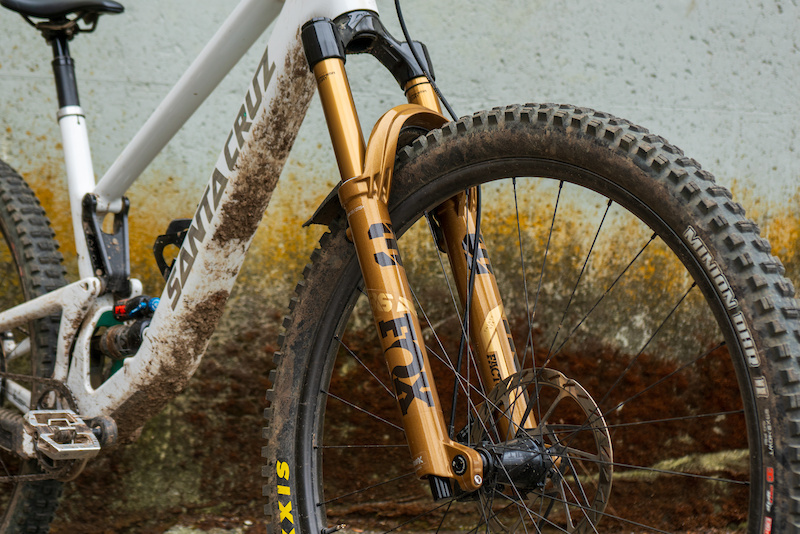
You'll notice a black rubber "O" ring on your Fox 38's upper stanchion. The "O" ring has two uses. The first is to set your initial sag. Secondly and more importantly, the "O" ring helps you tune your suspension as you ride. The "O" ring will let you know how your suspension is performing. All forks or shocks have a maximum travel. For forks, the maximum safe travel is typically around 10mm below the fork crown. When you ride, you never want to see the "O" ring pushed up hard against the crown. If you do, this means you bottomed out the fork.
Ideally, you want to see the "O" ring on or about 10mm from the crown after a hard series of jumps, drops, rocky descents, etc. This tells you that your air pressure/volume/spring rate is set correctly. On the other hand, you also don't want to see the "O" ring only about mid travel after a series of jumps, drops, rocky descents, etc. This means you're not taking full advantage of your suspension, your air pressure/volume/spring rate is set too high.
There is also another important aspect to running "Too" low an air spring pressure. In this picture, I'm on my Orbea Rise with Fox 36, FIT4 with 160mm of travel. I have about 9,000 miles on this fork. The rock face is at a fairly steep angle. When I reach the bottom, the fork will begin to compress due to my body weight, momentum and gravity. As the fork nears mid travel, resistance to compression will increase in the fork's air spring chamber. This is due to the tuning I have in the air chamber which is based on air pressure and or, air volume spacers. As the fork compresses further, the resistance continues to increase. Eventually the air spring's resistance nulls out the affect of gravity and compression. This air spring resistance is known as the air spring curve rate.
Where I to run "Too" low an air pressure, my fork air spring would not offer enough resistance to overcome gravity and the effect of my body pushing down on the fork. The fork would eventually bottom out and all compression absorption would cease. The sudden stop would immediately cause my body weight to shift downwards and forwards and a fantastic trip over the bars would result. Wahoo!
You can run a low air pressure. Just make sure it's not so low you bottom out the fork and crash. I hope this helps you better understand the effects of running an air spring pressure that is too low. Bottoming out a fork is never a good thing and it could lead to a bad crash.
You asked earlier about heavy riders on Levo's. My buddy John weighs 270 lbs. and rides a Levo Carbon Comp. He has a ZEB 170 of the front of his bike. He's running the stock Float X off of the rear. John has a sticker on his Levo that states "You ever seen a fat man fly?" John likes to hit jumps, big drops and rock gardens. He's never had an issue with frame flexing, etc. The Levo is an incredibly good bike.
Here are some pictures from my friends and I most recent bike trip to Hurricane Utah. We were trying to avoid all the rain California's been receiving. The rain and snow followed us to Utah, it was in the upper 30's and windy on some days.
Gooseberry Mesa
John on "Salt on the Rim", Guacamole Mesa
Precipice Trail, Saint George Utah
Sidewinder, Precipice and Suicidal Tendencies, Saint George Utah. Left to right my buddy Dan on his Trek Rail, Rob on his Pivot AM, John on his Trek Rail and Ed on his Orbea Wild. Not seen in the picture is Rob on his Pivot Lt and me on my Levo.
Guacamole mesa flow with Zion National Park as a beautiful back drop.
Sidewinder Trail, Saint George Utah. Rob aka Rusty Iron on eMTB Forum in blue. My buddies Dan and John on the trail above us.
My brother Rich (Background) and I on Gooseberry Mesa. My absolute favorite type of riding is technical rock crawling on the mesa's of Hurricane Utah.
The IMBA Hurricane Rim Epic Trail. Who doesn't love a little high speed flow...
Gould's Rim, Hurricane Rim Trail
John and my Levos, post ride beer stop at the Main Street Cafe. Awesome!

 www.pinkbike.com



 Not sure about eMTB yet!