Any evidence of good engineering regarding waterproofing?

billium

Active member
Joined
Jul 10, 2022
Messages
146
Reaction score
123
Location
Sussex
I've seen lots of talk about new gear design to minimize rattle and improve efficiency but I have not found any official or 3rd party discussion about waterproofing.
I'm not suggesting it is bad but given that it would take a couple of years for issues to surface, it would be nice to know they have done their homework to withstand British winter riding.
Early Brose motors have poor seal engineering and even Bosch motor seals can be improved significantly - see the Ebike motor centre's upgrade kits for details.

It would be nice to know that DJI did it right the first time.

Has anyone done a teardown to see how they keep the water out?
 
EMTB PRO
25% off e*thirteen, Peaty’s & more with PRO
Member-only deals from e*thirteen, Peaty’s, PEMBREE and Magicshine · ad-free browsing · PRO badge · Living Intelligence Reports
See the deals →
From £1.99/month
I've seen lots of talk about new gear design to minimize rattle and improve efficiency but I have not found any official or 3rd party discussion about waterproofing.
I'm not suggesting it is bad but given that it would take a couple of years for issues to surface, it would be nice to know they have done their homework to withstand British winter riding.
Early Brose motors have poor seal engineering and even Bosch motor seals can be improved significantly - see the Ebike motor centre's upgrade kits for details.

It would be nice to know that DJI did it right the first time.

Has anyone done a teardown to see how they keep the water out?
"Any evidence of good engineering regarding waterproofing?"

That ^^^ is quite funny. ;)
 
I've not seen any teardown regarding the water resistance, but the m2s motors are ip66 rated.
 
I've not seen any teardown regarding the water resistance, but the m2s motors are ip66 rated.
Yeah, I was going to say the same thing. The difference between the M2S at IP66 and the Bosch CX Gen5 at IP54 seems very relevant to the typical use of a MTB. IP54 can tolerate rain, but not high pressure spray or submersion, whereas IP66 can tolerate both of those.

That all of course assumes that there isn't some little flaw in the M2S waterproofing that only shows up in the real world, but if you put faith in these sorts of industrial ratings then there was definitely more thought put into waterproofing on the M2S

I feel there has been a lack of attention in the industry to this waterproofing issue, so I just want to also call out (in a good way) Gobao which has an IP67 rating on their newer motors, which allows for full submersion in up to 1 meter of water for up to 30min. This is the motor that is being white labeled by several companies including Aventon and a couple smaller European brands.
 
Some time passed since the Avinox's birth and I haven't seen/read any case in which the motor was destroyed because of water ingress...guess there aren't so many cases. In any case I don't think anybody can implement a worse waterproofing than Bosch :-)

As for IP66, it won't tolerate jets with pressure higher than 100kPa (3m distance). So forget about washing your bike with high pressure (100bar/10mPa) Carcher style washing devices. No (e)bike motor will survive that.
 
Some time passed since the Avinox's birth and I haven't seen/read any case in which the motor was destroyed because of water ingress...guess there aren't so many cases. In any case I don't think anybody can implement a worse waterproofing than Bosch :-)

As for IP66, it won't tolerate jets with pressure higher than 100kPa (3m distance). So forget about washing your bike with high pressure (100bar/10mPa) Carcher style washing devices. No (e)bike motor will survive that.
Motors can be made waterproof for both spray and immersion. Consider your typical electric car - it won't die because it spent a day on a rainy motorway at 70mph or went through a few fords! I don't think it is unreasonable to expect that level of protection from any EMTB motor.

If the design team spent time on this and perhaps used better seal systems then it may have increased the motor price by a pound or two. Question is - did they?

As examples, here are the mitigations to poor original designs made my Ebike motor centre pulled from their upgrade pages.
I suspect similar mods would cost pennies if performed in the factory.

For Brose
  • Single lip rotary shaft seal to stop water ingress into the crankshaft needle roller bearing and beyond (This also stops rust damage to the crankshaft bearing surface and premature failure of the crankshaft needle roller bearing)
  • Genuine Brose bearing cover seal for the right hand crankshaft ball bearing (Not factory fitted until 2017)
  • Waterproof long life grease packed between outer bearings and motor covers. (This helps stop water sitting in these areas and seeping into the outer bearings).
  • We also fit an external X-ring seal each side of the crankshaft to further stop the chance of any water ingress into the motor.
  • We remove the two ECU cover screws and seal these to stop water ingress into the ECU.
  • Finally, we treat and coat the motors’ electric plugs to stop corrosion and water entering the ECU by capillary action along the wires.

For Bosch
  • The original torque tube sealing ring is removed and an Oilite self-lubricating bronze bush is fitted to ensure maximum crankshaft support. This stops crankshaft oscillation and aids sealing.
  • After the Oilite bush, we fit a single-lip rotary shaft seal, with the lip facing outwards to stop water ingress into the crankshaft and torque tube area. This stops rust damage to the crankshaft bearing surface, premature failure of the crankshaft support bushes, and internal damage to the printed circuit board (PCB) and all other components.
  • The left hand crankshaft bearing is replaced with a double-sealed bearing to prevent water ingress into or through this bearing.
  • Waterproof long life grease is packed between outer bearings and motor covers. This helps stop water sitting in these areas and seeping into the outer bearings.
  • We also remove the PCB and add a silicone coating to the plug assembly gasket seal.
  • Silicone gasket sealant is also added to the aluminium motor cover gasket. Water ingress into this area corrodes the gasket faces of the magnesium motor cases.
  • Finally, we treat and coat the motors’ electric socket pins to limit corrosion.
 
Put quality silicone grease that doesn't rot rubber (e.g. Servisol) on every little rubber o-ring that you can find.
The ones on the tiny Hugo plugs and all other plugs. This improves the water resistance enormously for these connectors.
 
I would like to see serviceable outer seals on all motors - could be simple press fit like front forks or a small bolt-on carrier that the seal is pressed into. The tricky part is the concentric path between the chainring and the pedal crank but it can be done. Then we could easily take the proactive step to install a new 'seal kit' every year taking perhaps 30 mins without removing and opening up the motor, voiding warranty etc.
 
You've just described Bosch motors.
Partially.
Yes they have their seal kit which I have used on my Cx but it only has two seals & does not address the concentric path between the chainring and the crank that water could enter.
 
No idea what's meant by concentric path but CX motors have two seals per side with a layer of factory grease between them providing an extra tier of protection. This topic comes up regularly here, after all there is only so much to discuss about ebikes but either way, the reality is most electric bikes are not mountain bikes, ragged through ditches & so the manufacturers generally build them to the market they're serving & to seal them fully would be both prohibitively expensive & unacceptably power sapping.

Certainly with Bosch motors, the best thing you can do to extend their life is to incorporate removing the outer seals & replenishing the grease layer to your routine maintenance. Some good looking guy here made a video on how to do it.
 
No idea what's meant by concentric path but CX motors have two seals per side with a layer of factory grease between them providing an extra tier of protection. This topic comes up regularly here, after all there is only so much to discuss about ebikes but either way, the reality is most electric bikes are not mountain bikes, ragged through ditches & so the manufacturers generally build them to the market they're serving & to seal them fully would be both prohibitively expensive & unacceptably power sapping.

Certainly with Bosch motors, the best thing you can do to extend their life is to incorporate removing the outer seals & replenishing the grease layer to your routine maintenance. Some good looking guy here made a video on how to do it.
if you pedal backwards you will see that the crank turns but the chainring does not. This is because the chainring is attached to a hollow shaft that the crank sits inside - concentrically. Water can get in the gap between them unless it is sealed somehow. Since pretty much all motors work this way, they need three seal sets - one on the left side and two on the drive side.
 
Well there are very good reasons why ebike motors have one way clutches & again, they are built to the requirements of the market which again, largely excludes dirty mountain bikers. It is possible to let the perfect be the enemy of the good.
 
…Some good looking guy here made a video on how to do it.
I think that famous video has gone global now. It certainly changed my maintenance routine …Bosch seal kit. At least once a year. I think the grease plays an important part. (Da green stuff).

Btw, if you like Morgan Freeman or David Attenborough documentaries, you’ll like this. 👍🏻😁
 
Last edited:
I'd like a link to this video.

I rode my Bosch through a running river 2x in the last week so I should probably pay attention to these things.
 
Motors can be made waterproof for both spray and immersion. Consider your typical electric car - it won't die because it spent a day on a rainy motorway at 70mph or went through a few fords! I don't think it is unreasonable to expect that level of protection from any EMTB motor.

If the design team spent time on this and perhaps used better seal systems then it may have increased the motor price by a pound or two. Question is - did they?

As examples, here are the mitigations to poor original designs made my Ebike motor centre pulled from their upgrade pages.
I suspect similar mods would cost pennies if performed in the factory.

For Brose
  • Single lip rotary shaft seal to stop water ingress into the crankshaft needle roller bearing and beyond (This also stops rust damage to the crankshaft bearing surface and premature failure of the crankshaft needle roller bearing)
  • Genuine Brose bearing cover seal for the right hand crankshaft ball bearing (Not factory fitted until 2017)
  • Waterproof long life grease packed between outer bearings and motor covers. (This helps stop water sitting in these areas and seeping into the outer bearings).
  • We also fit an external X-ring seal each side of the crankshaft to further stop the chance of any water ingress into the motor.
  • We remove the two ECU cover screws and seal these to stop water ingress into the ECU.
  • Finally, we treat and coat the motors’ electric plugs to stop corrosion and water entering the ECU by capillary action along the wires.

For Bosch
  • The original torque tube sealing ring is removed and an Oilite self-lubricating bronze bush is fitted to ensure maximum crankshaft support. This stops crankshaft oscillation and aids sealing.
  • After the Oilite bush, we fit a single-lip rotary shaft seal, with the lip facing outwards to stop water ingress into the crankshaft and torque tube area. This stops rust damage to the crankshaft bearing surface, premature failure of the crankshaft support bushes, and internal damage to the printed circuit board (PCB) and all other components.
  • The left hand crankshaft bearing is replaced with a double-sealed bearing to prevent water ingress into or through this bearing.
  • Waterproof long life grease is packed between outer bearings and motor covers. This helps stop water sitting in these areas and seeping into the outer bearings.
  • We also remove the PCB and add a silicone coating to the plug assembly gasket seal.
  • Silicone gasket sealant is also added to the aluminium motor cover gasket. Water ingress into this area corrodes the gasket faces of the magnesium motor cases.
  • Finally, we treat and coat the motors’ electric socket pins to limit corrosion.
I have had the bosch upgrade done by performance line bearings,luckily i caught the crank bearing just in time,so i sent it off for a full rebuild and bushing upgrade,motor running perfectly with no issues,and the peace of mind that it now has better bearing
S than stock is a bonus,best 400 squids ive spent 👍
 
I've not seen any teardown regarding the water resistance, but the m2s motors are ip66 rated.

Yeah, I was going to say the same thing. The difference between the M2S at IP66 and the Bosch CX Gen5 at IP54 seems very relevant to the typical use of a MTB. IP54 can tolerate rain, but not high pressure spray or submersion, whereas IP66 can tolerate both of those.

That all of course assumes that there isn't some little flaw in the M2S waterproofing that only shows up in the real world, but if you put faith in these sorts of industrial ratings then there was definitely more thought put into waterproofing on the M2S

…Gobao which has an IP67 rating on their newer motors, which allows for full submersion in up to 1 meter of water for up to 30min…

As for IP66, it won't tolerate jets with pressure higher than 100kPa (3m distance). So forget about washing your bike with high pressure (100bar/10mPa) Carcher style washing devices. No (e)bike motor will survive that.

Obviously there may be a difference between what a manufacturer claims is the Ingress Protection (IP) rating of a given motor and the reality.

The OP was after evidence, but in most cases all that will exist is anecdote via a self selecting sample posting on the internet. All manufacturers seem to ‘self certify’ the IP rating, has anybody asked for a copy of the independently assessed and certified ISO certificate for IP for anything they buy?

Best you seem to get is a statement of compliance which might be all you need.

Personally, I’ve not yet lost an e-bike motor of any type to water ingress, but lots of people seem to.
 
Obviously there may be a difference between what a manufacturer claims is the Ingress Protection (IP) rating of a given motor and the reality.

The OP was after evidence, but in most cases all that will exist is anecdote via a self selecting sample posting on the internet. All manufacturers seem to ‘self certify’ the IP rating, has anybody asked for a copy of the independently assessed and certified ISO certificate for IP for anything they buy?

Best you seem to get is a statement of compliance which might be all you need.
And, I am not that reassured by IP66 'compliance' when you look at the test spec - essentially water jet for 1 minute with no evidence of intrusion. I can imagine a motor with wooden casing, no seals (just plenty of grease around the cranks) passing that spec. Of course it would be rusted solid a few days later.
The design spec for the engineers could be a simple 'motor must pass IP66' - which is kinda bare minimum for EMTB in UK
Or it could be 'motor must survive frequent dunkings and very wet riding over several weeks and IP66' - which would likely mean it would pass IP67 too.

I would feel much better if any of the video interviews about the motor design had discussed what they did for water ingress vs just focusing on gear design, noise & efficiency. Having a water/moisture sensor inside the case seems like a no-brainer too.
 
And, I am not that reassured by IP66 'compliance' when you look at the test spec - essentially water jet for 1 minute with no evidence of intrusion. I can imagine a motor with wooden casing, no seals (just plenty of grease around the cranks) passing that spec. Of course it would be rusted solid a few days later.
The design spec for the engineers could be a simple 'motor must pass IP66' - which is kinda bare minimum for EMTB in UK
Or it could be 'motor must survive frequent dunkings and very wet riding over several weeks and IP66' - which would likely mean it would pass IP67 too.

I would feel much better if any of the video interviews about the motor design had discussed what they did for water ingress vs just focusing on gear design, noise & efficiency. Having a water/moisture sensor inside the case seems like a no-brainer too.
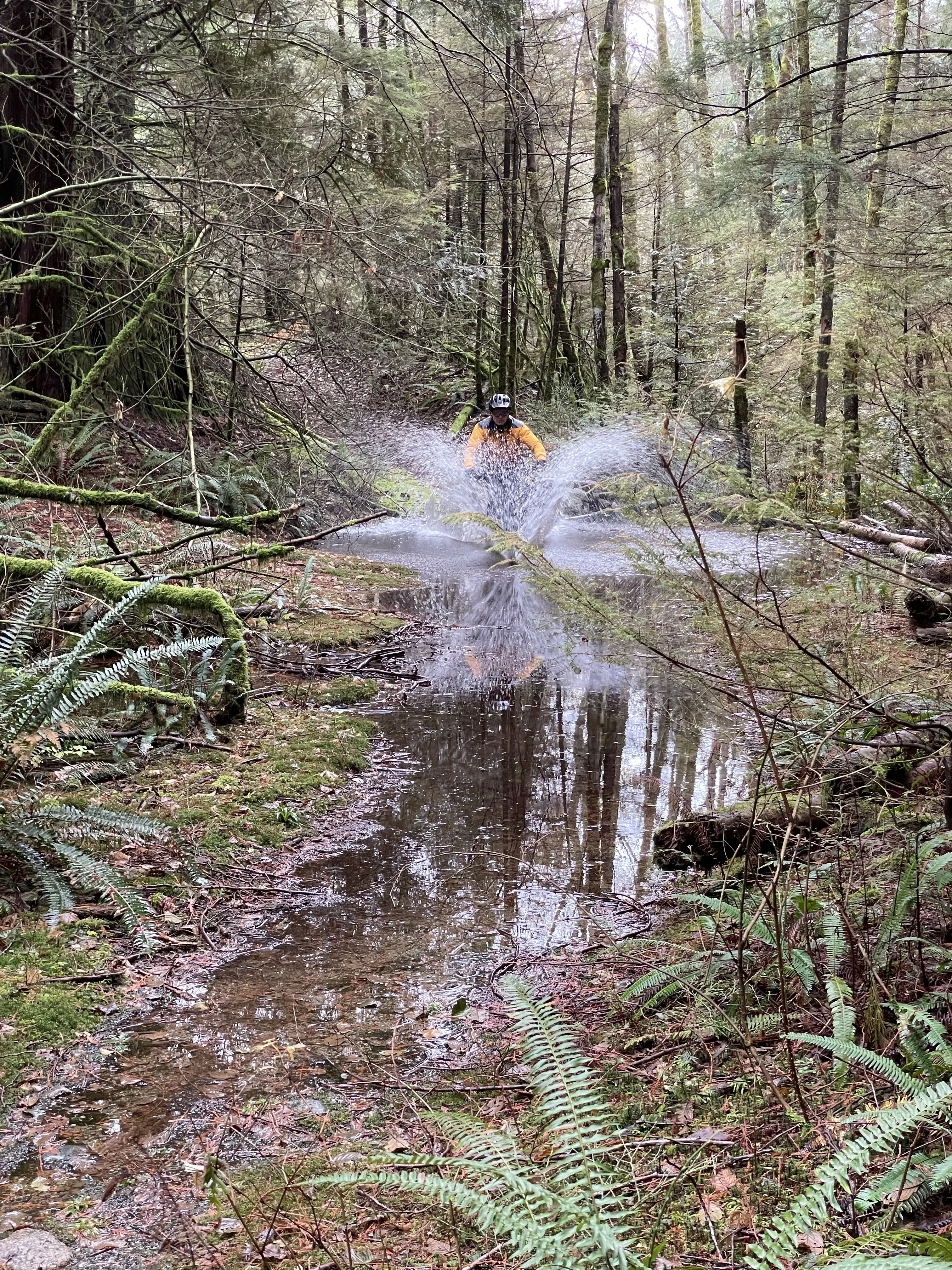
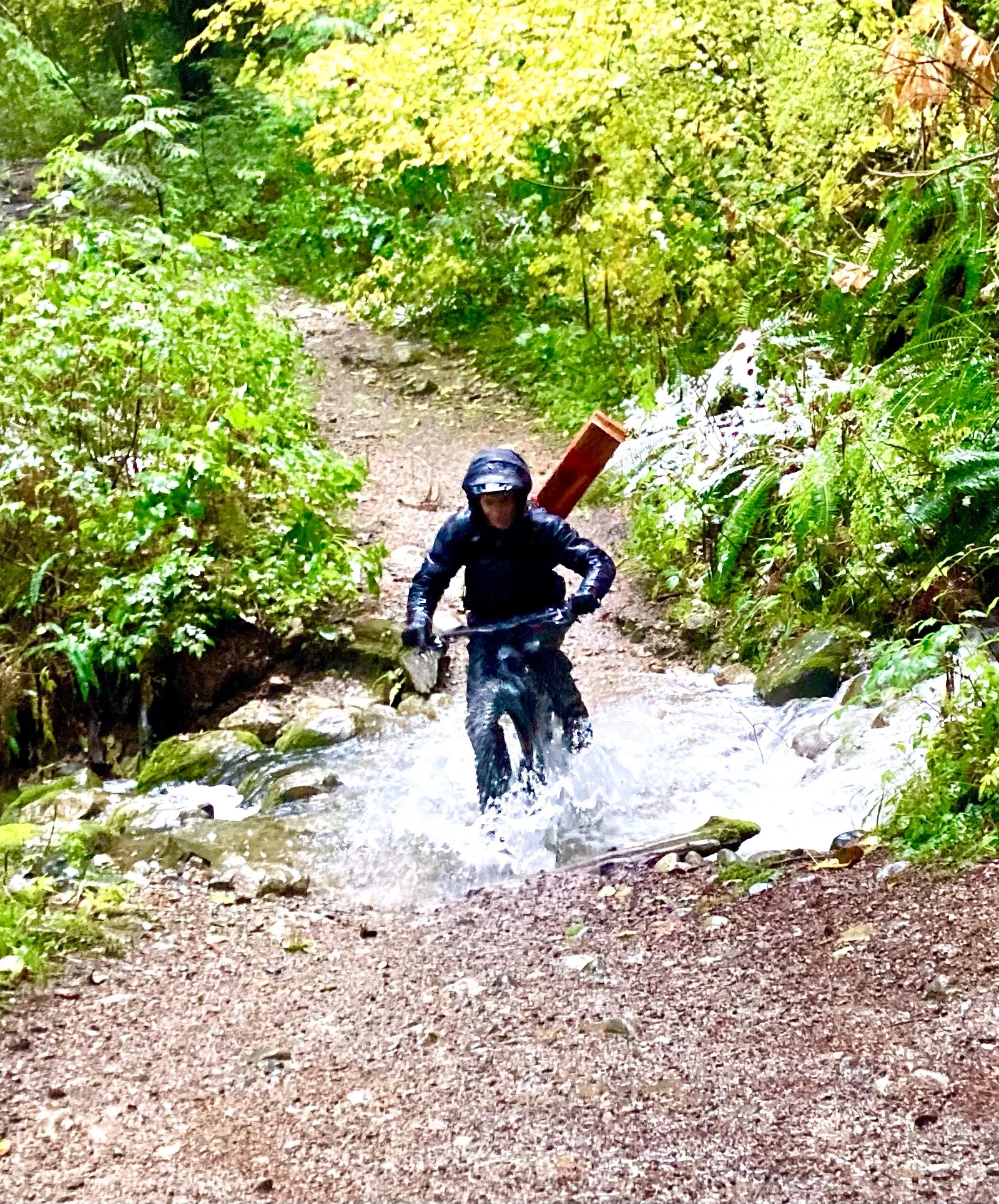
I’m not sure if I’m just lucky or I got a well built, and tight, motor. (Bosch CX). I was told by the Trek manager, mechanics and the sales representatives …”Oh sure. Water won’t hurt it” .

So I submarine’d my EMTB, and myself, several times through rivers, creeks, puddles and rain storms.
I’ve posted these before;
IMG_5475.webp
IMG_2133.webp
I’ve only had the motor rebuilt once (last year) and there was no water ingress.
 
................ Having a water/moisture sensor inside the case seems like a no-brainer too.
Brilliant idea! Very customer focussed, but it will not happen unless after market suppliers like the E-Bike Motor Centre start adding it to their upgrade.
 

Amflow just posted this video of “how to wash the bike”. Straight light pressure washing the whole thing so I think they’re confident in it
 
I’m not sure if I’m just lucky or I got a well built, and tight, motor. (Bosch CX). I was told by the Trek manager, mechanics and the sales representatives …”Oh sure. Water won’t hurt it” .

So I submarine’d my EMTB, and myself, several times through rivers, creeks, puddles and rain storms.
I’ve posted these before;
View attachment 188840
View attachment 188841
I’ve only had the motor rebuilt once (last year) and there was no water ingress.

I find this all very German, to sort of under promise yet overdeliver regarding its capabilities.
 
Keep reading
    Browse all

    Similar Threads

    Free account
    Join 42,912
    eMTB riders
    One tap. No forms. Fewer ads.
    or sign up with email
    Back
    Top