Any Electrical Engineers, 2 600w Batteries Run Together?

Rideit

Member
Joined
Jun 1, 2023
Messages
112
Reaction score
69
Location
Tetons
So, I had an idea. If, hypothetically, one had access to an extra 600 w battery or two, how feasible would it be to use the second one as a range extender? Or 1 800 and one 600? I would think it wouldn’t be too terribly difficult to make the necessary compatible wiring. From what I can see, with a non-piggy-back shock, I could easily fabricate a secure mount for a second 600 On top of the downtube.
Any thoughts on problems that I might run into?
Series, Parallel, what have you?
That could be an epic setup for loooong rides, bike packing, etc…
 
⚡ EMTB Pro Go Pro — exclusive discounts & ad-free Peaty's 25% off & more · Ad-free browsing · Pro badge See the deals →
Definitely can’t run them in series, it would need to be parallel. The way the range extenders work isn’t that dissimilar. The BMS on each battery should protect itself from overdrawing, the main challenge would probably be that many of these things communicate to the motor and require a CAN signal of some sort to even enable power to be drawn from the battery through the BMS I believe.
 
Cant see many issues, the socket on the frame battery slots into a plug the same as the charging plug, so it would just be case of making up the correct wiring.

Main issue would be the charging plug location, I know on my Bosch Gen 4 it was right where the pedal arm was and I cleaned it off a couple of times, moving the bike while charging.

As above, don't know if the system would be happy seeing 2 large batteries, in such case you could run a changeover switch... or it may be as simple as plugging in the 2nd big battery like a range extender. This would all be dependant if the bike system accepts a range extender and what is the circuitry on the range extender is telling the ebike system vs what another regular drive battery tells it.
 
So, that’s the reason for the inquiry, DJI/Avinox do not ‘support’ range extenders, so I thought the way around that might be to use their own damn battery, lol.
 
So the factory battery is turned on when you turn on the display. Before this it is switched off. These batteries have both a power and communication connection. So if you just parallel another battery. The bike won't turn on, because it sees power when it shouldn't.

So to add a second battery, you would need to isolate the second battery, turn the bike on. Then parallel the second battery only across the postive and negative 36v power connection.

Because it is in parallel across the 36v. The system wouldn't even know a second battery is connected. The battery would just take longer fully discharge, as the discharge is halved between the batteries.

You would also want to make sure you isolated the second battery before turning the bike off. Once again. The bike will check the factory battery turns off, when you switch the display off.

You would also need to charge the second battery separately.

Using a second Avinox battery would not work. Because it has a communication connection to turn it on. And if you connected 2 Avinox batteries. The system would detect it and not turn on.
 
Running two batteries in parallel runs the risk of one battery charging the other (or a low cell group within the other battery) at very high current for a prolonged period of time. This can damage the cells and/or the BMS. It is critical to use a dual battery balancer to prevent unequal batteries from creating high current draw.
 
While this debate continues, can I ask optimal method to carry a second 630 battery? I'm thinking of a modified backpack.
 
You probably have no clue how BMS works, do you? Don't take it offensively, but essential knowledge of how system works is needed.
You probably have no clue how pithy sarcastic retorts work, do you?
Don’t take it offensively, but essential knowledge of how language nuance works is needed.


(dood, what in the hell did I say in the title? Let me recap: I need an electrical engineer’s input, as that is not my forte)

😗😉🤣
1769576194234.png
 
So, I had an idea. If, hypothetically, one had access to an extra 600 w battery or two, how feasible would it be to use the second one as a range extender? Or 1 800 and one 600? I would think it wouldn’t be too terribly difficult to make the necessary compatible wiring. From what I can see, with a non-piggy-back shock, I could easily fabricate a secure mount for a second 600 On top of the downtube.
Any thoughts on problems that I might run into?
Series, Parallel, what have you?
That could be an epic setup for loooong rides, bike packing, etc…
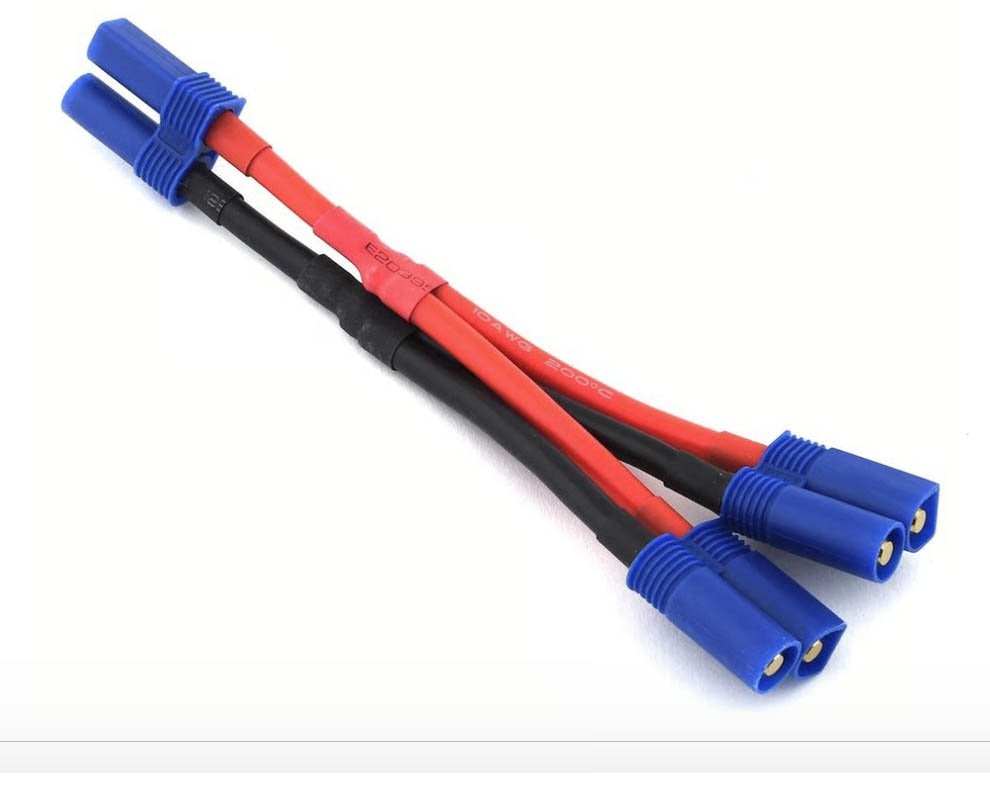
I don't think you need an electrical engineer, I have done it many times with my RC planes. But I always use identical packs from the same manufacturer, same discharge rate. I do parallel for extra capacity, some planes I have a tight compartment and I have to do to smaller ones in series that is for more voltage, the harness below is how you would wire what you are trying to do.

parallel.jpg
 
Just look at AliExpress for a "Double Batterie" electronic.
My is from Chamrider.

This thing is exactly what you need.
 
Last edited:
I don't think you need an electrical engineer, I have done it many times with my RC planes. But I always use identical packs from the same manufacturer, same discharge rate. I do parallel for extra capacity, some planes I have a tight compartment and I have to do to smaller ones in series that is for more voltage, the harness below is how you would wire what you are trying to do.

View attachment 175239
I think that electrical engineer advice would be helpful for this application. The cable above has the potential to, with a voltage mismatch between batteries risk of one battery charging the other at very high current for a prolonged period of time. This can damage the cells and/or the BMS. Using a battery balancer will accomplish the following:

Auto Battery on-line detecting. If only one battery is connected with module, will switch to this battery automatically;

If the voltage of both batteries are not same, the module will discharge the battery with higher voltage first untill two batteries voltage approaching similar, then will discharge both batteries together;

When the voltage of both batteries are same, the module will discharge both batteries together. With that being said the current draw of a 1000 watt 36 volt system will draw ~28 amps so you will want to be working with something like a 40 amp rating. The blue connectors pictured may be EC5 connectors and they have a 90 amp rating. XT 90 connectors would easily carry the load as well.
 
Last edited:
So the factory battery is turned on when you turn on the display. Before this it is switched off. These batteries have both a power and communication connection. So if you just parallel another battery. The bike won't turn on, because it sees power when it shouldn't.

So to add a second battery, you would need to isolate the second battery, turn the bike on. Then parallel the second battery only across the postive and negative 36v power connection.

Because it is in parallel across the 36v. The system wouldn't even know a second battery is connected. The battery would just take longer fully discharge, as the discharge is halved between the batteries.

You would also want to make sure you isolated the second battery before turning the bike off. Once again. The bike will check the factory battery turns off, when you switch the display off.

You would also need to charge the second battery separately.

Using a second Avinox battery would not work. Because it has a communication connection to turn it on. And if you connected 2 Avinox batteries. The system would detect it and not turn on.
Electrical Engineer (Battery Expert) here.
If this comment is correct about the Avinox power architecture, then this is the most important comment in this thread.

My question: Why not just throw it into a backpack (or saddle bag, or...) and install the battery when the first dies? Is changing the battery difficult?
 
My question: Why not just throw it into a backpack (or saddle bag, or...) and install the battery when the first dies? Is changing the battery difficult?
You would need the tools to remove the motor, and display. But otherwise it would be a 15 minute job to change the battery, if you practised it beforehand.

It's what I would do on a big adventure ride.

But probably not something you want to do on a regular basis, especially as you need to connect the battery to the motor to charge it as well.

I run a 800whr power bank. On a big day I use this to fast charge during lunch. But it does require returning to where you have the power bank.
 
Sounds like a few of you understood the assignment, lol. The idea behind using an identical battery was to eliminate one potential factor of incompatibility with voltage. Regulating how they would discharge (and charge) is another matter.
carrying a heavy-ass, long battery in a pack or whatever sucks, you want that weight down low, if possible. Obviously repeatedly disassembling the motor and connectors, out in the field is just…well..


I’ll be polite, and say ‘imprudent’. 😘
 
Is it not simply how best to carry a second battery? At the end you still have to carry the second battery and switching over after 3 hours if not a deal breaker? Sorry.
 
Switching over? 😂


While my buds wait for me to drop the damn motor, in the snow or in the rain, bugs, heat, what have you?
uhh…yeah.
sure…
And then I would still have the other battery to lug around.

@kla456 , I’m assuming you don’t actually have an Amflow?

To answer your question, no, “It is not simply how to carry a second battery”, but how to connect them so they work for 5, 6, 7 hours or what have you.

However, if there is a way to switch where the power is coming from (Main or Auxiliary), yes, that would certainly work.
In a way that would be better, as I could run the Aux first, and then jettison it if there is a good location to do so. Or even charge it again while back at the truck, home, or whatever. But principally I’m interested in really, really long backcountry rides.
 
Keep reading
    Browse all

    Similar Threads

    Community Stats

    Since 2018
    668K
    Messages
    40,761
    Members
    Join 30,000+ Riders, it's free!
    Back
    Top