Bike Lifiting Techniques

Cap'nJim

New Member
Joined
Dec 11, 2025
Messages
7
Reaction score
6
Location
Telford
Hello,

First off, sorry if this is not the right location for this post, but it seemed the most relevant location to me.

I am a relativly new EMTB owner, having peviously ridden either lightweight gravel bikes for XC/Trail bikes. None of my previous bikes weighed anything over 13kg, but now I have a 21kg EBike. As a result (and yes I appreciate this shows how weak in the arms I am) I am really strugling to lift it into my work stand for general maintenance.

It's not that I can't physically lift the bike, but that in order to engage the clamp, I have to hold it in one hand. I find myself now with an ol wrist injury flairing up - a warning sign I need to stop and find a more sustainable solution. To this end, I would apprecate any good advise and 'cheap' ways that I could get the bike into the stand. I appreciate there are electric lifts for workshops, but I'm not in a position to spend that sort of money.

Thanks for your advice / suggestions.
 
⚡ EMTB Pro Go Pro — Living Intelligence Reports, exclusive discounts & ad-free Up to 25% off Peaty's, PEMBREE, Magicshine & more · Ad-free browsing · Pro badge See the deals →
rotate your clamp so the jaws are horizontal.
Buy a false crossbar.............fit the false crossbar to the bike.. You now have a horizontal bar you can lift into the jaws of the clamp using both hands/arms. The bar will ust hang in the lower section of the jaws....now tighten the jaws. The only drawback with this method is if you want to remove the bars or stem. For those rare occasions I fit a cheap drop handlebar into the clamp at a slight angle such that the bike hooks up on the forward section of the crossbar and under the shock yoke at the rear.
False crossbar is a bout £22 delivered from Halfords. My bikes are c 26kg.....no problem.
 
I would like a Park Tool PRS-30 but firstly it's costly but secondly does not fold up/collapse so would have to walk around it in the garage all the time. So I use a Halfords False Cross Bar and hook my fore arm under it to lift the bike onto the clamp on the balance point. If I have to remove/service forks then clamping the seat post is f7cking hard work.

Edit: have a Park Tool PCS-9.3
 
Last edited:
Would love a Parktool PRS-30, but £££. So Heres what I do, get 2 boxes to put each wheel onto to get the seat post to the correct height for the clamp, line boxes up with stand, lift bike onto boxes, slot the tube into the clamp and tighten, remove boxes. Makes life easier for an old bloke like me, but lifting a 23kg bike and holding it one handed while faffing trying to clamp it up ain't that easy for most I'd imagine, so beneficial for all.
 
Would love a Parktool PRS-30, but £££. So Heres what I do, get 2 boxes to put each wheel onto to get the seat post to the correct height for the clamp, line boxes up with stand, lift bike onto boxes, slot the tube into the clamp and tighten, remove boxes. Makes life easier for an old bloke like me, but lifting a 23kg bike and holding it one handed while faffing trying to clamp it up ain't that easy for most I'd imagine, so beneficial for all.
Never understood why folk would hang an emtb from the seat post. It means probably 50% of the bike's weight is forward of that fixing point plus of course additional forces due to any disturbance caused as you work on the bike.
Using the false crossbar method also means there is no need to spend a lot of money on a PT stand.....virtually any stand will do. Mine is a £40 Halfords stand which I have used for over 5 years and enables me to work on all 4 bikes in my household equally well.
 
Never understood why folk would hang an emtb from the seat post. It means probably 50% of the bike's weight is forward of that fixing point plus of course additional forces due to any disturbance caused as you work on the bike.

Bike weights 22ish KG.

I weigh 90kg.

Bike is static. I move around and shift weight.

The seatpost will be absolutely fine. The forces you put it under just riding it along the ground are a few multiples of the forces it will be under in a workstand.
 
Here's what I do -

I lift the bike up from the seat tube and top tube with both hands, slotting the seatpost into the clamp. I then get my left knee under the bottom bracket which means I can remove the top tube hand and close the clamp.

I have the clamp so that it closes somewhat loosely, then I wind it in a few turns to make it secure. I stuff an old microfibre into the clamp to protect the surface of the seatpost a bit just in case there are some debris in there.

It's a bit cumbersome with such a heavy bike but with practice I've gotten it down to be a smooth action - as long as you don't mind your jeans getting a bit muddy!
 
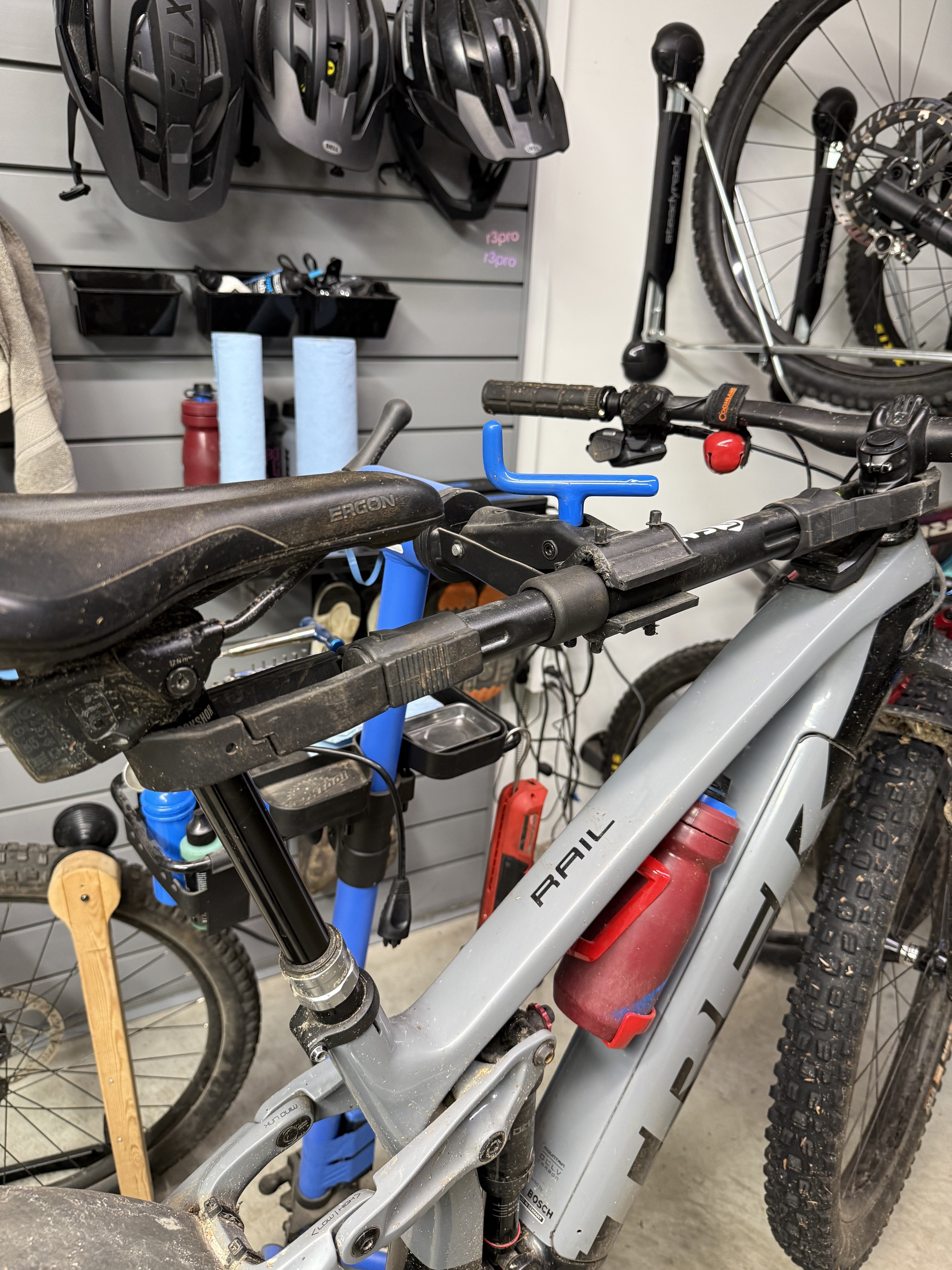
I use the Saris fake bar between the stem and seat post when I lift the bike onto the Park Tool work stand.
IMG_0927.jpeg
There are several reasons why I use this method. The top tube is carbon and doesn’t quite fit the clamp. The balance point and stability wouldn’t be great. I wanted to distribute the overall weight of a 21kg bike.
With the Saris bar in place I can simply arm-curl the bike and drop it onto the horizontal positioned clamp. The bike is then balanced perfectly. I can then decide whether to tighten the clamp …or not. 🤷🏼‍♂️.

My bike lives here. Easy to maintain. I do the same for almost any bike that I maintain. However, there was that one time.
Shortly after I started leaving my bike in the PT stand overnight, I entered the bike cave only to find my bike, PT stand, a some tools and lubes laying on the floor.

I was SHOCKED …and held back tears. 😉.
The support clamp on the stand had slid and caused the stand to collapse. Never again I said. A bit of duct-tape solved that. 👍🏻
 
Same as me. I do not need to adjust the height of the clamp so rather than rely on the clamp that enables that, I have drilled a hole through the 2 tubes at the height I want and put a bolt plus wing nut through them. Those height adjustment clamps tend to slip with temperature change.
 
Here's a contrarian POV: I rarely, if ever, use a bike stand for eMTB work (and most bike maintenance). For lubing chains, cleaning cassette out, cleaning rotors, changing wheels, and checking pressures I just flip the bike over. Part of the reason I HATE a messy cockpit with lots of goofy stuff attached to the handlebars. About the only time I'll use a stand is on a brand new MTB or gravel build. Watching a "pro" mechanic swap out a wheel on a stand makes me cringe - so much less efficient and more prone to misalignment.
 
Bike weights 22ish KG.

I weigh 90kg.

Bike is static. I move around and shift weight.

The seatpost will be absolutely fine. The forces you put it under just riding it along the ground are a few multiples of the forces it will be under in a workstand.
Weight is just one part of the equation. The distance the weight from the pivot point ( the clamp/ seatpost) x the weight= the leverage force. Regardless of your riding weight you never impose even a fraction of that force . Those forces when the seat post is used also have to be managed by the stand and explains why even just the clamp plus arm costs 4 or 5 times the cost of any complete stand that is absolutely fine when the false crossbar method is used.
 
Same as me. I do not need to adjust the height of the clamp so rather than rely on the clamp that enables that, I have drilled a hole through the 2 tubes at the height I want and put a bolt plus wing nut through them. Those height adjustment clamps tend to slip with temperature change.
Yeah, bolts through the tube is probably a better idea. I must be too lazy to do that. However the ole duct-tape has held for some years now. I’ll get a-round-two-it.😉.

I also tape the charging brick to that tube. Run the power chord across the floor and tape that down with the magic duct-tape to prevent any tripping hazards. Btw, I’ve got silver, red and black duct-tape. 😛

I only flip the bike when I remove the motor.

I’m not much of a bike washer so trail debris falls to the floor when it dries. A suspended bike is easy to sweep under.
 
Here's a contrarian POV: I rarely, if ever, use a bike stand for eMTB work (and most bike maintenance). For lubing chains, cleaning cassette out, cleaning rotors, changing wheels, and checking pressures I just flip the bike over. Part of the reason I HATE a messy cockpit with lots of goofy stuff attached to the handlebars. About the only time I'll use a stand is on a brand new MTB or gravel build. Watching a "pro" mechanic swap out a wheel on a stand makes me cringe - so much less efficient and more prone to misalignment.
If I had to install a rear wheel on a flipped bike, gawd help me.🙏 I would probably be found in a fetal position next to the bike. 😉
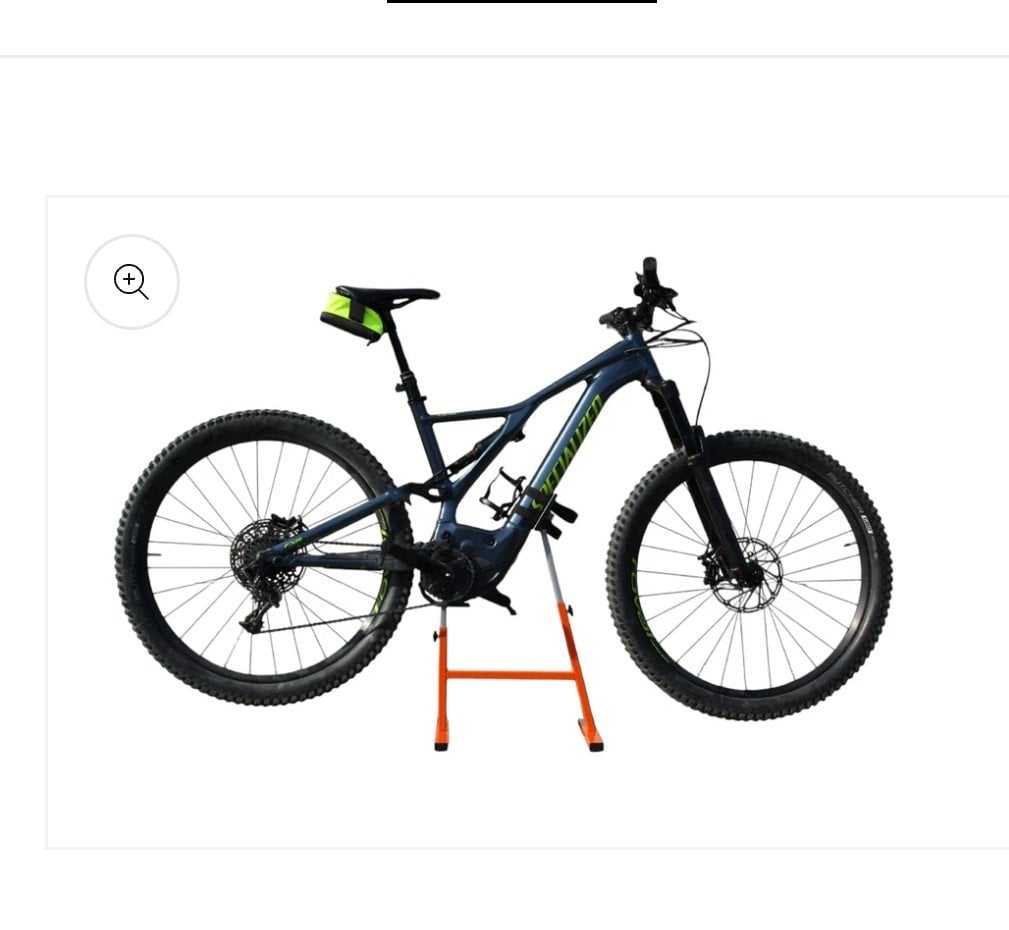
I like a clean cockpit though. 👍🏻
 
I leave the front wheel on the ground and clamp the seatpost/dropper in the jaws. Height of jaws is set to have the rear wheel high enough off the ground sufficient for me to rotate the cranks. If I need to work on the front wheel, I drape an old folded towel over the crossbar of the jaws and rest the bottom of the headset over the crossbar.
If ever I need to exert any serious leverage anywhere, the bike goes upside down on the floor, with the bar furniture on a kneeling mat to avoid damage.

I never need to lift more than one half of the bike at any one time. However, I didn't adopt this practice just to make life easier, but because I dislike clamping on either the seatpost or the frame and then be levering away on the bike. I used to do this on my mtbs before I got my first emtb.
 
Never understood why folk would hang an emtb from the seat post. It means probably 50% of the bike's weight is forward of that fixing point plus of course additional forces due to any disturbance caused as you work on the bike.

While that is indeed true, you need to ask yourself if the forces imparted by the stand exceed the forces exerted by your giant åșś as you shred the gnar and huck to the flat. I've broken seatposts and bent my fair share of seat rails, but it's never been from the stand.

When I put my bike in the stand, I set it so the saddle is up against he clamp. The weight of the bike is all right there, and then I clamp it down. It saves having to hold the weight of the bike with one hand while adjusting the clamp with the other.
 
While that is indeed true, you need to ask yourself if the forces imparted by the stand exceed the forces exerted by your giant åșś as you shred the gnar and huck to the flat. I've broken seatposts and bent my fair share of seat rails, but it's never been from the stand.

When I put my bike in the stand, I set it so the saddle is up against he clamp. The weight of the bike is all right there, and then I clamp it down. It saves having to hold the weight of the bike with one hand while adjusting the clamp with the other.
You huck to flat sat on the saddle!? That has got to hurt!
 
I’m gonna try a different method …Wish Me Luck.
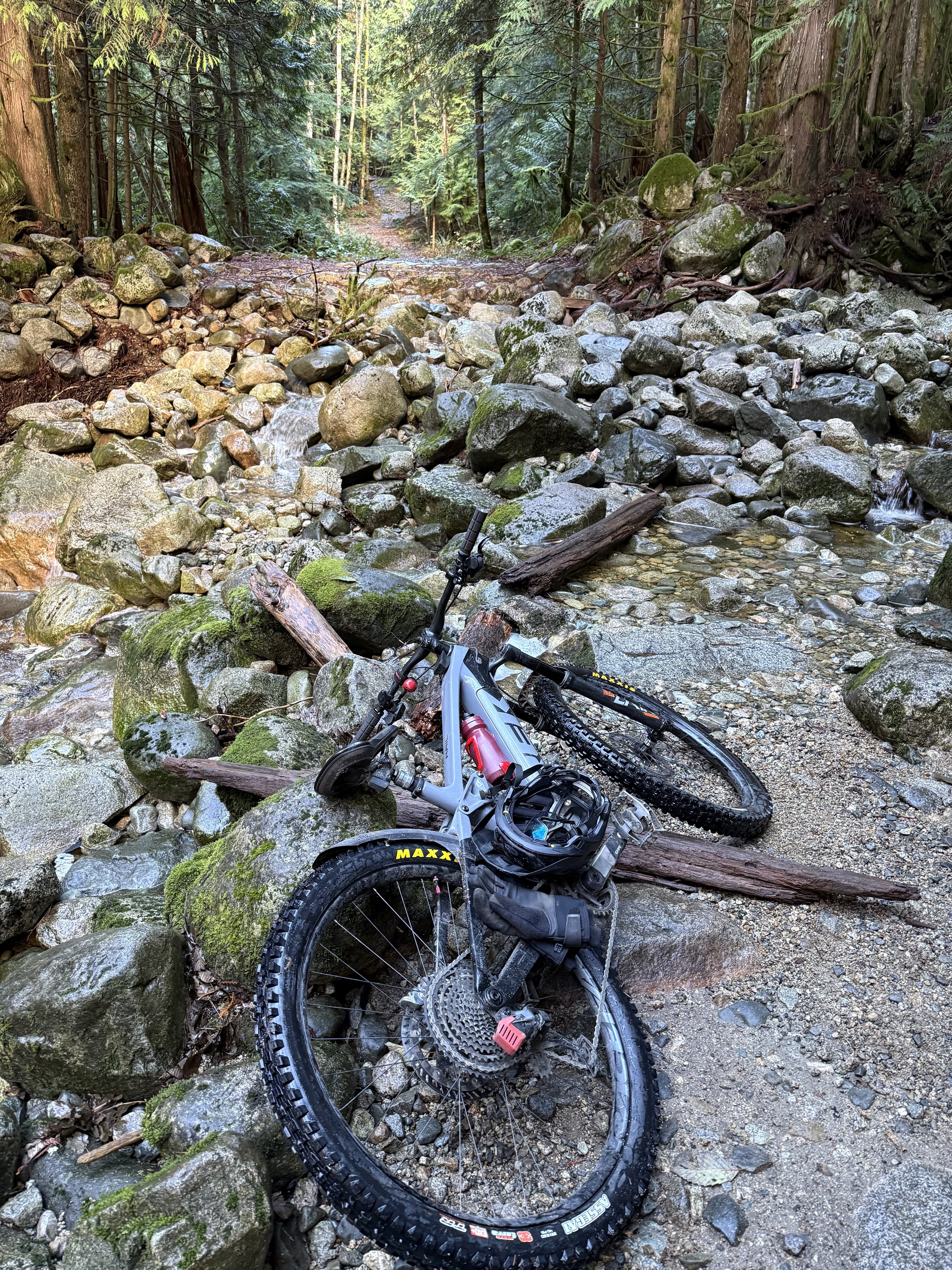
View attachment 173020
I'm sure I rode something like that when descending Jacob's Ladder on Saturday! I hadn't intended to do something as rough as that, didn't even want to to do, but had little choice! The last time I did Jacob's Ladder was 10-12 years ago on an mtb and wow! it sure has got a lot rougher since then! (And I've got a lot older too! :eek:)
PS: The bit I was doing was gravity assisted not uphill or even on the level.
 
I installed a small electric hoist in my workshop. I bought the hoist on Amazon for $100, a channel-strut cost $35 at Home Depot, and trollies for the hoist to run in the channel-strut were $30 on Amazon.

Now I don't need to lift the bike at all, and the hoist has been useful for a bunch of other things as well.

I might be overkill, but my back isn't great and this does a great job of protecting it.
 
I installed a small electric hoist in my workshop. I bought the hoist on Amazon for $100, a channel-strut cost $35 at Home Depot, and trollies for the hoist to run in the channel-strut were $30 on Amazon.

Now I don't need to lift the bike at all, and the hoist has been useful for a bunch of other things as well.

I might be overkill, but my back isn't great and this does a great job of protecting it.
Sounds great. Can you send pics?
 
I use the saddle nose trick to get my Turbo Levo on my stand (2:02 min):


Notice you're dealing with only a fraction of the weight compared to a dead lift.

This is good enough for many tasks. But if I want to get the dropper post into the clamp (e.g., to get the front wheel off the ground) it's now a lot easier. You can also put a box or milk crate (do these exist in the UK?) under the rear wheel while using two hands to reposition the clamp and/or dropper. If the rear wheel is on a box/crate, you can even stand in front of the bike while it's hanging on the nose, and let the bike lean a bit on you while reaching over to reposition the clamp and dropper. I had to do this once after injuring my lower back.

Use the same "divide and conquer" approach when putting an ebike on a bike carrier with trays. Rather than dead-lifting the entire bike onto the rack, put the front wheel up first, followed by the rear wheel. Some carriers now have removeable ramps to allow wheeling the bike onto the tray.

If I'm just lubing the chain, I prop the bike up against a wall, then insert an allen key (hex wrench) into one of the chain ring bolts. The crank now has something to push on. This allows you to grab a pedal and rotate the crank backwards to move the chain.
 
Last edited:
Keep reading
    Browse all

    Similar Threads

    Community Stats

    Since 2018
    671K
    Messages
    41,235
    Members
    Join 30,000+ Riders, it's free!
    Back
    Top