

It's no secret that the spider nut loosens on Gen 4 motors, but since by bike had over 2600 miles on it, I didn't think it would be a problem. I was mistaken. I'm sharing these pictures for those who have never looked closely at the issue and who might want to be prepared.
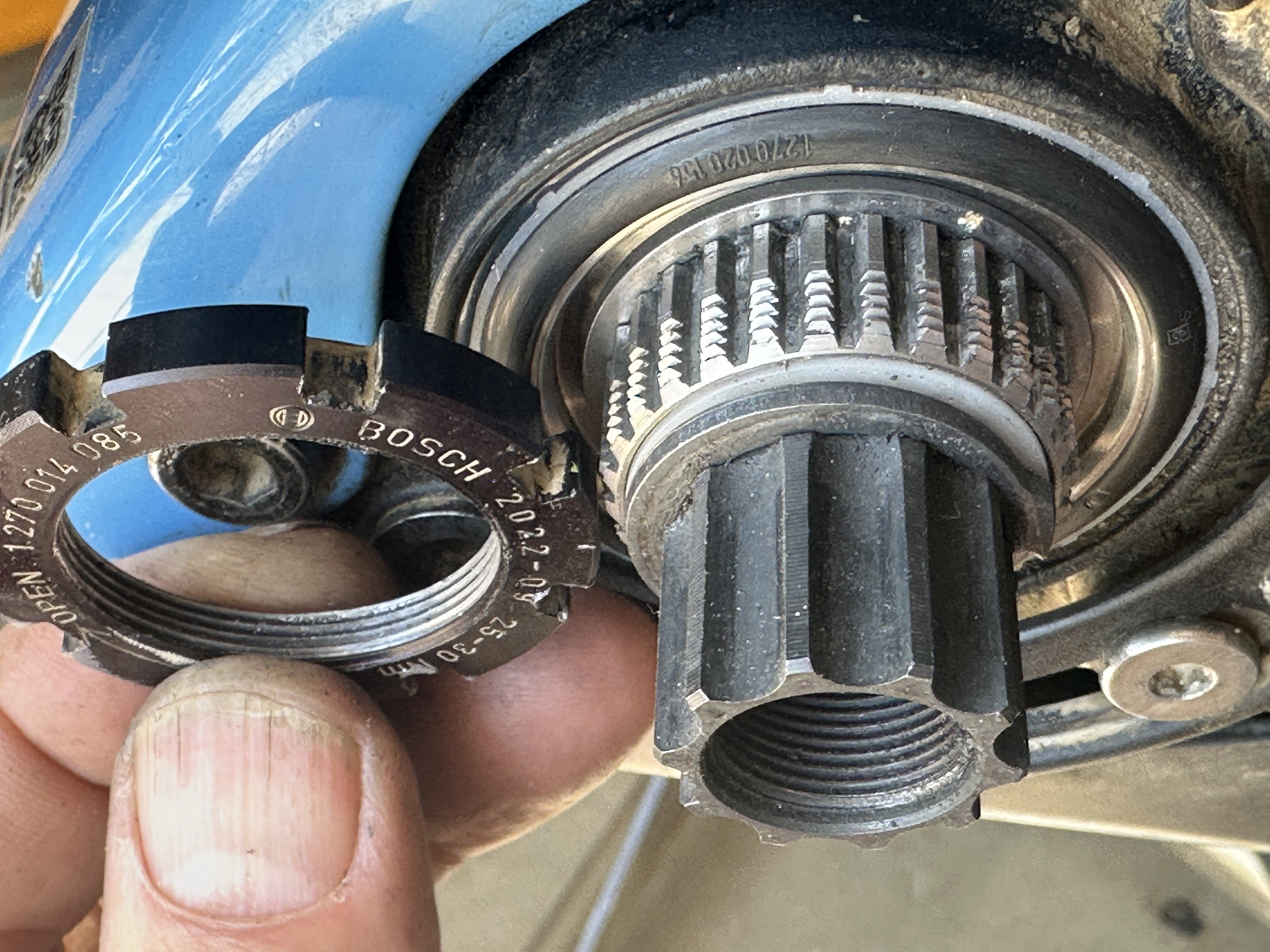
As you can see from the pictures, the nut screws onto output shaft of the motor. One might assume that's a simple thing--until you look closely. There are a couple weaknesses that are glaringly obvious. The threaded output shaft has an interrupted thread. Generally, the thread holding ability of a fastener is diminished in proportion to the amount of missing threads. In this case, the engagement of the remaining threads is about 40%. That means the nut is 60% weaker right off the top. Additionally, the thickness of the nut is 5 mm. Generally, you would want the thickness of a nut to be about 0.8 times that of the thread. The thread is 30 mm, so optimally, we'd want a nut 24 mm thick. To complicate the matter further, the nut is aluminum.
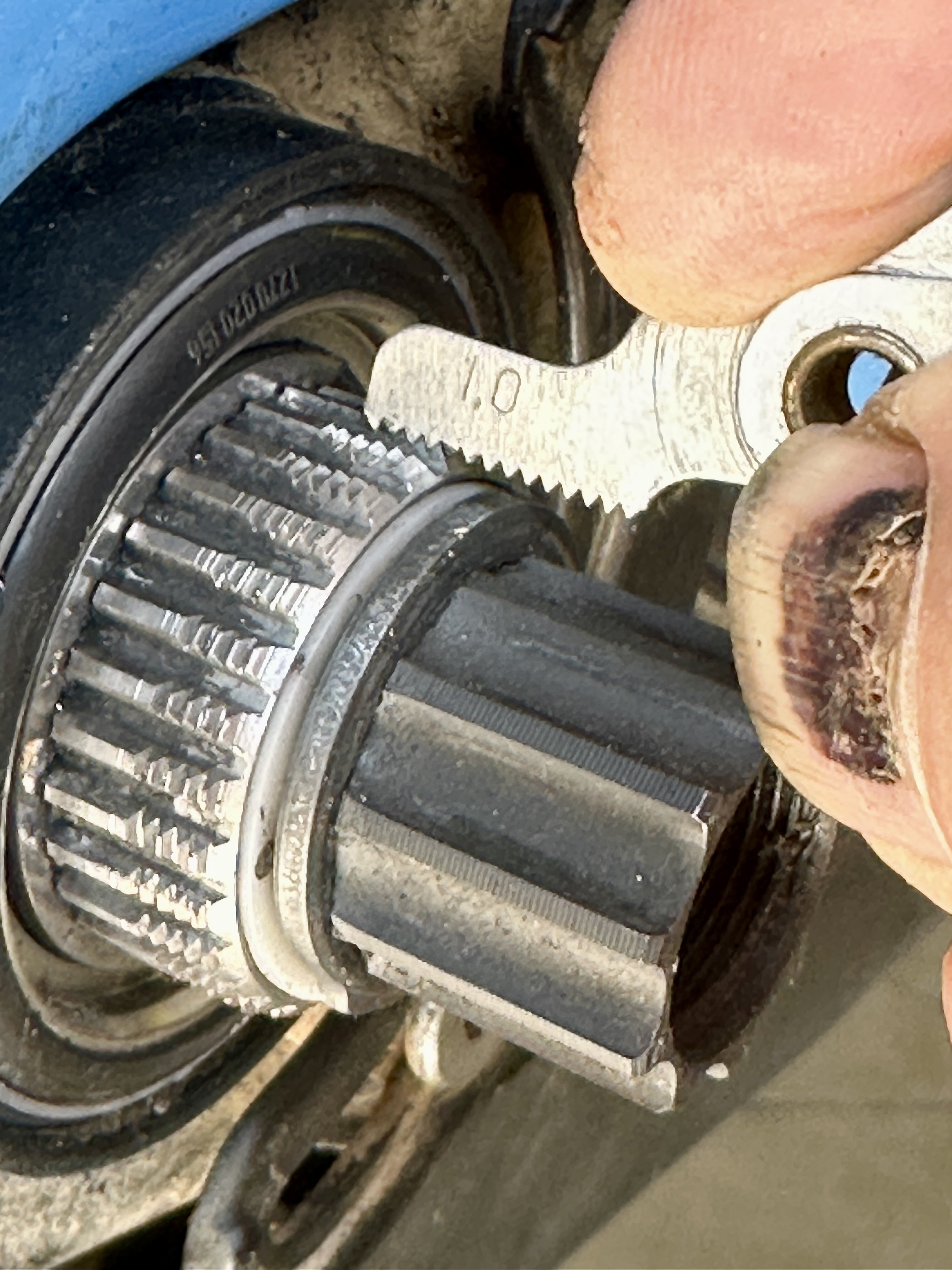
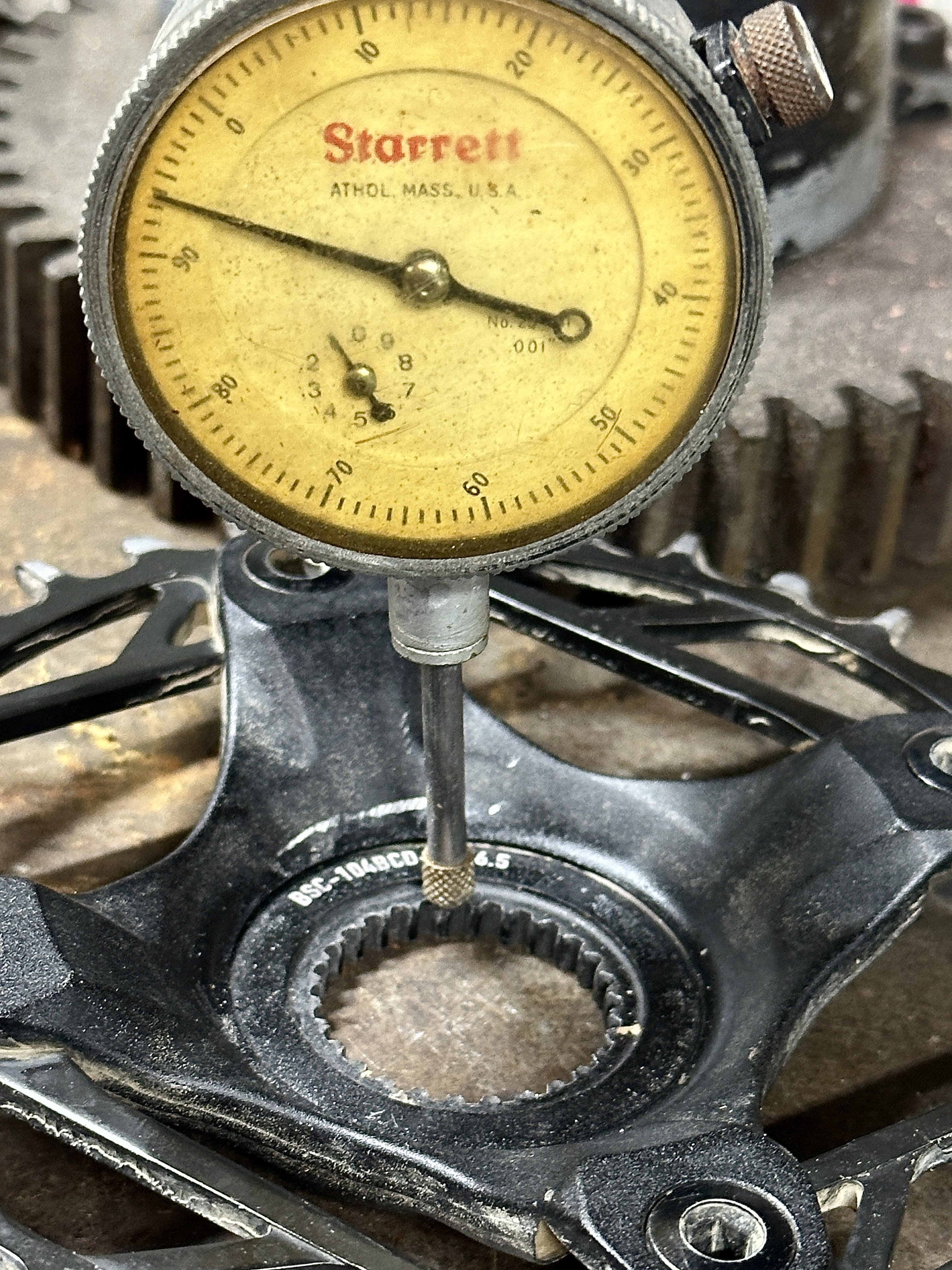
My spider wasn't loose for long. I was five miles into the ride when it went floppy, so it was loose for less distance than that. Regardless, the spider suffered sufficient damage to render it unusable. Take a look at the attached pictures to see how deformed the teeth are. Further, the deformation resulted in the flat clamping surfaces to be raised at the tips of the teeth. On the front side, the surface was raised by 0.010", on the back about half that. If I was to reinstall the used spider, I'd be tightening the nut on tiny high-spots. It surely wouldn't take long for these high spots to flatten down, creating play, allowing the nut to loosen once again. If your spider gets loose, just go ahead an buy a new one.
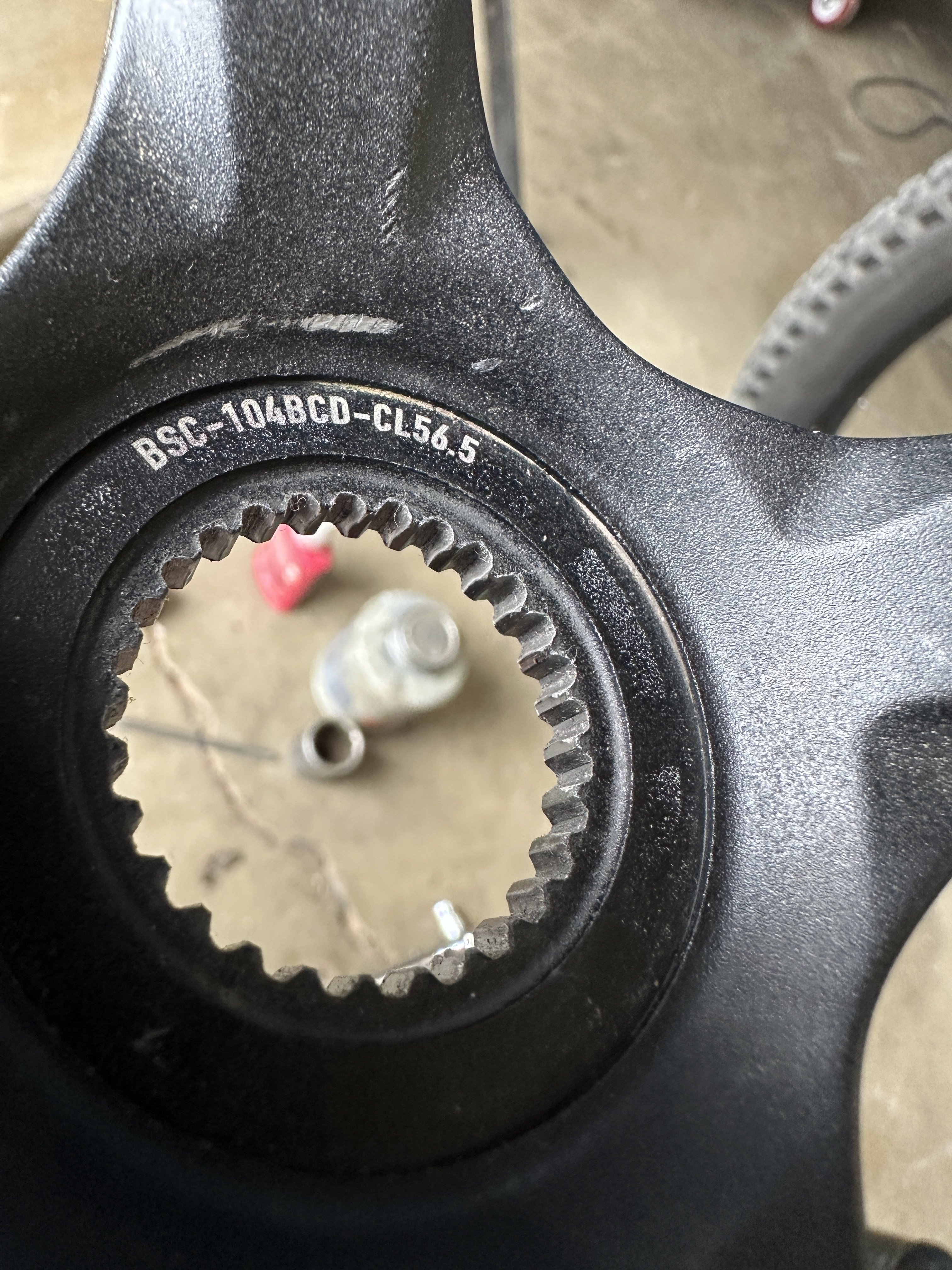
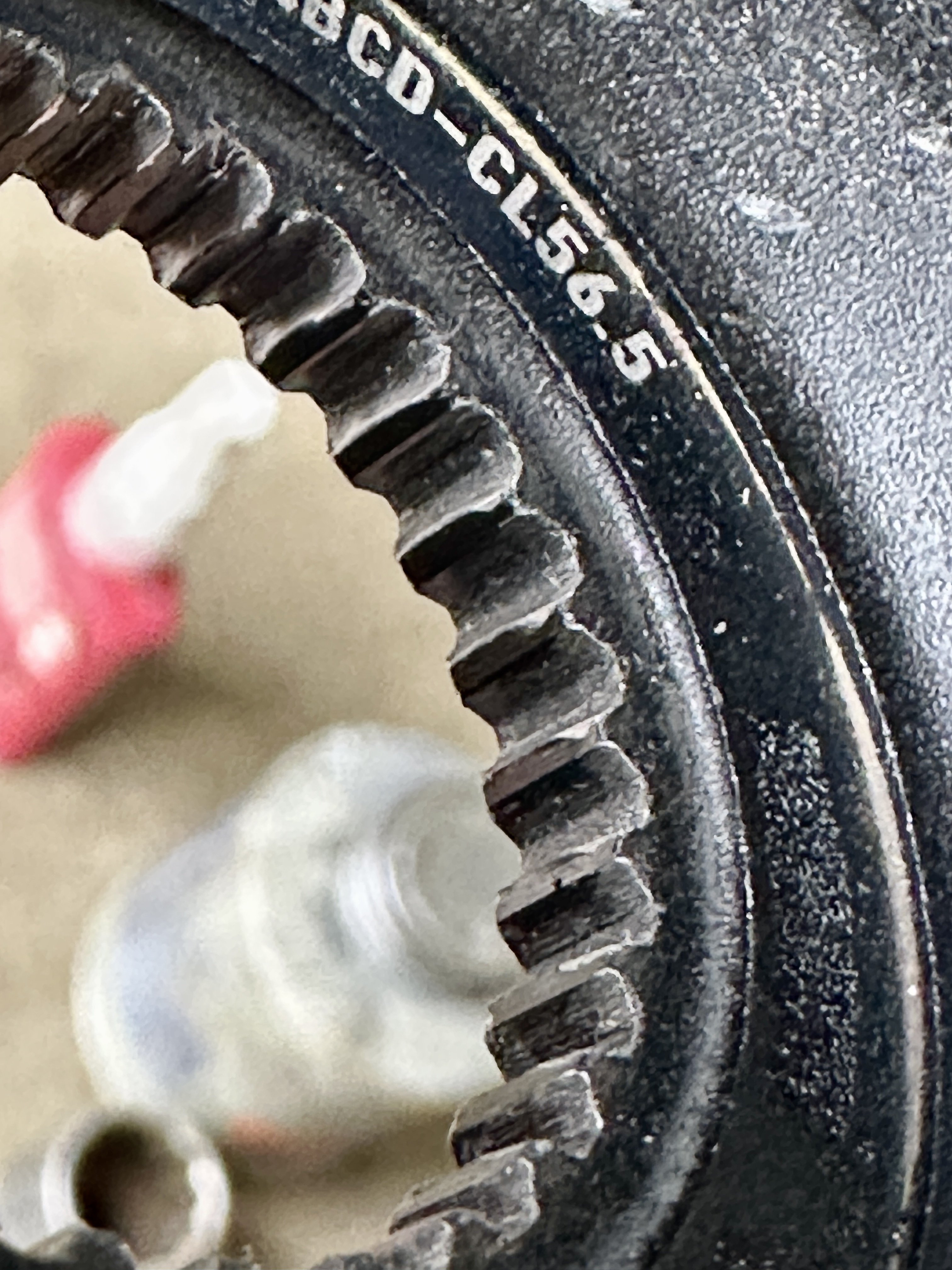
Bosch recommends torquing the nut to 25-30 Nm. There are anecdotal claims that a service bulletin that recommends 40 Nm and grease, but I can't find that bulletin. I decided to figure it out on my own. I assumed 6061-T6, 30 mm x 1 mm thread, 5 mm nut thickness, and 40% thread engagement. Do the math, and it comes to 50 Nm. I chose 49 Nm and medium strength Loctite.
After it was all assembled, I marked the nut and spider with a paint marker. If anything starts to loosen, I'll spot it early.
As you can see from the pictures, the nut screws onto output shaft of the motor. One might assume that's a simple thing--until you look closely. There are a couple weaknesses that are glaringly obvious. The threaded output shaft has an interrupted thread. Generally, the thread holding ability of a fastener is diminished in proportion to the amount of missing threads. In this case, the engagement of the remaining threads is about 40%. That means the nut is 60% weaker right off the top. Additionally, the thickness of the nut is 5 mm. Generally, you would want the thickness of a nut to be about 0.8 times that of the thread. The thread is 30 mm, so optimally, we'd want a nut 24 mm thick. To complicate the matter further, the nut is aluminum.
My spider wasn't loose for long. I was five miles into the ride when it went floppy, so it was loose for less distance than that. Regardless, the spider suffered sufficient damage to render it unusable. Take a look at the attached pictures to see how deformed the teeth are. Further, the deformation resulted in the flat clamping surfaces to be raised at the tips of the teeth. On the front side, the surface was raised by 0.010", on the back about half that. If I was to reinstall the used spider, I'd be tightening the nut on tiny high-spots. It surely wouldn't take long for these high spots to flatten down, creating play, allowing the nut to loosen once again. If your spider gets loose, just go ahead an buy a new one.
Bosch recommends torquing the nut to 25-30 Nm. There are anecdotal claims that a service bulletin that recommends 40 Nm and grease, but I can't find that bulletin. I decided to figure it out on my own. I assumed 6061-T6, 30 mm x 1 mm thread, 5 mm nut thickness, and 40% thread engagement. Do the math, and it comes to 50 Nm. I chose 49 Nm and medium strength Loctite.
After it was all assembled, I marked the nut and spider with a paint marker. If anything starts to loosen, I'll spot it early.

 I have said repeatedly on here that the nut is single use only for the simple reason that given the material ( ally) of the nut and the relatively small amount of thread.....onto a steel thread, even the lower torque specification will be designed to "spread" the thread of the nut in order to achieve maximum thread friction.


