Smart charger

giordano

New Member
Joined
Sep 9, 2025
Messages
33
Reaction score
9
Location
Zalaegerszeg, Hungary
For fun, I've started a project. There are 2 things that annoys me with the smart charger.
1, it is not smart enough to be able to set up a charge limit and I want to charge my bike to 80 or 90% only most of the time.
2, there is not a car charger.

I know for the non smart system, to make a charger is fairly easy. It is a 4A CC source up to a certain Voltage (42?), than it is CV. All the "extra" is a 5V separate stabilized PSU.

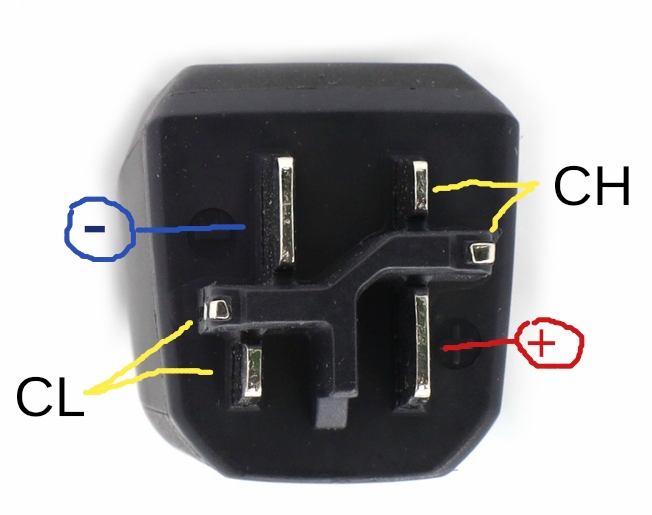
I see for smart system it is different. It has 4 pins, 2 power and 2 CAN pins.
1757540034416.png

1757540114930.png

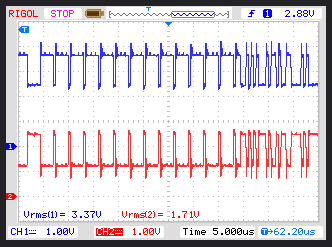
I've already grabbed CAN frames from the charger and from the battery successfully with a CANable 2.0 . I could not find out yet what are they talked about, nor how the SMPSU works in the charger.

- I consider that at least I could find data what I can calculate charge status from and just simply cut the power from the charger at certain %
- next level would be to make my own charger, without a need of an inverter in the car, just using a CC and CV controllable step up SMPSU module with a CAN enabled microcontroller.

Let me know if you have any info what may help.
Thanks!
giordano
1757540164048.png
 
Last edited:
⚡ EMTB Pro Go Pro — Living Intelligence Reports, exclusive discounts & ad-free Up to 25% off Peaty's, PEMBREE, Magicshine & more · Ad-free browsing · Pro badge See the deals →
Pour le plaisir, j'ai commencé un projet. Il y a deux choses qui m'agacent avec le chargeur intelligent.
1, il n'est pas assez intelligent pour pouvoir définir une limite de charge et je souhaite charger mon vélo à 80 ou 90 % seulement la plupart du temps.
2, il n'y a pas de chargeur de voiture.

Je sais que pour un système non intelligent, fabriquer un chargeur est assez simple. Il s'agit d'une source CC de 4 A jusqu'à une certaine tension (42 V), puis d'une tension continue. Le seul « plus » est une alimentation stabilisée séparée de 5 V.

Je vois que pour un système intelligent, c'est différent. Il possède 4 broches : 2 broches d'alimentation et 2 broches CAN.
View attachment 167826
View attachment 167827
J'ai déjà récupéré avec succès les trames CAN du chargeur et de la batterie avec un CANable 2.0. Je n'ai pas encore compris de quoi il s'agit, ni comment fonctionne le SMPSU dans le chargeur.
View attachment 167828
- Je considère qu'au moins je pourrais trouver des données à partir desquelles je peux calculer l'état de charge et simplement couper l'alimentation du chargeur à un certain %
- Le niveau suivant serait de fabriquer mon propre chargeur, sans avoir besoin d'un onduleur dans la voiture, en utilisant simplement un module SMPSU élévateur contrôlable CC et CV avec un microcontrôleur compatible CAN.

Faites-moi savoir si vous avez des informations qui pourraient vous aider.
Merci!
Giordano
Pour le point 1, j'utilise une prise connectée que je peux contrôler avec mon téléphone ou une minuterie. Il suffit de connaître les temps de charge pour X %, puis de définir le temps de charge. Mais bon, c'est moins amusant que de fabriquer son propre chargeur !
 
Pour le point 1, j'utilise une prise connectée que je peux contrôler avec mon téléphone ou une minuterie. Il suffit de connaître les temps de charge pour X %, puis de définir le temps de charge. Mais bon, c'est moins amusant que de fabriquer son propre chargeur !
That is an interesting idea! The charge method makes the time calculation a bit difficult, because at around 80% the charger is in CV mode, so we can not count with 2A ... but anyway, that is interesting and probably accurate enough for the purpose.
Thanks!
 
You have already exceeded my total knowledge about chargers. I am unable to assist you. :giggle:
Well, It is not the charger what makes it complex. The charger should be rather simple. The charger itself should be a PSU what starts with CC mode in 4A or 2A, and transitions to CV mode when the battery reach the level that the Voltage goes up. In the pack, the BMS manage the balancing (and other things, but from charging point of view the balancing).
I do not know why Bosch complicated and put a CAN controller in the charger. I get it, it is "smart", but what is the benefit?
A kickback, I saw a universal charging station some time ago near the lake Fertő, which had a few cable output, the old Bosch also, guys with Shimano steps were able to charge there, but no one with Bosch "smart".
 
For fun, I've started a project. There are 2 things that annoy me with the smart charger.
1, it is not smart enough to be able to set up a charge limit and I want to charge my bike to 80 or 90% only most of the time.
2, there is not a car charger.

I know for the non smart system, to make a charger is fairly easy. It is a 4A CC source up to a certain Voltage (42?), than it is CV. All the "extra" is a 5V separate stabilized PSU.

I see for smart system it is different. It has 4 pins, 2 power and 2 CAN pins.
View attachment 167826
View attachment 167827
I've already grabbed CAN frames from the charger and from the battery successfully with a CANable 2.0. I could not find out yet what are they talked about, nor how the SMPSU works in the charger.
View attachment 167828
- I consider that at least I could find data what I can calculate charge status from and just simply cut the power from the charger at certain %
- next level would be to make my own charger, without a need of an inverter in the car, just using a CC and CV controllable step up SMPSU module with a CAN enabled microcontroller.

Let me know if you have any info what may help.
Thanks!
Giordano
Quite a project! I use a $10 smart plug and some maths to guestimate how long to charge for to hit 80ish%. I like your idea but don't have the time/skills to tackle it. Would be interested to hear how you get on/ Best of luck :)
 
Progressing. Now making a full dump of the communication during a charge cycle from 5% to 100%.
While charging, also watching and I found a few data from the battery:
1758990718033.png
 
So, now I know what frames to send to initiate charging and also to monitor charge from the BMS.
What I do not understand, why there are 2 close Voltages going parallel. Maybe before and after the current sensor?

Also, there is a big thing I do not understand. At another thread I was reading that someone was discharging the battery by just connecting some dumb load on it. This time I've tried to measure what is on the battery power output, but it was 0V (before charging started). BMS disconnects the battery. But, if BMS disconnects the battery, when I put it into the bike, how is it starting?
If I think before connecting the battery, the motor and the BMS talking, but, how the motor would get energy to do that?
 
Alarms sounding in my head. Toomany unknowns before even getting to unknown-unknowns. No way I would risk hacking my own systemn, too expensive for mistakes and no reason to beileve Bosch would look kindly ...
 
Alarms sounding in my head. Toomany unknowns before even getting to unknown-unknowns. No way I would risk hacking my own systemn, too expensive for mistakes and no reason to beileve Bosch would look kindly ...
Don't do if your not confident and electronics is not your main job :-)
On the other hand, reverse engineering is surely not part of my job, it is just hobby, for fun, but it will not be the first.
... but, I'm also thinking to try to get a very much used, still working pack to play with - if I realize the charger at all, because what is needed for the automation is there already.
I just need to hook CAN enabled mcu, listen only , grab the frames with ID 0x611 and read out voltage and current. With the Voltage and current the % charged can be calculated accurately. When I have the %, it just cuts the Bosch charger's power at given %. ... and I do not need to keep checking it, just plug, set the % and leave it. For that I'm choosing an mcu which is available on a small module also, like an stm32f042f4. But, I will not suggest to replicate unless you really know what you do.
 
I just learned this:

BMS = Battery Management System.
It's the electronics that monitors every battery voltage and keeps the potential bomb from going bang 💣


I can do without BANG 💣
 
So, it works now. If anyone interested I can tell what CAN frame to look at and how to look at the data inside. In fact, it is actually on the picture above. Sure, it is almost the same thing as just measuring Voltage on the charge lines, but it is the proper way I think to listen to the BMS rather.

On the other hand, now that I've reverse engineered and realized a charge cut off circuit (just disconnect the mains from the charger with a relay when 80% related Voltage is reached), used it for a while and realized in practice it is not enough. Or, may not be the right direction. 2 reasons:
1, I found myself rather need a discharger to certain Voltage or %. It happened now a few times that I've fully charged the battery because I've planned a full day ride for next day, and weather thought other way, I've ended up staying home, the battery was on 100% (I know I'm lazy, but just do not prefer to ride in the rain.) When this happens and I know I can not ride for several days, I just discharge a little, to about 85%, but it is a hassle.
2, I've exchanged some messages with Bosch tech support and got confirmed about, It's true that cell balancing mostly happens at the very end of the charge cycle when cells are near full. (This does not mean at all that it has to be fully charged all the time at all. He advised to occasionally fully charge.)
Probably the charge cut off stays at the proto level, but now I've turned to the discharge. Unfortunately, for discharge it seems it is not only listening on CAN because the battery has to be asked to switch on and stay on. Sending CAN frames needed. I'm not sure yet if this can be realized without removing the battery. (With removing the battery it is easy, but it would be nice to just connect to the bike, without having have to remove the battery. )

(Please keep for yourself replies like just go out and ride, I know. Or things like it will blow up, or the universe going to fall in the black hole etc.
Anyway I want to realize a discharger. Maybe when I can do it, it will be no more interesting again and I just drop this also, but now curiosity push me to realize it :- )
 
A kickback, I saw a universal charging station some time ago near the lake Fertő, which had a few cable output, the old Bosch also, guys with Shimano steps were able to charge there, but no one with Bosch "smart".
Yes, I noticed the same thing when riding in Switzerland. I go through a charge during the day and find I need a bit of a charge to get home many times.
 
So, I was progressing with the charger cut off at certain %, I sniff now the BMS reported %, not calculated from pack Voltage any more. This is in frame ID 0x362 in the 12th byte. Like in the sniff, : "(1771617229.970320) can0 362##5000000000000000000000057000..." the 0x57 represents 87%.
But, on the other hand -and what would be more important- I just could not find a way to keep the bike or BMS awake during discharge. It shuts off after 10min. If I push a button, that keeps it awake, but I can not send button push through can fd because for that the challenge-response algorithm would need to be used.
If you have any idea what to send, let me know please. Thanks!
 
Keep reading
    Browse all

    Community Stats

    Since 2018
    677K
    Messages
    42,138
    Members
    Join 30,000+ Riders, it's free!
    Back
    Top
