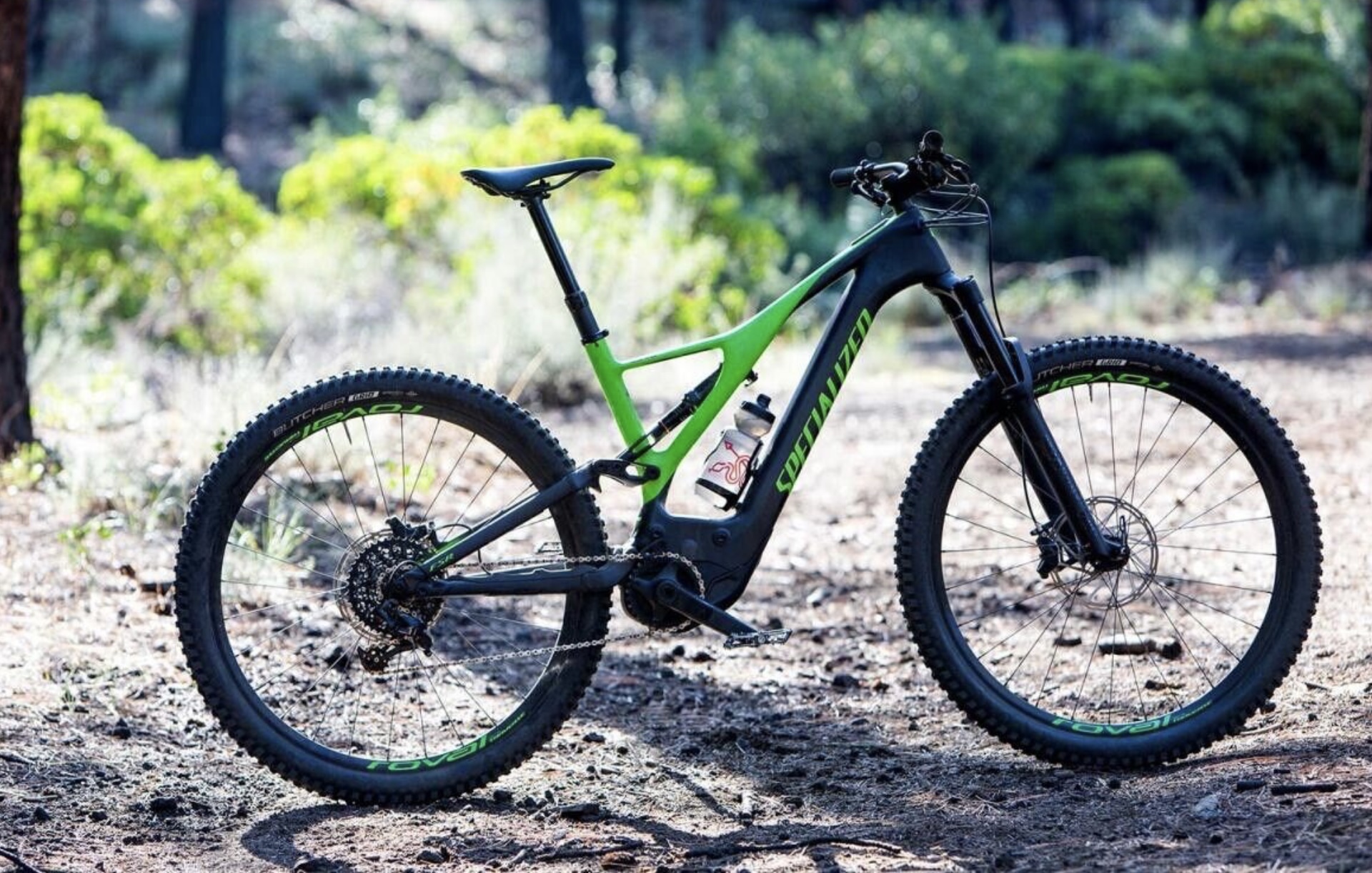
Just picked up an immaculate, low mileage Levo Carbon Expert, well happy! Want to upgrade a few parts though and wanted advice:
1. SRAM Code R brakes are shocking! Had them adjusted, tried new pads, still very poor, so probably going to swap them out. Had SLX on my hardtail Levo, which were good, but looking at XTs or similar…any views?
2. Want to swap to a 36T chainring…do I really need to stay with steel?
thanks in advance.
View attachment 111456
Dicko70,
That's a beautiful ride! I own a Levo Carbon Comp and love the bike, it's such a capable ride.
Both SRAM and Shimano brakes systems work equally well. To work well, they have to be maintained and set up correctly with a few minor modifications.
The SRAM Code R brakes are a really good four piston brake system. My only complaint with the Code R system is the semi floppy brake lever and lack of a bite point adjustment. The Code RSC uses the same four piston brake caliper as the Code R, however the RSC brake lever has a bite point adjustment and the lever pivots upon a set of ball bearings. This gives the lever a firm and solid feel. On the other hand, the SRAM Code R brake lever uses a bushing upon which to pivot. Unlike the RSC's ball bearing pivot, the R's bushing pivot causes the brake lever to feel somewhat loose with play.
Any brake system, whether Shimano, SRAM, Magura, TRP, etc., will suffer poor performance if the system is not maintained.
SRAM Code brakes use DOT 5.1 brake fluid. All DOT automotive brake fluids are hygroscopic, meaning the brake fluid will absorb moisture in the air. This includes the DOT fluid in a bike's brake lever, brake hose and caliper.
DOT 5.1 brake fluid when new is clear. As the fluid gradually retains moisture from the air and dirt making it's way past the brake piston seals, the fluid will begin to darken. Eventually the fluid will turn black if not flushed and new fluid added. I make it a habit to change the fluid in my SRAM Code brakes once a year.
Because your bike is used, and you maybe do not know the bike's maintenance history, I would suggest flushing out the old brake fluid and adding new fluid. This will give you a good base of reference for future maintenance. Britain may be incredibly dry and rarely does it rain, however.....there's still that odd bit of moisture trying to get at the DOT 5.1 fluid.
Do your lever's feel firm when you pull them? If not, this could indicate some air is in the system. A good flush and bleed will alleviate a spongy lever.
Does it take a long lever pull to reach the bite point upon which the brake pads make contact with the rotor? If it does, this could indicate air in the system, worn pads and or, brake rotors which have been worn past the minimum thickness. eBikes are heavy and it doesn't take much to wear out a brake rotor.
Other than SRAM using DOT 5.1 brake fluid and Shimano using a mineral oil brake fluid, both systems operate exactly the same. Both systems require occasional caliper maintenance to avoid sticking caliper pistons.
Because your bike is used, I would suggest giving each the four pistons on your Code R caliper a good cleaning. This will insure they are not sticking and you are getting the most performance out of your calipers. A sticking caliper piston will cause uneven brake pad wear and also lower the amount of braking pressure you can apply to the brake pads.
Prior to my Levo, I owned an Orbea Rise with Shimano brakes. I did a three part technical series in the Orbea Forum on Shimano brake maintenance and modification. The three parts series discusses brake pad wear, sticking pistons, cleaning the caliper, inspecting rotors for wear and general modifications, i.e. increasing brake rotor size. In each article you could easily substitute the word SRAM in place of Shimano. If you have time, give the articles a read.
This will be a three part technical article discussing Shimano braking system components, how to service your Shimano brakes and brake system modification on your Rise. Part # 1 will discuss basic maintenance on your Shimano brakes. Part # 2 will discuss brake modifications to your Orbea...

www.emtbforums.com
This technical article is the second installment in a two part series on Shimano brake systems. Refer to “Part # 1: Shimano Brake System Service”, for information on bleeding and servicing Shimano brakes and brake pad compounds...
www.emtbforums.com
Part # 3: Shimano Brake System Service
Let's face it, the Levo won't be winning any prizes for being the lightest eBike out there. Add the weight of a middle aged rider, his or her ride pack and you quickly arrive at a lot of weight. eBikes deserve a bit more braking performance due to this weight.
In regards to enhancing the Code R's braking performance, I would suggest three things:
1) If you have not done so, I would suggest changing your front and rear brake rotors to 220mm, or at the very least ensure your bike has a 220mm rotor on the front and a 200mm rotor on the rear. Increasing brake rotor size is the quickest and cheapest way to increase brake performance.
2) I see on your Levo that you are running SRAM Centerline brake rotors. I would suggest swapping out your Centerline rotors with the new SRAM H2 rotor. I installed SRAM H2 rotors on my Levo and absolutely love them. I weigh 192 pounds and run a 220mm on the front and a 200mm on the rear.
SRAM Centerline rotors have a starting thickness of 1.8mm and are recommended for replacement at 1.5mm. That's not a lot of room for wear. SRAM recently introduced the H2 brake rotor which are better suited for eBikes. The H2 rotor has a starting thickness of 2mm. A 2mm brake rotor will promote a more firm brake lever and resist heating/brake fade better. It's important to note that a Code R brake lever only has a set amount of brake fluid it can advance per lever squeeze. The thicker the rotor, the less squeeze required for the brake pads to make contact with the rotor.
3) Brake pad compound has a significant impact on braking performance. Because of an eBike's weight, it is easily capable of generating a lot of heat at the rotor on long downhill trail segments or short, technical and steep downhill segments. Heat leads to brake fade and or a reduction in braking performance. Heat is the enemy.
Organic braking compounds are quiet when exposed to moisture and offer better modulation over metallic pads. However, organic pads suffer the most from heat and brake fade. Metallic brake compounds suffer less from brake fade, but can be noisy and annoying as hell when wet.
There's a company called MTX Braking which is located in the United States. MTX makes a high performance Ceramic and Kevlar brake pad for mountain bikes. I used to run metallic pads on my Shimano and SRAM brake systems. I came across a review in regards to MTX brake pads and I decided to try them out.

mtxbraking.com
Three after-market disc brake pads subjected to poor braking surfaces and steep inclines and compared to original equipment...

nsmb.com
MTX brake pads offered a noticeable improvement in brake performance, lever modulation and resistance to brake fade. I use MTX "Red Label" brake pads and 100% recommend them. I will no longer run anything else on my bikes.
The "Red Label Race" series offers stellar modulation, no brake fade and are mostly quiet when exposed to a lot of water. Those using Shimano brakes and you desire a bit more modulation instead of that instant on that Shimano brakes provide should seriously consider MTX Red Label Race pads. Red Label pads don't last as long as the Gold Series pads, however modulation is better with the red label series.
The "Gold Label HD" series of pads offers longevity and a higher resistance to brake fade. I tried a set of gold lable pads and can honestly say I never wore the suckers out. The harder compound means modulation suffers a bit. I prefer modulation over longevity and switched to the Red Label Race Series.
I hope you find this post useful.
be safe,
Rod