Brushless Motor 1.7
Fantic's own-brand mid-drive on the XMF, XEF and XTF lines is a Brose Drive S Mag underneath, Fantic-tuned: a single-rated 90 Nm, a Velomotion-measured 712 W peak, and the quietest belt-drive delivery in its class. It is a previous-generation unit, since superseded by Brose's belt-free Drive³ Peak, but one Fantic still ships across its 2026 range.
Builds smoothly to a broad high plateau and, unusually, keeps feeding power as cadence rises rather than falling away at the top — until heat intervenes on the longest sustained climbs.
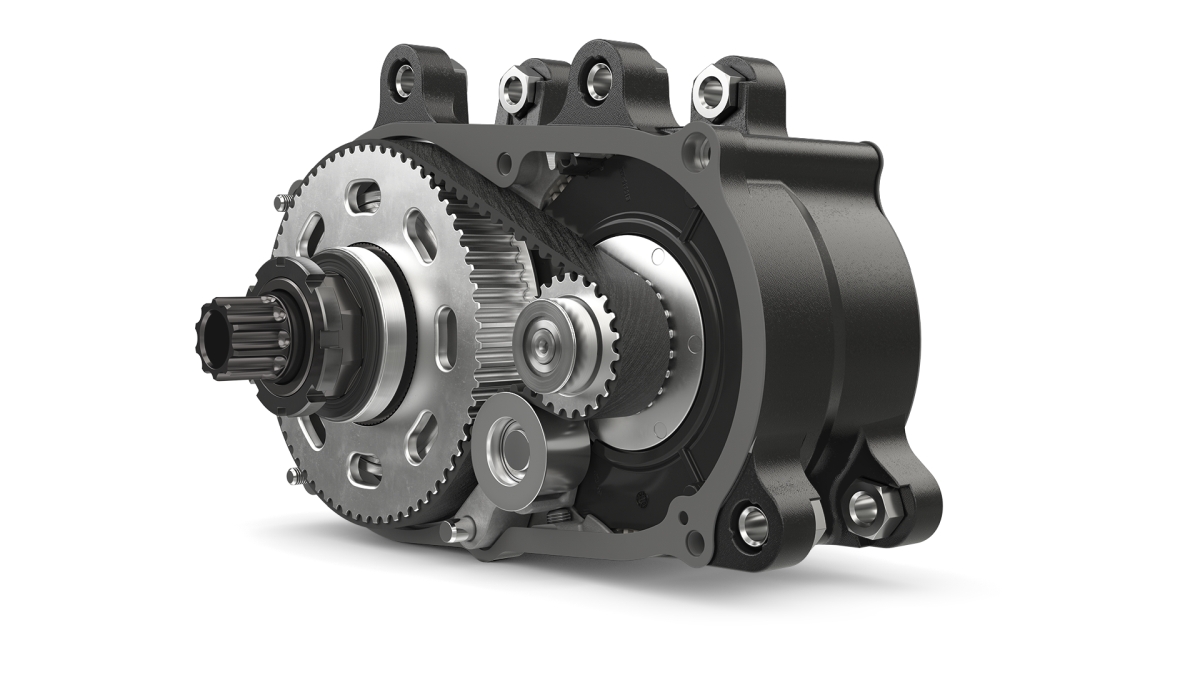
Fantic Brushless Motor 1.7 is Fantic's badge on a known quantity: the Brose Drive S Mag, the magnesium-housed belt-drive that built its reputation on silence and an uncannily natural pickup. Fantic rates it at a single 90 Nm and 250 W nominal on a 36 V system — Brose publishes one torque figure here, not a separate inflated peak — and runs it across the XMF, XEF and XTF range. The hardware is Brose's; the app, display and tune are Fantic's.
On Velomotion's dyno it returned 712 W peak and a standout 575 W at just 100 W of rider input, which is where this motor earns its keep. That figure beats a Bosch Performance CX (398 W at the same input) and a Shimano EP8 (508 W) by a clear margin, meaning you don't have to stamp on the pedals to unlock its best. It is also genuinely frugal, sipping around 5 Wh/km on the flat. The unusual party trick is that in its Flex Power mode the Drive S Mag actually feeds in more power as your cadence climbs — up to a published 410% of rider input — rather than tailing off the way most geared mid-drives do.
Worth being clear about its place in the timeline: this is a last-generation motor. Brose unveiled its successor, the belt-free, 48 V Drive³ Peak (95 Nm, 600 W peak), at Eurobike 2023, with bikes arriving from summer 2024. Fantic has stuck with the proven Drive S Mag on the 1.7 line, so you are buying mature, well-understood hardware rather than the current Brose state of the art.
The trade-offs are the Brose ones. The internal carbon belt has a service-history reputation it has had to live down, though Fantic shipped the reinforced belt and the 2020 peak-load-reduction firmware across the post-2020 run, so most bikes in the field are on the improved spec. It is not immune to heat either: like all Drive S Mag units it begins thermal rollback around 90 °C, so very long, steep, sustained climbs in Turbo can shave output rather than holding a flat plateau — though its magnesium housing manages heat better than the older alloy unit, and riders typically report 60–80 °C on real climbs. There's no freewheel rattle and no drag with the assist off, but it does want a Brose-authorised dealer and the Servicetool for firmware. Quiet, efficient, torquey and forgiving of lazy legs, it remains a fine all-rounder even where the rest of the bike around it is merely competent.
Character
The case for and against
Strengths
- Huge 575 W output from just 100 W of rider input (Velomotion-measured)
- Quietest motor in its class, even under load
- Single-rated 90 Nm with a broad, sustained power plateau
- Very efficient on flat terrain (~5 Wh/km); strong real-world range on the 720 Wh pack
- No drag or rattle with assist off (belt drive)
Compromises
- Previous-generation hardware — superseded by Brose's 48 V, belt-free Drive³ Peak (2024)
- Carbon belt has a service-history reputation (mitigated post-2020)
- Thermal rollback from ~90 °C can trim output on very long sustained climbs
- Peak power trails current-gen rivals (Bosch CX, DJI Avinox)
- Needs a Brose-authorised dealer and Servicetool for firmware