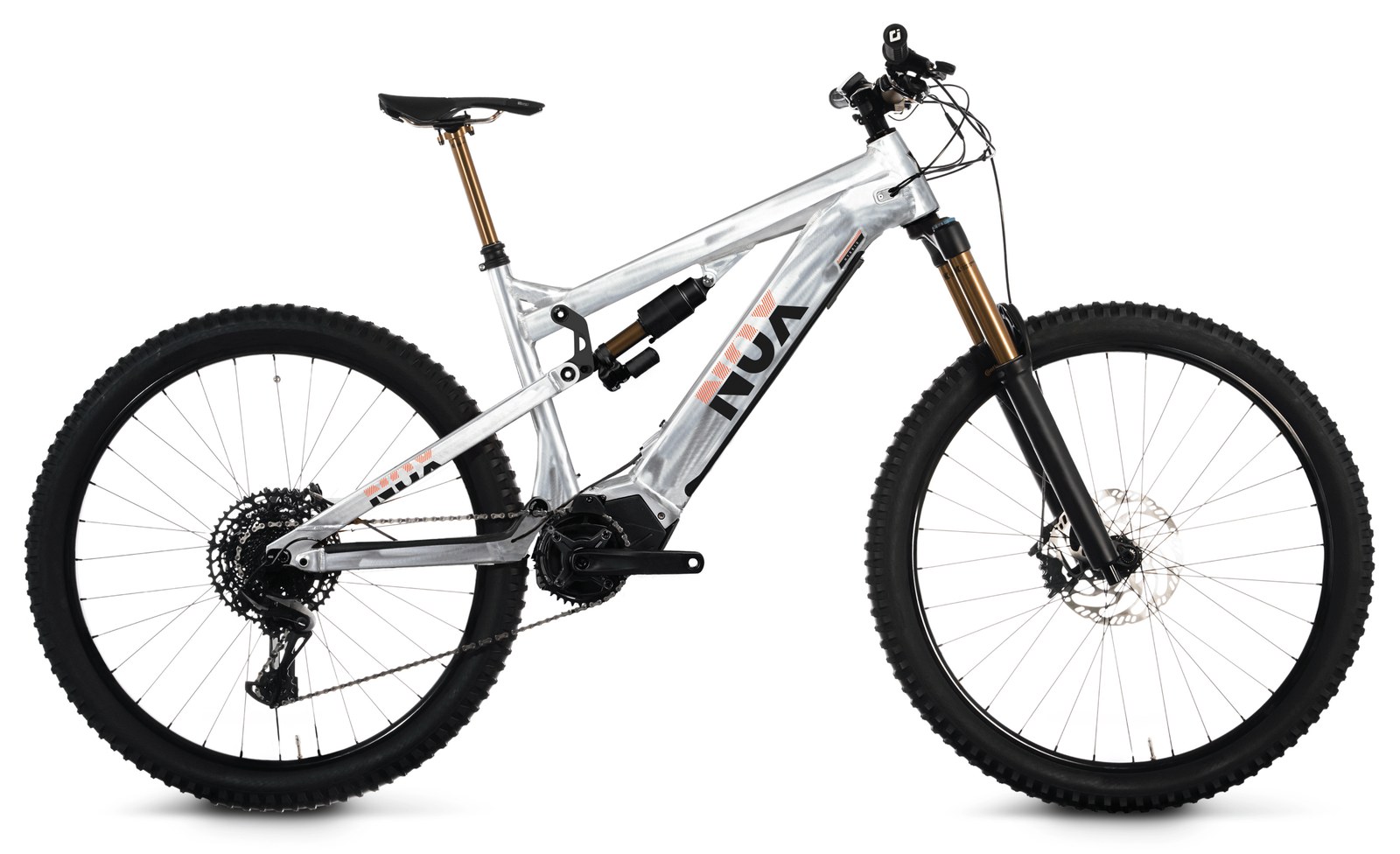
RS
Germany's home-grown heavyweight: the Sachs RS pairs ZF's headline 112 Nm with 898 W of measured peak power on Velomotion's dyno — second only to the TQ HPR120S — wrapped in an unapologetically aggressive delivery.
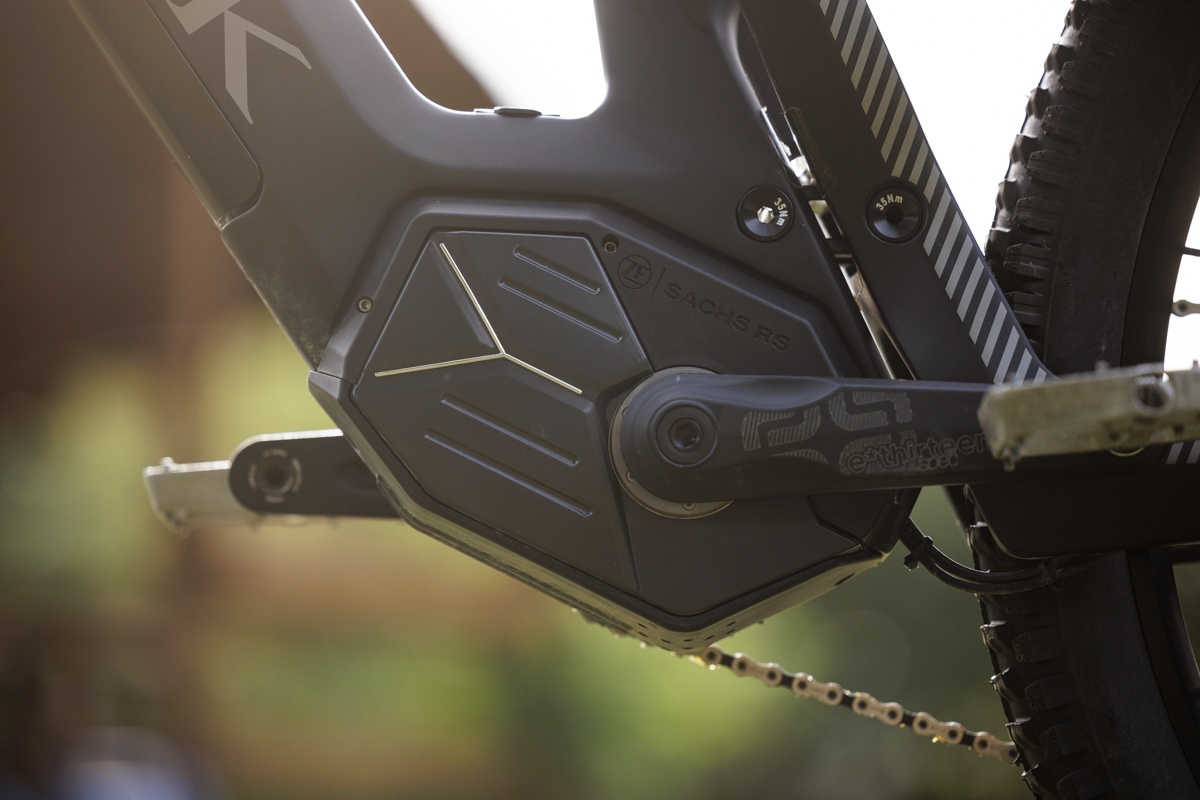
A torquey low-cadence character that hits hardest just off the line and through the mid-range, then tapers as cadence climbs past 90 rpm.
Sachs RS is the motor that arrived to out-muscle everyone. On Velomotion's 2022 test bench it punched out a measured 898 W of peak power, second only to the lightweight TQ HPR120S (1,034 W) and just ahead of the Panasonic GX Ultimate Pro (887 W) — leaving the Bosch Performance CX (745 W) and Shimano EP8 (666 W) well behind. ZF's own headline figures are 112 Nm of torque and 700 W of motor power (held for up to three minutes), atop the 250 W EU-continuous rating. However you read the numbers, this is one of the most physically forceful mid-drives ever fitted to an eMTB.
The character matches the numbers. Stamp on the pedals in a low gear and the RS hits so hard the front wheel can lift off the ground unprompted. The original software made that punch feel binary and slightly unruly; the 2023 adaptive update transformed it, replacing the fixed upper support levels with algorithm-driven modes that read speed, cadence and rider torque to dose the power far more intelligently. Post-update, the same raw shove arrives with proper modulation in technical terrain.
The compromises are weight and thirst. At 3.5 kg it is one of the heavier units here, and on the bench it posted the highest energy consumption in Velomotion's nine-motor field — thirstier than even the 1,034 W TQ — both on the flat and on a 10% climb. It is also one of the louder motors under load, with a clearly perceptible hum on long ascents that the testers called uncomfortably loud at high power. Paired with the 630 Wh BMZ pack that Nox fit, or the larger 725 Wh battery on the Storck e:drenalin SRS, that appetite is something to plan rides around. You buy the RS for the firepower, and you pay for it at the battery and on the scales.
Character
The case for and against
Strengths
- 898 W measured peak — second only to the TQ HPR120S in Velomotion's nine-motor test
- Headline 112 Nm torque from ZF
- Huge, front-lifting low-end punch
- 2023 adaptive update vastly improved modulation
- Returns ~735 W for a modest 100 W rider input
Compromises
- Heavier unit at 3.5 kg
- Highest energy consumption in the test field — plan the battery around it
- Clearly audible, sometimes uncomfortable hum under climbing load
- Limited independent thermal/de-rate data; production wound down, parts harder to source