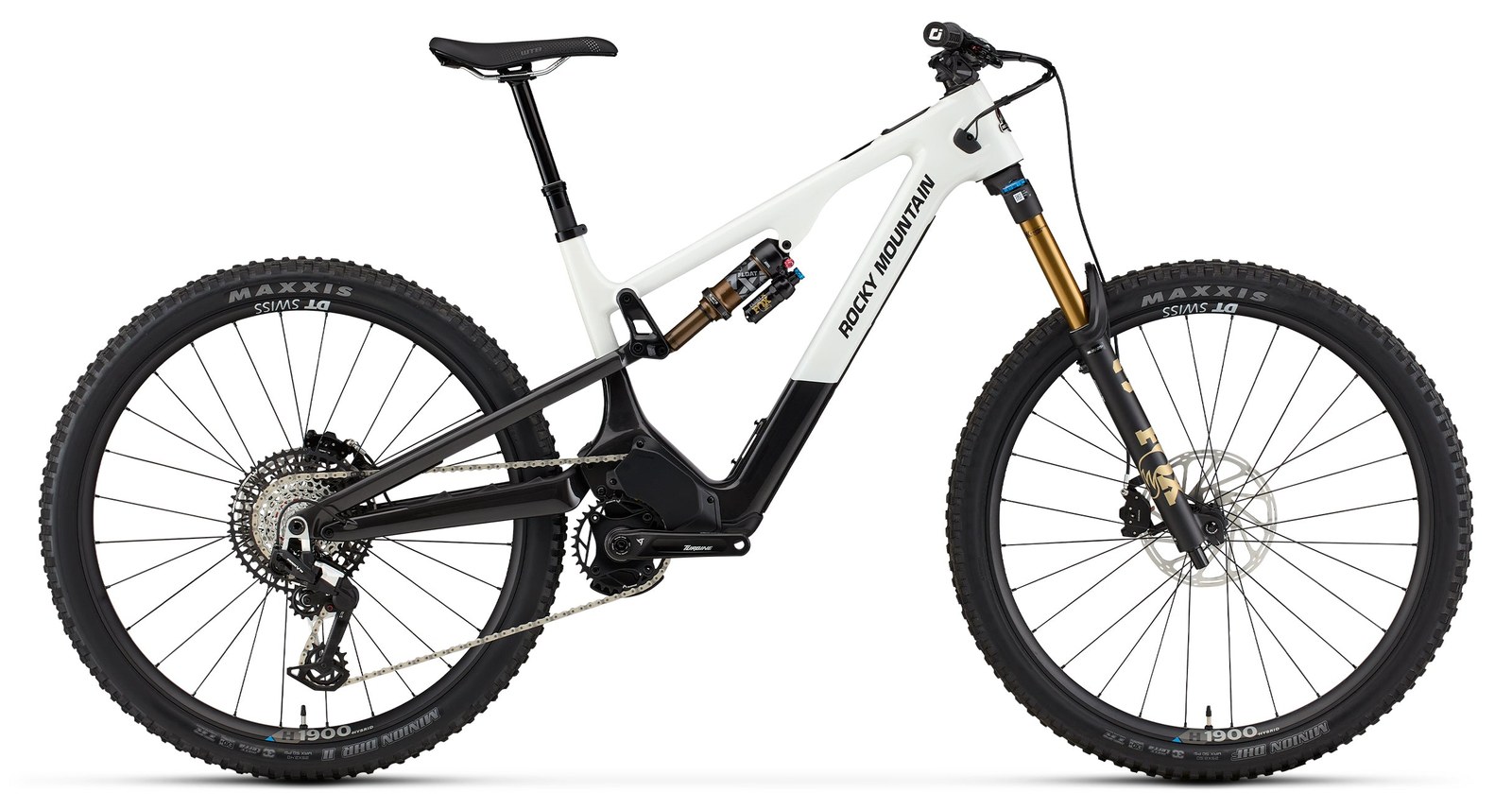
Dyname S4 Lite
Rocky Mountain's lightweight take on its in-house Dyname drive: a magnesium-cased, chain-tension-sensing motor that trades all-out grunt for a trail-natural feel, and which a September 2025 firmware update bumped from 65 Nm to a claimed 75 Nm.
Builds steadily off the bottom and peaks high in the cadence range — emtb-test measured maximum output at 90 rpm at the crank — then tapers at very high rpm. Shape derived from the Dyname 4.0 bench test and scaled to the Lite's claimed peak; not measured for the Lite.
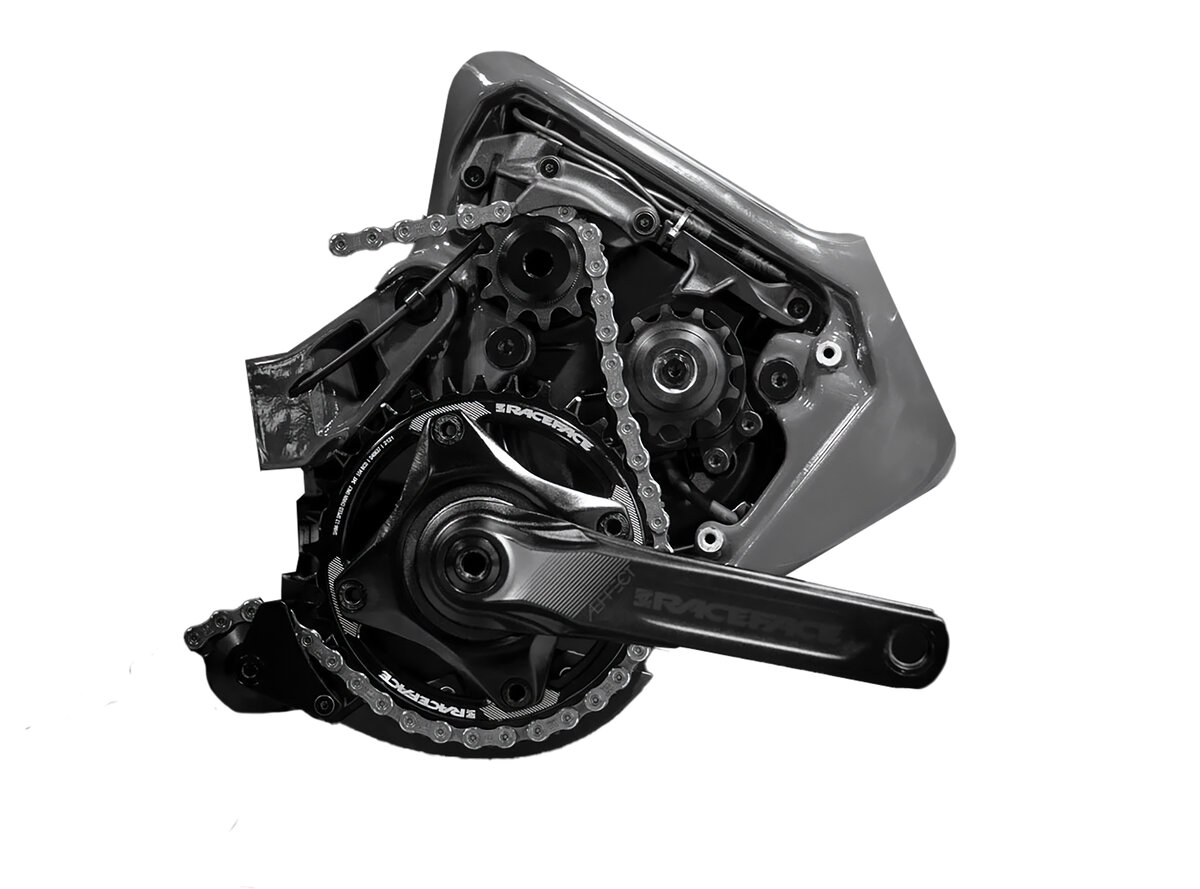
Rocky Mountain Dyname S4 Lite is the brand's answer to the mid-power, lightweight class, and it does it on Rocky's own terms rather than buying in a TQ or Fazua. Like the full-fat Dyname 4.0, the actual motor sits above the bottom bracket and drives the cranks through a separate sprocket, with a second sprocket reading chain tension to sense rider input. A magnesium housing and slimmed internals keep it to a claimed 2.26 kg, and it pairs with a slender 480 Wh battery (plus an optional 314 Wh Overtimepack 2.0 range extender) to keep the whole package trail-bike trim.
At launch it was rated 65 Nm and 550 W peak, but a September 2025 dealer-installed firmware update lifted that to a claimed 75 Nm and 700 W, a ~27% jump that closes much of the gap to the heavier full-power class without adding weight. Those are Rocky's figures; on emtb-test's bench the Lite delivered around 490 W with a 150 W rider input, and the closely related full-power Dyname 4.0 measured 573 W peak on Velomotion's dyno, so the 700 W headline is a peak ceiling rather than a sustained, independently verified number. The defining trait is the tuning: it is very sporty and rewards an active rider. Pedal hard and it surges with genuinely natural, controllable assistance; soft-pedal and it gives little back, which makes it less of a chairlift and more of an amplifier.
That character won't suit everyone, but for riders who want the bike to feel like a bike, the S4 Lite is one of the more honest motors out there. emtb-test note it runs without overrun, cutting support the instant you stop pedalling, and that peak output arrives high up at 90 rpm at the crank, so it rewards spinning rather than mashing. It is not silent, though: emtb-test put it on a par with Bosch's SX for audible noise rather than the near-mute TQ. Independent dyno figures for the Lite specifically aren't published, so the power curve shown here is a representative shape derived from the Dyname 4.0 bench test scaled to the Lite's claimed peak, with the peak placed at the measured 90 rpm crank cadence.
Character
The case for and against
Strengths
- Distinctive chain-tension sensing gives immediate, natural input response with no overrun
- Light for its claimed output (magnesium housing, 2.26 kg)
- Highest claimed torque and peak power in the lightweight class (75 Nm / 700 W)
- Free 2025 firmware update lifts it from 65 Nm / 550 W to a claimed 75 Nm / 700 W
- Sporty, controllable feel that rewards an active rider; strong real-world climbing (1,000 m in 29 min)
Compromises
- Input-hungry tuning gives little back if you soft-pedal
- Heaviest motor in the lightweight bracket on paper
- Audible on climbs — emtb-test rate it on a par with Bosch SX, not whisper-quiet like a TQ
- No independent dyno of the headline 700 W — bench-measured ~490 W at 150 W input
- Firmware upgrade is dealer-only, not user-installable